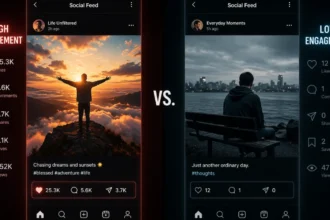

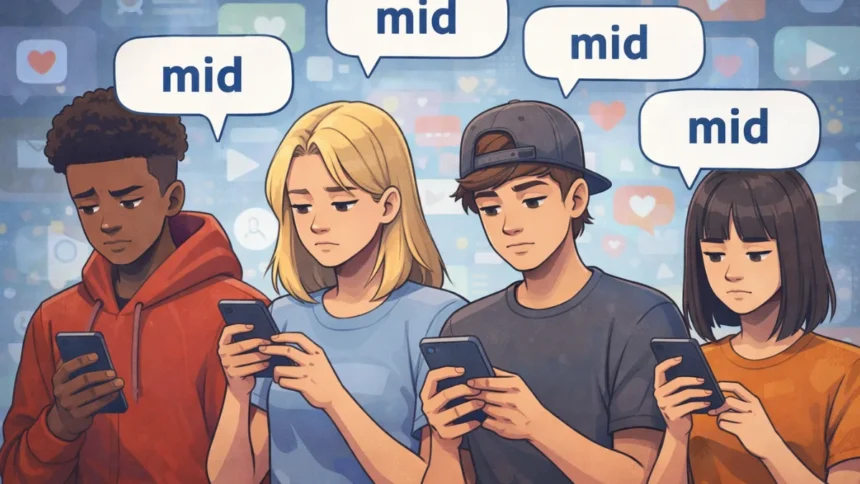
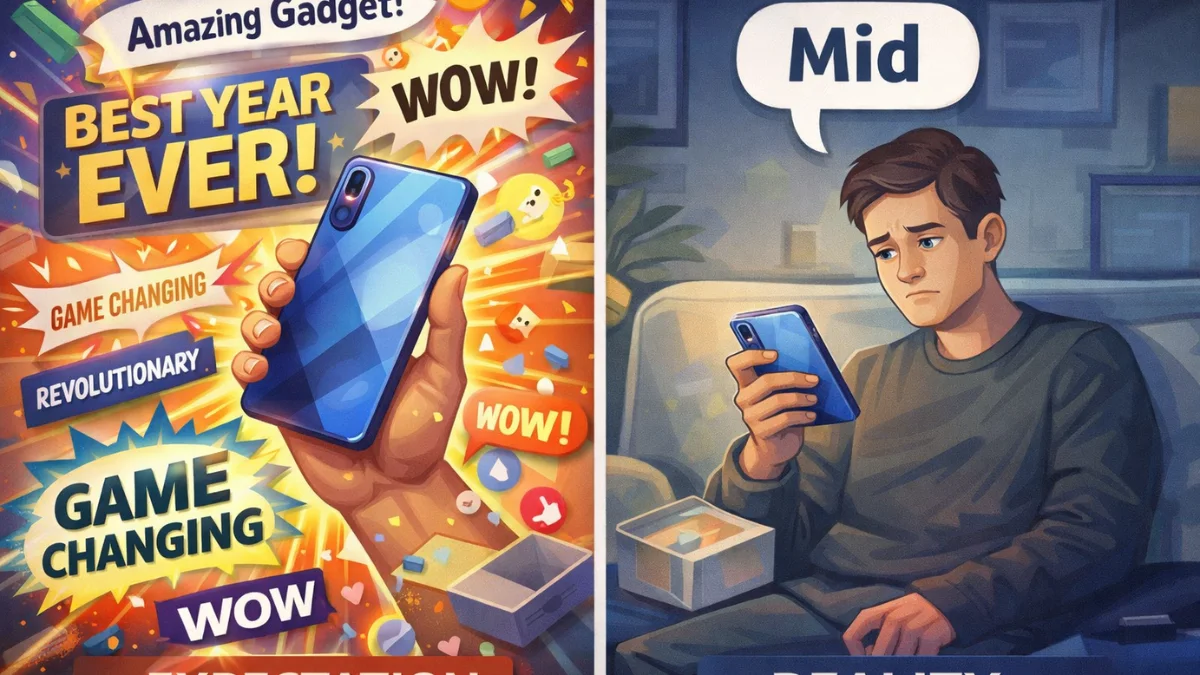
There’s a moment that plays out daily across the internet. A new movie drops. A song trends. A startup launches with glossy branding. Within hours, the verdict arrives—not in long reviews or careful critique, but in a single, dismissive word: mid.
No outrage. No enthusiasm. Just a quiet, almost bored judgment.
That word—simple, blunt, and oddly final—has become one of the most telling expressions of how modern audiences evaluate everything from entertainment to personal brands. Understanding Mid Meaning isn’t just about slang; it’s about decoding a shift in how we measure value in an overstimulated digital world.
What Is Mid Meaning?
At its most basic level, Mid Meaning refers to something that is average, mediocre, or unimpressive. Not terrible, not great—just somewhere in the middle.
But the nuance matters.
Calling something “mid” isn’t neutral. It’s subtly dismissive. It signals that the subject failed to stand out in a world where standing out is everything.
Unlike traditional criticism, which explains why something doesn’t work, “mid” skips the analysis entirely. It’s a verdict without justification. A cultural shrug.
You don’t argue with “mid.” You move on.
From Basketball Courts to TikTok Feeds
The origins of mid aren’t rooted in the internet at all. The term has been used informally in American slang for years, particularly in sports culture, to describe something average or below expectations.
But it wasn’t until social media—especially short-form platforms—that the word exploded into mainstream use.
TikTok, Instagram comments, and meme culture gave “mid” a new life. It became a universal shorthand. Quick to type, easy to understand, and perfectly suited to the pace of digital consumption.
In a feed where attention spans last seconds, language evolves toward efficiency. “Mid” survives because it’s efficient.
Why Mid Meaning Took Off Now
Language trends don’t happen randomly. They reflect deeper behavioral shifts. The rise of Mid Meaning coincides with a few key changes in how people consume content:
1. Oversupply of Content
There is simply too much to watch, read, and listen to. When everything competes for attention, audiences develop faster filtering mechanisms. “Mid” is one of them.
2. Declining Patience for Explanation
Detailed reviews require time—both to write and to read. Social media rewards brevity. A single word can carry more engagement than a paragraph.
3. Cultural Fatigue with Hype
Modern audiences are increasingly skeptical of marketing-driven excitement. Calling something “mid” often feels like pushing back against overhyped expectations.
4. Identity Through Taste
In digital culture, what you don’t like can define you as much as what you do. Labeling something as “mid” subtly signals your standards.
Mid Meaning in Social Media Culture
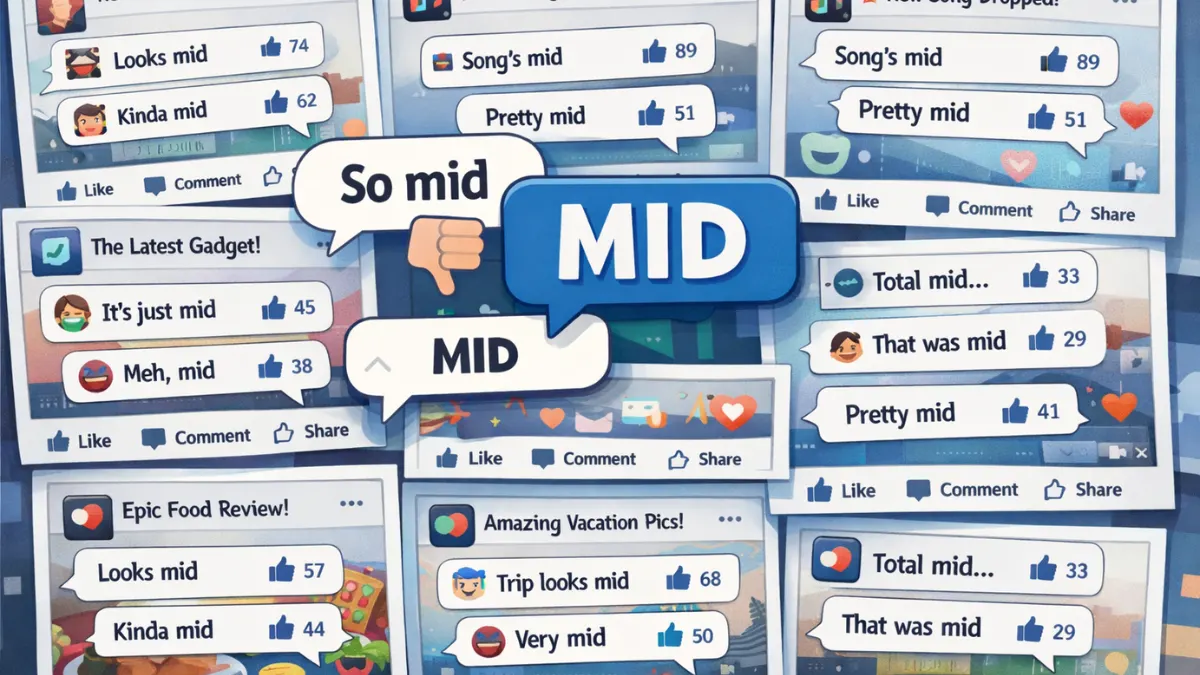
Scroll through any comment section, and you’ll see how Mid Meaning operates in practice.
A blockbuster film release: “mid”
A viral fashion trend: “mid”
A popular influencer’s content: “mid”
The word functions almost like a reflex. It doesn’t just describe—it categorizes.
What’s interesting is how little resistance it faces. Unlike harsher criticism, which often sparks debate, “mid” tends to end conversations rather than start them.
It’s socially safe. It doesn’t provoke strong emotional backlash. That’s part of its power.
The Psychology Behind Calling Something “Mid”
The appeal of Mid Meaning goes beyond convenience. There’s a psychological dimension at play.
Emotional Distance
Calling something “bad” can invite confrontation. Calling it “mid” feels less aggressive. It allows people to express dissatisfaction without escalating conflict.
Cognitive Shortcuts
Humans naturally look for shortcuts in decision-making. “Mid” acts as a quick classification tool—no deep thinking required.
Status Signaling
In some cases, labeling something as “mid” signals refined taste. It implies that you’ve seen better, experienced more, and aren’t easily impressed.
Fear of Overcommitment
Strong opinions can be risky in public spaces. “Mid” offers a middle ground—critical without being extreme.
When “Mid” Becomes a Cultural Filter
What started as slang is gradually becoming a filter through which people evaluate culture.
Content creators now face a new challenge: not just avoiding failure, but avoiding being labeled as forgettable.
Because that’s what “mid” really means in practice—not failure, but irrelevance.
A product that fails can still spark conversation. A product that’s “mid” disappears quietly.
For brands, artists, and creators, this is a more dangerous outcome.
The Business Impact of Mid Meaning
The rise of Mid Meaning isn’t just a linguistic curiosity—it has real implications for business and marketing.
1. The Death of Safe Content
Playing it safe often results in content that’s technically correct but emotionally flat. That’s exactly the kind of work that gets labeled “mid.”
2. Pressure for Differentiation
In crowded markets, being average is no longer acceptable. Brands must actively create distinct identities.
3. Faster Feedback Loops
Social media accelerates feedback. A campaign can be judged within minutes, often with little context or explanation.
4. Reputation Risk
Once something is widely labeled “mid,” it’s difficult to reposition. The perception sticks.
Mid Meaning vs Traditional Criticism
There’s a noticeable difference between how criticism used to work and how it works now.
Traditional criticism involved:
- Context
- Analysis
- Comparative evaluation
“Mid” removes all of that.
It’s not interested in why something is average. It only cares that it is.
This shift reflects broader changes in how people interact with information. Depth is often sacrificed for speed. Nuance gives way to immediacy.
Is “Mid” Killing Nuanced Conversations?
There’s an argument to be made that the widespread use of Mid Meaning is flattening discourse.
When everything can be reduced to a one-word judgment, complexity gets lost.
A film might have strong performances but a weak script. A product might be innovative but poorly executed. These distinctions disappear under the label of “mid.”
On the other hand, one could argue that “mid” is simply the natural evolution of language in a high-speed environment. It reflects how people actually think and communicate under time pressure.
Both perspectives hold weight.
The Future of Mid Meaning
Slang is inherently unstable. What feels current today often fades quickly. But the underlying behavior that gave rise to Mid Meaning is unlikely to disappear.
As long as content volume remains high and attention spans remain limited, there will be demand for quick, efficient judgment tools.
“Mid” may eventually be replaced by another word. But the function it serves will persist.
The real question isn’t whether the term will last. It’s whether creators and brands can adapt to a world where being average is no longer tolerated—or even noticed.
Why Mid Meaning Matters More Than It Seems
At first glance, “mid” looks trivial. Just another internet word.
But it reveals something deeper about modern culture:
- Expectations are higher
- Patience is lower
- Competition is relentless
In that environment, mediocrity isn’t just undesirable—it’s invisible.
Understanding Mid Meaning is really about understanding how value is assigned in a digital-first world. And more importantly, how quickly that value can be dismissed.
More Read

Conclusion: The Quiet Power of a Small Word
“Mid” doesn’t shout. It doesn’t argue. It doesn’t explain.
It simply dismisses.
That’s what makes it powerful.
In a landscape where everyone is trying to be noticed, being labeled as “mid” is a kind of silent failure—one that offers no controversy, no outrage, no second look.
Just indifference.
And in today’s attention economy, indifference might be the harshest judgment of all.
Final Insight
If language like “mid” can redefine how audiences judge content, imagine what understanding digital culture can do for your strategy. Stay ahead of trends, decode internet behavior, and build relevance that lasts.
Follow The Vue Times for sharp insights that help you stand out—not settle for average.
Frequently Asked Questions
What is Mid Meaning?
Mid Meaning refers to something that is average or mediocre. It’s used to describe content, products, or experiences that fail to impress but aren’t necessarily bad.
Why do people say “mid” on social media?
People use “mid” because it’s quick, easy, and expresses a dismissive opinion without needing explanation. It fits fast-paced digital conversations.
Is calling something “mid” an insult?
Not exactly an insult, but it carries a negative tone. It suggests that something is forgettable or not worth attention.
Where did the term “mid” come from?
The term originated in informal slang, particularly in sports and urban culture, before gaining popularity through social media platforms like TikTok.
Why is Mid Meaning trending now?
It reflects modern content consumption habits—short attention spans, content overload, and the need for quick judgments in digital environments.