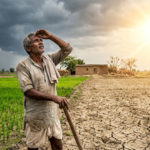

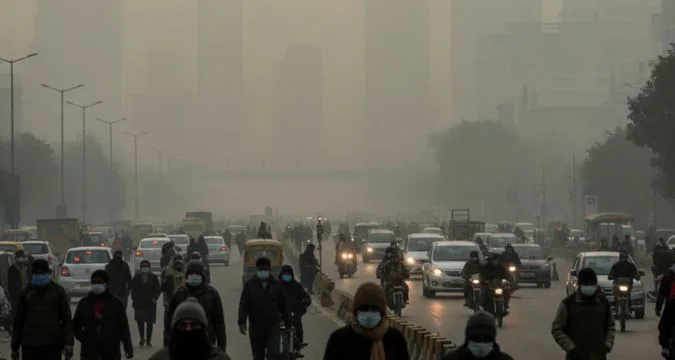
Every year, as the months shift from October to January, a familiar and alarming pattern returns across large parts of North India. Thick smog blankets cities, air quality indices spike to hazardous levels, schools shut down intermittently, flights are delayed, and hospitals report a surge in respiratory illnesses. This annual crisis raises a persistent question that concerns policymakers, scientists, and citizens alike: why North India air pollution worsens every winter, despite years of awareness, data, and policy interventions.
This is not a sudden or accidental phenomenon. The winter air pollution crisis in North India is the result of a complex interaction between geography, meteorology, economic activity, energy use, agricultural practices, and urban growth. Understanding it requires moving beyond surface level explanations and examining the structural and seasonal factors that make winter uniquely dangerous for air quality in this region.
This article on The Vue Times offers why North India’s air becomes unbreathable every winter, what makes this region especially vulnerable, how different pollution sources converge during these months, and why solutions remain difficult to implement despite widespread recognition of the problem.
Understanding North India’s unique geographical vulnerability
North India’s geography plays a foundational role in worsening air pollution during winter. The Indo Gangetic Plain, stretching from Punjab and Haryana through Delhi, Uttar Pradesh, Bihar, and into West Bengal, is one of the most densely populated and industrially active regions in the world. This vast plain is surrounded by natural barriers that restrict air movement.
To the north lie the Himalayan mountain ranges, which act as a massive wall. To the south are the Vindhya and Satpura ranges. This topographical structure limits the dispersion of pollutants, especially when atmospheric conditions are calm. During winter, these limitations become far more pronounced.
The flat terrain allows pollutants to accumulate rather than disperse vertically or horizontally. Once harmful particles are released into the air, they tend to remain trapped close to the surface, particularly in urban clusters where emissions are constant and intense.
Also Read: A Certain Toxin Air Breathing Crisis
The science of winter meteorology and pollution trapping
One of the most critical reasons why North India air pollution worsens every winter lies in winter meteorology, particularly a phenomenon known as temperature inversion.
What is temperature inversion
Under normal conditions, warm air near the ground rises and carries pollutants upward, allowing them to disperse. In winter, especially during clear nights, the ground cools rapidly. Cold air settles near the surface while warmer air forms a layer above it. This creates a temperature inversion.
During an inversion, vertical air movement is suppressed. Pollutants emitted from vehicles, industries, and households remain trapped near the ground, leading to a rapid buildup of particulate matter and toxic gases.
In North India, temperature inversions are stronger and last longer during winter due to calm winds, longer nights, and clear skies. Once established, these inversions can persist for days, turning cities into pollution chambers.
Decline in wind speed during winter months
Wind plays a crucial role in dispersing air pollutants. During winter, North India experiences significantly lower wind speeds compared to summer and monsoon months.
This seasonal reduction in wind movement prevents the horizontal spread of polluted air. In cities like Delhi, Lucknow, Kanpur, and Patna, wind speeds often drop to near zero during early morning and late night hours. As a result, emissions released during these periods accumulate rapidly.
Low wind conditions combined with temperature inversion create the perfect environment for pollution to intensify and linger.
Also Read: A Different Kind Of Winter
The role of stubble burning in agricultural states
One of the most discussed contributors to winter air pollution in North India is agricultural residue burning, commonly referred to as stubble burning.
Why stubble burning occurs
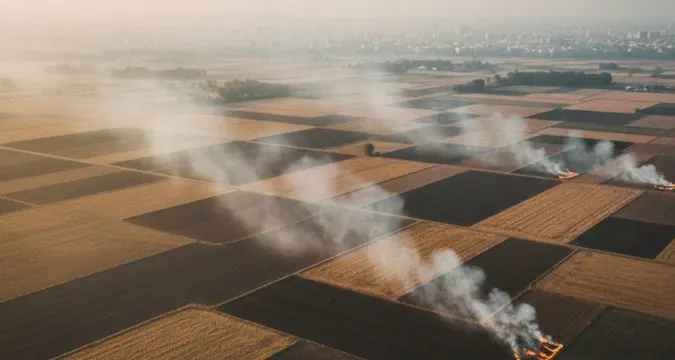
After the kharif harvest, particularly rice, farmers in Punjab, Haryana, and western Uttar Pradesh face a narrow window to prepare fields for the next crop, usually wheat. Mechanized harvesting leaves behind large amounts of crop residue. Removing this residue manually or mechanically is expensive and time consuming.
Burning the residue is often seen as the quickest and cheapest solution, despite legal bans and environmental consequences.
Seasonal timing and pollution impact
Stubble burning peaks during October and November, precisely when meteorological conditions begin to worsen. Smoke from these fires releases massive amounts of fine particulate matter, carbon monoxide, nitrogen oxides, and volatile organic compounds.
Because winter winds are weak and inversions are common, smoke from agricultural fires travels slowly and settles over urban centers, significantly worsening air quality. While stubble burning is not the sole cause of winter pollution, it acts as a powerful seasonal amplifier.
Urban emissions intensify during winter
Cities in North India do not reduce their pollution output during winter. In fact, emissions often increase.
Vehicular emissions
Cold weather affects vehicle combustion efficiency. Engines burn fuel less efficiently during winter, leading to higher emissions of unburnt hydrocarbons and particulate matter. Morning traffic peaks coincide with strong temperature inversions, trapping emissions close to the ground.
The growing number of vehicles, especially diesel powered commercial transport, adds to the pollution burden.
Industrial activity
Industries operate year round, but winter conditions increase industrial pollution impact. Emissions from thermal power plants, brick kilns, small manufacturing units, and construction sites become more dangerous when dispersion is limited.
Brick kilns, which are common across North India, often operate intensively during winter due to construction demand. Many still rely on coal or biomass, releasing high levels of particulate pollution.
Household heating and biomass burning
In rural and peri urban areas, winter brings increased use of solid fuels for heating and cooking. Firewood, coal, cow dung cakes, and agricultural waste are commonly burned indoors and outdoors.
This practice releases fine particulate matter that directly affects local air quality. In densely populated settlements, the cumulative effect of household emissions becomes significant, especially during cold nights when inversions are strongest.
Indoor pollution often spills outdoors, contributing to the overall pollution load while also exposing vulnerable populations to serious health risks.
Construction dust and urban development
Rapid urbanization across North India has led to constant construction activity. Dust from construction sites, unpaved roads, and debris contributes heavily to particulate pollution.
During winter, moisture levels are low and rainfall is minimal, allowing dust to remain airborne longer. Construction dust mixes with combustion pollutants, creating a toxic cocktail that worsens visibility and health impacts.
Despite regulations requiring dust control measures, enforcement remains inconsistent.
Why pollution persists longer in winter
Another critical reason why North India air pollution worsens every winter is the reduced ability of natural cleansing mechanisms to operate.
Lack of rainfall
Monsoon rains wash away pollutants and clean the atmosphere. Winter months see minimal rainfall across most of North India. Without rain, particulate matter remains suspended in the air for extended periods.
Shorter daylight hours
Shorter days mean reduced solar heating, which limits vertical air movement. The atmosphere remains stable and stagnant for longer durations, allowing pollution to accumulate continuously.
Health consequences intensify during winter
Winter pollution does not just look worse, it is more dangerous.
Fine particulate matter, especially PM2.5, penetrates deep into the lungs and bloodstream. Prolonged exposure during winter months increases the risk of asthma, bronchitis, heart disease, stroke, and premature death.
Children, the elderly, outdoor workers, and those with pre existing health conditions are particularly vulnerable. Hospitals consistently report spikes in respiratory emergencies during peak pollution episodes.
Why policy responses struggle to succeed
Despite emergency measures, odd even traffic schemes, construction bans, and firecracker restrictions, winter pollution remains persistent.
Fragmented governance
Air pollution does not respect administrative boundaries. Emissions from one state affect another. Coordination between states remains weak, making regional solutions difficult to implement effectively.
Economic trade offs
Agriculture, construction, transport, and industry support millions of livelihoods. Sudden restrictions often face resistance due to economic concerns, leading to diluted enforcement.
Reactive rather than preventive approach
Most interventions are triggered after pollution reaches hazardous levels. Long term structural reforms, such as cleaner energy transitions, agricultural reform, and public transport expansion, progress slowly.
Climate change and its emerging influence
Climate change is altering weather patterns in subtle but significant ways. Increasing temperature variability, changing wind patterns, and altered rainfall cycles are likely to intensify winter pollution episodes in the future.
Longer dry spells and unpredictable weather can extend pollution seasons, making winters more hazardous than before.
Also Read: Parliament Winter Session
A path forward requires year round action
Solving the winter pollution crisis requires addressing emissions throughout the year, not just during emergencies.
Cleaner energy adoption, sustainable farming practices, improved public transport, stricter industrial controls, and urban planning reforms must work together. Awareness alone is insufficient without structural change.
The challenge is complex, but not insurmountable.
More Read

Conclusion
The question of why North India air pollution worsens every winter has no single answer. It is the result of geography that traps air, meteorology that suppresses dispersion, seasonal agricultural practices, rising urban emissions, and systemic governance challenges.
Winter acts as a magnifying lens, revealing the cumulative consequences of year round pollution. Until emissions are reduced at their source and regional cooperation becomes stronger, winter will continue to bring smog, sickness, and disruption.
Understanding the problem is the first step. Addressing it requires sustained political will, economic innovation, and collective responsibility, not just when the air turns toxic, but every day of the year.