
Why this topic matters in today’s exams
Many students study sincerely and feel well prepared. They finish the syllabus, revise notes, and practice tests, yet their scores do not improve as expected. The confusion is not about effort, but about why that effort is not reflected in marks. This happens because exams have slowly changed. Today, questions focus more on how students think, judge, and choose relevant points, not just what they remember. However, most students still prepare by memorising content. Examiners now reward clarity, relevance, and application. Students struggle not due to lack of ability, but because the evaluation system has changed without being clearly explained.
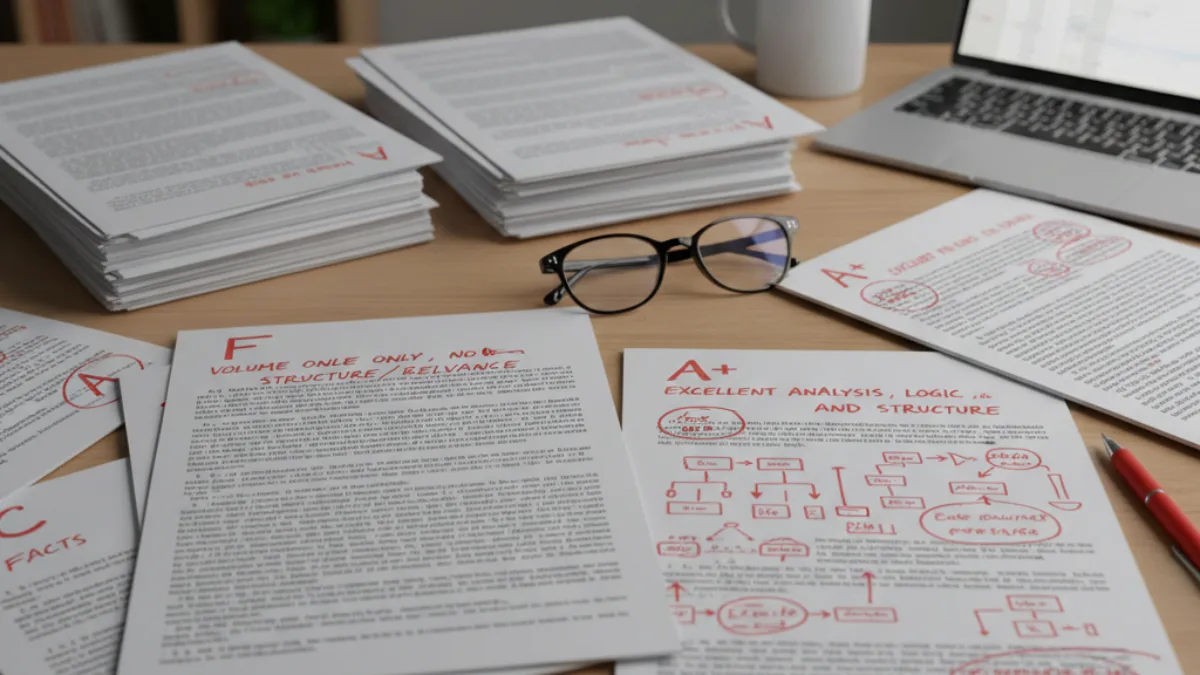
How examiners actually think about this area
Examiners don’t just start by throwing out a question. They start with a goal in mind.
Before a question is even formed, they’ve already decided: “What kind of thinking should this answer show?”
The topic itself is just the setup; the real aim is to see how someone reasons through it.

From an examiner’s point of view, everyone already knows the basic facts. Their job isn’t to figure out who knows more details, but to see how well different candidates understand the material. This isn’t about who has more facts; it’s about seeing who can:
- Figure out what’s most important in a big topic,
- Make sure their answer exactly matches what the question is asking,
- Stay on track even when they’re limited by time or word count,
- Show they’ve thought clearly instead of just listing a bunch of information.
That’s why questions often have tricky wording, limits, or seem simple but actually have deeper meanings. Every word is chosen carefully. Each part of the question helps narrow things down, highlights what matters, or tests someone’s judgment.
The way evaluations work follows the same idea. Points aren’t given for trying hard or covering everything; they’re given for how well the answer matches what the examiner wanted. An answer might be factually correct but still get a bad score if it misses the point the examiner was trying to make. From where the examiner sits, giving an irrelevant answer is worse than just not knowing something.
How the same concept appears across different papers
It turns out that simply knowing about a topic isn’t enough, and this looks different depending on the task, but the core idea stays the same
Essay-style questions
When students have more space to write, many think covering as much ground as possible makes their answer stronger. But the people grading them actually want to see focused detail. They’re checking how well students can pick the right information, arrange it logically, and connect the dots to directly answer the question asked. Writing an essay isn’t really about showing off everything you know; it’s more about building a clear, well-structured argument within the limits set. Knowing the topic gives you the basic ingredients, but it’s how you use them that creates the final piece.

Objective or short-answer formats
You know, even when things are short and to the point, how you apply what you know really counts. Questions might check if you can understand the situation, weed out options that don’t matter, or spot the tiny differences between ideas that seem similar.
Here’s the thing: just thinking you sort of know the topic can trick you into feeling too sure of yourself. Students who just rely on memory and don’t read carefully miss the important hints hidden in the way things are worded. Getting it exactly right is more important than getting it done fast.
Case-based questions
Case formats are specifically designed to assess how well students can apply what they’ve learned. The subject matter is presented within a real-world scenario that needs careful analysis. Evaluators watch to see how students identify the core issues, pinpoint the most useful ideas, and explain their reasoning. So, it’s less about simply knowing the topic and more about understanding when and how to use that knowledge effectively.
Interviews or personality assessments
In situations where you’re engaging with others, having a grasp of the topic is just the starting point. What truly matters is how well you can communicate clearly, adjust your approach to fit the situation, and show good judgment. When someone’s responses sound like they’re just reciting facts or reading from an encyclopedia, it often suggests they haven’t really made the information their own. Here, it’s more about showing you understand by what you choose to focus on and how clearly you express yourself, rather than by how much information you can cram in.

Where most students go wrong
Several predictable patterns explain why capable students underperform despite preparation.
Treating the topic as the answer
It’s common for students to think that simply writing down everything they know about a topic will automatically answer the question. Unfortunately, this approach often results in answers that are wide-ranging but lack focus.
Ignoring the question’s hierarchy
Not every part of a question is equally important, but many students struggle to distinguish between the main point that needs addressing and the secondary details that just support it.
Confusing accuracy with relevance
Facts may be correct but misplaced. Examiners penalise answers that drift, even if the content itself is sound.
Overestimating coverage value
There’s a common misconception that more extensive answers demonstrate deeper comprehension. Actually, adding unnecessary details frequently muddies the main point. These errors aren’t typically due to carelessness; rather, they stem from a study environment that values gathering lots of information over knowing what to focus on.
How toppers approach this differently
Top students approach their work with a unique inner perspective. Instead of diving straight into the subject matter, they start by asking, “What is the examiner really looking for with this question?” This helps them zero in on what’s most important. When crafting their answers, they prioritize a strong structure. Even when dealing with intricate ideas, they make sure everything ties back to a clear main point. They select supporting details based on how well they connect to the core idea, rather than trying to cover every single aspect. These students are strategic about what they include—they’re okay with leaving out some information if it means making their answer clearer, believing that clarity will earn more points than trying to be overly thorough. Above all, they view what they know as a flexible toolkit, using concepts as practical tools to solve problems, not just as facts to list off.
A practical framework students can reuse
A simple, reusable thinking model can bridge the gap between knowing and scoring.
Decode the demand
Before recalling content, identify what the question is asking you to do: explain, evaluate, compare, justify, or apply.
Set boundaries
Note constraints—time period, perspective, scope. These define what not to include.
Choose relevance over volume
Select points that directly serve the demand. Ask how each point advances the answer.
Structure before writing
Create a mental outline. Sequence ideas logically.
Align language with intent
Use terminology that reflects analysis, not narration, when required.
This framework is content-agnostic. It works across subjects because it mirrors evaluation logic rather than syllabus structure.
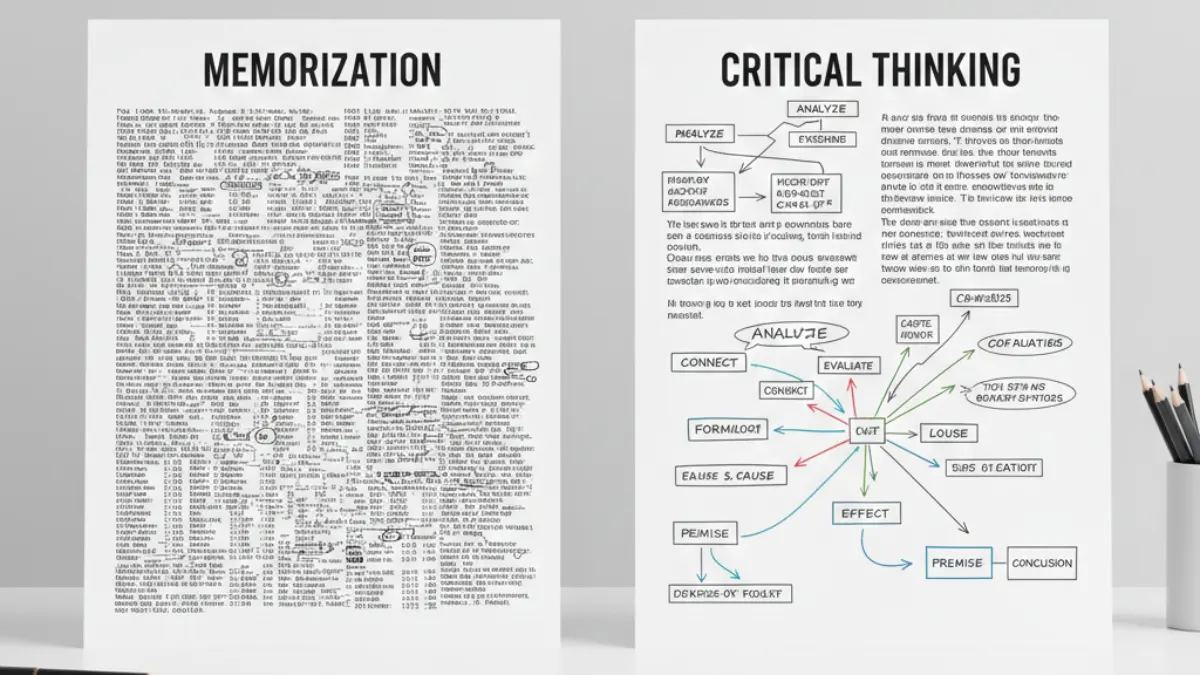
How this way of thinking helps beyond exams
This method helps build habits that stick around long after the test is over. Thinking clearly boosts decision-making because it forces you to figure out what’s truly important. Communication gets sharper when you arrange your thoughts with a clear goal in mind. Writing becomes more coherent when you let relevance shape the structure.
In both work and school, being able to answer questions or solve problems accurately is often valued more than just having a lot of facts memorized. In that way, exams are like early training sessions for this essential skill.

Final takeaway
Understanding the topic is essential, but it’s simply not enough these days. Exams are structured to reward showing you grasp the underlying purpose, rather than just how much information you’ve crammed in. When students shift their focus from just knowing facts to how they apply that knowledge, their results often start to look very different. It’s less about studying more or trying different methods, and more about thinking in a smarter way right when they’re answering the questions. Things become much clearer instead of confusing once you get what the examiners are really looking for. And once that clicks, it feels like all the effort you put into preparing actually leads to the results you want.
FAQs
Is this approach useful across different exams?
Yes. Because it is based on evaluation logic rather than subject content, it adapts well to different formats and disciplines.
Can this help students who feel stuck despite regular study?
Often, yes. Many plateaus result from misalignment, not lack of effort. Adjusting thinking patterns can unlock improvement.
Why do correct answers still score poorly?
Because correctness alone does not guarantee relevance. Marks reward alignment with the question’s intent.
How long does it take to see improvement using this approach?
Some students notice changes quickly, especially in answer clarity. Deeper habits take consistent practice.
Can beginners apply this way of thinking?
Absolutely. Starting early with intent-focused thinking prevents the formation of unhelpful habits later.
For more exam analysis grounded in evaluation logic, readers may explore related insights on The Vue Times, where question patterns and examiner intent are regularly decoded for serious students.