Delhi’s Pollution Puzzle: Why Firecrackers Hit Harder Here
The Festival Glow That Turns into a Smog Blanket
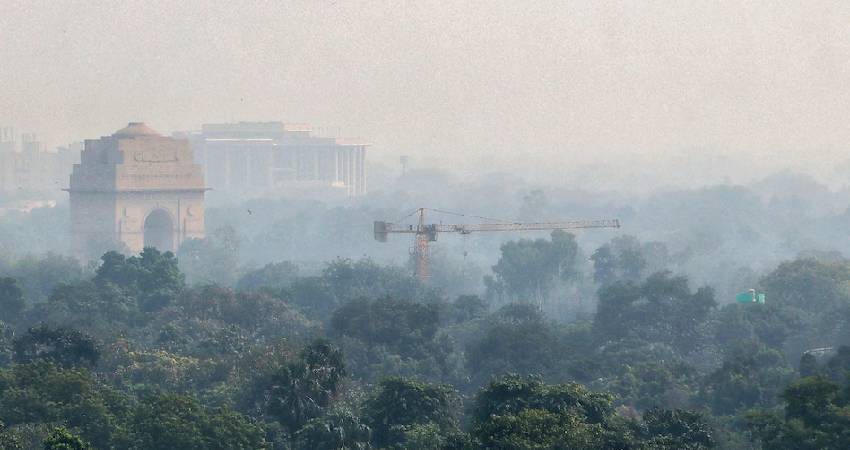
Every year, as India lights up with fireworks, a familiar headline dominates India news and national affairs: Delhi chokes under post-Diwali smog. The city’s Air Quality Index (AQI) rockets to “Severe” levels, while other North Indian cities like Jaipur, Chandigarh, or Lucknow, despite similar festivities, do not suffer the same prolonged pollution.
This raises an important question: Why does Delhi become the epicenter of post-firecracker pollution every winter?
The answer lies in Delhi’s unique combination of geography, weather patterns, urban density, industries, and cumulative emissions. Together, these factors transform firecrackers — a symbol of joy — into a severe public health hazard.
Delhi’s Geography: The Pollution Bowl Effect
Delhi is often called a “pollution bowl” because of how it is geographically positioned. Unlike coastal cities like Mumbai or Chennai that benefit from strong sea breezes, Delhi is landlocked. This means polluted air lingers longer and doesn’t escape easily.

- Surrounded by agriculture-heavy states – Punjab, Haryana, and Uttar Pradesh – Delhi receives heavy inflows of stubble-burning smoke in October-November.
- When firecrackers add sulfur dioxide, PM2.5, and PM10 particles to this already toxic air, the city’s atmosphere becomes a dense, poisonous soup.
Cities like Jaipur or Chandigarh, which are less industrialized and have more open land, don’t trap pollutants in the same way.
Weather & Meteorology: The Winter Trap
One of the biggest scientific reasons for Delhi’s smog problem is a weather phenomenon called temperature inversion.
- In winters, a layer of cool air gets trapped near the ground, while warmer air sits above it.
- Normally, hot air rises and helps disperse pollutants, but during inversion, smoke and particulate matter remain stuck close to the ground.
- Add firecracker smoke into this mix, and Delhi transforms into a giant gas chamber overnight.
Other North Indian cities experience this inversion too, but Delhi’s urban emissions (vehicles + industry + dust) amplify the problem.
Urban Density: More People, More Pollution
Delhi is home to over 3 crore people, making it one of the densest megacities in the world. This high density translates into:
- Over 1.3 crore registered vehicles → constant emissions.
- Massive construction activities → dust suspended in the air.
- Power plants & industries in NCR → continuous background pollution.
When firecrackers are burst in a city already filled with pollutants, the cumulative effect is catastrophic.

For comparison:
- Chandigarh has just 12 lakh people and far fewer vehicles.
- Jaipur, with a population of 40 lakh, has more open spaces and better dispersion.
Thus, while firecrackers pollute everywhere, Delhi’s scale makes the impact far worse.
The Industrial Belt Factor: A Hidden Contributor
Another often-overlooked reason is Delhi NCR’s industrial presence. While Delhi itself has restrictions on heavy industries, the surrounding NCR region — Ghaziabad, Faridabad, Gurugram, Noida, and Bahadurgarh — houses:

- Manufacturing units (textiles, plastics, metals).
- Thermal power plants around NCR.
- Small-scale factories that rely on coal, diesel, or furnace oil.
These industries release sulfur dioxide, nitrogen oxides, and particulate matter round the clock. During the festive season, when firecrackers add additional toxins, the industrial background load prevents dispersion and magnifies the smog effect.
In contrast, cities like Jaipur or Lucknow do not have such large industrial clusters concentrated around them. This explains why their air clears faster compared to Delhi, even if similar numbers of firecrackers are burst.
Scientific Data: The Numbers Tell the Story
Several official studies underline the stark difference between Delhi and other cities:
- According to CPCB (Central Pollution Control Board), Delhi’s AQI after Diwali in 2023 touched 450+ (Severe), while Lucknow’s was around 270 (Poor) and Jaipur’s 240 (Moderate-Poor).
- SAFAR (System of Air Quality Forecasting and Research) found that PM2.5 in Delhi spiked 7–8 times higher within 24 hours of firecracker bursting compared to pre-Diwali days.
- Metals like barium, copper, and aluminum from crackers were found in much higher concentration in Delhi’s post-Diwali air samples than in Chandigarh or Kanpur.
- Studies from IIT Delhi show that industrial zones in NCR add nearly 30% to particulate load during winter smog episodes, making the firecracker impact worse.
This shows that it’s not just about people bursting more crackers in Delhi — it’s about how Delhi’s air traps and multiplies the damage due to surrounding industries and background pollution.

Why Other North Indian Cities Don’t Suffer as Much
Let’s break down why firecrackers don’t turn Jaipur, Chandigarh, or Lucknow into “gas chambers” the way they do for Delhi:
- Jaipur – Windy desert climate helps disperse pollutants.
- Lucknow – Lower vehicle density and smaller industrial belt compared to NCR.
- Chandigarh – A planned city with greener cover and better air circulation from Shivalik hills.
- Varanasi – High population, but river winds from the Ganga aid dispersion.
Delhi, unfortunately, combines all risk factors at once:
- Landlocked geography.
- Winter temperature inversion.
- High population density.
- Surrounding manufacturing and industrial clusters.
- Stubble smoke inflow.
This is why firecrackers in Delhi magnify into a health emergency.
Human Impact: When the Air Turns Toxic
The numbers are scary, but the real impact is on people:
- Children & Schools: Post-Diwali, Delhi schools often shut down due to smog. Children report breathing problems and eye irritation.
- Health Costs: Hospitals like AIIMS and Safdarjung see a 30% surge in respiratory cases in November.
- Outdoor Workers: Delivery partners, rickshaw pullers, and street vendors are forced to work in AQI levels marked “hazardous.”
- Factory Workers in NCR: Many report headaches, eye burns, and breathing issues, showing how the industrial factor worsens post-Diwali pollution.
This is not just about discomfort — it’s about serious national development concerns, as poor air quality affects productivity, healthcare spending, and long-term wellbeing.
Neutral Awareness Note
It’s important to highlight that firecrackers are only one piece of the problem. Delhi’s crisis is not about blaming traditions or communities. It’s about science and environment.
The same crackers in Jaipur or Chandigarh don’t create the same crisis because Delhi’s conditions — including industries around NCR — are fundamentally different.
This awareness is the key to finding solutions without hurting sentiments.

The Human Cost: How Firecrackers Impact Health in Delhi
Delhi’s post-Diwali smog is not just a seasonal inconvenience — it is a public health emergency. Unlike many other North Indian cities, Delhi records the sharpest rise in hospital admissions for respiratory issues after festivals involving fireworks.
1. Immediate Health Impacts
Within hours of firecracker burning, Delhi’s air quality deteriorates from “poor” to “severe.”
- Particulate Matter (PM2.5) from firecrackers penetrates deep into the lungs, causing breathing difficulty.
- Sulphur dioxide and nitrogen oxides irritate the eyes, throat, and skin.
- People report headaches, nausea, and fatigue due to high carbon monoxide levels.
In 2023, Delhi hospitals saw a 30% rise in patients with asthma attacks and breathlessness within 48 hours of Diwali.
2. Why Delhi Suffers More than Other Cities
While Lucknow, Jaipur, and Chandigarh also experience temporary smog, Delhi’s trapped air and industrial density make recovery much slower.
- In Delhi, pollutants linger for 5–7 days.
- In other cities, wind disperses firecracker emissions in 1–2 days.
- Children in Delhi breathe air equivalent to smoking 40–50 cigarettes during the peak post-Diwali smog week.
3. Vulnerable Groups at Higher Risk
- Children: Weak lung capacity, higher outdoor activity → prone to bronchitis and asthma.
- Elderly: Pre-existing conditions like COPD or hypertension worsen.
- Outdoor Workers: Delivery staff, street vendors, and rickshaw pullers face direct exposure.
- Pregnant Women: Linked to low birth weight and complications due to inhaling high PM2.5 levels.
4. WHO & Medical Warnings
The World Health Organization (WHO) states that no level of PM2.5 is safe. Delhi, during Diwali week, records PM2.5 levels 20–25 times higher than the safe limit.
Indian health experts repeatedly emphasize that firecracker bans are not cultural restrictions but medical necessities in Delhi.
5. Emotional & Social Impact
Beyond physical health, there’s an emotional cost:
- Parents fear letting kids play outdoors.
- Schools shut down for “smog breaks.”
- Festivals meant for joy often leave behind anxiety and emergency hospital visits.

The Way Forward: Tackling Firecracker Pollution Without Losing Festive Spirit
Delhi’s pollution crisis is complex — but it is not unsolvable. While firecrackers add to cultural celebrations, their environmental cost is highest in the capital due to geography, industry, and population density. The challenge, therefore, lies in balancing tradition with sustainability.
1. Adopting Green Crackers
The Council of Scientific & Industrial Research (CSIR) introduced green crackers that reduce emissions by up to 30%.
- These emit less sulphur dioxide and heavy metals.
- They are designed to create sound and light effects without severe air pollution.
- Delhi can promote awareness campaigns so families know where to buy authentic green crackers.
2. Stronger Enforcement & Smart Regulation
Delhi Police and local authorities already regulate cracker sales, but illegal vendors often bypass rules.
- Strict licensing and QR code verification on cracker boxes can ensure safety.
- Time-bound cracker use (e.g., 8–10 PM only) reduces prolonged exposure.
- Heavy penalties for violators can act as a deterrent, while subsidies for green crackers can encourage compliance.
3. Community-Led Celebrations
Instead of individual households bursting crackers, community fireworks shows can be organized in safe, controlled zones.
- This reduces the overall number of crackers while retaining festive joy.
- Housing societies in Delhi have already adopted this model, cutting down neighborhood smog.
4. Alternatives for Celebration
Festivals don’t need to lose charm without firecrackers. Many families are shifting to:
- Laser light shows and drone displays → visually stunning, zero pollution.
- Eco-friendly diyas, rangoli, and flower decorations → promote tradition with sustainability.
- Digital fireworks apps for children → interactive yet safe celebrations.
5. Tackling the Bigger Picture
Firecrackers alone are not the only villain; they worsen an already fragile system. Solutions must be multi-pronged:
- Accelerate stubble management techniques in Punjab & Haryana.
- Strict control on industrial emissions around NCR.
- Expand Delhi’s green cover to naturally filter air.
6. Role of Citizens
Every Delhiite plays a part in the solution:
- Choose green crackers or alternatives.
- Avoid buying from illegal vendors.
- Educate children about health impacts while keeping the festive spirit alive.
7. A Balanced Future
The narrative must move away from “ban vs. tradition” debates. Instead, it should focus on:
- Cleaner celebrations that respect cultural values.
- Health-first policies that ensure children breathe clean air the morning after Diwali.
- Collective responsibility where government, industry, and citizens act together.
A Festival of Light, Not Smoke
Diwali is meant to be a festival of light, joy, and togetherness, not of suffocation. Delhi faces the harshest impact from firecrackers due to its unique combination of weather, geography, and pollution sources. But with green innovation, smarter policies, and community responsibility, the capital can reclaim the festive spirit without compromising public health.