

What Is Quantum AI? When Computing Stops Thinking Like Humans

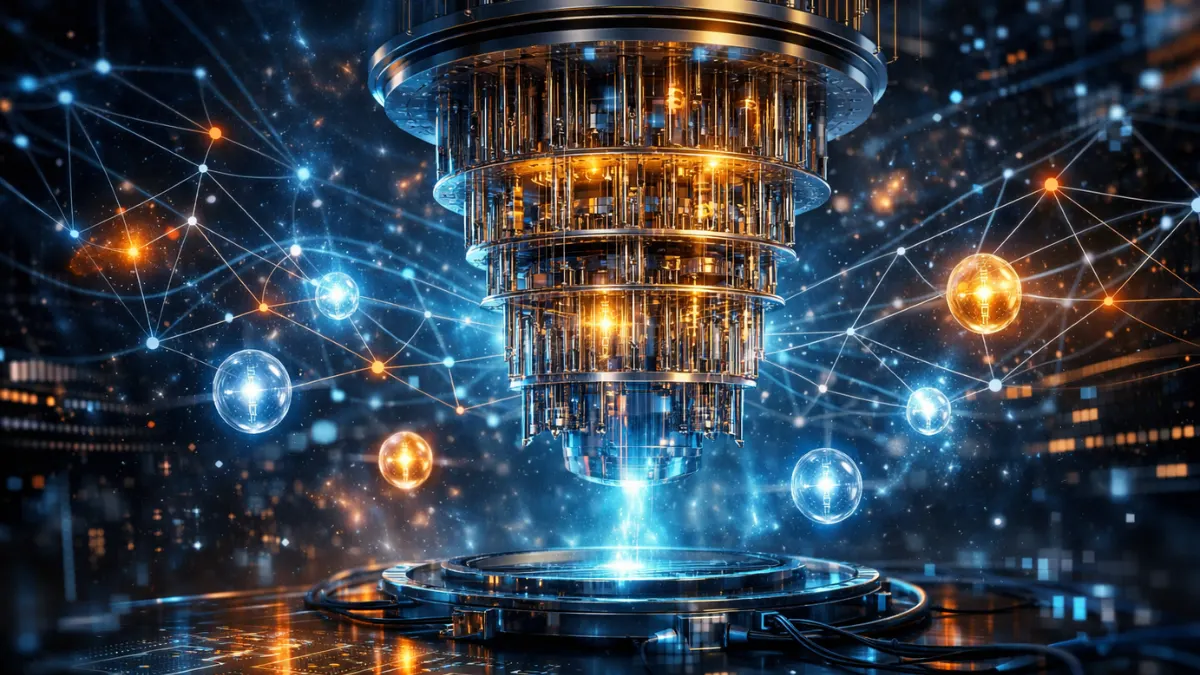
There’s a quiet shift happening in the way machines “think.” It doesn’t announce itself with flashy headlines or viral apps. Instead, it shows up in subtle places—faster drug discovery models, improved financial predictions, simulations that seem almost impossibly detailed. Somewhere beneath all of this is a question that’s gaining momentum: What Is Quantum AI?
For most people, artificial intelligence already feels complex enough. Now add quantum computing to the mix, and the conversation starts to sound abstract, even futuristic. But the idea itself is surprisingly grounded: it’s about reimagining how machines process information—and what happens when they no longer follow the same logical pathways as humans.
What Is Quantum AI? A Shift Beyond Traditional Intelligence
At its core, What Is Quantum AI? refers to the integration of quantum computing principles with artificial intelligence systems. Traditional AI relies on classical computers—machines that process information in binary (0s and 1s). Quantum computing, however, introduces a different approach altogether.
Instead of binary bits, quantum systems use “qubits,” which can exist in multiple states at once. That single change alters everything. It allows machines to process vast combinations of possibilities simultaneously rather than step-by-step.
When AI models are powered by this kind of computational flexibility, they are no longer just optimizing within limits—they are exploring possibilities on an entirely different scale.
This doesn’t mean Quantum AI is replacing AI as we know it. It’s expanding it. It’s taking the existing logic of machine learning and giving it access to a more complex, probabilistic way of thinking.
Where Did the Idea Come From?
The roots of Quantum AI lie in two separate revolutions.
On one side, artificial intelligence evolved from pattern recognition systems into deep learning architectures capable of mimicking human decision-making. On the other, quantum computing emerged from physics—specifically, the understanding that particles behave unpredictably at microscopic levels.
For years, these two domains existed separately. AI was practical and widely applied. Quantum computing was experimental, mostly confined to research labs.
The convergence happened when researchers began asking a simple but powerful question: What if AI could leverage the uncertainty and parallelism of quantum systems?
That question gave birth to Quantum AI—a field still in its early stages but already attracting significant attention from tech companies, governments, and research institutions.
Why “What Is Quantum AI?” Is Suddenly Trending
A few years ago, Quantum AI would have been a niche topic. Today, it’s increasingly part of mainstream tech conversations. The shift isn’t accidental.
There are three key reasons behind this growing interest:
1. Limitations of Classical AI
Traditional AI systems, despite their progress, face computational limits. Training large models requires enormous processing power, energy, and time. Quantum systems offer a potential way to overcome these constraints.
2. Data Explosion
The volume of data being generated globally is staggering. Processing this data efficiently is becoming a challenge. Quantum AI promises to handle complex datasets more effectively by exploring multiple outcomes simultaneously.
3. Strategic Competition
Countries and corporations are investing heavily in quantum technologies. The race isn’t just about innovation—it’s about future dominance in computing power.
The question “What Is Quantum AI?” is no longer theoretical. It’s tied to real-world stakes.
[caption id="attachment_10123" align="alignnone" width="1200"] Scientist working on advanced quantum AI system in futuristic lab[/caption]
How Quantum AI Could Change Real-World Industries
The impact of Quantum AI isn’t confined to labs. Its potential applications stretch across industries, often in ways that aren’t immediately visible but deeply transformative.
Healthcare
Drug discovery often involves testing millions of molecular combinations. Quantum AI could accelerate this process dramatically, identifying viable compounds in a fraction of the time.
Finance
Markets are influenced by countless variables. Quantum AI systems could analyze complex financial patterns and risk scenarios more accurately than current models.
Logistics and Supply Chains
From optimizing delivery routes to predicting disruptions, Quantum AI could handle large-scale optimization problems with unprecedented efficiency.
Cybersecurity
Ironically, the same technology that could break current encryption systems could also create stronger, more advanced security frameworks.
These aren’t distant possibilities—they are areas where early experimentation is already underway.
The Psychology Behind the Hype
Part of the fascination with Quantum AI isn’t just technical—it’s psychological.
Humans are used to machines operating within predictable boundaries. Even advanced AI systems, for all their complexity, follow patterns we can eventually trace back.
Quantum AI challenges that comfort. It introduces a layer of unpredictability that feels both powerful and unsettling.
There’s a subtle shift here—from machines that simulate intelligence to systems that operate in ways we may not fully understand. That uncertainty fuels both excitement and skepticism.
And perhaps that’s why the question “What Is Quantum AI?” resonates so strongly—it’s not just about technology. It’s about redefining our relationship with it.
Business and Strategic Implications
For businesses, Quantum AI represents both an opportunity and a dilemma.
On one hand, early adoption could provide a competitive edge. Companies that integrate quantum-enhanced AI into their operations could outperform others in efficiency, prediction, and innovation.
On the other hand, the technology is still evolving. Investing too early carries risks—high costs, uncertain outcomes, and a lack of standardized infrastructure.
This creates an interesting dynamic: organizations are watching closely, experimenting cautiously, and preparing for a shift they know is coming but cannot fully predict.
In many ways, Quantum AI is becoming a strategic consideration rather than just a technical one.
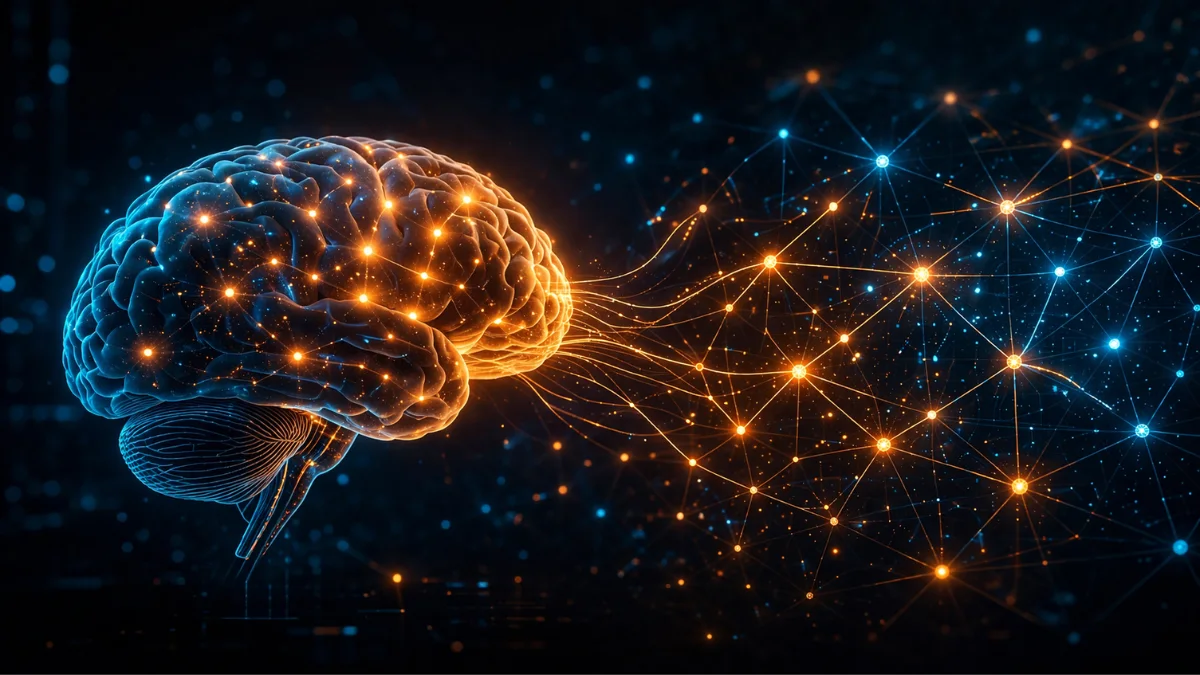
[caption id="attachment_10125" align="alignnone" width="1200"] Comparison of classical computing and quantum AI technology[/caption]
What Is Quantum AI? The Future Direction
Looking ahead, Quantum AI is unlikely to replace classical AI entirely. Instead, the two will coexist, each serving different types of problems.
Classical AI will continue to handle everyday tasks—recommendation systems, automation, customer interactions. Quantum AI will be reserved for problems that require immense computational depth—complex simulations, large-scale optimization, and advanced scientific research.
The real transformation will happen at the intersection—where classical systems integrate quantum capabilities seamlessly.
We are still in the early chapters of this story. But the direction is clear: computing is evolving beyond linear logic into something more fluid, more probabilistic, and far more powerful.
[ruby_related heading="More Read" total=5 layout=1 offset=5]
Conclusion: When Intelligence Stops Being Predictable
So, What Is Quantum AI? It’s not just a technological upgrade. It’s a shift in how machines approach problems, decisions, and possibilities.
For decades, computing has been about precision—clear inputs leading to clear outputs. Quantum AI introduces ambiguity into that equation, and with it, a new kind of potential.
The most interesting part isn’t just what these systems can do. It’s how they force us to rethink intelligence itself—both artificial and human.
As Quantum AI continues to develop, the real question may no longer be what it is, but how far we’re willing to go with it.
Final Insight
Quantum AI isn’t arriving loudly—but it’s arriving decisively. The businesses and thinkers who pay attention early won’t just understand the future; they’ll help shape it.
Frequently Asked Questions
1. What is Quantum AI in simple terms?
Quantum AI combines quantum computing with artificial intelligence to process complex data faster and more efficiently than traditional systems.
2. How is Quantum AI different from regular AI?
Regular AI uses classical computing (binary logic), while Quantum AI uses qubits that can process multiple possibilities at once, enabling deeper analysis.
3. Is Quantum AI already being used today?
Yes, but mostly in experimental and research settings. Industries like healthcare, finance, and logistics are beginning to explore its potential.
4. Why is Quantum AI important for the future?
It can solve problems that are currently too complex for classical computers, making it crucial for scientific breakthroughs and advanced technologies.
5. Will Quantum AI replace traditional AI?
No, both will likely coexist. Classical AI will handle everyday tasks, while Quantum AI will focus on highly complex computations.










Comments (0)