
The system of higher education of India is at a junction. Having in excess of 4 crore students, well above 1,100 universities, and thousands of colleges, both urban and rural India wide, any slight change in regulation can have far-reaching effects. It is against this background that the UGC New Guidelines 2026, which is formally presented as Equity Regulations on Higher Education Institutions, have occasioned one of the most heated recent academic and political discussions.
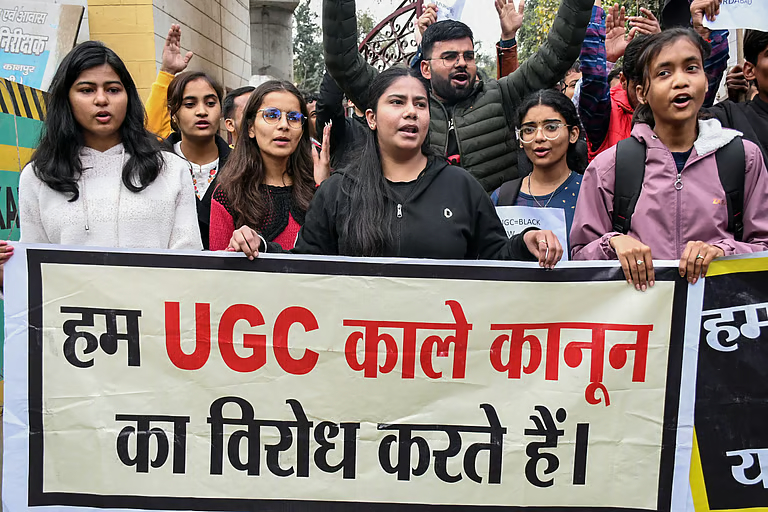
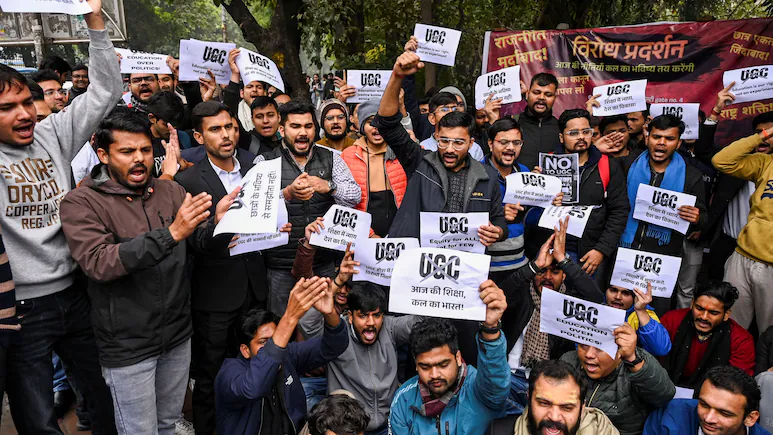
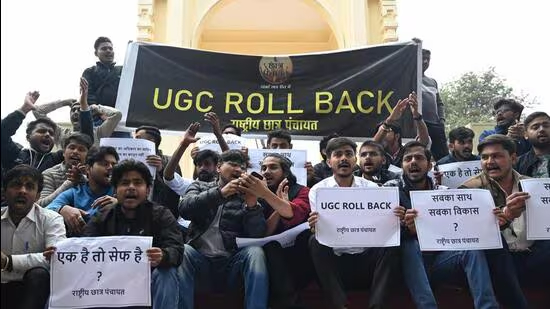
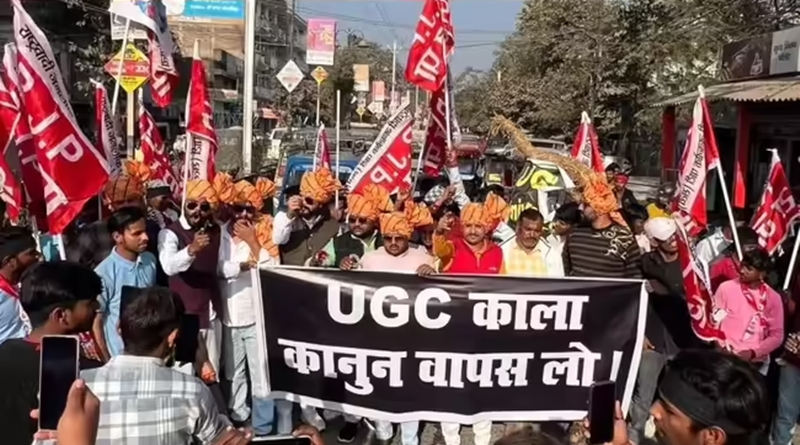
These laws are being called by those in favor as long overdue measures to prevent discrimination based on caste. Critics claim that they are vague, discriminative and could be divisive. Demonstrations, petitions, and resistance at the level of the campuses have already taken the issue past universities into the political debate on a national level.
This paper will describe the nature of the UGC new guidelines 2026, what was changed, the reason why this has received increased opposition, and what this entails to the students, teachers, and institutions in India.
The relevance of UGC Regulations in the Indian Education System
University Grants Commission (UGC) is not any other regulatory organization. It determines the operation of higher education in India.

UGC regulations determine:
- The ways universities are managed.
- How teachers are appointed
- How students are evaluated
- The manner of handling grievances.
Any altered UGC regulations impact the academic liberty, campus culture, and institutional autonomy in a domino effect.
In the past, UGC reforms have been striving to:
- Expand access to education
- Enhance quality and responsibility.
- Make higher education national.
The 2026 policy on higher education by UGC purports to carry on this legacy by relying on equity, inclusion, and safety.
The Historical Background: discrimination and Campus Reality
The purpose of the UGC equity regulations 2026 would be understandable by looking at the Indian circumstances on the campuses.

Over the last decade:
- Several student suicides due to discrimination were a shock in the country.
- Caste-based discrimination was marked by committees and commissions in hostel, evaluations, and administration.
- The universities were repeatedly requested by the courts to tighten grievance redressal.
- It has been recognised by government data and policy reports that students representing marginalised communities are more likely to be subject to subtle and structural exclusion and this is more evident in elite institutions.
These facts are the ethical background of the UGC anti-discrimination rules.
What Are the UGC New Guidelines 2026?
Fundamentally, the UGC new rules clarified are concerned with the establishment of institutional mechanisms to be used to prevent, detect, and deal with discrimination.

The policies require all institutions of higher learning to establish a systematic model of equity and grievance.
The major provisions that have been added in the UGC regulations 2026 India.
Equity Committees
All institutions should have their own committee that will oversee matters concerning discrimination.
Equal Opportunity Centres
These centres have the responsibility of creating awareness, counselling and supporting the disadvantaged students.
Equity Squads
Specific teams which have the authority to immediately take cognisance of complaints and make recommendations.
24 Hour Helpline and online complaint systems.
Students may either file complaints anonymously or officially.
Time-Bound Redressal
Misgivings have to be analyzed within stipulated time limits.
Mandatory Reporting to UGC
Periodic compliance reports have to be provided by institutions.
On paper, these reforms seem to be all-inclusive and student-focused.
What Is Different From the Previous Rules?
There were already grievance mechanisms in Universities in India. Nevertheless, there are three crucial changes in the UGC new guidelines 2026.
First, authority centralisation.
Previously, redressing of grievances was different in institutions. The new regulations standardise the structures in all the universities.
Second, broadened the definition of discrimination.
The guidelines identify indirect, structural and implicit discrimination as well as acts of discrimination not only direct.
Third, tightening of regulatory control.
Failure to comply may become the focus of harsh scrutiny by the UGC.
These modifications represent the shift between rather reactive grievance management and a more active institutional surveillance.
Why has the UGC Guidelines been met with opposition?
The UGC guidelines controversy has escalated even in the campuses despite what they say they are.
Opposition is not regional and ideologically exclusive. Various concerns have been raised by the students, teachers and administrators.
Concern One: Feeling Ostracized of General Category Students.
Among the most serious criticisms, there is the fact that the guidelines explicitly work on SC, ST, and OBC students, but say nothing about the assurances to general category students.
Critics argue:
- Any person can be discriminated against.
- Rules need to be applicable to everyone.
- Equity must not seem to be partial.
This has contributed to the institutional imbalance perception particularly among students who are not as reserved.
Concern Two: Fear of Abuse and Fraudulent Complaints.
The other significant concern is associated with procedural safeguards.
Opponents highlight:
- Lack of clear punishment on false or malicious complaints.
- Wide definitions which are largely subjective.
- Reputational exposure to harm prior to due process.
Academic disputes have aroused a panic among university teachers on how the conflicts can be interpreted as discrimination.
Issue Three: Uncertainty in Words and Action.
Terms such as:
- “Implicit bias”
- Hostile academic environment.
- “Structural exclusion”
- are not clearly defined.
India is a diverse nation and thus ambivalence in language may result in inconsistency in enforcement, campus after campus.
Campus Polarisation and Social Tension Concern Four.
Student organisations in all states have reported:
- Greater distrust among groups of students.
- Identity-based mobilisation
- Campus space politicisation.
Critics advise that equity rules are poorly implemented, which can further divide people rather than bringing differences down.
The Defence of the UGC New Guidelines by Government.
Those who have strongly defended the UGC new guidelines 2026 are the officials at the Union government and UGC.
Their key arguments include:
- The laws are not retaliatory, they are proactive.
- They are not out to attack other students but to ensure protection of vulnerable students.
- There is no loss of due process and institutional checks.
Officials also underscore the fact that by equity there is no exclusion but there is equal dignity and opportunity.
The Constitutional and Legal aspect
The constitutional principles are also involved in the debate.
Supporters cite:
- Article 14 (Equality before law)
- Prohibition of discrimination in article 15.
- Article 46 (Weak section Promotions of weaker sections education interests)
Critics counter by invoking:
- Natural justice
- Right to reputation
- Institutional autonomy
This constitutional conflict is the reason why ugc guidelines protest has left campuses to courts and public discussions.
Direct Effect on Universities and Colleges
The rules of 2026 will presuppose a substantial reorganization of the administration in universities.
Institutions must:
- Assign funds to new bodies.
- Equity compliance training of train personnel.
- Keep records in meticulous detail.
- React promptly on complaints.
This can be feasible in case of big central universities. In the case of small rural and state colleges, the implementation may be very difficult.
Rural College Perspective Ground Reality
Take the example of a government degree college in the rural Madhya Pradesh.
The institution:
- Has few administrative personnel.
- Struggles with funding
- Catering to first-generation learners.
Although the purpose of equity rules can be consistent with the needs of students, the ability to make complicated compliance mechanisms is still poor.
This is where the policy aspiration falls short of reality on the ground, the source of controversy.
The Voices of students:
Reactions of students towards the ugc new policy higher education reforms are not consistent.
A good number of students with the marginalised background would say:
- Formal procedures make them assured.
- Grievances are now seriously considered.
- There is no longer a choice of being silent.
Others worry:
- Colleges might turn into spies.
- The open debate may be discouraged.
- There may be poor peer relationships.
Both views are based on realities of life.
The Fit of this in the overall Education Reform Agenda of India
The UGC guidelines need to be regarded together with:
- National Education Policy reform.
- The development of digital education.
- Dwelling on inclusivity and accessibility.
- India is trying to strike a balance between merit, equity and scale unlike any other time.
Ugc regulations 2026 India is an attempt to bring social justice into academia.
Comparisons by international economists: Is India special?
Globally:
- There are equity and diversity offices in US universities.
- Equality impact assessment is followed by UK institutions.
- There are anti-discrimination units in Australian campuses.
But the critics point at the social complexity of India which needs locally specific solutions, rather than policy borrowing.
The Way Forward: What Needs To Be Fixed
The opinion of the majority of education experts is one, that the concept of equity must be there but the design needs to be better.
Recommendations to improve it are:
- Stricter definitions and protection.
- Language protection of equality amongst students.
- Penalties for proven misuse
- Capacity-building assistance in minor institutions.
- Periodic evaluation on the basis of facts and results.

What Students Can Do to Adapt
Students should:
- Know grievance procedures.
- Institutional mechanisms should be used with responsibility.
- Act in dialogue and not confrontation.
- Be educated on the rights and duties.
- Nothing is better than awareness.
What Should Teachers and Administrators Pay Attention To
Faculty and administrators are able to:
- Encourage openness of assessment.
- Decision Making: Be careful when making documents.
- Promote participatory classroom.
- Undergo training and consultations.
- Equity thrives well when there is trust and clarity.
More Read

Concluding Impressions: Why It is Important to Debate This
The controversy of the ugc guidelines is not merely the issue of rules. It reflects:
- The dilemma on equality and diversity in India.
- The difficulty of reforming big public systems.
- The necessity of consensus in the sensitive policy spheres.
The success or failure that the UGC new guidelines 2026 can achieve will not be about good intentions, but execution, consultation, and correction of course.
The campuses in India are not only learning institutions. They are mirrors of society. The future of education and indeed the social cohesion in its entirety will be determined by the nature this debate will take.