In a decisive breakthrough, the Jammu and Kashmir Police have detained a religious cleric from Haryana in connection with an emerging multi-state terror network. This action follows the recent car explosion near Delhi’s Red Fort, which has now evolved into one of the most far-reaching counter-terror operations in recent years.
A New Dimension to the Delhi Attack
The detained cleric, identified as Maulvi Ishtiyaq from Mewat district in Haryana, was taken into custody after intelligence linked him to a sophisticated module that investigators describe as a “white-collar terror network.” He was reportedly residing on the campus of a private university in Faridabad, where preliminary searches uncovered a staggering cache of explosive materials.
Officials involved in the probe confirmed that over two thousand kilograms of explosive precursors, including ammonium nitrate, potassium chlorate, and sulphur, were seized. The chemicals were stored under the guise of laboratory supplies, indicating that the network had penetrated academic and professional spaces to avoid detection.
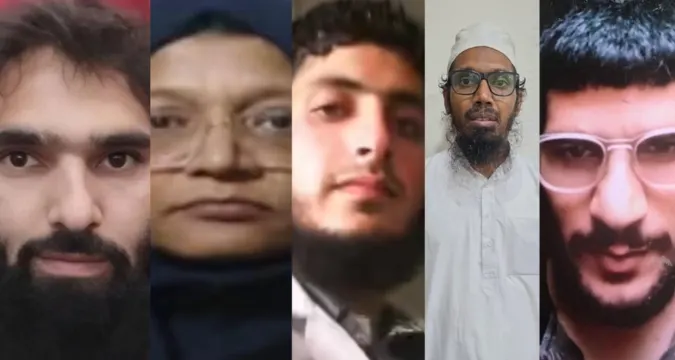
The seizure is the latest in a series of arrests linked to the Delhi blast case, which claimed several lives and raised fresh alarms over internal radicalisation and inter-state terror logistics. So far, at least nine individuals have been detained, and investigators believe the network has roots in Jammu and Kashmir, Haryana, and Uttar Pradesh.

The White-Collar Terror Module
The term “white-collar” has gained prominence because several suspects are educated individuals, teachers, medical professionals, and clerics, who used legitimate platforms to mask illicit activities. According to police sources, the group had been active for nearly a year, operating with financial and ideological links to banned outfits such as Jaish-e-Mohammed and Ansar Ghazwat-ul-Hind.
The network’s operations reflected a troubling shift from traditional forms of militancy to more urban, intellectualised, and resource-heavy models of terror planning. Unlike past attacks that relied on smuggling explosives across borders, this module relied on domestic procurement, chemical synthesis, and coded online communication.
Investigators found that the cleric’s premises contained both industrial-grade chemicals and instructional documents on handling volatile compounds. Forensic experts have confirmed that the composition matches the traces found at the Delhi blast site, strengthening the connection between the Faridabad seizure and the Red Fort explosion.
A Pattern of Evolving Terror Strategy
Security agencies see this as part of a larger pattern where terror groups seek legitimacy by embedding themselves within civilian or academic frameworks. Using university premises as operational covers not only conceals their activities but also shields them from conventional surveillance systems.
The Delhi blast, which occurred in a parked car near the Red Fort, was deliberately timed for maximum visibility. The symbolic choice of location underscores the attackers’ intent to create panic at a national landmark and challenge India’s security apparatus in its capital.

Intelligence officials have revealed that the vehicle used in the blast had changed locations multiple times before the explosion, indicating careful planning and surveillance of police patrol routes. CCTV footage recovered from the surrounding area has been crucial in retracing its movement across Connaught Place and Mayur Vihar.
The Inter-State Web of Radicalisation
The operation that led to Maulvi Ishtiyaq’s detention began in Srinagar when the Jammu and Kashmir Police discovered links between online extremist content and suspicious fund transfers to individuals in Haryana. The subsequent trail of digital evidence exposed connections that went far beyond Jammu and Kashmir.
Teams from the Anti-Terror Squad, National Investigation Agency, and multiple state police forces collaborated to map the group’s network. The cleric’s association with several young men from Mewat and western Uttar Pradesh has now become a central focus of the investigation. Authorities are probing whether these recruits were being trained in chemical handling or merely used as couriers.

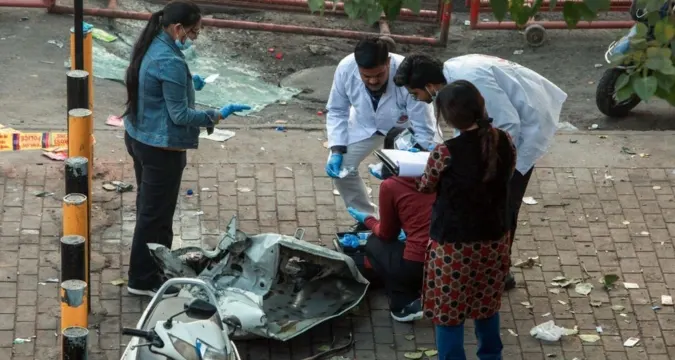
The seizure of precursor chemicals in such massive quantities has prompted fresh scrutiny of India’s supply chain monitoring mechanisms. Despite stringent rules under the Explosives Act, the black-market trade of industrial chemicals remains a persistent challenge. This loophole, experts warn, allows covert groups to assemble bomb-making kits domestically without detection.
Ideological and Cultural Implications
The presence of an educated cleric at the centre of this case highlights a deeper ideological challenge. Radicalisation is no longer confined to marginalised or remote areas; it is now penetrating urban religious and educational ecosystems. The infiltration of such ideology within legitimate institutions undermines public trust and complicates counter-terror measures.
From a cultural standpoint, this development is alarming for a society that values its educational spaces as centres of enlightenment and dialogue. Turning campuses into covert laboratories for destruction stands in direct contrast to India’s civilisational philosophy that upholds knowledge as a force for peace and progress.
The episode also raises important moral questions about the responsibilities of religious leaders in maintaining social harmony. In the Indian spiritual framework, the guru or cleric serves as a guide toward ethical living; when that role is manipulated for extremist ends, it represents a profound moral failure that damages both community trust and the sanctity of faith.
Challenges for Law Enforcement
While the arrests mark significant progress, the investigation remains incomplete. Authorities are now focused on tracking the financial and communication networks that sustained the module. There are indications that funds were routed through legitimate business fronts and online wallets, complicating the forensic audit trail.
Another key challenge lies in coordination. The operation spans several states, each governed by its own jurisdictional framework. The success of future counter-terror efforts depends on building faster, real-time intelligence-sharing systems.
The case also highlights the need for stronger surveillance of industrial chemical suppliers. Experts argue that India must introduce digital inventory tracking for bulk chemicals, much like Western countries do, to prevent unauthorized diversions.
Policy and Security Outlook
This episode may prompt the central government to tighten the Unlawful Activities (Prevention) Act provisions on chemical procurement and campus security. Universities may soon face new guidelines requiring background verification of all tenants, visiting scholars, and rented facilities within academic compounds.
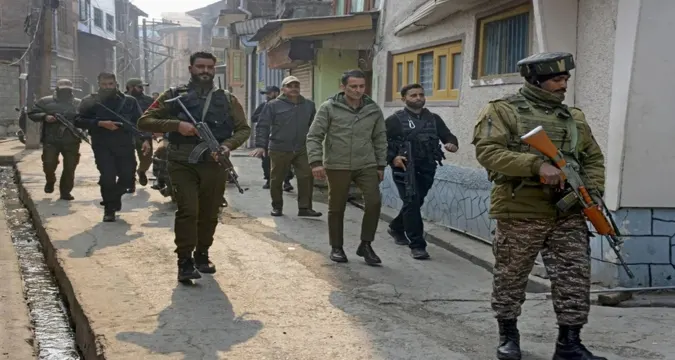
From a broader strategic lens, the case underscores the hybrid nature of modern terrorism, a convergence of ideology, technology, and legitimate cover operations. India’s counter-terror doctrine, traditionally focused on border infiltration and rural insurgency, must now adapt to confront urban, professional, and digitally-enabled threats.
The Road Ahead
More Read

The Jammu and Kashmir Police have earned commendation for unearthing the first major urban-academic terror network in recent years. Their swift coordination with Haryana and Uttar Pradesh authorities prevented a potential series of coordinated attacks. However, the road ahead is complex.
The immediate priorities include completing forensic verification, identifying external handlers, and ensuring that legal proceedings move without procedural delays. The long-term challenge lies in rebuilding institutional resilience, ensuring that educational and religious institutions remain safe spaces, not potential sanctuaries for extremist thought.
In the words of a senior security official,
“We are not just fighting bombs and guns anymore; we are fighting ideas that use intellect as camouflage.”
That statement captures the essence of India’s evolving internal security challenge, one that demands both vigilance and introspection.
Sources:
Reports and data referenced from Jagran, The Economic Times, NDTV, The Indian Express, India Today, and The Guardian, between 10 – 12 November 2025.