A New Frontier Beneath the Waves
When one speaks about the natural resources in India, mostly the discussion would be about coal, oil, or green energy; however, no hard mineral would have escaped the realization that oceans form another treasury. Where the world delights in space exploration and Mars missions, India is working on an equally big project here on earth, deep-sea mining. This little-traveled frontier holds promise of transforming the energy and economic security of the country and turning India into the center of the resource battle played out by nations all over the world.
The search for deep-sea minerals is no longer only about mining ores but also about finding supplies of important raw materials to drive the contemporary economy, including smart phones and electric cars, renewable energy networks and advanced defense systems. As the world increases its need for rare earths and strategic metals, the move into the depths of the ocean waters do not only pose opportunities but also challenges to India.
It is about India sending off a submarine to explore the unknown deep-sea beds where the future of energy and technology perhaps lies buried.
The Global Mineral Crunch
The lifeblood of any economy is natural resources and the 21st century has experienced the absolute transformation of the meaning of that which is considered critical. The industrial revolutions of old were defined by coal and oil but the minerals now in vogue are cobalt, nickel, manganese, copper and the rare earth elements.

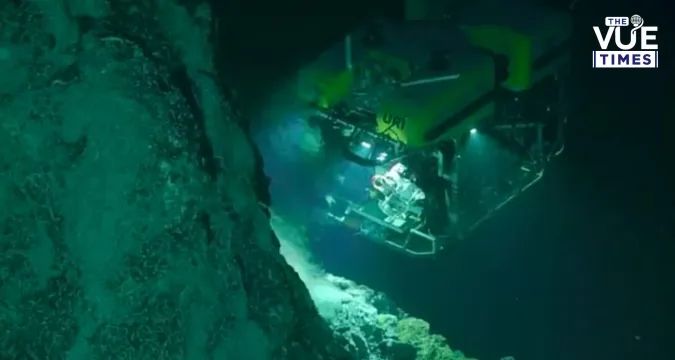
- Lithium-ion batteries in electric vehicles rely on cobalt and Nickel.
- Manganese and Copper can be critical to electronics, renewable energy storage, and infrastructure.
- Rare Earth Elements are irreplaceable in defense, satellites, semiconductors and green energy.
As China dominates close to 70% of the rare earths market, the other world is in panic to diversify supply. And enter the oceans here, the deep sea contains polymetallic nodules and hydrothermal deposits full of these resources.
India and its increasing demands of energy security and indigenous technological self sufficiency cannot afford not to take a plunge into this race.
India’s Deep Ocean Mission – A National Priority
An official announcement of the Deep Ocean Mission (DOM) was made as a flagship program by the Government of India under the Ministry of Earth Sciences (MoES) in 2021. This mission at a whopping cost of over 4000 crore is to explore and tap the ocean resources to achieve sustainable development.
Five Major Deep Ocean Mission Goals
- Polymetallic nodes mining (PMNs):
In the Central Indian Ocean Basin (CIOB), India has been given a location of 75,000 square kilometers by the International Seabed Authority (ISA). Polymetallic nodules in this single site have the potential to harbor millions of tonnes of cobalt, nickel, copper and manganese.

- Deep-Sea Mining Tech Development:
India is developing their own mining machinery that can work at 6,000 meters under crushing weight and intense darkness.
- Underwater Robotics and Submersibles:
The mission involves the creation of a manned-submersible, Matsya 6000 that will enable three humans to dive up to 6 kms down the ocean and study and explore first hand.
- Conservation and Marine Biodiversity:
Besides mining, DOI is also involved in preservation of marine life and research in the field of biodiversity, which may have some pharmaceutical uses.

- Energy security and resource independence:
The mining of deep-sea minerals is core to India in renewable energy, manufacturing of electronics goods, and defense preparedness.

Why Deep-Sea Minerals Matter for India
- Strategic Security
Over 90 percent of the cobalt and the rare earths used in India are imported, mainly through China and African countries. The risk of dependency on geopolitically sensitive suppliers is there. Deep-sea mining can enhance national security and reduce vulnerability.
- Economic Growth
An amount that only a small part of the allotted seabed nodules in India is worked upon successfully, it will contribute billions of dollars to the economy. The estimated reserves of the Central Indian Ocean Basin exceed 380 million tonnes of polymetallic nodules.
- Energy Transition
Deep-sea minerals play a critical role in the scaled-up renewable energy systems, the electric mobility, and battery storage systems as India plans to achieve its net-zero goal by 2070.
- Technological Leadership
Marine deep-sea exploration demands learn edge robotics, AI-guided navigation, and material science. These investments bring India in the league of high-tech sectors as it can be a leader in the world.
The International Competition
India is not the only hunter. A number of states are claiming their point in the race over seabed resources:
- China has aggressively invested in deep-sea mining and has already carried at least pilot extractions.
- In 2017, Japan was able to mine zinc and gold, among materials on its seabed.
- R&D of underwater resource mapping is being funded by the United States and Europe.
- The Pacific Island Nations are demanding licenses to mine, as they are in the vicinity of mineral-rich areas.
Here, it is essential that India is a member of the International Seabed Authority because the international waters are under their jurisdiction. A designated exploration license guarantees India 50/50 of the opportunities in the future mining industry.
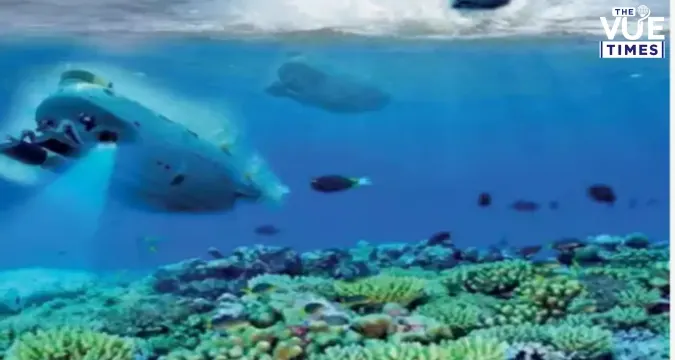
Challenges Ahead – Not All That Glitters is Gold
Deep-sea mining seems like a golden opportunity with lots to be had but it comes with lots of problems.
- Technological Hurdles
Working in depths of up to 6,000 meters implies having to deal with intense pressure, low temperatures, and the lack of sunlight. A major challenge is how to develop cost effective and durable mining systems.
- Environmental Concerns
Marine biologists caution that seabed mining may disturb the highly delicate ecosystems; much of which are yet unknown to the community of scientists. Sediment plumes, habitat destruction and the loss of biodiversity are significant risks.
- Legal and ethical issues
The matter of ownership, profit-sharing and environmental responsibility, since the seabed is believed to be the common heritage of mankind.
- Economic Viability
Mining at such depths is capital intensive. Global fluctuating prices of metals may affect the profitability of mining.
India’s Way Forward – Balancing Exploration and Conservation
In the case of India, the way forward is to aim at a sustainable deep-sea mining model. This means:
- Green Mining Technologies Investment: As with machines that only have a small impact on the ecological balance.
- Phased Exploration: It begins with mapping and pilot-scale mining followed by full-scale mining.
- International Partnership: Engaging global masters of deep-sea technology.
- Marine Conservation Policies: Protection of biodiversity in the face of resource exploitation.
- Public Awareness and Debate: Involvement of scientists, environmentalists and citizens into planning the future of ocean mining.
Breaking News Headlines: What’s Next for India’s Deep Ocean Mission
According to recent reports, India is speeding up the creation of Matsya 6000 and the trial exercises of locally made mining machines may begin as soon as in two years. India could become one of the few countries in the world that operationalize deep-sea mineral extraction were it successful.
As the International Seabed Authority is likely to make a final decision on regulation in the months to come, pilot mining in the following years may see India shift gears to actual mining. It would be the first time in history a nation plunged into the last unexplored domain of the earth.

The Ocean as India’s Next Resource Frontier
The Indian secret ocean mission is not concerned solely with minerals, but vision. Following a trend to the global shift in green energy and innovative technologies, access to critical minerals will be a determining factor of power and prosperity. What was initially perceived as unexplored until far beyond tomorrow, and looked upon as a place of lawless wilderness, the deep ocean can now emerge as the next resource warfare frontier.
This is a time of opportunity, and a time of responsibility: to India. When wisely used, exploiting the depths of the sea may give the country its technological future, develop the economy, and lock its name into the list of the world resources competition members. However, when done in a fit of haste, it can potentially cause permanent destruction of marine ecosystems.
The search for deep-sea minerals reminds us that the next revolution in 3D might not be in the heavens up but in the depth of the sea. And India is ready to make the headline of that venture into the dark.