

Introduction: When High Fashion Forgets Its Roots
Milan Fashion Week has been an epitome of creativity for a long time now. The best fashion designers of the whole world meet here to present their seasonal collections and that which is currently considered to be the best avant-gard can be unveiled on these very ramps. But, under the tinsel, there exists an understated reality of recent years whereby the elements of Indian culture are being increasingly used by European fashion houses with no given credit, collaboration or even without any recognition.
Flowing stoles that resemble dupatta, mirror embroidered resembling Kutch work of Gujarat, lovely embellishments stuck on their foreheads resembling the traditional bindi, and sandals that show resemblance to chappals of Kolhapur, all these motifs and attires are extremely embedded in the Indian tradition. Their inclusion and absence in silence in the rows of Western runways with nothing to refer to or guide allude to appropriation rather than celebration. Centuries of heritage and traditional rural artisanship have been reduced into a rebranding of the idea as bohemian chic or heritage minimalism in the west.
This article explores how fashion’s elite have borrowed from Indian culture while erasing the very identities that created these legacies. At a time when the power of a culture is supported by the construction of stories, failing to recognize the origin of a piece of design is not an oversight, but a form of erasure
1: Visual Evidence of Indian Inspirations at Milan Fashion Week
Etro, an Italian luxury fashion company, presented models draped in loosely fitted pieces of softly draped silky stoles at the Milan Fashion Week Spring/Summer 2023 that strongly resembled the Indian dupatta. These clothes were introduced as new fashion articles, with no trace of related to its cultural heritage.
However, the dupatta is not a mere piece of cloth, but a stratified meaning. The Indian society has used it to show respect, womanhood, and class. In the past dupattas were dyed using natural colours and were embroidered using family symbols or signature motifs, and were a part of wedding wear or holy garments.
“It is difficult to miss the connection if you’ve grown up seeing your grandmother drape a dupatta over her saree or salwar kameez,” says Professor Mitali Desai of NIFT Mumbai. “Designers know where this inspiration comes from, but acknowledgment is inconvenient.”
Kolhapuri Chappals as “Heritage Leather Sandals”
A collection of minimalist leather sandals was on display in Fall/Winter 2022. Fashion journalists dubbed them “rustic Italian footwear with an ancient soul.” But to the Indian eye, this was certainly Kolhapuri chappals and an artisan product of Maharashtra.
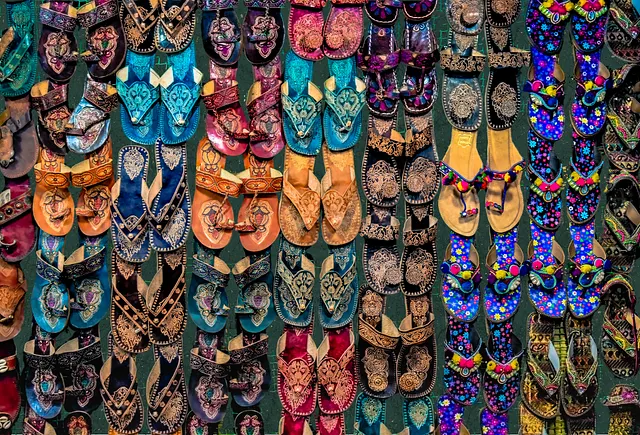
These handcrafted leather sandals, made using vegetable-tanned leather, date back over 800 years and are now protected under India’s Geographical Indications (GI) Act. The numbers of artisans working in their production are almost 1.5 lakh.
None of this, however, appeared in the designer notes or runway briefs. According to Tanushree Pawar, a shoemaker at Kolhapur, the tradition became their trend. They stole our name and made it a foreign one.
Bindi-Inspired Embellishments
Fake forehead jewels on European catwalks are not unprecedented. Dolce & Gabbana’s 2021 collection featured ornate jewels placed at the center of models’ foreheads, an element they referred to as “spiritual adornment.” No references were made to the bindi, a sign that has been incorporated to Hindu philosophy and spirituality alongside feminine power.
The bindi has passed through many ages; it began as a religious representation in Vedic era and now is being used as a fashion statement. However, when taken out of the historical and social context, it may be regarded as little more than a piece of decoration.
2: Why Cultural Context Matters
Through globalization, cultures have been able to interrelate and affect each other. Fusion, trade, and inspiration are not necessarily the issue. Yet, in certain occasions when these borrowings are one-sided in the sense that global fashion enjoys the esthetic value of Indian designs without in any way recognizing their source it becomes the issue of appropriation.
There is no cultural appreciation without dialogue, credit and collaboration. Culture appropriation lives in extraction and hush hush.
This is particularly worrisome when we take into consideration the massive power and representation disparity. Their artisans in Bhuj or Kolhapur are never invited to Milan. They never put their names in the press releases or designer diaries. Us? Our undertaking circles the world, and us it conveys not.
3: India’s Forgotten Artisans
The Indian textile industry and the craft industry are by far the largest in the world. Invest India states:
- The industry makes up 2.3 percent of the GDP of India.
- It has direct employment of more than 45 million people.
- It is also the second-biggest textile exporter in the world.
Still, these contributions are not as well-known as Indian artisans. Indian suppliers frequently are hired by the western fashion companies as middlemen, serving as the source of embroidery, mirror work or even fabrics without direct contacts or equal reward.
According to a report by the Crafts Council of India (2024), fewer than 5 percent of the artisans participating in international supply chains get recognition at the brand level.
4: When the Internet Calls It Out
With the power of social media, cultural appropriation has come to light. On Instagram, Threads, and X (previously known as Twitter), fashion watchdog accounts have reported this oversight several times, showing that Indian culture is pirated.
Viral Examples:
The look was put next to a Gujarati wedding outfit side-by-side and went viral under the hashtag #DupattaNotStole.
The use of mirror-work in a crop top that the supermodel Bella Hadid was seen wearing in 2024 is a popular Italian brand that is highly similar to Kutchi embroidery, as dismantled in an @brownvogueindia post.
Such online discussions have brought about more enlightenment to the young Indians, who are demanding change and responsible sourcing in the fashion industry.
5: Legal and Structural Loopholes
India has a good Geographical Indications (GI) system, but its enforcement at international level is poor. The World Intellectual Property Organization (WIPO) at the moment does not require attribution of traditional knowledge, unless explicitly registered and defended on an international basis.
As a result, designs such as Ajrakh, Bandhani, Chikankari and Madhubani are sometimes appropriated overseas with no compensations or attributions made to its original authors.
There are demands to:
- Create a legal defense indigenous arts grant.
- Publish restrictions on the intellectual property with the free trade agreements.
- Set up international pattern registries of designs on fabrics.
6: Indian Designers Taking the Power Back
Everything is not bleak. A new breed of Indian designers is in revolt against this process. Designers such as Rahul Mishra, Gaurav Gupta and Aneeth Arora are repossessing the language of design in India on the international market stage.
In 2024, Paris Haute Couture Week showcased the work of Rahul Mishra who was not only praised in advance of his show through craftsmanship but also named artisans in each lookbook and press release.
Other labels such as Raw Mango and Fabindia are establishing direct-to-customer connections between the artisans and international customers, and are demonstrating that ethical fashion can not only be viable but lucrative.
More Read

What the World Must Remember
Indian culture is not a fad. It is a breathing, living continuum of identity, recollection and proficiency. When Milan or Paris is taking over it, they are appropriating centuries of work and even generations of lived life.
It is not wrong to wear a dupatta inspired stole or heritage sandal. When you put it on and people don’t notice, you render the story of the needle obsolete. The ability to be heard is power in an age where being seen is the least expected of the international fashion fraternity.
The fashion capitals of the world are ready to go beyond aesthetic mining to fair collaboration. True style is not only what is good to look at-it honors its place of origin.
Be Fair Fashion Ask Questions. Choose brands who can name their craftsmen. And because all our heritage belongs to all of us-but first of all there must be respect.