

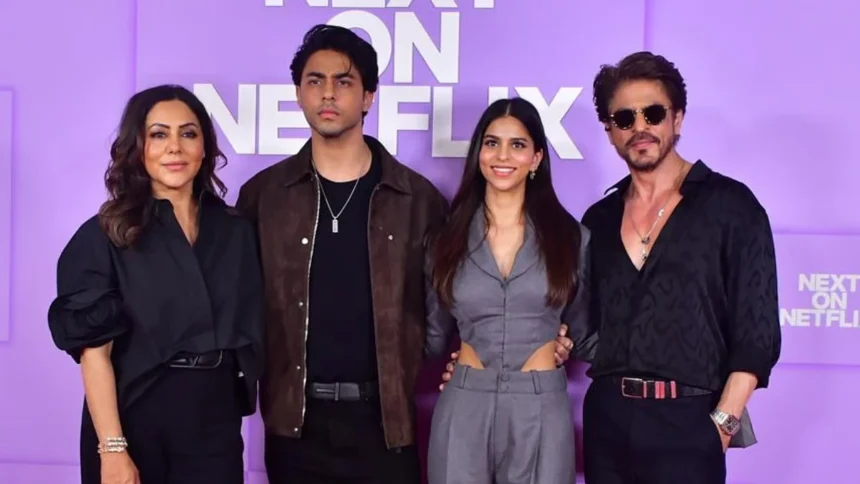
When you speak about fatherhood in the life of Bollywood’s beloved superstar, only one name immediately comes to mind: Shah Rukh Khan. Often hailed as the “Badshah” of Indian cinema, Khan also plays the role of a father to three children — Aryan, Suhana and AbRam — with a brand of parenting that seems almost paradoxical given his larger-than-life persona. Instead of dictating rules, he leans into silence; rather than giving advice, he allows room. In this long-form piece, we explore how Shahrukh’s approach to parenting has evolved, why he chooses gentleness and space over lecturing, and how that choice resonates—particularly in the Indian context of family, fame, and generational shifts.
1. From Modest Beginnings to Superstar Daddy
Shahrukh’s own childhood and ascent into Bollywood shape his parenting in ways often overlooked. Losing his father as a teenager and his mother while establishing his career, he tasted both loss and longing early. In one interview he stated his mother would have said “my parents will be proud of how I have raised my children” if they were alive today.
Given this background, his parenting isn’t about controlling everything or replicating his success for his kids. Instead, it’s about giving space, modelling humility, and being present.
Shahrukh has often emphasised that despite his fame, his home life remains “simple”. At the Locarno Film Festival he remarked, “We have a very normal family life. The family is simple, the kids are simple; like a father, I spend a lot of time with them.” The fact that someone of his magnitude uses the word “normal” when describing his family says a lot.
2. Why “Silence” Instead of Advice?
It may sound counterintuitive: a father choosing not to give advice. But for Shahrukh, there’s reason behind this un-parental style.
A. He believes their worlds are different
In a candid interview, he said:
“I don’t think I’m anyone to advise, because all our circumstances, our situations and things that happen to us as an actor — especially in the Indian film industry — are very unique. … I do find myself having less knowledge than my children about the way the world now perceives art or entertainment.”
In other words: he recognises the terrain his children are navigating—film, social media, global culture—is not the same terrain he walked. To give them the same map, he feels, would be misleading.
B. He learns from them, too
In the same spirit he’s said that his children have seen his frailties, his real life beyond the screen:
“They’ve seen my sad days, my failed projects… because they’ve seen my frailties, they seem to be more in control of life.”
A father who admits he learns from his kids flips the usual dynamic. That humility creates a space where advice isn’t forced; the relationship is more collaborative.
C. He values their autonomy
Shahrukh said of his daughter Suhana’s acting rehearsals:
“When she comes to me asking to rehearse, I do. But I don’t tell her how to deliver the dialogue because I think her expression may be more relevant to how people like it now.”
By stepping back, he allows his children to express themselves rather than simply replicate his style. The message is: you have your own voice, your own route.
3. How this Parenting Plays Out at Home
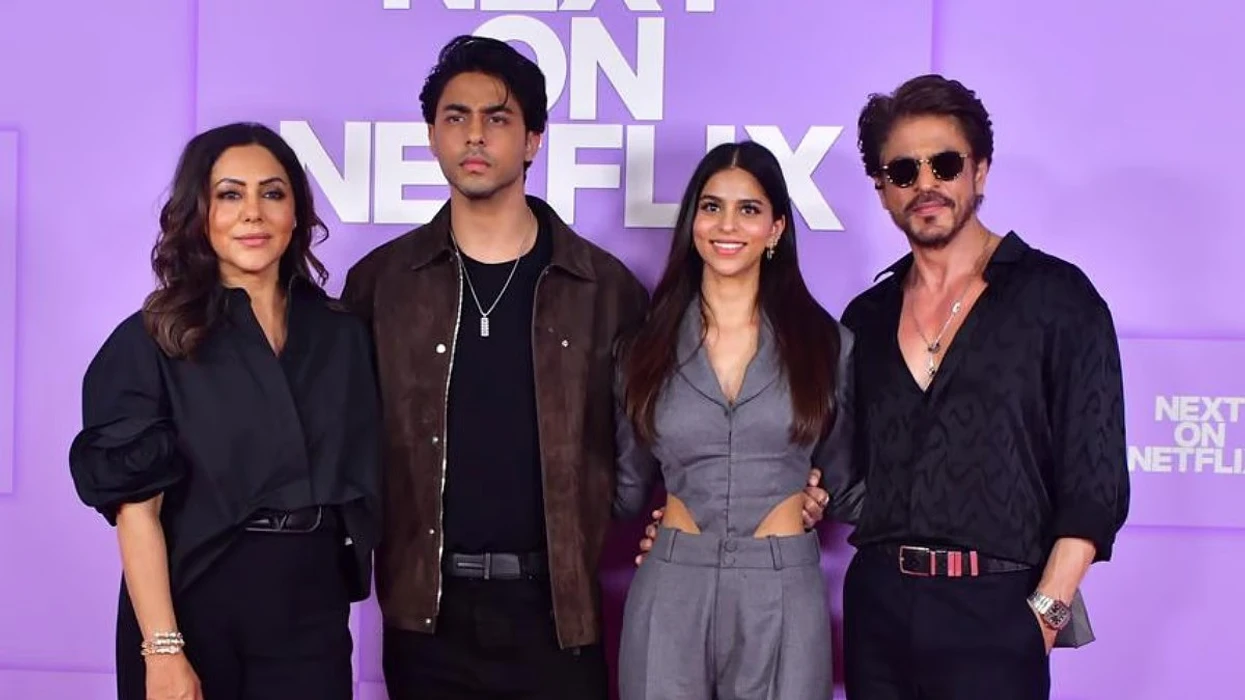
What does all this mean in day-to-day life? Shahrukh has given glimpses of the warmth, humour and space in his household.
For example, speaking of his toy-time with younger son AbRam, he said:
“I lost my dad when I was 14 or 15… I play with my kids’ toys now. I’m just a father who didn’t have toys.”
And then the sitcom style interactions:
On his Instagram, he related how Aryan once told him: “Papa, you know you’re not making it tough.” SRK replied: “Son, you turned out to be quite tough yourself.”
These anecdotes reflect three qualities: presence, humility and a touch of self-deprecating humour.
He also acknowledges the challenge of patience in parenting:
“Your patience is directly proportional… to the number of kids you have.”
Parenting three kids in the glare of cameras and expectation demands patience, and he admits so.
4. What About “Advice”? – The Fine Print
It’s not that Shahrukh gives zero advice—but he gives minimal rigid prescriptions. Instead, he emphasises values, presence and example.
Values
One recurring message: “I want them to be humble about the privileges they have because of me becoming a star. I want them to understand that they have to come out of the shadow, both positive and negative, of being a star’s child.”
Rather than specifics like “do this, don’t do that”, he chooses broader principles: humility, sense of value, groundedness.
Example
His own story of trying really hard, failing sometimes, and still moving forward becomes the living lesson. His kids see him work, see him fall, see his flaws. From this, they pick up resilience without a lecture.
Minimal direct career dictation
Despite being a heavyweight in cinema, he said:
“If they ever come to me… they need to chart their own journey. I’m not telling them what to do.”
That is meaningful especially in an industry where star-kids often feel the weight of expectation and father’s shadow.
5. Why It Works (And Why It Matters)
In the Indian cultural context where parenting can often mean firm rules, close supervision and sometimes directive guidance, Shahrukh’s approach stands out. Here’s why it’s effective and important:
A. It acknowledges change
The world Aryan and Suhana live in is vastly different: globalised, digital, more connected. Recognising that without trying to retrofit old strategies is a sign of adaptability.
B. It respects autonomy
When children feel trusted, they often step up. Knowing their father believes in their uniqueness gives them confidence.
C. Models humility
In an industry where privilege is visible, saying “Be humble about your privileges” is radical. It teaches gratitude over entitlement.
D. Builds authentic relationships
When a father doesn’t constantly lecture but simply is there, the relationship shifts from authority-figure to bond. And that bond opens doors to mentorship that is not forced but natural.
6. A Rubber-Meets-Road Example: Aryan & Suhana

Let’s look at how the children’s paths reflect their father’s philosophy:
-
Aryan Khan: Although he comes from one of Bollywood’s biggest families, Shahrukh mentions that he didn’t push Aryan to become an actor. When asked about advice, SRK resisted: “our circumstances are unique… it won’t be exactly the way it was for me.” Aryan himself remarked he had to carve his own path.
-
Suhana Khan: She’s making strides in acting, often rehearsing with her father—but SRK won’t dictate how she should act. He trusts her perspective.
In both cases, the absence of forced guidance has perhaps allowed them to internally motivate themselves.
7. Where There’s Tension—and How He Handles It
Of course, no parenting approach is flawless, and tension exists.
One of the more delicate spaces is shielding his children from the pressure of being “star kids”. Many applaud how grounded they are. Filmmaker Karan Johar noted their humility, crediting SRK and Gauri for upbringing rooted in their humble beginnings.
Another space is boundaries. Even a liberal approach needs structure. He talks about discipline with a hint of humour:
“I have never scolded my kids ever… I tell them ‘You have to sleep by 10:00 pm – Mumma has said it’.”
So yes, discipline exists—but light-heartedly and humanely.
It’s also worth noting that fans and media often expect grand insights—“What’s his secret?” But SRK’s answer is simple: presence, humility, trust and space.

8. Lessons for All Parents (Star or Otherwise)
Even if you’re not raising children in a high-flying Bollywood family, there are take-aways:
-
Your children’s world changes fast. What worked for you may not for them.
-
Allow autonomy, when safe—trust builds muscle.
-
Model the values you cherish rather than preaching.
-
Be present more than you are perfect—children remember you showing up.
-
Humility and gratitude are powerful anchors, especially where privilege exists.
-
Include humour and warmth—discipline isn’t always heavy. Laughter matters.
-
Silence is sometimes better than advice—listening says “I value your voice”.
9. The Indian Cultural Context – Why It’s Especially Relevant
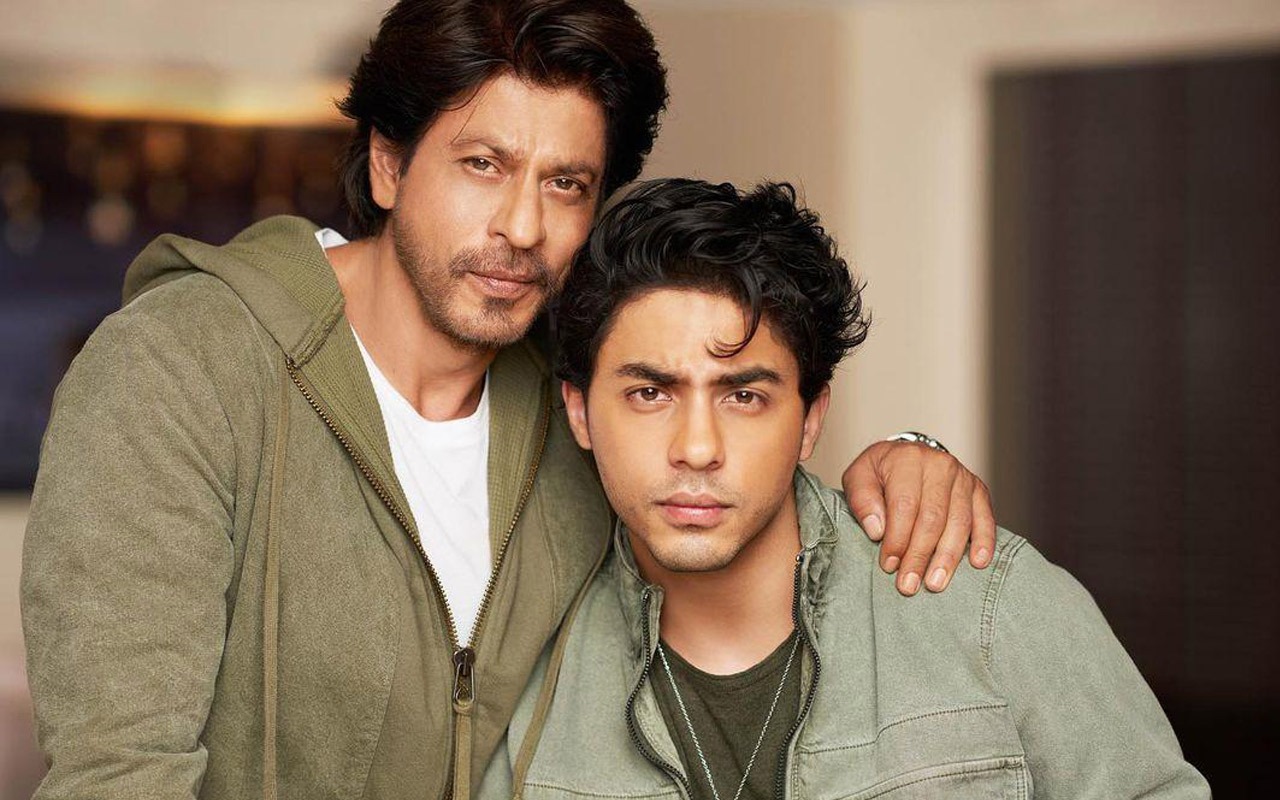
In India, parenting often comes with high expectations, clash of generations, fixed roles and rigid rules. Shahrukh’s style offers an alternative:
-
The Indian father who doesn’t lecture but listens.
-
The star father who isn’t detached but relates.
-
The celebrity parent who emphasises humility over fame.
In a country where success stories are common but sustainable parenting models less so, this approach is a refreshing narrative.
10. Final Reflection
Shahrukh Khan’s journey as a father is far from conventional—or maybe that’s the beauty of it: unconventional in the realm of Bollywood stereotypes, but deeply human in its humility. He doesn’t claim to have all the answers. He doesn’t bulldoze his children with “this is how you do it”. Instead, he steps back, offers presence, invites dialogue, models values.
In giving them space, he gives them wings. In foregoing strict advice, he shows trust. And in his quiet way, he shows that parenting is less about teaching and more about growing—together.
At the end of the day, whether Aryan carves a new path behind the camera, or Suhana takes the on-screen route, or AbRam chooses something entirely different—they carry with them something that no amount of advice can substitute: a father who believed their journey would be their own. And maybe in that belief lies the real strength of his parenting.