In everyday news, political discussions, and legal reporting, words like Bill, Act, Ordinance, and Amendment appear frequently. They are often spoken in the same breath, sometimes even treated as if they mean the same thing. In reality, each term represents a distinct stage or method in the life of a law.
When a government announces a new reform, headlines may say a Bill has been introduced, or that an Act has come into force, or that an Ordinance has been issued. Later, the same law may be amended. Without understanding what these terms actually mean, it becomes difficult to follow how decisions are made or why certain legal steps matter.
This article explains these concepts in a simple and structured manner, using clear language and real-life examples to show how laws in India are proposed, enforced, temporarily applied, and later refined.
Difference Between Bill, Act, Ordinance, And Amendment

| Term | Nature | Authority | Duration |
| Bill | Proposal | Legislature | Until passed |
| Act | Law | Legislature + President | Permanent |
| Ordinance | Temporary law | Executive | Temporary |
| Amendment | Modification | Legislature | Permanent |
How a Law Begins: The Idea Behind a Bill
Every law starts with an idea. It may arise from a social issue, an economic challenge, a court judgment, or a public demand. Once the government decides that a legal solution is required, the idea is converted into a Bill.
A Bill is a formal proposal placed before a legislature for discussion. At this stage, it is not a rule, not an order, and not binding on anyone. It is simply a written draft suggesting what the law should be.
For example, if the government believes that existing data protection rules are outdated, it may draft a Bill proposing a new legal framework. Until this proposal is debated and approved, nothing changes on the ground.
What a Bill Really Represents
A Bill represents intention, not authority. It signals what the government or a legislator wants to do, but not what has already been done.

This is why Bills are often revised, delayed, or even withdrawn. Public feedback, parliamentary debates, and expert opinions can significantly alter the original draft.
In daily life, a Bill is similar to a proposal in a housing society meeting. The proposal may be discussed, modified, or rejected altogether. Only after members vote in favour does it become binding.
Different Kinds of Bills and Why They Exist
Not all Bills are alike. Different subjects require different procedures, which is why the Constitution recognises multiple categories.

Ordinary Bills in Daily Governance
Ordinary Bills deal with general matters such as education reforms, criminal laws, digital regulation, or environmental protection. These are the Bills that most often appear in news reports.
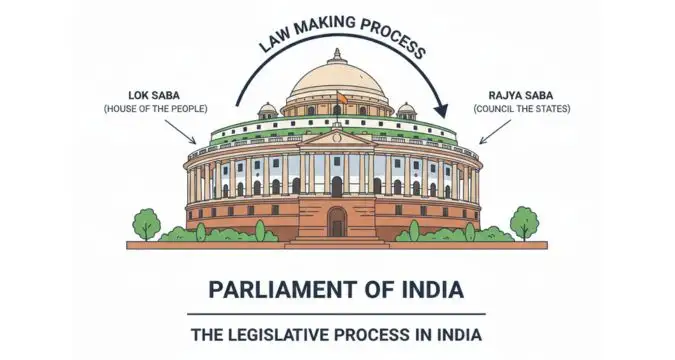
For instance, if the government proposes changes in labour laws or updates rules related to online platforms, it usually does so through an Ordinary Bill. Such Bills are debated in both Houses of Parliament, allowing multiple perspectives to be heard.
Money Bills and Public Finance
Money Bills are limited to financial matters such as taxes, government spending, and public funds. Because these issues directly affect citizens’ money, the Constitution gives primary control to the Lok Sabha.
When the Union Budget is presented, the financial proposals that follow are based on Money Bills. While the Rajya Sabha can discuss them, it cannot block their passage.
Constitutional Amendment Bills and Long-Term Change
Some proposals go beyond ordinary law and seek to change the Constitution itself. These are introduced as Constitutional Amendment Bills.
For example, when voting age was reduced or when new constitutional bodies were created, these changes required constitutional amendments. Such Bills are treated with greater seriousness because they alter the country’s foundational framework.
From Bill to Act: When the Law Becomes Real
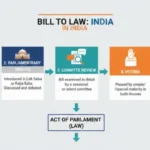
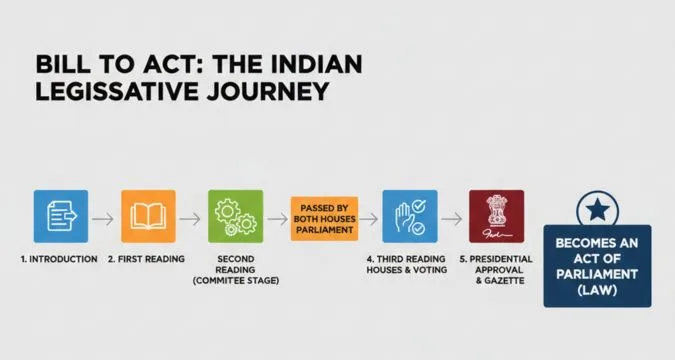
Once a Bill is debated, voted upon, and approved by the legislature, it is sent to the President for assent. After the President signs it, the Bill becomes an Act.
An Act is a completed law. It has legal force and can be enforced by courts and authorities.
At this point, the proposal stops being a matter of debate and becomes a matter of compliance.
What Changes When a Bill Becomes an Act
The transition from Bill to Act is more than symbolic. It marks the moment when:
- Rights and duties are legally defined
- Government agencies gain authority to act
- Courts can interpret and enforce provisions
For example, when a consumer protection Bill becomes an Act, consumers gain enforceable rights, and businesses become legally bound to follow new rules.
Acts in Everyday Life
Many aspects of daily life are governed by Acts passed years or even decades ago. Laws related to contracts, marriage, employment, taxation, and education are all contained in Acts.
People often follow these laws without realising that each one began as a Bill debated in Parliament.
Ordinance: Lawmaking in Urgent Situations
Sometimes, waiting for Parliament to meet is not practical. Emergencies, economic crises, or unforeseen situations may require immediate legal action. In such cases, the Constitution allows the executive to issue an Ordinance.
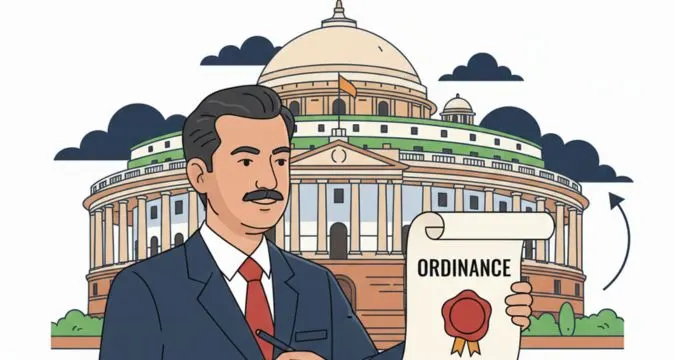
An Ordinance is a temporary law issued by the President or a Governor when the legislature is not in session.
Understanding Ordinances Through Real Situations
Imagine a sudden financial crisis where immediate legal backing is needed to regulate banks or protect depositors. If Parliament is not in session, the government cannot wait weeks or months to pass a Bill. An ordinance allows temporary action until the legislature can debate the issue.
Similarly, during public health emergencies, ordinances have been used to quickly introduce legal measures when delays could cause harm.
Temporary Nature of Ordinances
Although an ordinance has the same effect as an Act, it is not permanent. Once the legislature reconvenes, the ordinance must be presented and approved within a limited time.
If it is not approved, it automatically lapses. This ensures that temporary executive action eventually faces democratic scrutiny.
Concerns About Overuse of Ordinances
When ordinances are used too frequently, questions arise about bypassing legislative debate. Critics argue that repeated ordinances weaken the role of Parliament.
Courts have emphasised that ordinance-making should remain an exception, not a routine method of governance.
Amendment: Changing Laws Without Replacing Them
Laws are not static. Social values change, technology evolves, and new challenges emerge. Instead of replacing entire laws, legislatures often introduce Amendments.
An amendment modifies specific provisions of an existing law while keeping its basic structure intact.
Amendments in Practical Terms
If a law regulating digital transactions was written before smartphones became common, it may not address modern realities. Instead of drafting an entirely new law, Parliament may amend certain sections to include newer forms of technology.
This approach ensures continuity while allowing flexibility.
Constitutional Amendments and Stability
Amending the Constitution is more complex than amending ordinary laws. Special procedures exist to prevent frequent or impulsive changes.
This ensures that while the Constitution can evolve, its core principles remain stable.
How These Four Work Together
The Indian legal system relies on a balance:
- Bills allow ideas to be tested and debated
- Acts provide certainty and enforceability
- Ordinances ensure continuity during emergencies
- Amendments allow laws to evolve with time
None of these instruments work in isolation. Together, they create a system that is democratic, adaptable, and functional.
Common Misunderstandings in Public Discourse
Many people assume that once a Bill is introduced, the law has already changed. Others believe ordinances are permanent executive orders or that amendments create entirely new laws or policies.
Such misunderstandings often lead to misplaced criticism or confusion when policies are announced.
Why Clarity Matters
Understanding these terms empowers citizens to:
- Read news more critically
- Understand government decisions better
- Distinguish between proposals and enforceable laws
Clarity in legal terminology strengthens public discourse and democratic awareness.
More Read

Conclusion
A Bill proposes what the law could be.
An Act confirms what the law is.
An Ordinance temporarily applies the law when urgency demands it.
An Amendment updates the law to reflect change.
Together, these instruments shape how ideas become rules and how rules adapt over time in India’s democratic system.
Frequently Asked Questions
1. What is the difference between a Bill and an Act in India?
The difference between a Bill and an Act lies in their legal status. A Bill is a proposal for a new law or a change to an existing law and has no legal force. Once the Bill is passed by the legislature and receives the President’s assent, it becomes an Act, which is legally enforceable across India or within a specific state.
2. Is an Ordinance the same as a law passed by Parliament?
An Ordinance has the same legal effect as a law passed by Parliament, but it is temporary. It is issued by the President or Governor when the legislature is not in session and urgent action is required. Unlike an Act, an ordinance must be approved by the legislature within a limited time or it will lapse automatically.
3. Why does the government issue an Ordinance instead of introducing a Bill?
The government issues an Ordinance only when immediate legal action is necessary and Parliament or the State Legislature is not in session. A Bill requires debate and voting, which takes time. Ordinances are meant to address urgent situations and are not intended to replace the normal legislative process.
4. What is an Amendment and how is it different from a new law?
An Amendment modifies an existing law or the Constitution by adding, removing, or changing specific provisions. It does not create an entirely new legal framework. A new law, on the other hand, is introduced through a fresh Bill that becomes an Act after legislative approval.
5. Can an Act or Amendment be challenged in court?
Yes. An Act or Amendment can be challenged in court if it is believed to violate constitutional provisions or fundamental rights. Courts have the power of judicial review to ensure that laws and amendments remain within constitutional limits.