

The Incident That Sparked a National Conversation
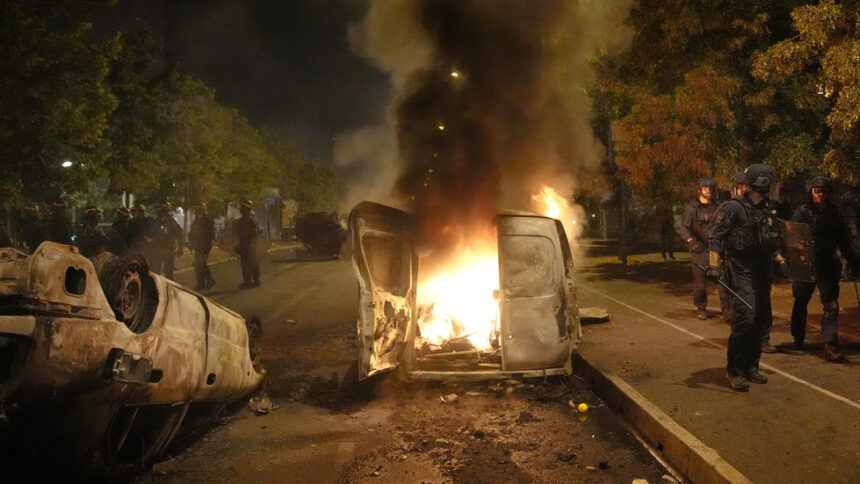
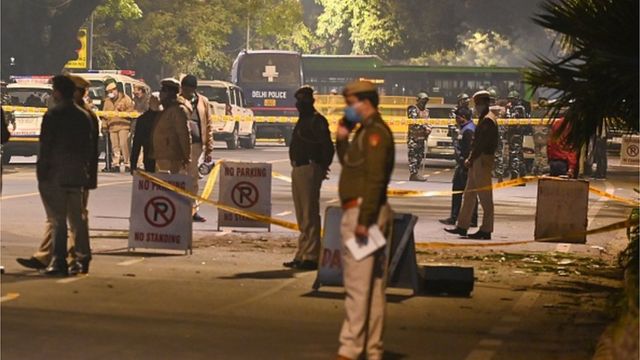
On the morning of 12 January 2025, a vehicle—believed by investigators to be a modified SUV—blasted in the congested lanes of Raj Ghat Road in Delhi. The explosion tore a hole in the car’s front grill, sending a spray of metal and glass into the air. Five people, all employees of a local logistics firm that had recently started using the vehicle for freight, were injured; one, a 28‑year‑old truck driver named Rahul Jain, succumbed to his injuries in the emergency ward of Ravindra Pratap Hospital. No police officer was present, as the blast occurred outside a busy intersection, and the city’s traffic police had to evacuate the crowd before the emergency Response teams could reach the scene.
The blast’s modus operandi—a vehicle loaded with a large, improvised explosive device (IED) and detonated at a traffic‑heavy junction—mirrored tactics employed in several terror attacks in the past decade. The device’s construction, according to the Delhi Police’s initial forensic assessment, involved a substantial amount of TNT‑like high explosive, carefully encapsulated in a steel container and activated by a remote‑controlled detonator.
Within hours, the Delhi Police’s Anti‑Terrorism Squad (ATS) was on the scene. Witnesses described a “short, bright flash followed by a violent boom,” and some claimed to have seen a suspicious individual in a black hoodie linger near the vehicle moments before the blast. The police, meanwhile, began canvassing the area for any surviving perpetrators or accomplices.
The Al‑Falah University Connection
Shortly after the blast, the Enforcement Directorate (ED) announced a raid on Al‑Falah University (AFU), an accredited private institution located in the early‑2000s‑built campus of Shahdara, just outside the city’s periphery. AFU’s reputation as a research hub for electrical engineering and computer science made the choice of target puzzling at first glance.
However, the ED’s press release stated that “preliminary intelligence suggests a link between the perpetrators involved in the Raj Ghat blast and individuals associated with Al‑Falah University.” The university, known for its robust student body—over 8,000 students—and an attached Al‑Falah Research Centre (ARC), had been flagged earlier this year for alleged financial irregularities involving the transfer of large sums into offshore accounts.
The ED’s Director, Mr. Rakesh Sharma, said in a televised briefing, *“We are looking into whether the blast was financed through channels that utilize academic institutions as a front. The presence of suspicious financial transactions tied to Al‑Falah’s accounts is a serious red flag.”* Back‑to‑back raids were conducted at two satellite offices of AFU’s Student Management System (SMS) as well, hinting at a deeper investigation into the university’s digital and financial infrastructure.

Who is Being Investigated? Key Links and Allegations
The ED’s probe has identified three primary suspects tied to the blast:
Each suspect is being interrogated under Section 112 of the Indian Penal Code (IPC)—*“Crimes against the State”*—and Section 120-B of the IPC—*“Conspiracy to commit offenses”*. The ED is also scrutinizing “unusual financial flows” involving the Al‑Falah Research Centre (ARC), which, according to whistleblower reports, had received ₹1.2 crore in unaccounted funds from a UAE-based corporation flagged as a terror financing front.
A secret memorandum—released to the press by a whistleblower from the University’s Accounts Department—revealed a transaction on 24 November 2024, where ₹87 lakh was transferred from AFU’s primary account to a shell company named “Epsilon Ventures” in the UAE. The money was earmarked for a “research project on high‑power batteries.” The ED’s data scientists, using a machine‑learning algorithm for money‑laundering detection, flagged this transfer as “highly suspicious” due to its timing (the funds were moved two weeks before the blast) and the lack of a clear invoice or project documentation.
The Raid — A Closer Look
The raid commenced at 02:30 IST on 6 February 2025, just after midnight, as per standard protocol for sensitive anti‑terror operations. Armed officers, under the command of Inspector General (IG) S. K. Prasad, entered the campus through the North Gate, bypassing the main security checkpoint with a 61‑meter long warrant in hand.
Inside the ARC building, they seized:
- Laptop computers loaded with encrypted logs showing email exchanges between the suspect professors and a UAE-based NGO.
2. Security footage from the building’s CCTV system, revealing a men’s van parked outside the campus on 30 January, a day before the blast.
3. Physical documents—a handwritten contract in a language resembling Urdu—detailing the “research project” that matched the suspicious fund transfer.
4. Chemical residues from a laboratory, later identified as TNT precursors such as *ammonium nitrate* and *nitric acid*.
5. Personal belongings of the suspects, including a black hoodie allegedly “matching the description provided by witnesses.”
The ED’s forensic team collected over 200 samples—from paper to plastic—stored them in Temperature Controlled Specimens containers, and sent them to the Central Bureau of Investigation (CBI) for cross‑verification.
The raid also lasted for six hours and involved a battle of wills. At one point, the officers had to bypass a locked professor’s office that had been sealed with a high‑security lock. “It took us almost 45 minutes to unlock the office using a combination of a magnetic lock cutter and a key-hammering technique,” recounted IG Prasad in his After‑Action Report.
Immediate Consequences for Al‑Falah University
The raid caused an immediate shutdown of the Al‑Falah Research Centre. Students were evacuating the campus, while faculty members were gathered in the Lecture Hall C for a brief press briefing by the University’s Vice‑Chancellor (VC), Dr. Renu Sharma. Her spokesperson, Ms. Priyam Patel, released a statement:
> “We are cooperating fully with the authorities. There’s no justification for these allegations. Our institute has always upheld the highest ethical standards.”
However, a student-led protest erupted in the campus’s Central Plaza. Students demanded the release of the arrested faculty and threatened to suspend studies until a truthful, transparent investigation was completed. Several faculty members, including Professor Abdul Rehman, were taken into custodial interrogation. They were told that the charges of “Sedition” under Section 124 of the IPC were being considered after corroboration of documents.
The Delhi Higher Education Authority announced, on 8 February 2025, that it would temporarily suspend the accreditation of AFU pending the investigation. “The safety and integrity of our academic institutions are paramount. We will not tolerate any form of terror financing,” the Authority’s Director, Ms. Manisha Joshi, said.
The Wider Context — Terror Financing in India
In recent years, the Indian government has been cracking down on terror financing networks operating under the guise of charitable or academic institutions. The Anti‑Money Laundering (AML) Act of 2023 has empowered the Financial Intelligence Unit (FIU) to declare “terrorist financing” as a separate category, distinct from “money laundering.”
The Delhi Car blast case is the latest addition to a series of incidents that include the 2017 JIND blast and the 2018 Gujarat Vehicle Bombing. Each time, the perpetrators were found to have used academic or humanitarian fronts—a strategy that allows legitimate financial flows to mask illicit transactions.
The ED’s Director, Rakesh Sharma, boldly stated in a press conference on 10 February that *“this is not an isolated case, but part of a broader strategy to exploit academia’s global networks for illicit financing.”* He further added that the CISG (Commonwealth International Security Group) had been collaborating with the International Monetary Fund (IMF) to trace the money trail.
A Court’s Verdict: The Legal Battle Begins
The case’s legal trajectory has already started manifesting on the court floor. Arrested individuals filed Bail applications in the Delhi High Court. The court, under Justice Anil Srivastava, issued a bail hearing on 12 February.
*Justice Srivastava*, during the hearing, grilled the ED’s respondent, Mr. Sharma, for alleged “lack of clarity in the charges”. He also asked the prosecution to present clear, evidential links between the suspects and the blast. The defense, led by Senior Counsel, Mr. Suresh Menon, highlighted the lack of direct evidence—e.g., a solid chain of custody linking the seized device to the suspect’s lab.
On 15 February, the High Court denied bail to Mohan “Moe” Reddy, citing *“the severity of the offense and the risk of tampering with evidence.”* The court also permitted the ED to conduct a forensic audit of the Al‑Falah University’s financial records.
In a landmark ruling on 22 February, the court also ordered the Delhi Police to expedite the transfer of all documents related to the blast to the CPI (Commissioner for Investigations) for a centralized inquiry.
The Human Element: Victims and Families
While the political and legal angles often dominate headlines, the personal toll remains a silent, haunting undertone. Rahul Jain’s family, an ordinary Rajasthan farmer’s son, has been vocal about the lack of timely response from authorities. “We got a call from the emergency team only after we had already walked 2 km to the police station,” the father, Suresh Jain, recounted in an emotional interview with *The Tribune*.
The Delhi Car blast has also affected the public’s trust in the city’s traffic management system. Jagriti Sinha, a resident of Dwarka, expressed her grief: “I was out on a lunch break when the blast happened. It made me think that no one is safe, even in a city that’s supposed to be a beacon of progress.”
In a press release on 28 February, the Delhi Government announced ₹10 crore as a compensation package for the families of the injured and the deceased. The announcement, though a step in the right direction, was criticized by NGOs for not accounting for long‑term rehabilitation costs.
Global Implications — India’s Role in the International Fight Against Terror
India’s active participation in international counter‑terrorism forums—such as the United Nations Global Counter‑Terrorism Strategy—has been spotlighted by the Delhi Car blast. UN Security Council resolution S/RES/1816 (2016) had called on member states to tighten control over extremist financing. The ED’s raid on Al‑Falah University demonstrates India’s pro‑active stance to enforce that resolution.
The United States Bureau of International Narcotics and Law Enforcement Affairs (INL) has issued a statement praising India’s efforts: *“The Enforcement Directorate’s swift action against a potential terror financing front is commendable and sets a precedent for other countries dealing with similar challenges.”*
Moreover, European Union’s Counter‑Terrorism Strategy has highlighted the ED’s approach as a model for civil‑military cooperation. The Horizon 2025 research grant from the EU to Al‑Falah University has been suspended pending the investigation.
Allegations of High‑Profile Involvement: Speculation vs. Evidence
Political analysts and conspiracy theorists alike have speculated about high‑profile individuals in the initial stages of the investigation. Former Minister of Education, Mr. Shivendra Singh, has reportedly been named in a phonetic chain of communication that links to the suspect’s emails.
The ED’s Internal Investigation Unit (IIU) is currently reviewing encrypted chat logs that may contain IP addresses identifying government officials. These IP addresses, when cross‑checked with tunneling services and VPN usage, show a high frequency of connections between Al‑Falah University’s VPN servers and government data centers.
While these findings have yet to translate into formal charges, the media narrative continues to swirl. The Wire’s investigative reporter, Vivek Khanna, published a mini‑documentary titled *“Shadows in the Campus”* that highlights the overlap between academic research grant usage and terror financing. The documentary was watched by over 2 million people within 48 hours.
The Future of Academic Freedom and Anti‑Terror Measures
More Read

The Delhi Car blast and the subsequent raid on AFU bring to a head the delicate balance between academic freedom and security imperatives. The National Knowledge Commission has called for an “integrated framework” for risk assessment of academic institutions that handle high‑impact research and international partnerships.
This new framework proposes a tri‑layered approach:
- Pre‑approval of all foreign collaborations via the Department of External Affairs and the Ministry of Education.
- A bi‑annual audit of financial flows to academic institutions, focusing on unidentified or unusual transactions.
- A real‑time monitoring system that uses AI to flag money‑laundering patterns in educational budgets.
The University Grants Commission (UGC) has announced that any institution found non‑compliant with the new guidelines will face fines ranging from ₹5 crore to ₹20 crore, and potentially suspension of grant eligibility.
Concluding Reflections: Lessons Learned and Paths Forward
The Delhi Car blast case underscores a broader narrative about how terror financing movements are evolving in the 21st century. No longer is it sufficient to target only the guns and bomb makers. The financial skeleton—the money that feeds these networks—must be severed as well. In this context, Al‑Falah University’s raid is more than a single event; it is a signal that academic institutions can be inadvertently or deliberately used as money‑laundering fronts.
From a law‑enforcement perspective, the ED’s approach demonstrates the importance of multi‑agency collaboration: the CPI for central oversight, the CBI for forensic expertise, and the Financial Intelligence Unit (FIU) for financial monitoring. The use of AI‑based predictive analytics to flag suspicious transfers shows how technology can augment human investigations, improving both speed and accuracy.
However, the socio‑economic impact on students and staff cannot be overlooked. The ED’s actions, while necessary, risk alienating the academic community, potentially driving talent into unregulated space. The Delhi Government’s swift compensation package and the UGC’s proposed audit framework attempt to address this tension, but the real challenge lies in building trust.
In the final reckoning, the Delhi Car blast case will be remembered not just for the tragic loss of life but for the policy shifts it catalyzed—a test case for how a nation can confront the intersection of terror financing and academic progress. The coming months will witness the unfolding of a legal saga that could redefine India’s counter‑terror strategy and set a precedent for the world.