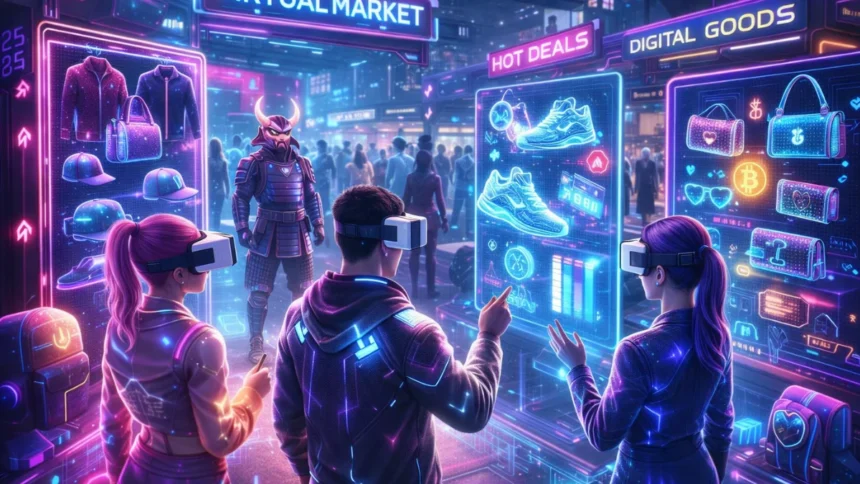
On a crowded evening metro ride, almost everyone is staring into a screen. Some are scrolling through reels, others gaming, a few attending virtual meetings with headphones plugged in. It’s a familiar scene—but it hints at something larger. The screen is no longer just a device; it’s becoming a gateway.
Not to the internet as we knew it—but to something more immersive, more persistent, and arguably more personal.
That’s where the question begins to matter: What Is Metaverse?
What Is Metaverse? A Simple but Evolving Idea
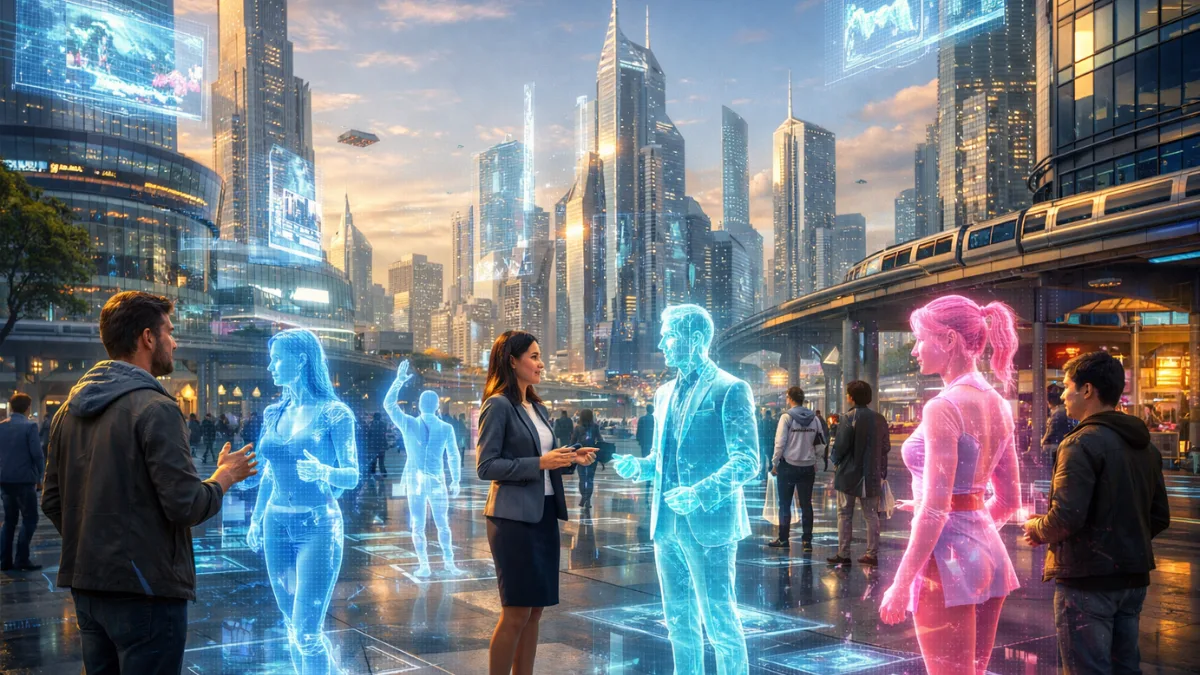
At its core, the metaverse refers to a shared digital space where people can interact, work, play, and exist through avatars in real time. It blends elements of virtual reality (VR), augmented reality (AR), gaming, social media, and digital economies into a single interconnected experience.
But calling it a “virtual world” undersells it.
The metaverse isn’t just a place you visit—it’s a layer that sits on top of reality. You don’t log off from it in the traditional sense; instead, your digital identity continues to exist, evolve, and interact.
Companies like Meta Platforms have pushed this vision forward, framing the metaverse as the next phase of the internet. If the web was about information, and social media was about connection, the metaverse is about presence.
From Science Fiction to Strategic Investment
The idea isn’t new. It has been quietly evolving for decades.
The term “metaverse” first appeared in Neal Stephenson’s 1992 novel Snow Crash, where people escaped into a digital universe using avatars. For years, it stayed in the realm of fiction and niche gaming communities.
Then something shifted.
Online games like Fortnite and Roblox began hosting virtual concerts, social events, and economies where digital items carried real value. These weren’t just games anymore—they were early versions of persistent digital worlds.
The pandemic accelerated this transition. Work, education, and social life moved online almost overnight. What felt temporary revealed something deeper: people were ready to live part of their lives digitally.
Why the Metaverse Is Trending Now
There’s a reason the term has exploded in recent years. It sits at the intersection of multiple technological shifts.
First, hardware has improved. VR headsets are more accessible, and AR is becoming integrated into everyday devices. Second, internet speeds and cloud infrastructure now support real-time, immersive experiences. Third, digital ownership—through concepts like NFTs and blockchain—has introduced the idea that virtual assets can hold real-world value.
But beyond technology, there’s a cultural shift.
People are increasingly comfortable with digital identities. Whether it’s curated Instagram profiles or avatars in gaming platforms, the line between “real” and “virtual” has already blurred. The metaverse simply formalizes that shift.
More Than Gaming: Where the Metaverse Is Expanding
It’s tempting to think of the metaverse as an extension of gaming. That’s where it began, but it’s no longer where it ends.
Work and Collaboration
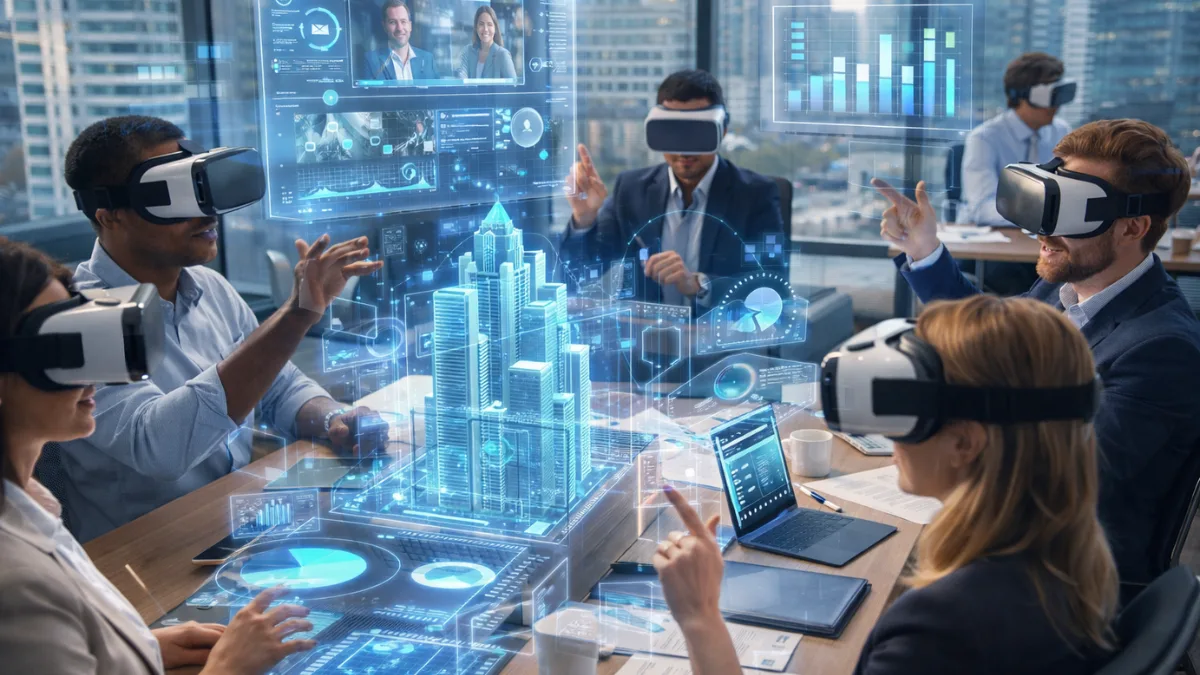
Virtual offices are already being tested. Instead of Zoom calls, teams meet in 3D spaces, walk through presentations, and interact with data in ways that feel spatial rather than flat.
Education
Imagine attending a history class where you don’t just read about ancient Rome—you walk through it. The metaverse opens up experiential learning, making abstract concepts tangible.
Commerce
Brands are experimenting with virtual stores where users can browse products, try digital versions, and make purchases. Digital fashion—clothes for avatars—is already a growing market.
Entertainment
Concerts, film premieres, and live events are being reimagined. In some cases, millions attend simultaneously—far beyond physical capacity limits.
The metaverse is not replacing reality; it’s expanding how reality can be experienced.
The Business of Virtual Worlds
Underneath the surface, the metaverse is as much an economic story as it is a technological one.
Digital land is being bought and sold. Virtual goods—skins, accessories, environments—are generating billions in revenue. Entire ecosystems are emerging where creators design, sell, and monetize digital experiences.
Companies are investing heavily, not because the metaverse is fully formed, but because they don’t want to miss its formation.
There’s a familiar pattern here. Early internet adopters built the platforms that later dominated the digital economy. The metaverse presents a similar opportunity—only this time, the stakes feel even higher.
The Psychology Behind the Metaverse
There’s also a deeper layer that often gets overlooked: why people are drawn to it.
The metaverse offers control. In a virtual environment, identity is customizable, environments are flexible, and limitations are reduced. It allows people to experiment with versions of themselves that might not be possible in the physical world.
It also offers immersion. Unlike scrolling through content, the metaverse places you inside the experience. You’re not watching—you’re participating.
But this raises questions.
If digital experiences become more engaging than real ones, what happens to attention, relationships, and perception of reality? The metaverse doesn’t just change technology—it changes behavior.
Challenges the Metaverse Cannot Ignore
For all its potential, the metaverse comes with serious concerns.
Privacy and Data
If today’s internet tracks clicks and preferences, the metaverse could track movements, gestures, even eye patterns. The depth of data collected will be unprecedented.
Accessibility
High-quality experiences still require expensive hardware. If the metaverse becomes essential, it risks creating a new kind of digital divide.
Regulation
Who governs virtual spaces? What happens when disputes arise over digital property or behavior? These questions don’t yet have clear answers.
Mental Health
Extended immersion in virtual environments could impact how people relate to reality. The balance between digital and physical life will become more critical than ever.
The metaverse is not just a technological evolution—it’s a societal experiment.
What the Future Might Look Like
The metaverse, as it stands today, is incomplete. It exists in fragments—games, platforms, VR spaces—but not as a fully unified ecosystem.
That’s likely to change gradually, not overnight.
In the coming years, expect deeper integration rather than dramatic shifts. You might attend a meeting in a virtual room, shop in a digital marketplace, or socialize through avatars—all within the same interconnected environment.
The real transformation won’t be when the metaverse becomes visible. It will be when it becomes normal.
When switching between physical and digital presence feels as natural as opening an app.
More Read

Conclusion
So, What Is Metaverse?
It’s not a single platform, nor a finished product. It’s a direction—one where the boundaries between physical and digital experiences continue to dissolve.
The internet gave us access to information. Social media gave us connection. The metaverse is attempting something more ambitious: presence.
Whether it succeeds—or how it reshapes daily life—depends not just on technology, but on how people choose to use it.
Final Insight
The metaverse isn’t arriving as a revolution. It’s unfolding quietly, layer by layer, through technologies we already use. The real question isn’t whether it will exist—it’s how deeply it will integrate into everyday life, and whether we’re prepared for the shift from viewing the digital world to living inside it. Stay Updated Stay Informed-The Vue Times
Frequently Asked Questions
What is the metaverse in simple terms?
The metaverse is a shared digital space where people interact using avatars in real time. It combines virtual reality, augmented reality, and the internet into an immersive experience.
Is the metaverse already available?
Yes, but in parts. Platforms like gaming worlds and VR spaces offer early versions, though a fully connected metaverse is still under development.
How does the metaverse make money?
It generates revenue through digital goods, virtual real estate, advertising, and services within virtual environments.
Do you need VR to access the metaverse?
Not always. While VR enhances the experience, many platforms can be accessed through smartphones and computers.
Why is the metaverse important for the future?
It could change how people work, learn, socialize, and shop by creating more immersive and interactive digital experiences.