India has experienced numerous political tempest, but there are occasions that cut deeper than politics itself. The sudden, devastating, and unsettling wrongful implication of this was one such moment, the death of the Deputy Chief Minister of Maharashtra in a plane crash at Baramati. It is a tragedy that has rocked not only a state government, but the nation as a whole conscience.
Ajit Pawar was not just some political leader holding a constitutional office. He was a powerhouse, controversial, decisive, and firmly fixed on the soil of Maharashtra and at the center of its power structures for decades. Under circumstances that are yet to be arrived at, his demise has created a sense of grief, unanswered questions and a political vacuum, not easily filled.
It is not merely the account of an accident. It is the tale of a life cut so short in the middle of its path, of administration nipped off, of a machinery which now must cease and begin to look and to act responsibly.
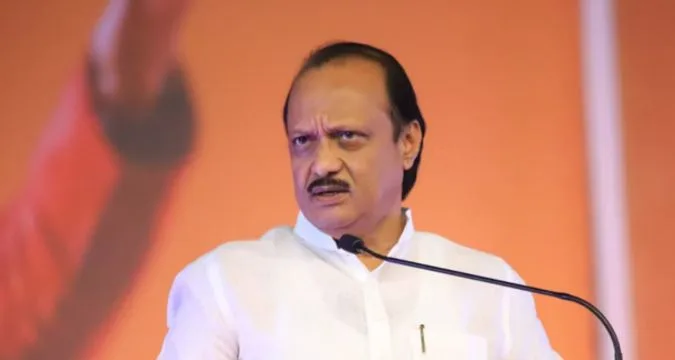
A Morning that changed Maharashtra.
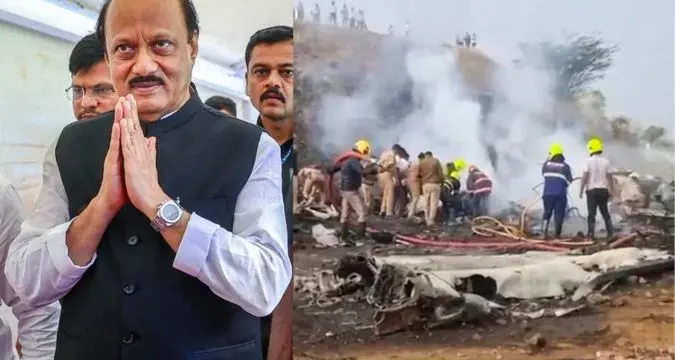
It was Monday January 28, 2026, Ajit Pawar was in a train to his political nest Baramati, the constituency that made him nearly synonymous as the public knew him. His airplane was trying to land in Baramati airport under adverse conditions. Then came a series of occurrences that culminated in disaster.

Minutes later, the crash was publicized in Maharashtra. Sure enough, in a moment there was a report, no news, no news. Ajit Pawar and other board members were dead.
It was a shock to its core. The grim, political wrangles were like broken boughs. Tributes poured in on both sides of the floor, in Parliament and in state assemblies, among political ancient and new, among those whose political memories stretched back to childhood, who had heard the name of a late statesman, and who had now learnt his undeserved fate and honors.
Ajit Pawar: A Political Life of Full Throttle.
To see the scale of this loss, we need to see how high Ajit Pawar was in Maharashtra politics.
Pawar was said to be a stern disciplinarian and to have an administrative acuity in office, a sharpness that was specially noticed when he served in portfolios that dealt with finance and development. He was a leader who subscribed to control, speed and results. Critics doubted his procedures; admirers praised his effectiveness. But there were few who denied his influence.
Not only was it a constituency of Ajit Pawar, but also his playground of power, government, and loyalists. He left his mark in the roads, irrigation projects, cooperative institutions and political networks. Dada was not a far off leader and in the eyes of many residents it is ever present.

Thousands of people whose political life was marked by him feel his death personally.
The Crash and the Questions It Raises.
Areas of concern, as investigations are conducted by official agencies, are initially stated in poor visibility during landing. But in tragedies concerning people in high places, the mere facts never suffice to assuage popular fears.
A number of questions are now worth a grave analysis:

- Would the smaller airfields have sufficient safety measures to handle the VIPs?
- Did the aircraft have sufficient equipment and maintenance to take the conditions it was in?
- Are the Indian aviation oversight mechanisms timely to risk indicators?
These are not questions that deal with apportioning blame too soon. They deal with responsibility. Safety should never be sacrificed to convenience when the leaders make frequent travels with stringent timelines.
Included will be the inclusion of independent investigative agencies, not only to find out what ailed what went wrong but also to build up the unwavering trust of people.
Ripple Effects of Politics in Maharashtra.
Ajit Pawar is dead and this has direct political ramifications.
In the coalition party, he is gone and this causes a leadership vacuum, which cannot be resolved overnight. He was a strong negotiator, power broker, and organisational anchor. The decisions that were made through a known channel will now have to be recalibrated.
To the Nationalist Congress Party the defeat is existential. Ajit Pawar was not merely a leader, he was an embodiment of a continuity, especially to the cadres who viewed him as the future of the mass politics of the party. Already there have been queries regarding the continuance of leadership, togetherness and long term prospects.
On the bigger scale, the governance in Maharashtra is under a phase of uncertainty which requires self-control, decency, and institutional stability among all the political players in the state.
A Nation Takes a Rest, Politics Retires.
The only notable thing in the post-tragedy is the temporary suspension of political enmity. Ideological critics, regional opponents and leaders of other nations have all paid their own tributes. The Parliament had a silence. The activities of states were halted. Outstanding demonstrations were terminated.
During such situations, democracy reveals the human face.
When senior national leaders attend the last rites of Ajit Pawar, their attendance is not just a symbolic one. It is an acknowledgment of one that had always defined policy, power and discourse in the political aspect decades later and elicited controversy.
Beyond Mourning: What Must Change.
The tragedies should not stop at rituals only. They must lead to reform.
Let the death of Ajit Paw attract a national discourse on the serious question of:
- VIP travel safety standards
- Non-metro airport risk assessment guidelines.
- Openness in aviation safety.
- Preparedness against emergency responses.
When these discussions subside after stories have died over time, the loss is even greater.
Sacrifice already belongs to the life of the masses. It must not require avoidable hazards.
It is Not So Much the Chair as the Nurse.
In the following weeks, the political legacy of Ajit Pawar, his choices, his relationships, his conflicts will get analysed. That is inevitable. But at this instant we may think of the human aspect.
He was a son, a husband, a father. He was a colleague and a rival. He was liked as well as disliked and vice versa. Above all, he was present. Constantly active. Constantly moving.
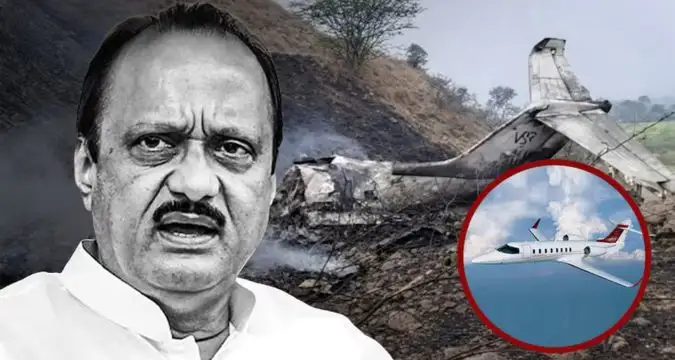
That movement was suddenly terminated on a runway at Baramati.
More Read

A Final Reflection
The death of Ajit Pawar is a wake up call on the vulnerability of the mightiest, even lives. It is a reminder that it is human hands doing the governing, moving the paper around, behind all political headlines is a family bereft, a community grieving, and a democracy that has to re-optimize.
The future of Maharashtra will be difficult. In the case of Indian politics, the cost is great. This is a time when the country needs pride, honesty and change.
The issues that this tragedy brings to the table should be answered.
This life that was lost should not be forgotten.
The future should be made safer, that so there is only a loss once.