Introduction: Why the Indian Rupee’s Fall Matters Now
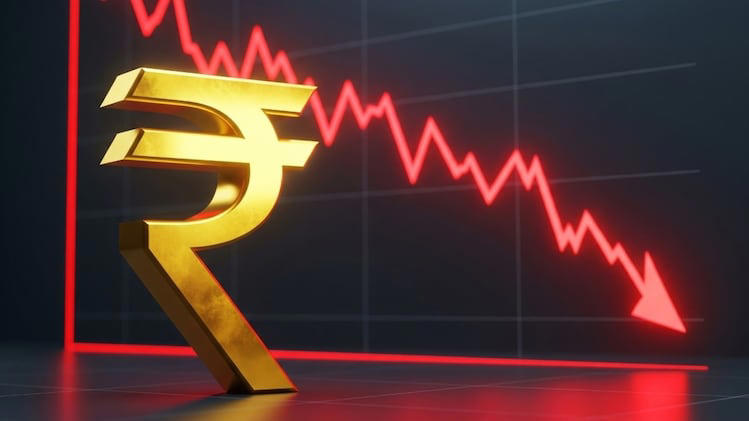
In late 2025, the Indian rupee slid past the ₹90 mark against the US dollar — a symbolic and economic milestone that has caught the attention of policymakers, investors, and families across the nation. India’s currency has become one of Asia’s worst-performing this year amid shifting global winds and growing internal pressures.
A weakening rupee is not just a number on a ticker; it’s a living force that affects everyday costs, influences inflation and trade balances, and shapes investment flows in and out of the country. This blog unpacks the why, how, and what’s next of the rupee’s fall — in clear terms, with real context from the Indian economy.
How We Got Here: A Brief Historical Context of Rupee Values

India’s currency regime has evolved over decades. Once tightly controlled, the rupee now floats more freely, allowing market forces to influence its value. Over the last decade, the rupee has gradually weakened from around ₹60 per USD in the mid-2010s to over ₹90 in late 2025. That’s roughly a 30–40% depreciation over ten years — a function of internal structural trends and global pressures.
This long-term slide reflects not just a falling currency but India’s growing integration into global trade and finance. As India’s economy grows, so does its demand for imported goods, services, and capital, which has implications for the rupee’s positioning against global currencies.

Why Is the Rupee Falling Now? Key Drivers Explained
Understanding the rupee’s depreciation requires looking at several interconnected forces. It isn’t a single cause but a confluence of global pressures, domestic imbalances, and policy choices.

1. Strong US Dollar and Global Capital Shifts
One of the strongest drivers of rupee depreciation is the sustained strength of the US dollar. Global investors often see the dollar as a safe haven, especially during uncertainty, leading to higher demand for dollars and lower demand for emerging market currencies like the rupee.
This dynamic intensifies when US interest rates or Treasury yields rise, as foreign investors chase higher returns from dollar-denominated assets. As a result, capital flows away from emerging markets, reducing demand for rupee assets and pushing the INR lower.
- Foreign Institutional Outflows (FII/ FPI)
In 2025, foreign institutional investors will be net sellers of Indian equities and bonds. Such outflows are significant because when foreign investors sell Indian assets, they convert their rupees back into dollars, increasing dollar demand and weakening the INR.

Reports and market sources indicate substantial foreign capital withdrawal throughout the year, which has heightened pressure on the currency and contributed to the rupee’s slide.

- Trade Deficit and Import Demand
India imports a large portion of its:
- Crude oil
- Electronics and industrial machinery
- Gold and precious metals
High import demand increases the need for foreign currency — mainly the US dollar — to pay for these goods. When import bills rise faster than export receipts, the trade deficit widens, and the rupee weakens due to higher dollar demand.
- Trade Tensions & Policy Uncertainty
A unique factor in 2025 has been trade tensions, particularly with the United States. Higher tariffs (sometimes up to 50%) on Indian exports and delayed trade negotiations have dampened export competitiveness and investor sentiment, affecting currency flows.
5. Altered RBI Intervention Strategy
Typically, central banks can intervene in forex markets to support their currency by selling dollars and buying local currency. While the Reserve Bank of India (RBI) has intervened this year, experts note that its scale and timing have been more strategic and limited compared with previous episodes. This has allowed natural market forces to guide the rupee’s movement without aggressive defense.
- Global Macro Pressures & Safe-Haven Demand
Geopolitical tensions, global economic uncertainties, and shifts in inflation expectations can prompt a broader “flight to safety,” where investments shift towards stable currencies like the US dollar. In such times, emerging market currencies — including the INR — tend to face downward pressure.
How the Rupee Fall Impacts the Indian Economy
A weakening rupee has nuanced effects — some immediately visible, others unfolding slowly over months and years.
1. Import-Linked Inflation and Consumer Costs
When the rupee weakens, imported goods become more expensive. This includes:
- Fuel and energy
- Mobile phones and electronics
- Gold and luxury items
- Foreign travel and education
Higher import costs often translate into higher prices for consumers and can add inflationary pressures to everyday life.
For example, fuel price hikes — linked to higher oil import costs — can cascade into more expensive transportation, food logistics, and manufacturing.
- Export Competitiveness and Remittances
There’s a silver lining. A weaker INR makes Indian exports cheaper and more competitive abroad. Sectors like IT services, pharmaceuticals, and textiles can benefit from higher foreign earnings when translated back into rupees.
Similarly, remittances from Non-Resident Indians (NRIs) fetch more rupees for each dollar sent home, boosting household incomes and consumption.
- Inflation Expectations and Monetary Policy
Higher expected inflation can influence the RBI’s monetary policy decisions. If imported inflation rises too sharply, the RBI may need to tighten policy (like raising interest rates) to maintain price stability. That, in turn, affects borrowing costs, investment decisions, and economic growth.

4. Investments and Capital Markets
Foreign portfolio outflows reflect a broader investor risk aversion — not only for rupees but for emerging market assets. Continued depreciation can reduce foreign investment appetite, affecting equity and debt markets in the short term.
Human Stories: What the Rupee Fall Means for Real People
Beyond numbers and charts are real stories and challenges:
- Small business owners who import machinery may see input costs spiral.
- Students studying abroad could find tuition and living costs significantly steeper.
- Travel aspirants eyeing overseas education or vacations may need larger budgets.
- Export-oriented businesses, on the other hand, reap gains from competitive pricing overseas.
One small business owner in a Tier-II town recounted how the cost of imported spare parts surged, forcing a price increase for customers — a microcosm of wider structural pressures.
How Global Supply Chains Add Pressure on the Rupee
In today’s interconnected world, the strength of a currency is not determined only by domestic conditions — it’s shaped by global supply chain dynamics. India relies heavily on imported components for electronics, automobiles, pharmaceuticals, and industrial machinery. When global supply chains tighten or shipping costs surge, the cost of these imported inputs rises. This creates a double-edged effect: companies spend more dollars to procure raw materials, and the final goods become more expensive for consumers. The rupee, therefore, comes under compounded pressure as the demand for dollars increases faster than the supply. This linkage between global supply disruptions and currency weakness is now a crucial part of India’s economic reality.
The Psychological Impact of Crossing ‘Symbolic Levels’
Currency markets are not driven by economics alone — psychology matters just as much. When the rupee crosses symbolic thresholds such as ₹85, ₹88, or ₹90 per USD, it often triggers waves of panic among investors, importers, and individual consumers. Even if the actual economic fundamentals have not dramatically changed overnight, the perception of a “record low” prompts businesses to adjust pricing, accelerate imports, or hedge aggressively. This behavioral chain reaction can magnify volatility. In 2025, similar reactions were visible across markets when the rupee approached the ₹90 mark, with many traders expecting further decline purely based on sentiment rather than fundamentals. Such psychological triggers make currency management far more complex for policymakers.
Why the Services Sector Remains India’s Cushion During Rupee Declines
One reason India manages rupee volatility better than many emerging economies is its strong services export sector, particularly IT, finance, consulting, and digital services. These sectors earn a large portion of their revenue in foreign currency, especially the US dollar. When the rupee falls, these earnings translate into higher rupee incomes, allowing companies to maintain healthy margins even during uncertain times. This buffer stabilizes the job market, supports tax revenues, and sustains investment cycles. It’s no coincidence that during periods of significant rupee depreciation, India’s top IT firms often report stronger quarterly results. This structural strength gives India resilience and helps the economy absorb external shocks more effectively.

What a Continued Weak Rupee Could Mean for India’s Long-Term Strategy
If the rupee remains weak in the coming years, India will have to rethink parts of its long-term economic strategy. A consistently higher import bill may force deeper reforms in manufacturing, energy diversification, and export competitiveness. The government could accelerate initiatives such as Make in India, semiconductor manufacturing, renewable energy adoption, and trade diversification to reduce dollar dependency. At the same time, a weaker rupee may encourage diaspora remittances, boost export-oriented industries, and attract long-term foreign investment into manufacturing and services. The direction India takes will determine whether the rupee’s decline becomes a temporary pressure point or a catalyst for structural transformation.
What Policymakers Are Watching Now
The RBI and government policymakers are keeping close tabs on:
- Capital flow trends
- Forex reserve levels
- Inflation indicators
- Trade balance data
- Global interest rate movements
Recent RBI monetary policy decisions — including a modest repo rate adjustment — reflect careful balancing between growth and inflation control amidst currency pressures.
Forward Outlook: What to Expect in 2026 and Beyond
Looking ahead, several scenarios could shape the rupee’s trajectory:
1. Resolution in Trade Talks
Progress in major trade negotiations — especially with the US — could restore investor confidence, support export growth, and stabilize currency flows.
2. Global Interest Rate Movements
If the US Federal Reserve signals rate cuts, the dollar’s strength may ease, reducing pressure on emerging market currencies like the rupee.
3. Continued Current Account Management
Improving export diversification, reducing import reliance through local manufacturing, and managing global external shocks will be key to long-term stability.
Market analysts’ rupee forecast 2025–26 points to continued volatility with periods of stabilization, particularly if geopolitical headwinds soften and capital flows normalize.
Actionable Takeaways for Individuals & Businesses
Here’s what various groups can do in response to the rupee’s behavior:
- Students & Families:
- Consider forward contracts or remittance timing strategies for overseas fees.
- Plan travel and education expenses with currency trends in mind.
- Small Businesses & Importers:
- Hedge against currency risk where possible.
- Explore local supplier options to reduce import dependence.
- Investors:
- Diversify portfolios with a mix of domestic equities, export-oriented sectors, and safe-haven assets.
- Monitor interest rate signals and capital flow data.
- Exporters:
- Leverage competitiveness in global markets.
- Optimize pricing strategies to benefit from favorable exchange rates.

The Rupee’s Fall Is a Story of Global Shifts and National Choices
The Indian rupee’s fall in 2025 is not a standalone crisis but a multifaceted economic phenomenon shaped by global dynamics, trade balances, investor sentiment, and domestic economic structures.
While a weak currency presents challenges — especially in import costs and inflation risk — it also offers competitive advantages for exporters and remittance receivers. For policymakers, the task is to navigate these complexities without undermining growth or stability.
By understanding the why, recognizing the impact, and preparing for the future, businesses, professionals, and everyday citizens can make informed decisions in this evolving economic landscape.