
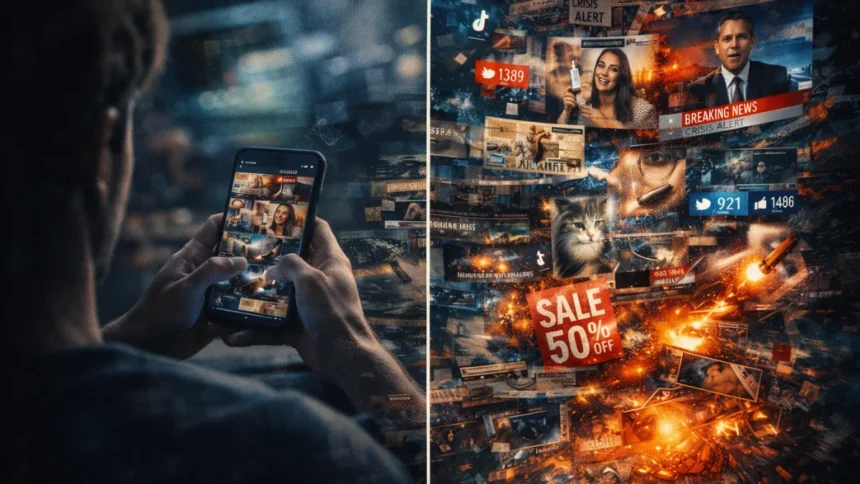
There’s a certain kind of video you stumble upon late at night—fragments of advertisements, influencers talking over each other, a news clip sliding into a meme, all stitched together in a way that feels chaotic but oddly intentional. It doesn’t try to entertain you in the usual sense. It doesn’t even try to make sense. And yet, you watch it till the end.
That uneasy feeling? That’s where Corecore lives.
Unlike polished reels or carefully curated feeds, Corecore doesn’t ask for your attention—it confronts you with the reality of what you’ve been consuming all along. It’s less a trend and more a mirror, reflecting the strange, overwhelming, and sometimes absurd ecosystem we’ve built online.
What Is Corecore—and Why Does It Feel So Different?
At its simplest, Corecore is a form of meta-content. It’s content about content. Videos that critique, remix, and sometimes mock the very structure of the internet itself.
But that explanation barely scratches the surface.
Corecore pieces often combine:
- Disjointed clips from social media
- Commercials and influencer content
- Viral moments stripped of context
- Overlapping audio that feels intentionally overwhelming
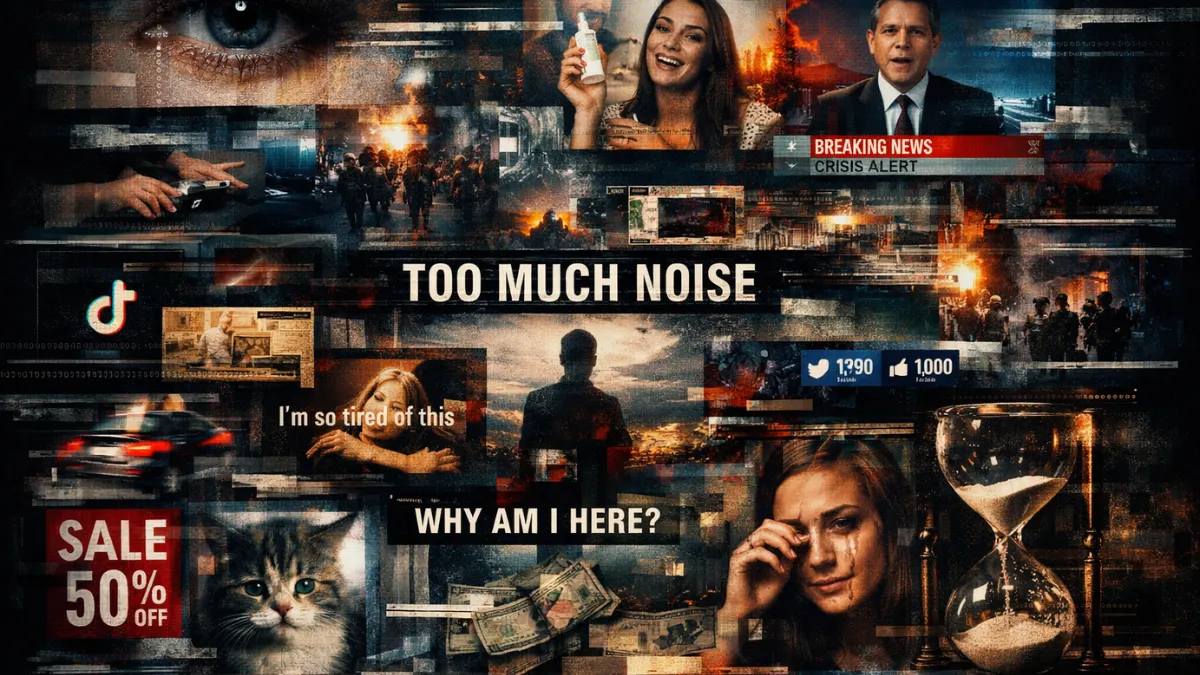
The result is something that doesn’t fit neatly into comedy, commentary, or art. It feels more like an emotional collage—one that captures the noise of digital life.
What makes it stand out is its refusal to simplify. Where most content aims to be digestible, Corecore leans into confusion. And strangely, that’s exactly why it resonates.
The Origin of Corecore: A Reaction, Not a Creation
Corecore and the Evolution of Internet Culture
Corecore didn’t emerge from a single creator or a defined moment. It grew out of a broader shift in how people interact with content—particularly on platforms like TikTok.
Over time, the internet has moved through distinct phases:
- Early social media: personal sharing
- Influencer era: curated identity
- Algorithm-driven feeds: optimized engagement
Corecore appears to be a reaction to the last phase.
As feeds became more predictable and content more engineered for clicks, a kind of fatigue set in. Users began to recognize patterns—the same hooks, the same editing styles, the same emotional triggers.
Corecore steps into that awareness. It doesn’t reject the system outright; it exposes it.
Why Corecore Is Trending Right Now
Corecore and Digital Burnout
There’s a reason Corecore is gaining traction at this particular moment.
People are tired.
Not just physically, but cognitively. The constant stream of content—short, fast, optimized for engagement—creates a kind of background exhaustion. You scroll, but you’re not really absorbing anything.
Corecore taps into that fatigue.
Instead of offering another polished distraction, it presents the chaos as it is. It acknowledges the overload rather than trying to smooth it out.
And in doing so, it creates something unexpectedly honest.
For many viewers, watching Corecore feels less like entertainment and more like recognition.
The Psychology Behind Corecore
There’s a subtle psychological shift happening here.
Traditional content is designed to:
- Capture attention
- Hold it
- Deliver a clear emotional payoff
Corecore disrupts that pattern.
It often leaves you with:
- Ambiguity instead of clarity
- Discomfort instead of satisfaction
- Questions instead of answers
That might sound counterintuitive, but it aligns with how people are increasingly experiencing the internet. Life online isn’t always coherent or meaningful—it’s fragmented, repetitive, and sometimes overwhelming.
Corecore reflects that reality instead of masking it.
It’s not escapism. It’s confrontation.

Corecore and the Business of Content
There’s also a deeper layer that makes Corecore interesting—its relationship with the content economy.
Modern digital platforms thrive on predictability:
- Algorithms reward familiar formats
- Creators replicate what works
- Brands integrate seamlessly into trends
Corecore breaks that cycle.
By highlighting the repetitive nature of online content, it indirectly critiques the systems that produce it. It exposes how engagement is engineered, how authenticity is often performative, and how quickly trends are recycled.
For brands and marketers, this presents a dilemma.
On one hand, Corecore is gaining visibility. On the other, it resists commercialization. Trying to package it too neatly risks missing the point entirely.
It’s one of the rare trends that doesn’t easily translate into a campaign.
Is Corecore Art, Satire, or Something Else?
Trying to categorize Corecore can feel like missing the point.
It borrows elements from:
- Experimental video art
- Internet memes
- Social commentary
But it doesn’t fully belong to any of these.
Some Corecore videos feel deeply intentional, almost like short films. Others seem chaotic to the point of randomness. The line between meaning and noise is deliberately blurred.
That ambiguity is part of its identity.
It invites interpretation without insisting on one.
What Corecore Says About the Future of Content
Corecore and the Next Phase of Digital Expression
If Corecore is a reaction, what comes next?
It’s unlikely that all content will suddenly become fragmented and self-aware. But Corecore does signal a shift in audience expectations.
People are becoming more conscious of:
- How content is constructed
- Why certain formats dominate
- What authenticity really means online
This awareness could lead to:
- More experimental formats
- Greater skepticism toward overly polished content
- A demand for deeper, more meaningful engagement
In a way, Corecore might be less about the videos themselves and more about what they represent—a turning point in how we relate to the digital world.
More Read

Conclusion
Corecore doesn’t try to comfort you. It doesn’t offer clarity or resolution. Instead, it holds up a fragmented mirror to the internet—and by extension, to us.
In that reflection, you see the patterns: the repetition, the noise, the endless loop of content feeding into itself.
And once you see it, it’s hard to unsee.
Final Insight
At a time when the internet is engineered for maximum engagement and minimum reflection, Corecore feels almost disruptive in its honesty. It doesn’t compete for attention—it questions why attention is being fought over in the first place.
That’s what makes it powerful.
Not because it’s polished.
But because it isn’t. Stay Informed Stay Updated-The Vue Times