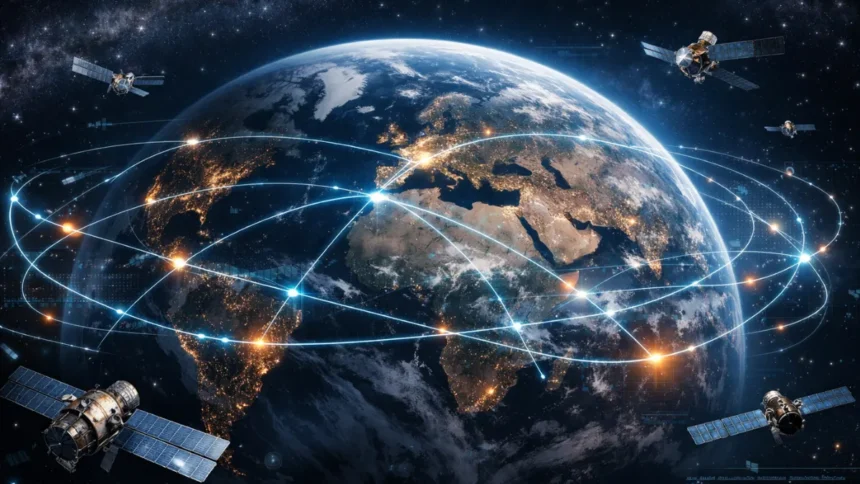
The first time you see Earth from orbit—whether through a live satellite feed or a high-resolution image—it doesn’t feel like science anymore. It feels personal. A quiet, blue planet floating in an endless black. That image, once reserved for astronauts, now circulates on smartphones, turning space from a distant mystery into something oddly familiar.
And that shift matters. Because the Future of Space is no longer about distant dreams or rare missions. It is becoming a space of business, policy, technology, and even everyday life.
The Future of Space Is Already Unfolding
Not long ago, space exploration belonged almost entirely to governments. Agencies like NASA, ISRO, and ESA shaped what humanity could do beyond Earth.
That model is changing rapidly.

Private companies—most notably SpaceX—have redefined the economics of space. Reusable rockets, faster launch cycles, and lower costs have turned space from a prestige project into a competitive industry.
This isn’t just about sending rockets. It’s about building infrastructure. Satellites are now essential to navigation, communication, weather forecasting, and even financial systems. In many ways, space has quietly become part of Earth’s daily operations.
The Future of Space is not just “out there.” It’s already embedded in how we live.
Why the Future of Space Matters Now
There’s a reason space has returned to headlines—and not just because of ambitious missions.
Three forces are converging.

First, economics. The global space economy is projected to cross trillions in value in the coming decades. Satellite internet, Earth observation, and data services are driving massive investments.
Second, geopolitics. Nations are competing again—not in a Cold War sense, but in terms of strategic positioning. Control over satellite networks, lunar missions, and space-based infrastructure is becoming a matter of national influence.
Third, technology. Advances in AI, robotics, and materials science have made missions more efficient and scalable. What once took decades can now be attempted in years.

The result? Space is no longer a symbolic frontier. It’s a practical one.
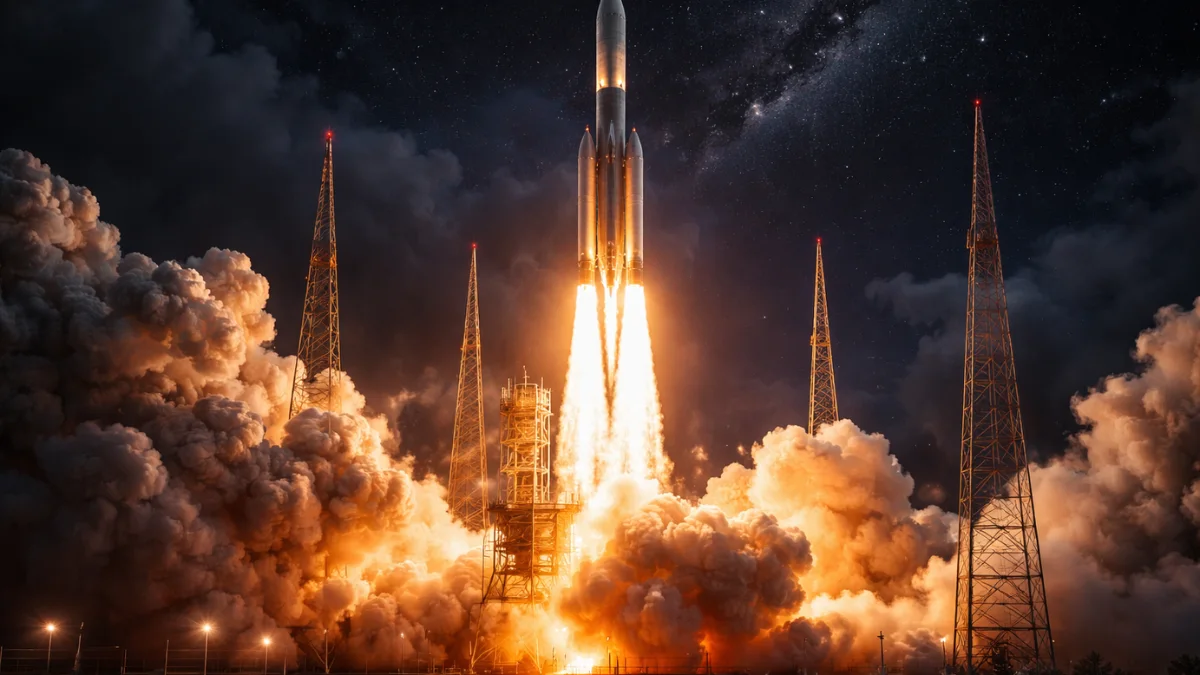
From Exploration to Colonization
The idea of humans living beyond Earth once felt like science fiction. Today, it is a serious conversation.
The Moon is the immediate focus. Several countries and organizations are working toward establishing a sustained human presence there—less as a destination, more as a testing ground. A lunar base could support research, resource extraction, and future missions deeper into space.
Mars, meanwhile, remains the long-term ambition. The timelines are uncertain, the challenges enormous—radiation, life support, psychological isolation—but the intent is clear.
The Future of Space increasingly includes the possibility that humanity becomes a multi-planetary species.
But here’s the less romantic reality: colonization is not just about survival. It’s also about economics. Mining rare materials, manufacturing in microgravity, and developing new industries could redefine global markets.
The Business of the Cosmos
Space is turning into a marketplace.
Satellite constellations are already competing to provide global internet coverage. Companies are exploring asteroid mining. Tourism—once an unimaginable luxury—is slowly becoming real, with suborbital flights already operational.
What’s striking is how quickly the narrative has shifted.
Earlier, space missions were judged by scientific achievement. Now, they are also measured by return on investment.
This commercialization introduces both opportunity and risk. On one hand, innovation accelerates when private players compete. On the other, questions emerge: Who owns space resources? How do we regulate orbital traffic? What happens when space becomes crowded?
The Future of Space will not just be engineered—it will need to be governed.
The Hidden Infrastructure Above Us
Most people don’t think about space when they check maps or stream videos. But they should.
Thousands of satellites orbit Earth, forming an invisible network that powers modern life. From GPS navigation to disaster monitoring, these systems operate quietly, often unnoticed.
As more satellites are launched, concerns are growing. Space debris is becoming a serious issue. Collisions in orbit could disrupt critical services.
This introduces a new dimension to the conversation. Space is not infinite in the way we imagine. Orbital paths are limited, and congestion is real.
Managing this environment responsibly will define how sustainable the Future of Space becomes.
The Psychological Shift: From Wonder to Ownership
There was a time when space inspired awe because it was unreachable.
Now, it inspires curiosity—and increasingly, participation.
Students build small satellites. Startups pitch space-based solutions. Even public interest has evolved from passive fascination to active engagement.
This shift is subtle but powerful.
When people begin to see space as accessible, innovation follows. The barrier between imagination and execution starts to shrink.
The Future of Space is not just about technology. It’s about mindset.
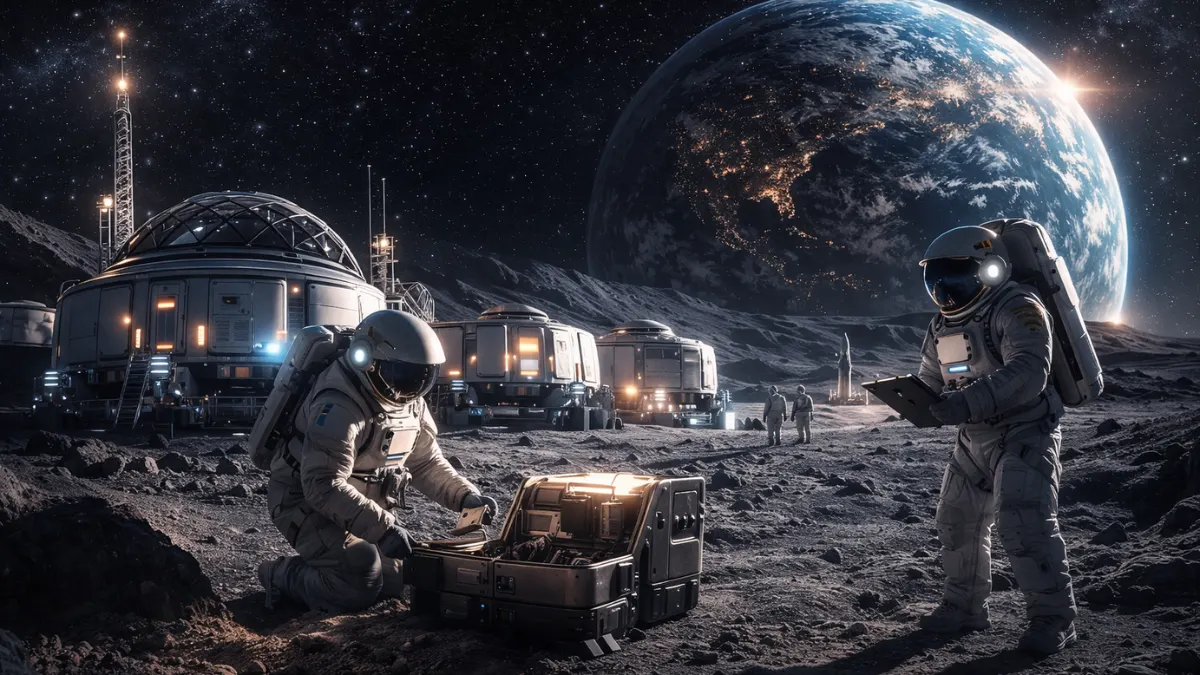
What Comes Next: The Direction of the Future of Space
The next decade will likely define the trajectory.
We will see more frequent launches, more international collaboration, and more commercial activity. Lunar missions will intensify. Mars will remain a long-term goal, but technological groundwork will accelerate.
At the same time, regulations will begin to catch up. Policies around space traffic, debris management, and resource ownership will become essential.
And perhaps most importantly, the line between Earth-based industries and space-based systems will blur further.
The Future of Space will not exist separately from Earth. It will extend it.
More Read

Conclusion: A Frontier That Reflects Us
Space has always been a mirror of human ambition.
What we choose to build there—whether collaborative systems or competitive empires—will reflect the priorities we carry from Earth.
The future is not just about reaching farther. It’s about deciding why we go, and what we bring with us.
Final Insight – The Vue Times
The Future of Space is no longer a distant vision reserved for scientists and astronauts. It is unfolding in real time—through policy decisions, business investments, and technological breakthroughs. The real question is not whether humanity will expand into space, but how responsibly and intelligently it will do so.
At The Vue Times, we see space not as an escape from Earth, but as an extension of human choices. The next frontier will not just test our engineering—it will test our judgment.
Frequently Asked Questions
What is the future of space exploration?
The future of space exploration includes lunar bases, Mars missions, and increased private sector involvement. It focuses on sustainability, cost reduction, and long-term human presence beyond Earth.
Why is the future of space important?
Space supports critical systems like GPS, communication, and climate monitoring. Its future impacts global economies, security, and technological progress.
Will humans live on other planets?
Possibly. The Moon may host early human bases, while Mars remains a long-term goal. However, major technological and biological challenges still exist.
What role do private companies play in space?
Companies like SpaceX are reducing costs and increasing launch frequency, making space more accessible and commercially viable.
Is space becoming a business industry?
Yes. The space economy includes satellite services, tourism, and potential resource extraction, making it one of the fastest-growing global industries.