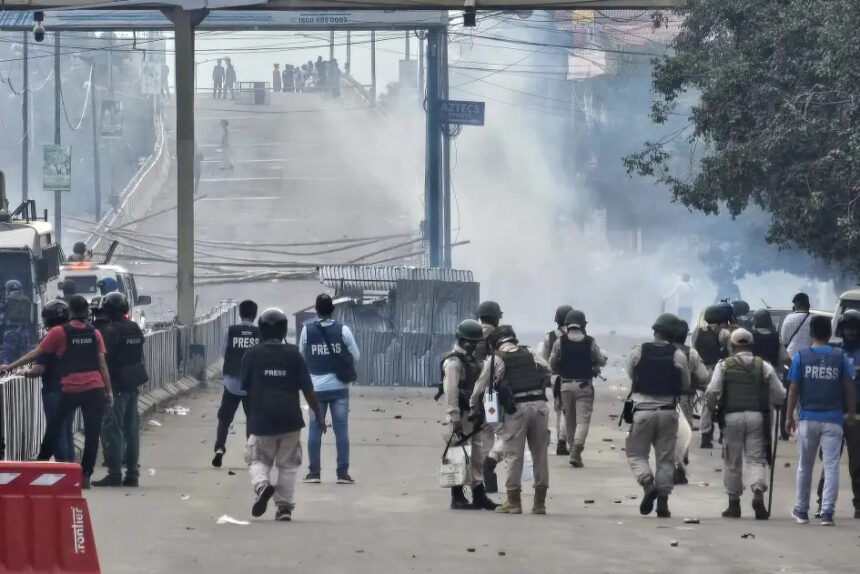
Manipur is now one of the most agonizing reminders to India that ethnic harmony should never be assumed. What used to be a culturally diverse and well-knit society has gradually broken down into fear, suspicion and segregation areas. The Meitei -Kuki confrontation that has taken place over the years yet burst out on a spurt since 2023 is still redefining daily life in the state.
The recent murder of a Meitei man in Kuki dominated Churachandpur is not just some statistic. It is a breakdown of trust, the inability to reconcile, and the normalisation of violence that is a threat to Manipur. This act has once again made India face an uncomfortable question: What exactly is going on in Manipur and why has peace been so elusive?
This more comprehensive report details the events of the Manipur violence, its background, the history of the entire conflict, the recent events and the feasible avenues upon which peace can still be achieved.
Why the Crisis of Manipur is a National Issue in India
Manipur is not a continent by itself, geographically, politically, and even emotionally. It is not stable, which has national implications.

The state has a long international frontier with Myanmar which is already enduring the military turmoil and refugees migration. Manipur is also a key component of the Indian policy in Act East, which can be used as a gateway to Southeast Asia. The strategic ambitions of India are undermined when Manipur burns.
In addition to strategy, the crisis has a question mark on Indian democratic morale. No nation that is established and maintained on diversity could sustain a long term ethnic war within its borders without losing credibility both locally and internationally.

Comprehending the Societies in the Middle of the War
The social geography of the state of Manipur must be first understood in order to clearly see the ethnic conflict in the state.
Imphal valley and the Meitei Community
The Meiteis are found in the Imphal Valley mainly the political economic center of Manipur. The valley is characterized by a small percentage of the land which makes up the state but accommodates most of the population. Meiteis have had a major influence on all forms of governance, education, and business historically.
Most Meiteis claim that they are endangered by migration, cultural dilution and demographic pressure. Their opinion of the demand to create status of a Scheduled Tribe is one in the form of protection, protection against culture, language, and land.

Kuki Community and the Hill Districts
Kukis are a tribal group of people who are known by the Constitution and occupy the hill districts of Manipur including Churachandpur. Their identity, livelihood, and existence revolve around land. Hill land is not at risk of being bought off by outsiders with safeguards entrenched in the constitution.
In the case of Kukis, demand for Meitei ST is not symbolic, but existential. They dread being deprived of their right to land, exclusion, and weakened tribal control.
These are the contradictory fears, on which the Meitei and Kuki dilemma revolves.

The way Legal Argumentation escalated into a blood Ethnic War
It is a sad thing about Manipur that violence did not burst out in one day. It was baited by decades of unresolved resentment, political silence and increasing distrust.
The arguments that Meiteis should be added to the Scheduled Tribe list were a straw onto a very thin glass. The next thing was not protest–but group indignation in the streets.
The state machinery could not take decisive actions when protests turned violent. Such indecision was expensive.
The Manipur Conflict Timeline: Tension into Tragedy
The Years Before the Explosion
In Manipur, even prior to the onset of open violence, he was dealing with:
- Land evictions and land disputes on forest land.
- Illegal claims of settlements.
- Hill district drug traffickers.
- Old ethnic animosity.
All these problems created the atmosphere where any incident could cause turmoil.
May 2023: The Breaking Point
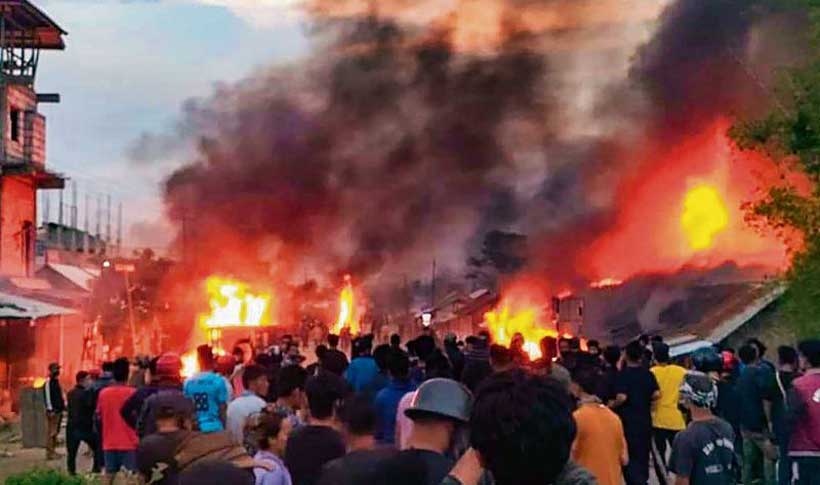
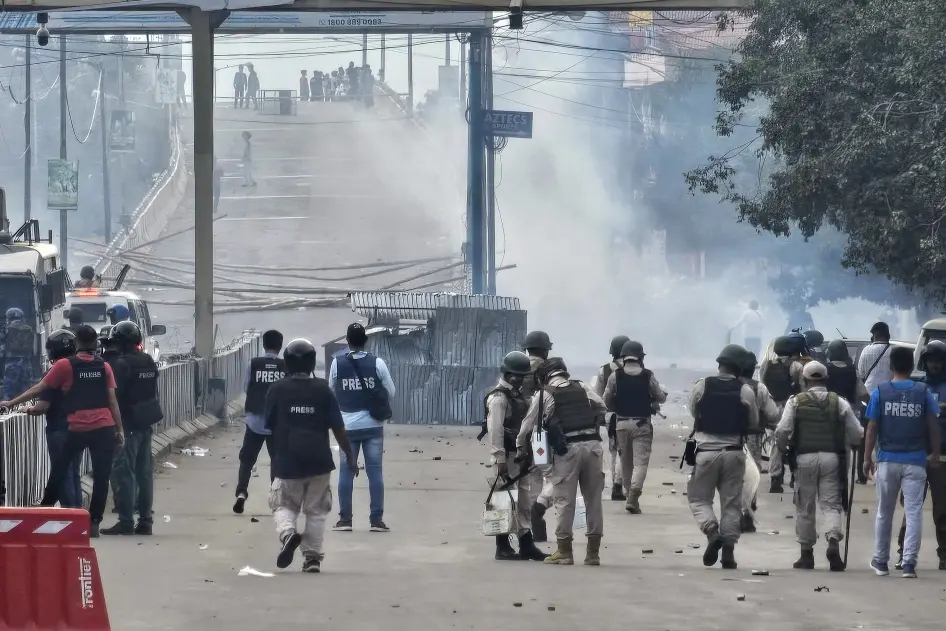
In May 2023, tribal solidarity marches denying the demand for Meitei ST were transformed into general violence. Houses were burnt down, places of worship destroyed and families sustained to resettle in the night.
The resulting internet shutdown not only severed information, but it also helped to isolate victims and leave rumours to rule.
2023–2024: Institutional Collapse
As violence dragged on:
- Civilian armed factions were formed.
- Security forces were looted of weapons.
- Ethnic boundaries became permanently solid.
Whole neighborhoods were reserved as exclusive quarters, with Meiteis and Kukis not being able to enter the territory of the other.
2024–2025: Normalisation of Fear
By 2024 the violence in Manipur ceased to outrage; it was the order of the day. Schools were shut, businesses failed and youth were raised with gunfire and curfews.
2026: Tattered Peace, Eternal Murders.
This murder of a Meitei man in Churachandpur destroyed the pretensions of stability. It revealed the shallowness and misleading nature of the peace.
Why the Churachandpur Killing Is a Turning Point
However, Churachandpur is not just any district but a symbolic boundary within the conflict over Manipur.
This kind of Meitei population in a Kuki-dominated region pushes against the already established ethnic partition. This murder is an indication that cross-ethnic movement is a risky affair that cannot support any possibility of re-integration.
It strengthens a wishful thinking: that Manipur is only able to work when partitioned.
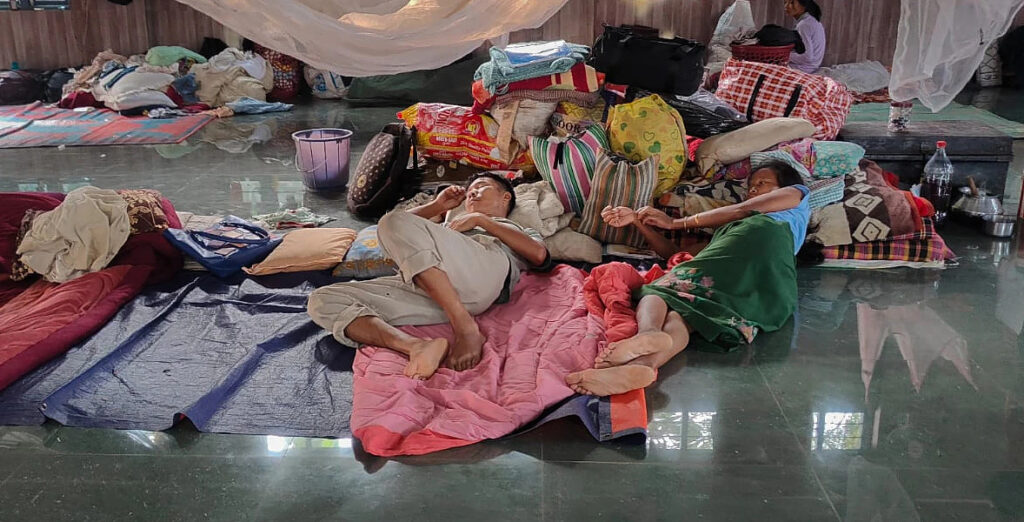
A Humanitarian Crisis: Life Within Relief Camps
There is a human side story behind the headlines, which hardly comes to the national limelight.
Relief camp families are left to:
- Overcrowding
- Mental trauma
- Lack of schooling
- Insecure futures
An uprooted Kuki peasant of Kangpokpi is telling us of losing not only his house but his dignity. An Imphal West Meitei shopkeeper tells that now his parents identify uniforms as fear not security in children.
This is the paradoxical price of Manipur unrest.
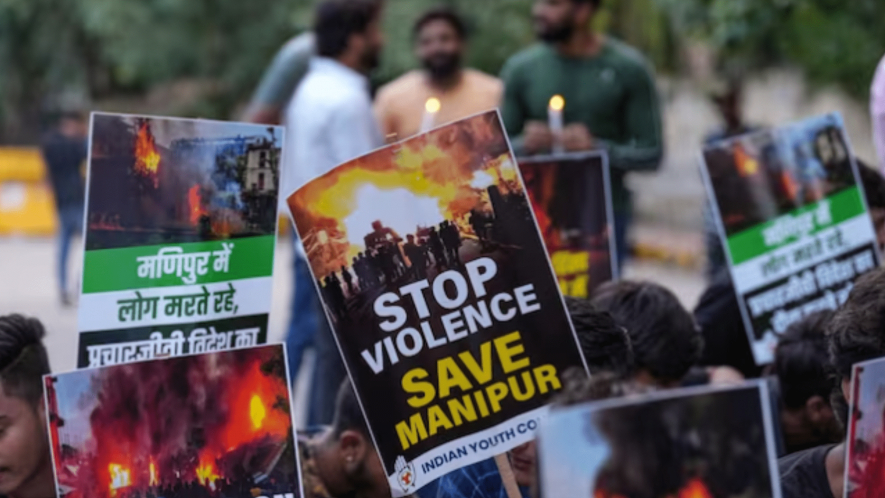
The Struggle and Distrust of Government by the People
The Manipur crisis uncovered should be addressed by appreciating the failures of governance.
Public anger stems from:
- Delayed political outreach
- Perceived partiality
- Lack of accountability
- Poor communication
Violence is the language of last resort when the citizens lose trust in the institutions.
The Role of the Central Government and Security Forces
The federal government has been using a lot of force to prevail violence. Although this has avoided a complete collapse, it has not helped to restore confidence.
The unrest the security can repress–but can:
- Heal trauma
- Rebuild coexistence
- Dissolve constitutional issues.
There are no political solutions and force is a temporary stay, not a remedy.
The impact of Social Media
The social media in Manipur has been used as:
- A tool of mobilisation
- A weapon of misinformation
- A mirror of hatred
Half-truths, graphic videos and shared stories have created emotional chasms between communities and as a result; reconciliation is prepared to be even more difficult.
The Psychological Damage: A Generation at Risk
Probably psychological segregation is the most permanent effect of the Meitei-Kuki confrontation.
Children are instead growing up learning that:
- Fear before empathy
- Identity before humanity
- Coexistence preceding survival.
It is this generational trauma that is more of a threat to the future of Manipur than any weapon.
How Peace Can Be Restored: Not Utopian, Real World Solutions
Peace is not a symbolic one in Manipur; it should be structural, maintained.
Political Steps That Matter
- Consensual conversation inclusive of neutral mediation.
- The clear Constitutional scrutiny.
- Equal consideration to all communities.
Security Reforms Needed
- Full deprivation of civilians.
- Community-neutral policing
- Security over transit routes.
Social Healing Measures
- Trauma counselling at scale
- Peace education in schools
- Reestablishing mixed communities.
Economic Recovery Programs
- Accountability + compensation.
- Hiring of dispossessed young people.
- Rebuilding the economy and agriculture.
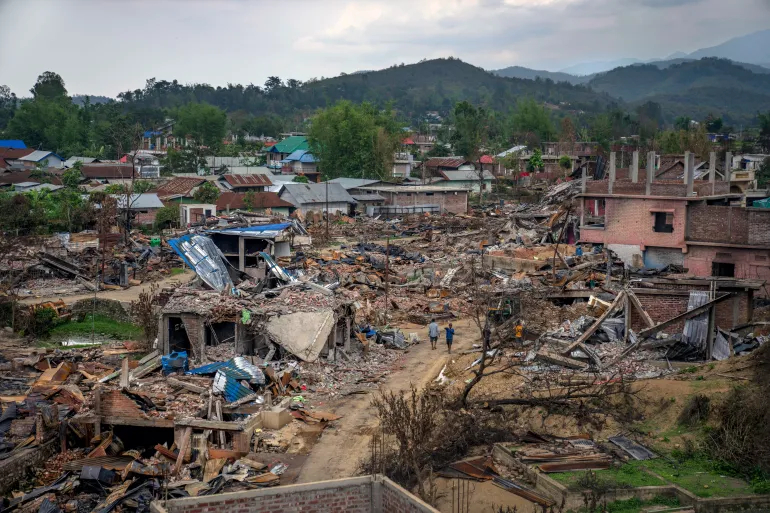
Measures by the government that can transform the ground reality
The mandate of stabilisation of Manipur is the mandate of the elected government and constitutional institutions first and foremost. Even the good intentions of peace do not succeed without firm leadership.
Better Political and Administrative Response
- Designate an impartial peace contact who will be agreeable among Meitei, Kuki as well as Naga people with a prescribed duration and limit.
- Have regular, open, dialogue rounds, but not closed-door meetings and the results are openly discussed.
- Postpone controversial decisions made by the administrative authorities in conflict areas until after consistency mechanisms have been reinstated.
- Bring about strict neutrality of district administrations, with frequent audits and transfers in case of bias being claimed.
These measures are essential in restoring credibility in governance which has been heavily destroyed in the Manipur violence.
Needs Constitutional and Legal Clarity
One of the key factors that motivate the MeiteiKuki conflict is the doubt of uncertainty and fear over constitutional rights.
The government must:
- Elucidate the legislation pathway to any proposal of Scheduled Tube in Parliament or constitutional organizations.
- Guarantee the tribal people in writing that the protection of lands will not be thinned without safeguards.
- Enhance Sixth Schedule-based or other similar regionality autonomy determinations on hill locations.
- Rapid juridical adjudication over land, forest and identity issues.
Who knows, Confusion can be done away with
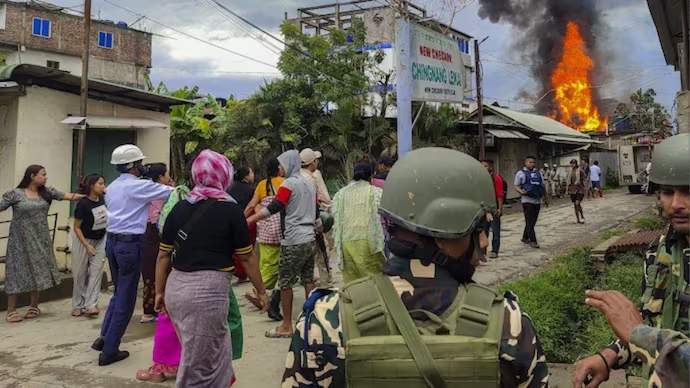
Security Reform outside Force Deployment
Although security forces are urged, their presence should change to the stabilisation of suppression.
Key steps include:
- Full recovery of weapons stolen by amnesty and implementation of time limits.
- Establish collaborative security surveillance within groups of central forces with local representatives that are trusted.
- Make transport roads secure to enable the free movement of civilians across ethnic borders.
- Stop selective enforcement, whereby arrest and investigation are targeted at all communities.
Any reconciliation in a neutral security environment is a prerequisite to its success.
Victim Rehabilitation, Relief and Justice
Relief camps should not be made into permanent homes. The government should take a firm step towards rehabilitation and not relief.
Immediate priorities:
- Reconstruction of permanent homes using definite deadlines and responsibility.
- Monetary reimbursement of homes, farms, and businesses that were destroyed.
- Special education packages on the child who lost his or her educational years.
- Quick track courts or special investigation units to restore justice to victims.
There can be no peace without justice, which will be tentative and frail.
Healing Community and Social Reconciliation
The Manipur crisis could only be explained with the help of policy without taking into account its ultimate hurt: social fragmentation.
The following should be supported by the government:
- The peace councils between communities conducted by the revered elders, teachers, and religious leaders.
- Relief camps and schools Mental health and trauma counselling programs.
- Cultural and sports interactions among the youth of each community.
- Peace education courses in state schools.
It is no less crucial to close the brains than the borders.
Financial Reproduction and Youth Empowerment
Unemployment and economic hopelessness threaten to drive young people even more to violence.
Actionable steps:
- Emergency jobs among the jobless young people.
- Development of skills that are related to local industries and agriculture.
- Restoring the local markets and supply chains that are lost in violence.
- Conflict-related special economic revival package.
Extremism is less attractive to economic hope.
Media, Technological and Information Control Role
The state ought to attend to the information crisis in a responsible manner.
Measures include:
- Counter-misinformation cells manned by professionals in office not political appointees.
- Internet restrictions are not blanket shutdown, but target and time-bound restrictions.
- Daily briefings by the government officials to ensure rumours do not dominate events.
- Prosecution against intentional hate speech, identity notwithstanding.
A democratic resolution of conflicts is ensured through the transparency of information.
What Every Indian Member Can Learn
Manipur is not the problem of Manipur only.
It teaches India that:
- Diversity involves never-ending communication.
- Silence enables violence
- There should be responsibility in identity politics.
Neglecting to pay attention to Manipur today is a serious risk of recreating it tomorrow.
The Road Forward: Is it possible to reunite Manipur?
Manipur may be cured–but India must prefer reconciliation to convenience.
Tranquility can never be achieved through forgetting the war, but rather through sincerity, gaining an understanding of the pain experienced by all parties, and beginning to rebuild the trust gradually.
The other one is an irreparably fragmented society–and what would the other have been but a lost government not only of Manipur, but also of India?
More Read
Key Takeaways for Readers
- The violence in Manipur has a basis on identity, land, and political power.
- There is no need for dominance in the Meitei-Kuki conflict, but dialogue.
- New murders demonstrate that peace is weak.
- Healing requires commitment over time, not rather control in the short run.