A customer support ticket is raised at 2:14 AM. No human is awake to respond. Yet within seconds, the issue is acknowledged, analyzed, and resolved—refund processed, email sent, satisfaction recorded.
No queue. No delay. No human intervention.
Somewhere behind the interface, a system didn’t just respond—it acted. It made a decision, executed it, and learned from it.
That’s where the conversation around What Is AI Agents? begins—not with theory, but with action.

What Is AI Agents? A Clear Explanation
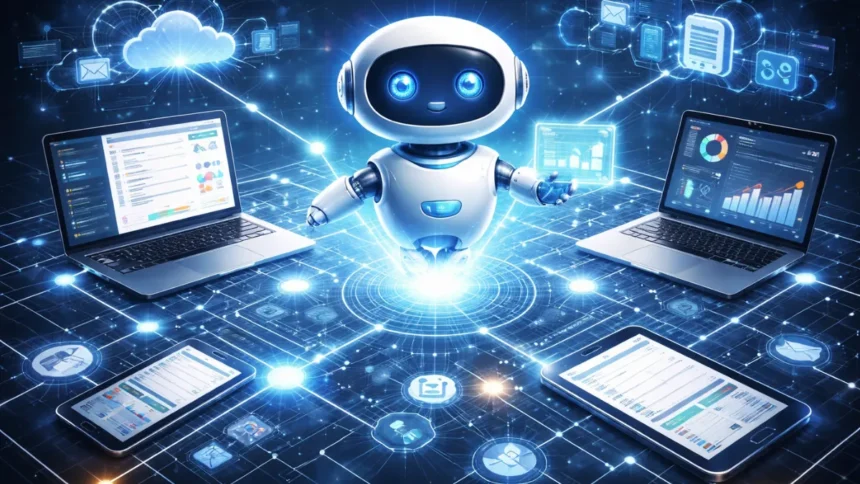
At its core, What Is AI Agents? refers to systems that can independently perceive their environment, make decisions, and take actions to achieve specific goals.
Unlike traditional software that follows fixed instructions, AI agents operate with a level of autonomy. They don’t just wait for commands—they interpret situations and respond accordingly.
Think of them as digital actors with three essential capabilities:
- Perception – understanding inputs (data, user requests, environment)
- Decision-making – choosing the best course of action
- Execution – carrying out tasks without constant human control
This combination is what separates AI agents from basic automation tools.

From Tools to Agents: A Subtle but Important Shift
For years, we’ve used AI as a tool—something that assists humans. Chatbots answered queries. Recommendation engines suggested products. Automation scripts handled repetitive work.

AI agents mark a transition.
They don’t just assist—they operate.
This shift is subtle but significant. It moves AI from:

- Reactive systems → responding when asked
- To proactive systems → acting based on goals
A scheduling tool reminds you of meetings.
An AI agent reschedules them, negotiates conflicts, and informs participants.
The difference isn’t just technical—it’s conceptual.
Why AI Agents Are Trending Right Now
The sudden interest in What Is AI Agents? isn’t accidental. It’s the result of multiple technologies converging at the same time.
1. Advances in Large Language Models
Modern AI systems can understand context, generate human-like responses, and reason through problems. This gives agents a “thinking layer” that older systems lacked.
2. Integration with Tools and APIs
AI agents are no longer isolated. They can:
- Access databases
- Use software tools
- Interact with external systems
This connectivity turns them from passive models into active operators.
3. Demand for Efficiency
Businesses are under pressure to do more with fewer resources. AI agents promise:
- Faster execution
- Lower operational costs
- Continuous availability
That combination is hard to ignore.
Real-World Examples of AI Agents
The concept can feel abstract until you see it in action.
Customer Support Agents
Modern AI agents can handle end-to-end support:
- Understand the issue
- Access user history
- Provide solutions
- Escalate when necessary
Personal Productivity Agents
These agents manage tasks like:
- Email filtering
- Calendar optimization
- Reminder systems
Some even draft responses and prioritize actions based on urgency.
E-commerce Agents
AI agents can:
- Recommend products
- Adjust pricing dynamically
- Manage inventory decisions
Developer Agents
In software development, AI agents can:
- Write code
- Debug errors
- Run tests
- Deploy updates
They act less like tools and more like junior collaborators.

The Psychology of Trusting Machines to Act
There’s an interesting psychological shift happening alongside the rise of AI agents.
People are gradually moving from:
- “AI helps me”
- To “AI handles it”
That transition requires trust.
When an AI agent books a ticket, processes a payment, or makes a recommendation, it assumes responsibility. Users must believe the system will act in their best interest.
But trust isn’t automatic. It’s built through:
- Accuracy
- Transparency
- Consistency
One mistake can break confidence. One successful experience can reinforce it.
The Business Case: Why Companies Care
From a business perspective, AI agents aren’t just a trend—they’re a strategic advantage.
Cost Reduction
Automating complex workflows reduces reliance on large teams for repetitive tasks.
Scalability
AI agents can handle thousands of interactions simultaneously without fatigue.
Speed
Decisions and actions happen in real time, improving customer experience.
Data Utilization
Agents continuously learn from interactions, making systems smarter over time.
However, the benefits come with trade-offs.
Risks and Limitations of AI Agents
The conversation around What Is AI Agents? often focuses on potential, but limitations matter just as much.
Over-Autonomy
Giving too much control to AI agents can lead to unintended outcomes.
Lack of Context
Even advanced systems can misinterpret nuanced situations.
Ethical Concerns
Decisions made by AI agents raise questions:
- Who is accountable?
- How are biases handled?
Security Risks
Autonomous systems interacting with multiple tools can become vulnerable entry points.
The technology is powerful—but not infallible.
AI Agents vs Traditional Automation
It’s tempting to see AI agents as just another form of automation. They’re not.
| Feature | Traditional Automation | AI Agents |
|---|---|---|
| Flexibility | Low | High |
| Decision-making | Rule-based | Contextual |
| Learning | Minimal | Continuous |
| Independence | Limited | Significant |
Automation follows instructions.
AI agents interpret situations.
That difference changes how systems are designed—and how they behave.
What Is AI Agents? A Glimpse Into the Future
The future of AI agents isn’t just about efficiency—it’s about collaboration.
We’re moving toward environments where:
- Humans define goals
- AI agents execute processes
This could reshape entire industries:
- Healthcare (diagnostics, patient management)
- Finance (trading, fraud detection)
- Education (personalized learning systems)
But the most interesting shift may be subtle.
AI agents will become invisible.
They won’t feel like tools or interfaces. They’ll operate quietly in the background, managing complexity while humans focus on strategy and creativity.
A Cultural Shift, Not Just a Technical One
The rise of AI agents reflects something broader.
We’re redefining what it means to “work.”
Tasks that once required attention are being delegated. Decisions that once required analysis are being automated.
This raises an uncomfortable question:
If machines can act, decide, and optimize—what remains uniquely human?
The answer isn’t disappearing work—it’s changing work.
More Read

Conclusion: The Rise of Autonomous Intelligence
Understanding What Is AI Agents? isn’t just about technology—it’s about direction.
We’re entering a phase where AI doesn’t just assist or recommend. It acts.
That changes expectations:
- From speed to autonomy
- From tools to systems
- From interaction to delegation
The challenge isn’t building smarter agents—it’s deciding how much control we’re willing to give them.
Because once systems start acting on our behalf, the line between convenience and dependency becomes harder to see.
Final Insight
Frequently Asked Questions
What is AI Agents?
AI agents are systems that can independently perceive data, make decisions, and perform tasks to achieve specific goals without constant human input.
How are AI agents different from chatbots?
Chatbots mainly respond to queries, while AI agents can take actions, make decisions, and complete tasks autonomously.
Where are AI agents used today?
They are used in customer support, personal productivity tools, e-commerce systems, and software development environments.
Are AI agents safe to use?
They are generally safe but depend on proper design, monitoring, and safeguards to avoid errors or misuse.
Will AI agents replace jobs?
They may automate certain tasks, but they also create new roles focused on managing, designing, and supervising AI systems.