No Longer a Charity Case: Social Impact Startups in Rural India
Since decades, the startup imagination has assumed an in-between zone of rural India as the location of the government experiment and charity-based interventions- not serious business. Such an assumption is no longer true.
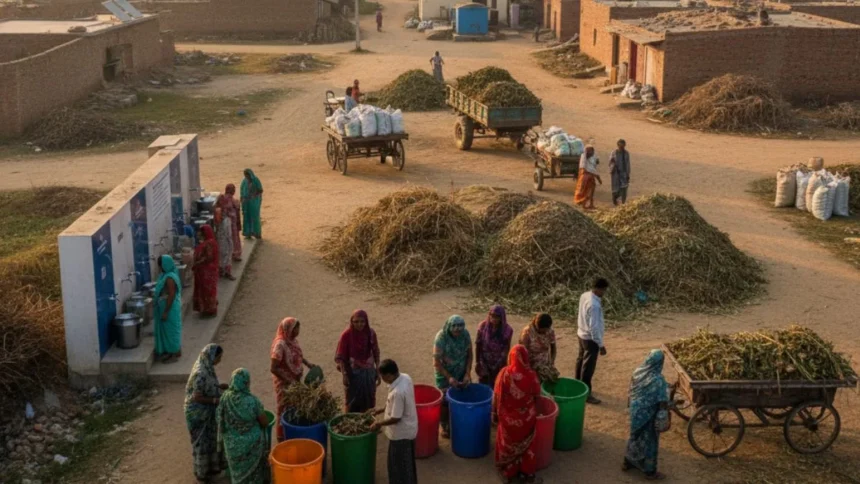
A silent and yet significant transformation is going on by 2026. In the villages and small towns of India, one can find people starting lucrative businesses to solve what was thought to be impossible to solve: garbage collection, lack of water, disjointed agricultural supply chains, village health care, and cheap energy.
These businesspeople are not pursuing vanity valuation and urban consumer trends. They are constructing the place where India resides. And in doing so, they are reinventing what successful Indian rural entrepreneurs actually would appear to be – in showing that mission and margin are not mutually exclusive or antagonistic, but rather allies. you are going to learn Social Impact Startups in Rural India.
What Is a Social Impact Startup?
A Social Impact Startup is an enterprise that deliberately aims at addressing a certain social or environmental issue and is still financially viable.

In contrast to NGOs that have to rely mostly on donations or grants, social impact startups earn money by providing instrumental products or services to underserved populations, including:
- Healthcare
- Clean energy
- Sanitation
- Education
- Agricultural solutions
Their main ideology is uncomplicated, but radical: only in the case the business itself can survive, grow and live without an endless external support, the long-term impact can be given.
The Change between India and Bharat
The startup culture in India has taken approximately 20 years to pursue a model that is well known: city dwellers, convenience through apps, quick user expansion and the growth of startups with the help of venture capital.
This model produced unicorns-but it also produced saturation, weak economies and stiff competition on a small segment of the population.
Meanwhile, there was another India that was overlooked, mostly known as Bharat.

This is the India of:
- 650,000+ villages
- Over 850 million people
- Radical, unresolved issues in need of scalable solutions
It is not rural India and has changed, but the infrastructure around it. Cheap mobiles, countrywide mobile payments, growing 4G and early 5G networks, Aadhaar-based identity system, and logistics penetration has made the cost of accessing rural consumers cheaper.
This has led to the breakdown of the old assumption that rural markets are too poor, too fragmented or too risky.
This is exactly where social impact startups are being formed at the intersection of an unmet need and a newly viable access.

The Reason Rural India is the New Silicon Valley
The fact that rural India is the new Silicon Valley has nothing to do with glamour and buzzwords. It is of magnitude, permanence, and necessity.
The Bharat Opportunity Structurally Massive
Urban India is competitive due to the fact that all are resolving the same issues to the same audience. Rural India is different. The problems are essential, regular and inevitable:
- Giving clean drinking water is not a choice
- The waste management can not be pushed forever
- The livelihoods depend on the efficiency of agriculture
- Access to primary healthcare is a need on a day-to-day basis
To tackle these issues in rural India, one must solve at least one of them, which includes tens or hundreds of millions of people.
A founder who captures:
- 1 million high end urban subscribers battles incessant churn and escalating acquisition expenses
- 100 million rural users often benefit from long-term adoption, loyalty, and trust of the word of mouth
The second scenario is not only bigger but stronger in terms of business.
Access Gap Closed due to Digital Infrastructure
The notion of rural India being offline is no longer relevant.
Key enablers include:
- Android smartphones are cheaply made
- UPI-driven digital payments
- Connections schemes supported by government
- Internet adoption of languages in the region
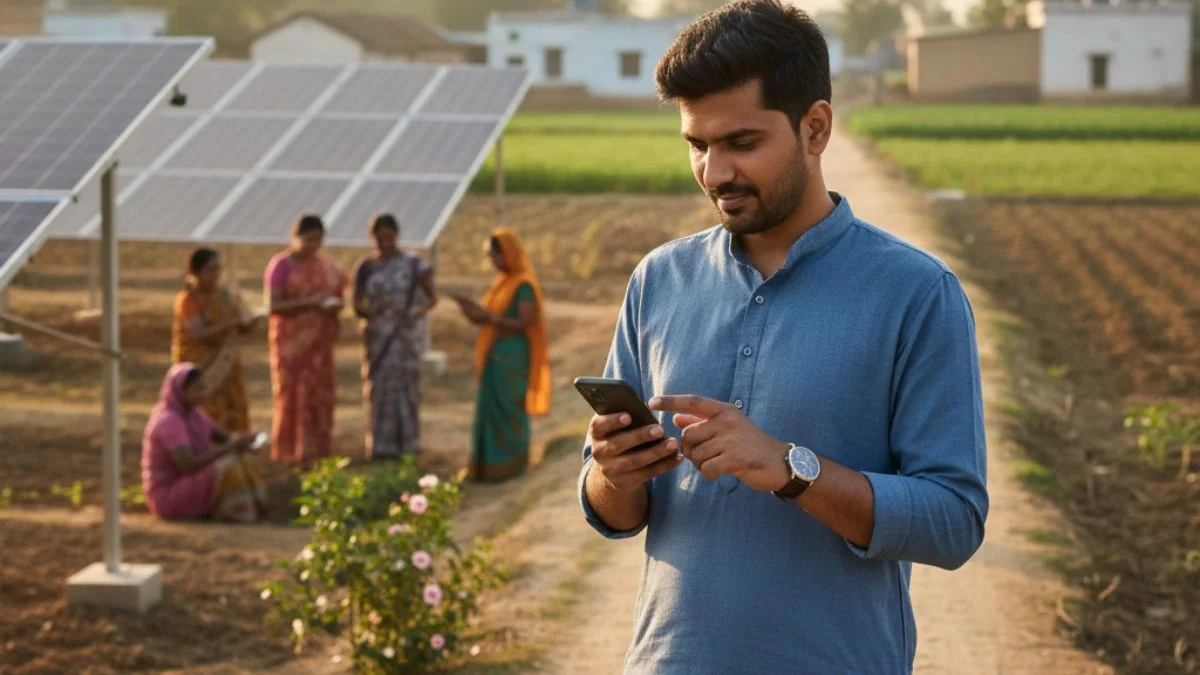
Today, an entrepreneur living in the village can:
- Accept digital payments
- Tracking inventory on simple software
- Granted weather, market prices and logistics platforms
- Onboard customers online with a limited friction
This infrastructure has silently eliminated the greatest barrier to rural business models, which is distribution.
Less Noise, More Signal
Differentiation is becoming more of a cosmetic matter in the urban startup hubs. In rural India, there is structural differentiation.
A startup gets a solution to a genuine issue, such as cold storage that is always reliable, irrigation that is cheap but efficient, or a solution to local waste disposal, then it becomes indispensable.
This explains the reason why rural-focused startups tend to encounter:
- Reduced cost of acquiring customers
- Longer customer lifecycles
- Community-driven defensibility
The country is not rewarded by hype in rural India. It rewards utility.
A Crucial Shift: The Double Bottom Line Concept
The conventional startups are judged based on one metric and that is financial performance. The second, equally crucial metric is measurable impact, which social impact startups bring up.
This model is referred to as the Double Bottom Line.
Definition of a Double Bottom Line
It means tracking:
- Profitability – Revenue, margins, cash flow and sustainability
- Impact – Lives have been better, emissions lower, income higher or access has been increased
Both metrics matter. Neither is optional.
What is the Importance of This in the Indian Case?
The most urgent issues of India such as the stress caused by climate, poverty in the country, health services are not to be resolved by businesses that will die when the funding is exhausted.
They cannot be resolved either by the companies that are able to extract value without positively influencing the local conditions.
The driving force of the double bottom line:
- This is advantageous to communities since solutions are long-term
- This is advantageous to businesses since trust and adoption is enhanced
- This is beneficial to the investors as the risk will decline with time
Real-Life Case Study: Farm Waste to Eco-Packaging
Consider a startup that:
- Buy out agricultural waste by farmers
- Turns it to a biodegradable packaging
- Sells the packaging to e-commerce companies and FMCG
Impact:
- Waste is another source of income to the farmers
- Crop burning decreases
- Plastic usage is reduced
Profit:
- Raw material is low-cost
- There is an increase in the demand of environmentally-friendly packaging
- Margins improve with scale
This is not charity. It is focused, result-centered capitalism.
There are Three Hard Truths of Social Impact Startups
Social impact startups are not simple businesses, despite the promise they have. They require systems thinking, humility and patience.
1. Trust is Built–and is not Sold
The rural society is naturally reserved. Many have seen:
- Failed government schemes
- NGOs which vanished following pilot projects
- Value extracting and exit companies
Consequently, trust has to be developed by:
- Consistent local presence
- Promotion within the community
- Open pricing and operations
This retards premature growth–but sets deep, impregnable roots when once penetrated.
2. The Real Battlefield Is Last-Mile Logistics
Provision of services in rural India entails:
- It has bad road connectivity in certain areas
- Unreliable power supply
- Seasonal disruptions
- Fragmented demand points
The city logistics solutions are not always successful in rural applications. Effective social startups redefine operations to the bottom, focusing on strength rather than velocity.
3. Capital Is Long-Suffering–But Skimpy
Majority of the conventional venture capital funds are organized on speedy-growing and exits. Social impact startups also need:
- Longer gestation periods
- Moderate but steady returns
- Hybrid funding models
Social startups often mix up: As we expounded in our article on [Bootstrapped vs Venture-Funded Startups], social startups often mix:
- Founder capital
- Revenue reinvestment
- Impact investors
- Strategic grants
This compromising method lessens stress and maintains autonomy.
Table Comparison Built in Google Featured Results
| Feature | Traditional Tech Startup | Social Impact Startup |
| Primary Goal | Growth in user acquisition, valuation growth | Resolving a social or environmental issue |
| Core Market | Urban, premium consumers | Unserved and rural population |
| Success Metric | Monthly recurring revenue, growth rate | Affected lives, increased income, sustainability |
| Funding Sources | Private equity, venture capital | Impact investors, grants, revenue, blended finance |
| Time Horizon | Short to medium term exits | Long-term systemic change |
| Competitive Edge | Speed, branding, capital | Credibility, connectedness, belonging to the community |
The New Geography of Indian Entrepreneurship
The decision of founders is another trend that has been highly underestimated in Indian startups.
Increasingly:
- Head offices are becoming closer to problem areas
- Investors are migrating to the Tier-2 and Tier-3 towns
- The process of making decisions is decentralised
This transformation saves money, enhances compassion and increases the speed of learning. It is significant that the gap between the beneficiary and the boardroom is narrowing.
The Reason Why This Model Is More Resilient Than Unicorn Chasing
Social impact startups can be labeled as being slow or unscalable. As a matter of fact, they are fragile.
During economic downturns:
- Basic amenities are important
- Businesses that are connected to the community keep the demand
- Revenue is likely to decelerate, though hardly ever to collapse
During regulatory shifts:
- Congruency to social good minimizes resistance
- Policy tailwinds tend to arise rather than head winds
Oppositely, most high-growth consumer startups are susceptible to:
- Funding cycles
- Regulatory crackdowns
- The changing consumer mood
Resilience is the new growth.
The International Environment: Why Bharat is in the Spotlight
The world capital is more conscious of impacts. The climate funds, ESG requirements, and development finance institutions are aggressively searching the emerging markets about the scalable models.
India offers:
- Democratic stability
- Entrepreneurial depth
- Massive internal demand
Social startups that are focused in rural areas are now exportable, not of a product, but of a structure.
More Read

The Vue Perspective
The most successful startups in 2026 will not be the ones that create the smartest apps but the ones that help to address most pressing human issues.
India is no longer an innovation periphery in rural India. It is emerging as the testing ground of a more real, stable model of capitalism, where revenue is not the only measure of success, but relevance.
We are of the opinion that this is not a trend at The Vue Times. It is a correction.
And the Bharat rural entrepreneurs who are currently constructing are privately planning the most sustainable economic future of India.