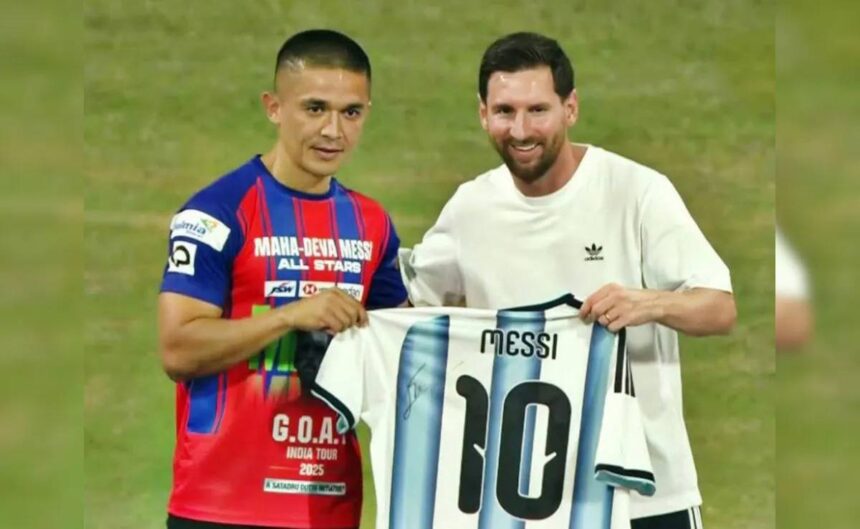
When it was announced that Lionel Messi was heading to India, it immediately overtook headlines, the social media feeds of the country and sports discussion forums. It was unlike Messi to visit India, a country where cricket is more of the religion than a sport. It was not only about football. It posed a much larger question: Is India now ready to see beyond cricket?
Since time immemorial India has been idolizing world football stars. European stadiums are perceived by Indian fans to be nearer than home football stadiums. Barcelo, Argentinian and PSG shirts are widespread in the Indian streets, but the Indian football does not have the mass audience yet. Messi in India alters this. His appearance itself represents potential, desire, and a sports change in India, which is hard to come by.
It is not just time to worship the celebrities. It concerns the culture of Indian sports, policy decisions, grassroots building, and the chance of India to become a real multi-sport state.
Why Messi Coming to India is more than Headlines
Lionel Messi is not the ordinary football celebrity around the world. He symbolizes quality, stability, and sporting worldwide impact. The visit of Messi to India sends a strong message to the fans, investors, administrators, and young athletes.

The Indian sport news has been focused on decades of information about cricket tournaments, IPL auction and player statistics. Football, west Indian (hockey), athletics, and Olympic sports are the sports that get attention in cases of international victories or scandals. Messi India messenger breaks that trend.
The major reasons why Messi in India is important:
- It confirms India as a serious sports market in the world.
- It provides foreign attention to the development of Indian football.
- It motivates grass root football India.
- It compels policy-makers to reconsider the priorities of sports.
- It revives controversy of football vs cricket India.
This is not hype. This is timing.
Long Relationship With Football: A Forgotten Legacy India
Football had thrived in India before cricket took over by freeing all of India under its rule. In such states as West Bengal, Goa, Kerala, or the Northeast, football used to be the beat of local population.

The 1911 marked a sporting victory of Mohun Bagan over East Yorkshire Regiment; and was also symbolic, a symbol of national achievement. Indian football teams could arrive with crowds that competed with those at the beginning of cricket games.
But the absence of professional leagues, poor infrastructure and weak governance relegated football. The cricket with its sponsorships, television and institutional support shot forward.
The fact that Messi visited India revives a discussion that India left decades ago.
Dominating Cricket in India: How One Sports Triggered Everything
Domination of cricket in India did not occur naturally. It was built systematically.

Television rights, advertising revenues and political favours as well as urban aspirational culture all gravitated around cricket. The IPL also solidified the fact that cricket was on the verge to become entertainment and business and national identity all in one.
In the meantime, football popularity in India was still divided. Matches were not covered on prime time. The home leagues had a problem in timing, advertising and sponsorship.
The result:
- More than 90 percent of sports ad revenues go into cricket.
- Sports in India Non-cricket sports in India survive on government grants.
- Skilled athletes usually drop out because of financial insecurity.
The visit by Messi to India breaks this imbalance, although not structurally.
Messi Impact on Indian Sports: Outside of Football Fans
Messi influence in Indian sports extends beyond the football lovers. His coming releases world attention, news pressure, and anticipation.
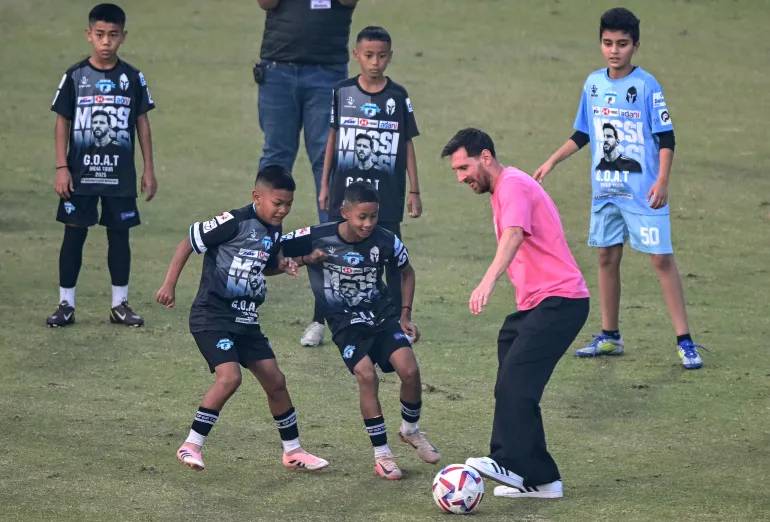
The children who might never have even seen an Indian Super League match are now willing to find out what is there. Parents are convinced that football is not only a hobby, but also a possible sport. Brands start looking at football sponsorships.
This ripple effect matters.
The introduction of international football stars in such countries as Japan and South Korea was a central event towards settling of the football culture. India might be at cross roads also.
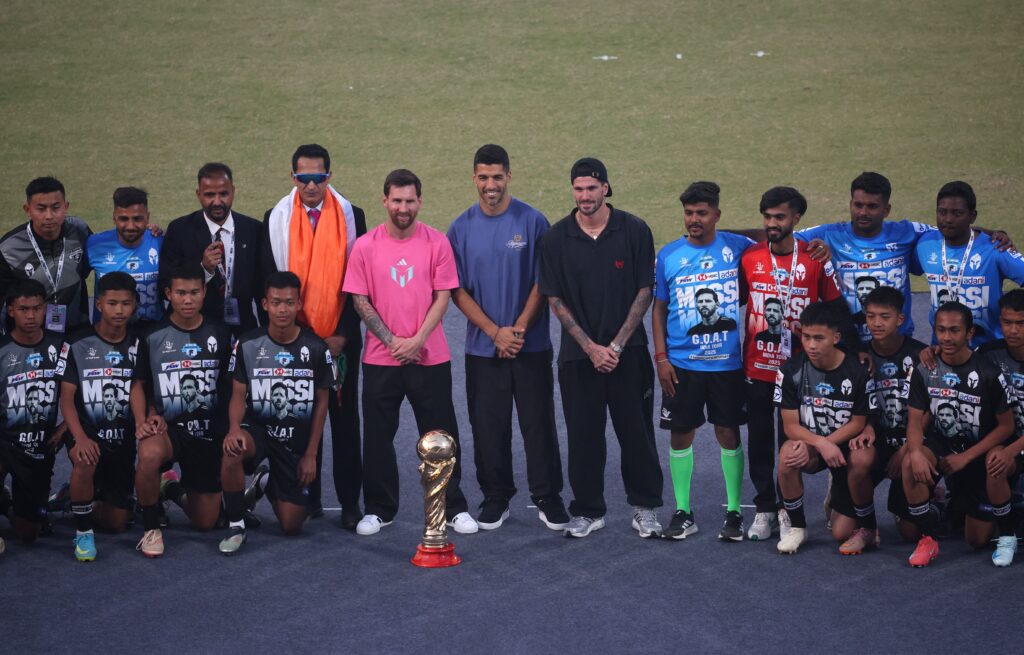
The present state of football in India: Growth, Gaps, and Ground Reality
There has been the promise of Indian football growth in the past few years. Super league among Indians became more visible. Academies increased at the grassroots in metro cities. Young people were more engaged.
But there are still immeasurable challenges.
Existing facts in football in India:
- Lack of infrastructure training in rural places.
- Lack of professional avenues among the youth players.
- Weak leadership in federation.
- Poor attendance to domestic matches.
Messi in India cannot do away with these issues in isolation. Nonetheless, it can hasten the dialogue about things that count.
Grassroot Football India: The Change That Has to Start There
India needs to invest in the right areas to have a football future: grassroots football India.
Give a real life example of Mizoram. One of the local schoolteachers started to arrange informal football competitions with the help of borrowed gear. With time these matches were organised tournaments. Others would later be enrolled in professional academies.
These are not isolated cases throughout India. What they do not have is scale, funding and recognition.
The India visit that Messi made should prompt the players in the policymaking sphere to concentrate on the systems rather than on the symbolic events.
Global Football Stars in India: The Symbolism vs Substance
International football stars have been hosted in India previously. Friendly matches and exhibition games and advertisements have been there and gone.
Credibility is the difference between Messi and the rest. He is neither old, nor formal, nor merely symbolic. He is a synonym of the existing world football perfection.
This creates pressure.
Unless India seizes this time, it will strengthen the belief that India is only good with stars but not good with systems.
Multi-Sport Vision: Why India requires Sports Beyond Cricket
India is a country of 1.4 billion. It can not afford spending both emotionally and financially on a single sport.
The issue of participation in Olympic sports India has been enhanced in recent years. Government projects have given a push to wrestling, badminton, boxing, and athletic sportsmen.
Nonetheless, the focus of the population remains much on cricket.
Messi visiting India is reviving a debate that needs to be revived: Can India find a balance between winning cricket and development of other sports?
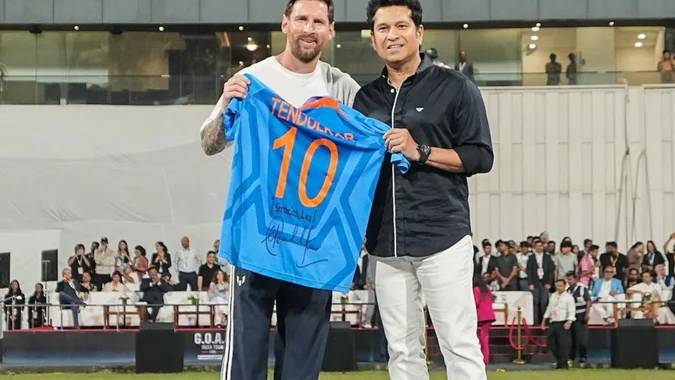
Football vs Cricket India: Fake Competition?
This discussion usually takes the form of football vs cricket India. This framing is misleading.
Cricket does not need to be replaced by football. It needs space alongside it.
The nations such as England, Australia and South Africa control multiple sports, which have no identity conflict. India can too.
The visit of Messi to India is an expansion rather than a threat.
Indian Sports Culture: Shifting Desires of the Youth
City Indian young people already watch worldwide sports content. They subscribe to European clubs, foreign sportsmen, and culture of fitness on the web.
It lacks national faith.
When Messi treads on Indian soil, it brings aspiration to reality. It informs young Indians that the excellence in sports around the world is not far.
This mental transformation is vigorous.
Role of Policy and Institutions in India Football Development.
Moment alone cannot serve in the development of India football. Institutions matter.
Governmental organizations, sporting associations, and other stakeholders are to be harmonized.
Current statistics of the Indian sports bodies indicate that there is more funding toward other sports other than cricket though there are loopholes in implementation.
Instead of celebrating Messi in India, there should be calls to accountability.
Olympic Sports India and Messi Effect
Interestingly, Olympic sports India could also gain indirectly out of the visit of Messi.
Why?
Due to the focus on football, conversations about infrastructure, coach support systems, and athlete support systems get adopted in all sports.
A country that comes to know how to cultivate football adequately can repeat such systems to athletics, hockey, and others.
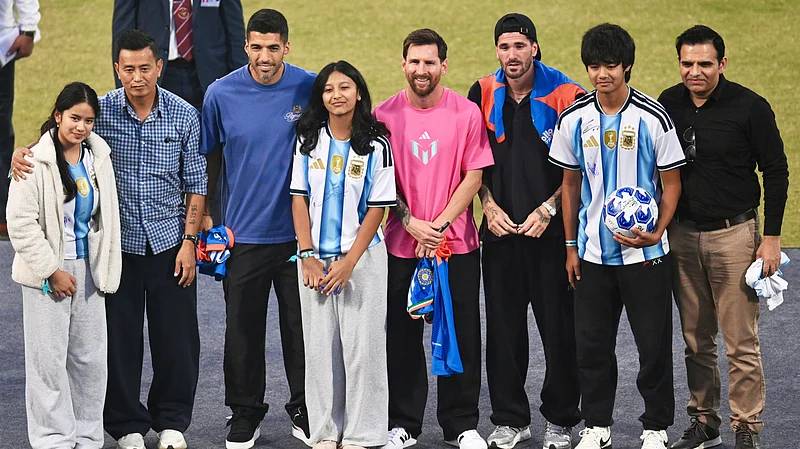
The role of Media: sensation into Substance
Indian sports media is spectacle. Massive coverage will be created by Messi India news.
The challenge is depth.
It is time, media should go beyond photo-ops and ask hard questions:
- What will become of Messi when he is gone?
- What is the number of football grounds being constructed?
- What is the number of coaches under training?
This is where journalism has to take action.
What India Can Learn When it Comes to Other Football Nation
By investing in long-term projects, the countries are developing strong ecosystems which are composed of countries with limited history of football.
Japan specialized in high-school football. Iceland spent money on indoor training. Morocco developed the European collaborations on youth academies.
India has resources. What it requires is visionary consistency.
Messi in India is not a blueprint in India, but a guide line.
Life story: A Small-Town Football Dream
In Kerala, a teenager spends everyday in a small town training on a muddy ground after being motivated by some videos of Messi on YouTube. His parents are concerned with making a living and he insists.
When Messi comes to India, then that dream will be not that unrealistic.
Such moments matter. They create belief.
The Business Side: Brand Watching
A also business opportunity in India is sports transformation.
Football presents an untapped potential to brands. Young demographics incline towards sports identities in the world. The market value of football is justified with the Messi visit to India.
This may trigger the improvement of sponsorships, leagues, and investment of infrastructure.
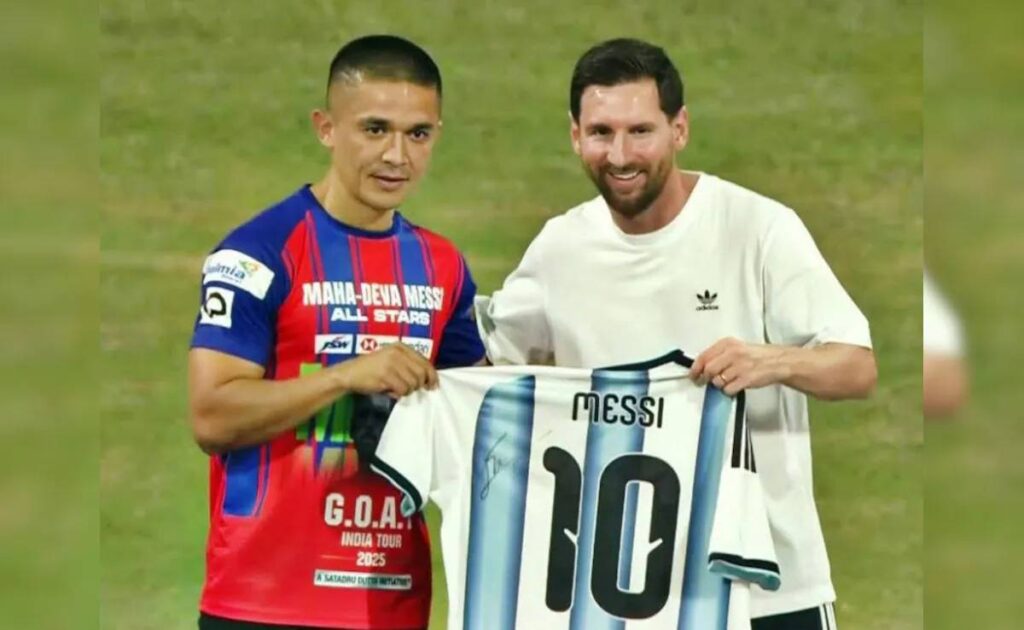
Threats: Forging A Historic Trend into a Failure
So there exists a very tangible threat that Messi visiting India could end up as another headline.
When glamour is concentrated on, without subsequent actions, things will not be different.
Such cycles have occurred in India.
This is the reason why the pressure of people, media ought to be bothered, and institutional accountability is vital.
India: What India needs to do after Messi visit.
Clear actions must follow.
- Invest in on ground football infrastructure.
- Develop local qualified coaches across the country.
- Enhance the domestic league presence.
- Promote football programs at school.
- Balance the funding to cricket and multi-sport.
The absence of such steps will make Messi in India more of a symbol.
Student/Young Athlete Actionables
This is the time that the young Indians should take advantage of.
- Have a serious look into football academies.
- Lead in domestic league, not only European clubs.
- Demand improved sports facilities in the area.
- Do not treat sports as a fantasy.
A change can start with the individual level.
What Professionals and Policymakers Could Learn
Sports management and analytics are emerging sectors among professionals.
To the policymakers, Messi visit is a vision test.
Policy in sports should leave a reactive approach behind and become more proactive.
More Read

Is India Ready to Start looking Beyond Cricket?
Messi in India does not imply making a choice between football and cricket.
It is the preference of ambition against limitation.
Talent, passion and population are available in India. It requires audacity to mix up its sporting identity.
India must use this opportunity carefully but in the event that it does, the visit of Messi may be the start of an inclusive, global and confident sports culture.
Otherwise it is just going to be a forgotten headline.
The choice lies with India.