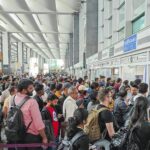
India’s largest airline is navigating one of the most turbulent operational crises in its history. For nearly a week, IndiGo has faced a cascade of delays, mass cancellations, passenger distress, and regulatory scrutiny, creating a ripple effect across almost every major airport in the country. With more than two thousand cancelled flights since Tuesday and fresh disruptions continuing into Monday, the crisis has highlighted the fragility of India’s aviation sector at a time of record domestic travel demand.
This report examines the ongoing situation, the root causes, the scale of the impact, and what passengers can realistically expect in the coming days as IndiGo works to stabilize its network.
A Week Of Disruption That Halted India’s Aviation Flow
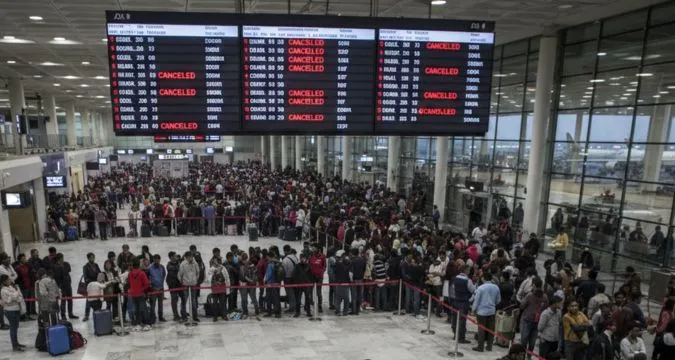
The initial wave of delays began early last week and quickly intensified. By the sixth day, more than two thousand domestic and international flights had been cancelled nationwide. Airports in Delhi, Mumbai, Bengaluru, Hyderabad, Kolkata, and Chennai reported long queues, stranded families, and passengers waiting hours for clarity on revised schedules.
IndiGo’s internal data indicates that the airline has operated approximately one thousand six hundred fifty flights out of its planned two thousand three hundred since Sunday. This partial restoration has provided some relief, yet nearly six hundred fifty flights remain cancelled on any given day as network adjustments continue.

Financial And Logistical Fallout For Passengers
The disruption created an unexpected burden for lakhs of travellers. IndiGo has already processed refunds worth six hundred ten crore rupees and returned about three thousand delayed baggage items. The airline’s automatic refund policy introduced last week aims to provide faster resolution for cancellations, rescheduling, and disrupted itineraries for travel between December five and December fifteen.
Passengers who booked tickets on or before December six have been told to expect their refunds by Monday afternoon. Despite this assurance, complaints continue to surface regarding delays in refund credit, challenges in accessing customer support, and lack of real-time communication regarding rebooked flights.
The Scale Of Disruptions Across India
Multiple airports remain affected today. Individual location updates show the depth of the crisis.
Delhi
Delhi’s Indira Gandhi International Airport remains the worst hit, with one hundred thirty four cancellations confirmed on Monday. Seventy five departures and fifty nine arrivals have been scrubbed from the day’s schedule. Passengers have been continuously advised to check flight status before leaving for the airport.
Mumbai
Thirty two flights are cancelled at Mumbai Airport. Of these, twenty two are departures and ten are arrivals. Although the situation is more controlled compared to Delhi, the operational imbalance is visible in the form of overcrowded terminals and extended waiting periods.

Srinagar
Srinagar Airport has reported cancellations of eight arrivals and eight departures for Monday. This has particularly impacted winter tourists and residents returning home ahead of the holiday season.
Nationwide Planned Cancellations
A planned schedule cut confirms the cancellation of two hundred twenty four flights nationwide today. This is part of IndiGo’s conscious strategy to reduce operational pressure and prevent spontaneous last-minute disruptions.
Root Cause Of The Crisis: The FDTL Rule Change
The airline has attributed the large scale disruptions to the introduction of new Flight Duty Time Limitation norms. These norms, designed to enhance crew safety and rest cycles, have effectively tightened the number of hours pilots can operate. IndiGo’s crew rosters were unable to adapt quickly to the revised requirements, creating staff shortages across critical routes.

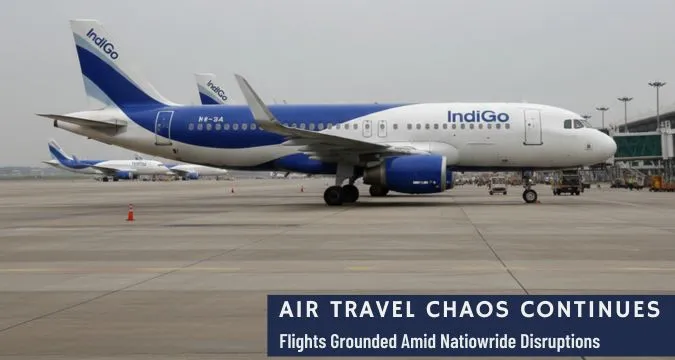
IndiGo’s Chief Executive Officer Pieter Elbers acknowledged that the airline is recovering from the disruptions and that the situation is improving every hour. He has stated that the airline is confident of achieving full network stability by December ten. The next forty eight hours will therefore be decisive for IndiGo, its regulators, and the millions of passengers who depend on it daily.
Also Read: Agartala And Bagdogra Flight Begin Soon
DGCA Seeks Accountability
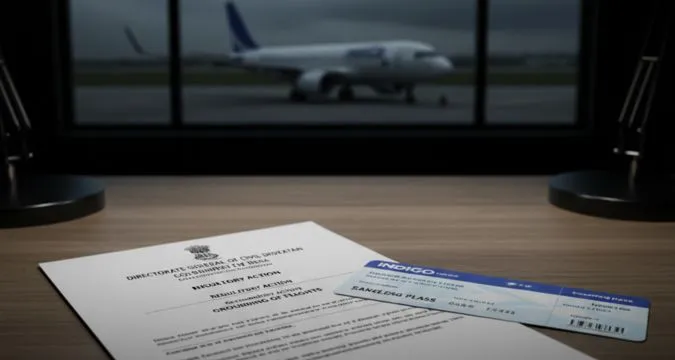
The Directorate General of Civil Aviation has issued a Show Cause Notice to IndiGo for what it describes as large scale operational disruptions and visible non compliance in scheduling. The Accountable Manager and Chief Executive Officer were expected to respond by December seven. However, the airline sought an extension citing operational constraints. The regulator has permitted a one time twenty four hour extension.
This inquiry is likely to set an important precedent for future operational planning across the Indian aviation sector, especially as safety driven regulations become tighter.
Passengers Continue To Face Uncertainty
Even as IndiGo restores a significant portion of its flights, travellers across India continue to face uncertainty. Complaints shared at airports and on social platforms describe passengers waiting several hours without communication, receiving refunds after multiple follow ups, or being unable to find alternative flights at reasonable prices.
This disruption is not limited to leisure travellers. Students, business passengers, and international connecting travellers have all reported missed events and significant financial loss. As year end travel peaks, such disruptions are likely to create wider congestion across the aviation network.
Also Read: Mumbai Second International Airport
A Sector Wide Stress Test
IndiGo’s crisis has revealed how sensitive the aviation ecosystem is when airline scheduling collapses. A single carrier contributes more than sixty percent of India’s domestic air traffic. When such an airline experiences even minor strain, the shockwaves affect air traffic management, airport operations, and competition pricing across the board.
In the short term, IndiGo’s reduced capacity may push up spot airfares on certain routes. Competing carriers like Air India, Vistara, and Akasa can absorb some spillover, but their fleets and schedules cannot fully replace IndiGo’s extensive network.
What Comes Next For IndiGo
A full return to normal operations by December ten is the airline’s official target. Achieving this requires stabilising crew rosters, updating duty time planning systems, deploying standby pilots more effectively, and reducing flight load temporarily to align with staffing capacity.
The more important question is whether such a disruption can happen again. The new FDTL norms will remain in place and airlines must reengineer their rostering processes accordingly. IndiGo and other Indian carriers will likely need structural adjustments in crewing, forecasting, and planning to ensure compliance without affecting flight reliability.
Industry observers believe that this crisis could speed up investments in technology for predictive rostering, automated crew planning, and real time monitoring of fatigue risk. Given India’s rapidly expanding aviation market, operational resilience will play a central role in airline competitiveness.
More Read

A Warning Signal For India’s Aviation Growth Story
India is on the verge of becoming the world’s third largest aviation market. This growth makes operational stability essential to public confidence. The IndiGo crisis serves as a reminder that even the biggest carriers can stumble when regulatory changes align with existing structural vulnerabilities.
In the long term, the airline’s response will significantly shape public perception. Transparent communication, efficient refunds, timely restoration of flights, and improved staff deployment will determine how quickly passengers regain trust.
For now, passengers must stay alert to schedule changes, verify flight details before traveling to airports, and anticipate longer wait times as airlines adjust operations.
Conclusion
IndiGo has begun the process of restoring its nationwide network, yet the ripple effects of the past week will continue to be felt for several days. As the airline navigates regulatory pressure, crew duty rules, and public frustration, India’s aviation sector is observing carefully. The response to this crisis may influence operational frameworks across the industry for years to come.
For travellers, the hope is that IndiGo delivers on its promise of stabilising operations by December ten and ensures smoother flying conditions during the peak holiday season. The coming days will reveal whether India’s largest airline can turn disruption into an opportunity to strengthen its systems and reinforce its leadership in the skies.