
It usually starts with a sentence delivered in complete sincerity and obvious irony at the same time. A friend buys a dress on sale and announces that she has, technically, saved money. Someone uses cash from a returned item to justify another purchase because it is “basically free.” A concert ticket bought six months ago no longer counts as a real expense because the emotional pain has already been absorbed. Everyone laughs, because everyone understands the logic even while knowing it is not logic at all.
That, broadly, is Girl Math: the internet’s cheeky shorthand for the small financial stories people tell themselves to make spending feel easier, smarter, or at least more emotionally manageable.
The phrase took off because it was funny. It stayed because it was familiar. But like many viral expressions, Girl Math is doing more than generating jokes. It opens a revealing window into how people experience money, identity, pressure, and self-justification in a consumer culture that rarely asks us to spend less and constantly invites us to spend more.
What Girl Math Really Means
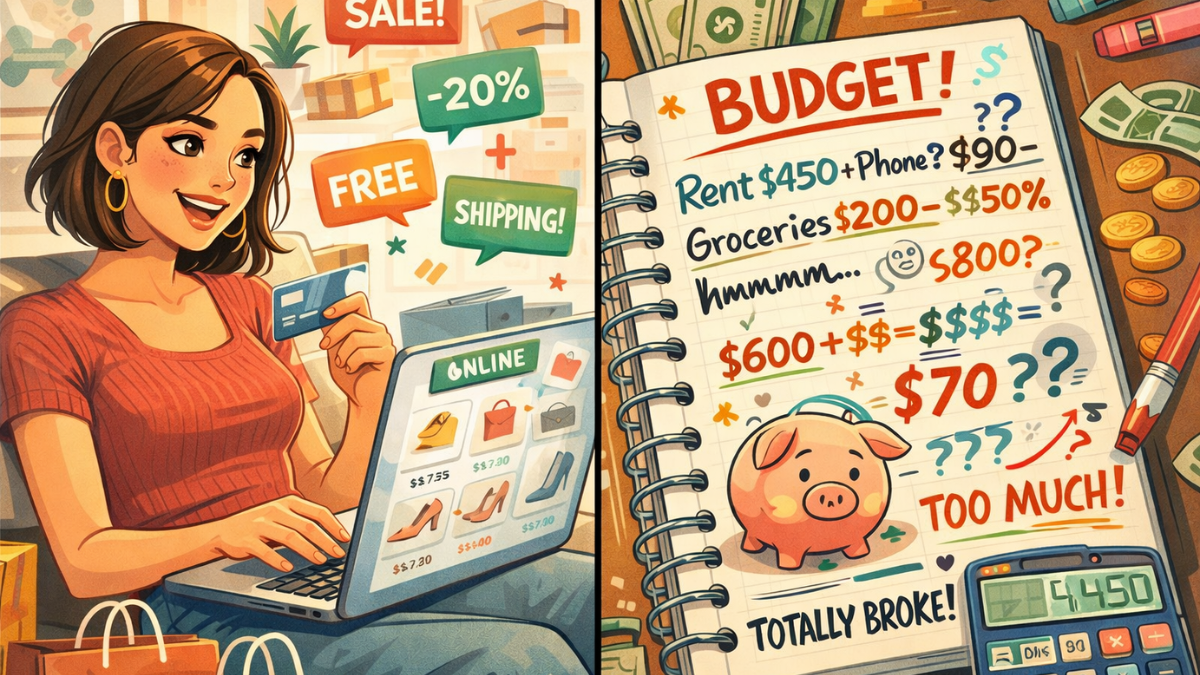
At face value, Girl Math refers to humorous, irrational, or selectively rationalized spending rules. The examples are now well known. If you return an item and get a refund, that money can be treated as newly available rather than recovered. If you split the cost of something over multiple uses, it becomes “worth it.” If you pay with a gift card, the purchase feels free. If the purchase helps your mood, the cost begins to look suspiciously like self-care.

None of this is actual mathematics, of course. That is the point. The phrase works because it frames emotional decision-making in the language of logic.
What makes the trend stick is that it names a behavior many people recognize in themselves. Not just women, despite the label. Almost everyone has some version of Girl Math. Men do it with gadgets, streaming subscriptions, sports tickets, and food delivery. Businesses do it when they call a discount an opportunity rather than a prompt to spend. Consumers do it every time they turn a desire into a justification.
The phrase is gendered, but the behavior is universal.
Why Girl Math Went Viral So Fast
A lot of internet culture runs on recognition. A joke spreads when it captures an everyday truth people have felt but never named. Girl Math hit that nerve immediately.
It arrived at a moment when financial stress is woven into ordinary life. Inflation has changed the emotional weight of everyday purchases. Rent, groceries, and transport take bigger bites out of monthly budgets. At the same time, social media continues to sell aspiration as a lifestyle: better skincare, better outfits, better coffee, better interiors, better everything. People are told to be careful with money and to keep consuming as if restraint is somehow a personal branding failure.

That contradiction creates tension, and humor is one of the quickest ways to manage it.
Girl Math is funny because it softens guilt. It lets people confess financial irrationality without sounding irresponsible. It turns a private habit into a public joke. Once that happens, the shame drains out and the relatability takes over.
Girl Math and the Psychology of Spending
Underneath the jokes is a pretty serious truth: most spending is not purely rational.

People like to imagine money decisions as neat calculations, but behavior rarely works that way. Spending is emotional. It is influenced by stress, reward, identity, boredom, scarcity, status, and timing. A purchase can feel different depending on whether it is framed as a treat, a necessity, a bargain, or a future investment in the self.
Girl Math takes those hidden mental shortcuts and drags them into daylight.
Behavioral economists have long studied the ways people mentally categorize money. One of the clearest examples is mental accounting, where individuals assign different meanings to the same amount of money depending on its source or purpose. Salary feels different from cash-back rewards. A bonus feels different from savings. Refund money feels different from rent money, even though numerically they are all just money.
That is why Girl Math resonates. It is not random nonsense. It is exaggerated mental accounting with excellent comedic timing.
There is also a protective function at work. For many people, especially younger adults navigating unstable economic conditions, small indulgences can feel like one of the few available forms of control or pleasure. The justification ritual matters. It transforms a purchase from reckless into reasonable, from frivolous into earned.
The Problem With the Name
The phrase may be catchy, but it is not neutral.
Critics of Girl Math have pointed out that the trend can reinforce old stereotypes about women being unserious or incompetent with money. That criticism is not overblown. Popular culture has a long habit of treating women’s spending as silly while normalizing men’s financial irrationality as enthusiasm, collecting, investing, or passion.
A woman jokes that shoes bought on sale are a net win and it becomes evidence of “Girl Math.” A man drops a large sum on a gaming setup, collectibles, or fantasy league expenses and somehow avoids the same mocking framework. The asymmetry is worth noticing.
Still, language online often works through exaggeration and self-parody. Many women using the term are not endorsing the stereotype. They are playing with it, owning it, and turning it into a social wink. The problem is that ironic labels do not always stay ironic once brands, media outlets, and comment sections get hold of them.
That is where the trend becomes less harmless. A joke about spending can quickly become a familiar dismissal of women’s financial judgment.
Why Brands Love Girl Math
Naturally, marketers spotted the opportunity almost immediately.
Girl Math fits perfectly into the emotional architecture of modern advertising. It encourages the consumer to reinterpret cost as value, guilt as empowerment, and spending as savvy behavior. A brand barely has to invent new messaging. The script is already there: it is an investment, not an expense. You saved by buying now. You deserved this. Cost per use makes it smart. Free shipping is practically profit.
Retail has always relied on these reframings. The only difference is that social media turned them into a joke users could repeat themselves.
This is why the trend matters beyond entertainment. When a meme normalizes a set of emotional spending habits, it can soften resistance to marketing. Consumers become fluent in self-justification. That does not mean people are gullible; it means culture and commerce often speak the same language.
The smartest brands know this and lean in carefully. The clumsiest ones overdo it and sound patronizing. Either way, Girl Math gave marketers a ready-made tone: playful, confessional, and consumption-friendly.

Girl Math in the Age of Personal Finance Content
There is a strange contrast between the rise of Girl Math and the boom in personal finance advice. Everywhere you look, there are budgeting apps, savings influencers, debt reduction threads, investing explainers, and “money mindset” content. Financial literacy has become a genre. Yet the popularity of Girl Math suggests that information alone does not settle the problem.
Knowing what you should do with money and feeling able to do it are not the same thing.
Many people know they should budget better. They also know that life can feel punishingly expensive and psychologically draining. A perfectly optimized financial system is useful on paper, but it often crashes into human moods, impulses, and exhaustion. Girl Math survives in that gap between ideal discipline and lived reality.
That may be why the trend sparked so much conversation rather than simple dismissal. It acknowledges, in a way formal finance language often does not, that money decisions are deeply emotional decisions.
The Future of Girl Math
Like most internet phrases, Girl Math will eventually lose some of its novelty. Another label will emerge, another meme will package familiar behavior in a fresher form. But the dynamic behind it is not going anywhere.
People will keep rationalizing purchases. Brands will keep encouraging them. Social media will keep transforming private thought patterns into public jokes. And financial anxiety will continue to shape the humor people gravitate toward.
What may change is the direction of the conversation. Already, some creators are using Girl Math as a gateway into more serious discussions about budgeting, debt, gendered spending judgments, and financial self-awareness. That is probably the most useful evolution available to the trend.
Because once you can laugh at your patterns, you can also examine them.
Not every irrational rule is damaging. Some are harmless and even humanizing. But a culture that constantly nudges people toward spending benefits when those rules remain unexamined. The interesting question is not whether Girl Math is true. It is why so many people needed a joke to talk honestly about money in the first place.
More Read

Conclusion
Girl Math may look like disposable internet humor, but it captures something much bigger than a meme. It reveals how people negotiate spending with emotion, identity, and pressure in a culture built around consumption. The term is funny because the behavior is real. People rarely spend through pure logic; they spend through stories they tell themselves about reward, necessity, and worth.
That does not make the trend foolish. It makes it revealing. And maybe a little uncomfortable. Because once the joke lands, what remains is a clear picture of how modern money habits actually work: not as equations, but as negotiations between desire and discipline.
Final Insight
At The Vue Times, trends matter most when they reveal something deeper than the joke. Girl Math is not just viral slang. It is a snapshot of how digital culture turns anxiety into humor, spending into identity, and self-justification into a shared language.
For more sharp, culture-first analysis that goes beyond surface-level trends, keep reading The Vue Times.
Frequently Asked Questions
What is Girl Math?
Girl Math is a viral internet term used to describe humorous, emotionally driven ways people justify spending money. It is not real math, but a joke about the mental shortcuts behind everyday purchases.
Is Girl Math offensive?
It can be, depending on how it is used. Some people see it as harmless self-aware humor, while others argue it reinforces stereotypes that women are bad with money.
Why did Girl Math become so popular?
It became popular because it felt instantly relatable. Many people recognized the spending logic in their own lives, especially during a time of rising costs and intense consumer pressure online.
Is Girl Math only about women?
No. The label is gendered, but the behavior is not. People of all genders use emotional reasoning and mental accounting to justify spending.
What does Girl Math say about consumer culture?
It shows how deeply spending is tied to identity, mood, and self-justification. It also reveals how modern marketing often mirrors the same logic people use to excuse purchases.