
Blockchain Beyond Crypto: Where the Real Revolution Is Happening


The conversation around blockchain has long been dominated by price charts, speculative trading, and digital coins rising and crashing in cycles. For many, the word still triggers images of volatile markets rather than meaningful infrastructure. Yet quietly, almost outside the noise, a different story has been unfolding—one that has very little to do with trading and everything to do with how systems build trust.
Walk into a logistics warehouse, a hospital records room, or even a government registry office, and you’ll find the same underlying problem: fragmented information, delayed verification, and a constant reliance on intermediaries. This is precisely where the idea of Blockchain Beyond Crypto starts to make sense—not as hype, but as infrastructure.
Blockchain Beyond Crypto: Moving From Speculation to Utility
At its core, blockchain is not about currency. It is about trust architecture.
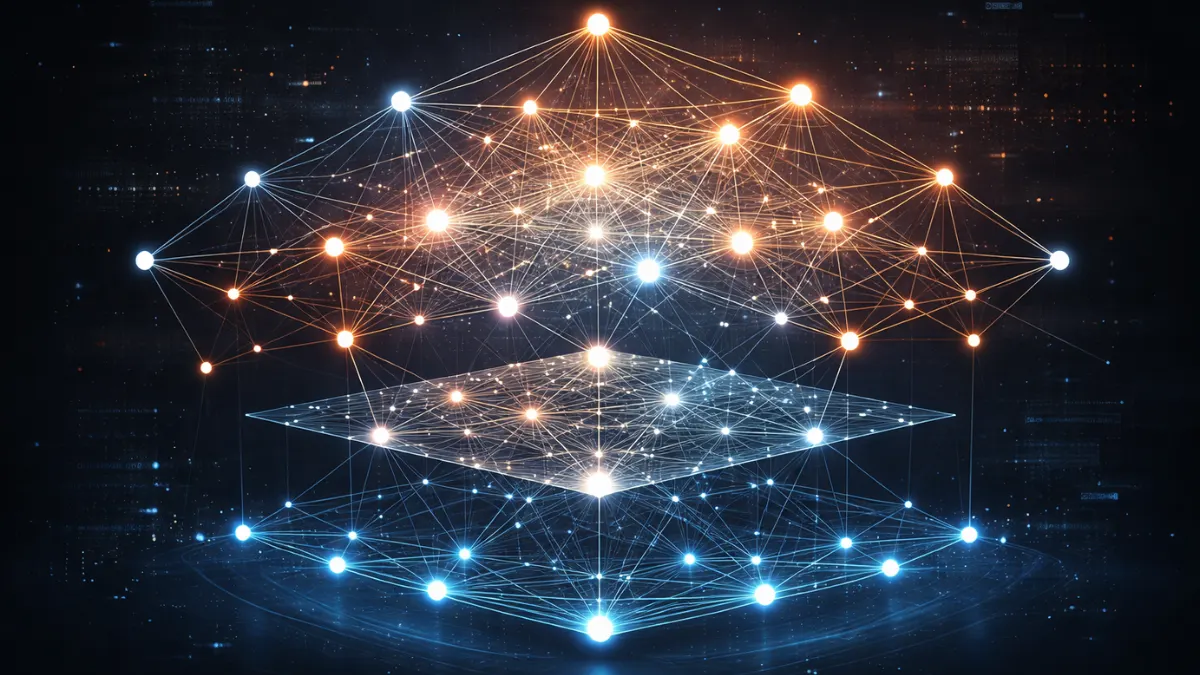
Instead of relying on a central authority to validate transactions or data, blockchain distributes that responsibility across a network. Every entry is recorded, time-stamped, and—most importantly—difficult to alter once verified. That single property changes how institutions think about accountability.
The early association with cryptocurrency overshadowed this broader potential. But over the past few years, businesses and governments have begun separating the technology from the noise. The question is no longer, “What is the price of crypto?” but rather, “Where can blockchain reduce friction?”
That shift marks the beginning of a more mature phase.
The Quiet Transformation Inside Supply Chains
Consider the journey of a simple product—a coffee bean. It travels from a farm to a distributor, then to a retailer, and finally into a consumer’s cup. At each step, records are created, often manually, and often inconsistently.
Blockchain introduces a single, shared ledger across this journey.
Companies are now using blockchain to track goods in real time, ensuring authenticity and reducing fraud. A retailer can verify whether a product labeled “organic” actually came from a certified farm. A pharmaceutical company can track whether a medicine was exposed to unsafe conditions during transit.
The impact here isn’t flashy—but it is structural. It replaces trust based on assumption with trust based on verification.
[caption id="attachment_10003" align="alignnone" width="1200"] Healthcare data management powered by blockchain systems[/caption]
Digital Identity: Ownership in the Age of Data
One of the most overlooked applications of Blockchain Beyond Crypto lies in digital identity.
Today, identity is fragmented. Your data exists across platforms—banks, social media, government databases—and you rarely control it directly. Verification often requires repeated submissions of documents, increasing both friction and risk.
Blockchain offers an alternative: self-sovereign identity.
Imagine a system where your credentials—education, medical history, licenses—exist in a secure digital wallet, verified once and shared only when necessary. No duplication. No central authority controlling access.
Governments and institutions are experimenting with this model, especially in regions where identity infrastructure is weak. For individuals, it represents something subtle but powerful: control.
Healthcare: Fixing the Invisible Inefficiencies
Healthcare systems, despite their importance, are often built on disconnected databases. Patient records rarely move seamlessly between providers. Errors happen not because of lack of expertise, but because of lack of coordination.
Blockchain is being tested as a backbone for unified medical records.
A patient’s history—diagnoses, prescriptions, test results—can be securely stored and accessed by authorized professionals across institutions. This reduces duplication of tests, speeds up treatment decisions, and improves outcomes.
More importantly, it changes the patient’s role. Instead of being a passive subject in a system, the patient becomes an active holder of their own data.
Why Businesses Are Paying Attention Now
For years, blockchain remained in the “interesting but impractical” category for most businesses. That perception is shifting, not because the technology suddenly changed, but because the context did.
Three forces are driving adoption:
- Data trust has become a competitive advantage
- Regulatory pressure around transparency is increasing
- Digital transformation demands systems that scale across organizations
Blockchain addresses all three.
Large enterprises are now integrating blockchain not as a replacement for existing systems, but as a layer that enhances verification and coordination. It’s less about disruption and more about reinforcement.
[caption id="attachment_10004" align="alignnone" width="1200"] Blockchain Beyond Crypto use cases in global supply chain tracking[/caption]
The Psychology of Trust in Digital Systems
There’s a deeper layer to the rise of Blockchain Beyond Crypto, one that is rarely discussed.
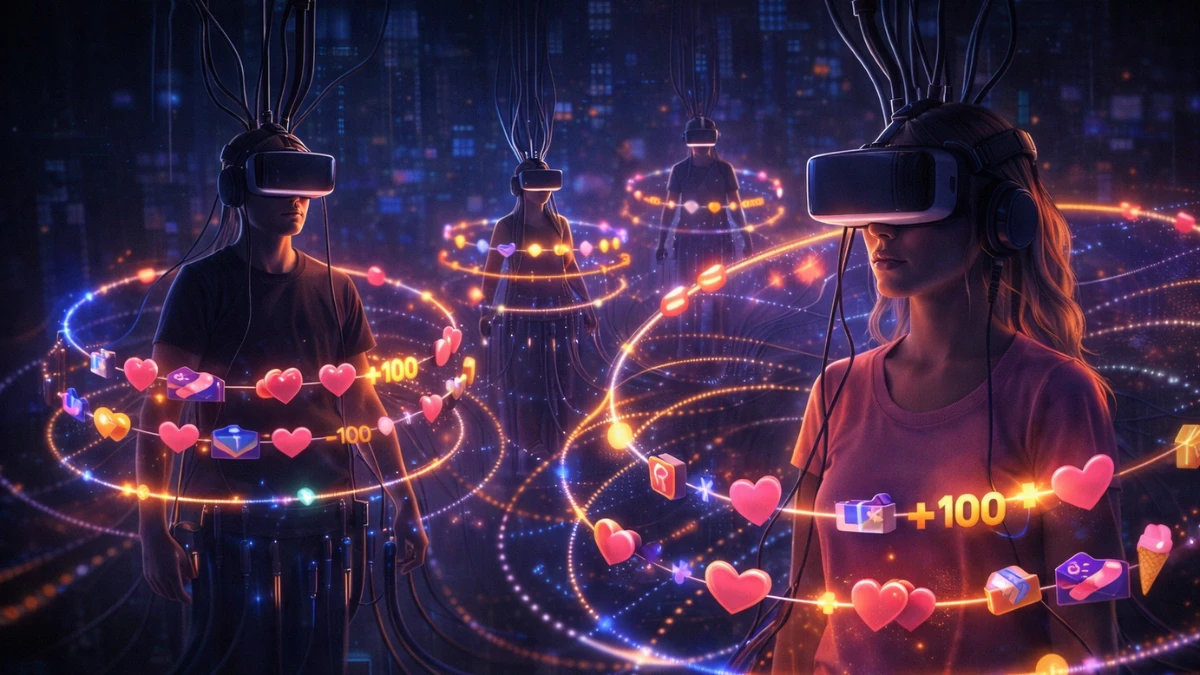
Modern digital systems ask users to trust invisible processes. When you transfer money, submit documents, or sign agreements online, you rely on institutions you cannot directly observe. Most of the time, that trust holds—but when it fails, the consequences are significant.
Blockchain reduces the need for blind trust.
It replaces it with observable verification. Every transaction leaves a trace. Every change is recorded. The system itself becomes accountable.
This subtle shift—from trust in authority to trust in system design—may be one of the most important changes in how digital societies function.
Public Systems and Governance: A Slow but Steady Entry
Governments have traditionally been cautious adopters of emerging technology, and for good reason. The stakes are high, and systems must be stable.
Yet blockchain is finding its way into public administration.
Land registries, voting systems, and public record management are areas where tamper-proof systems can significantly reduce disputes and corruption. Some pilot projects have already shown promising results, especially in digitizing land ownership records.
The transition will not be rapid. But once implemented, the impact is long-term and difficult to reverse.
The Limits: Where Blockchain Still Struggles
It would be incomplete to talk about blockchain without acknowledging its limitations.
Scalability remains a concern. Not all systems require decentralization, and forcing blockchain into unsuitable use cases often leads to inefficiency. There are also questions around energy consumption, governance models, and interoperability.
More importantly, blockchain is not a solution to poor system design. If the underlying data is flawed, recording it immutably only preserves the problem.
The technology works best when applied selectively—where trust, transparency, and coordination are genuine challenges.
The Future of Blockchain Beyond Crypto
The next phase of blockchain will likely be quieter than the last.
There will be fewer headlines, fewer speculative spikes, and more integration into everyday systems. Blockchain will not always be visible to users, just as most people don’t think about the protocols that power the internet.
It will function in the background—verifying, recording, and connecting.
And that is perhaps the strongest signal of maturity. When a technology becomes invisible, it usually means it has become essential.
[ruby_related heading="More Read" total=5 layout=1 offset=5]Conclusion
The real story of blockchain was never about coins—it was about coordination.
As industries move toward more interconnected systems, the need for reliable, transparent infrastructure becomes unavoidable. Blockchain offers one possible answer—not as a universal solution, but as a targeted tool for specific problems.
The shift from hype to utility is already underway. What remains is not whether blockchain will survive, but where it will quietly become indispensable.
Final Insight
The technologies that truly reshape systems rarely announce themselves loudly. They integrate, adapt, and eventually disappear into the background of everyday life. Blockchain is moving in that direction—away from speculation, toward structure.
For readers tracking the future of technology, the real signal isn’t in price charts. It’s in where trust is being rebuilt.-The Vue Times
Frequently Asked Questions
What is Blockchain Beyond Crypto?
→ It refers to using blockchain technology outside of cryptocurrencies, such as in supply chains, healthcare, identity management, and governance systems.
How is blockchain used in real-world applications?
→ Blockchain is used for tracking goods, securing medical records, verifying identities, and improving transparency in business and government operations.
Is blockchain only useful for finance?
→ No. While it started in finance, blockchain now has applications across multiple industries including logistics, healthcare, education, and public administration.
Why are businesses adopting blockchain now?
→ Businesses are focusing on data transparency, security, and efficiency, and blockchain helps reduce fraud, improve verification, and streamline processes.
What are the limitations of blockchain technology?
→ Challenges include scalability, energy consumption, and the need for proper implementation. It is not suitable for every system or use case.









Comments (0)