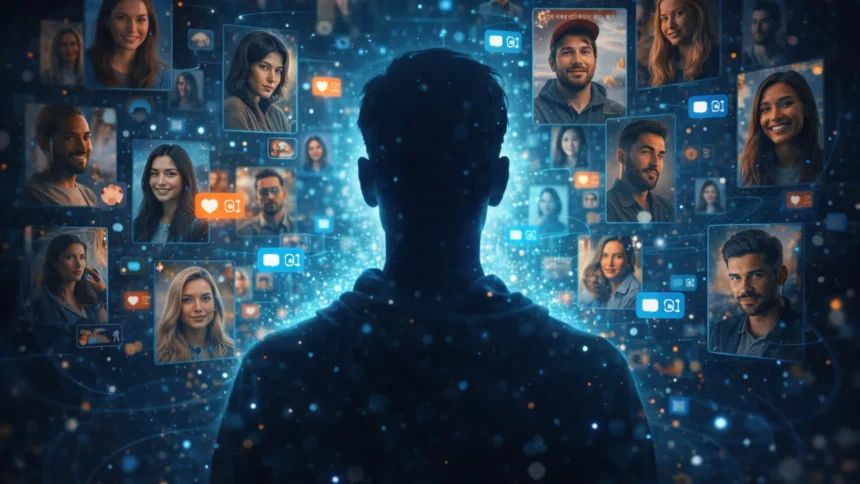
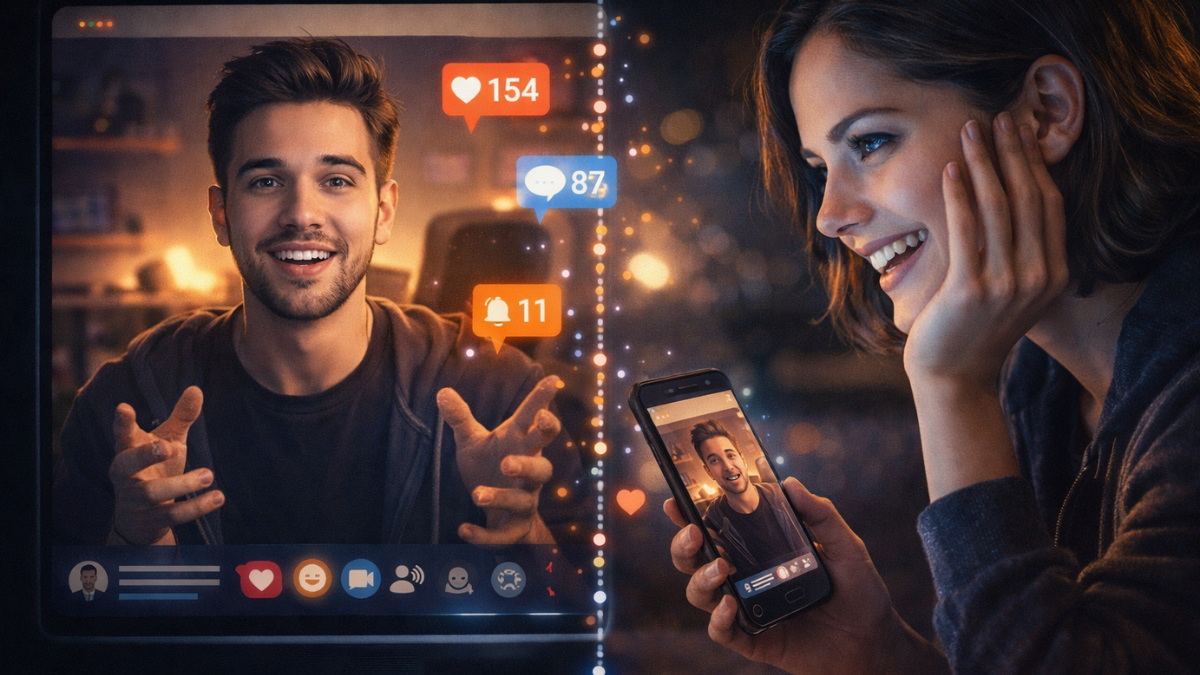
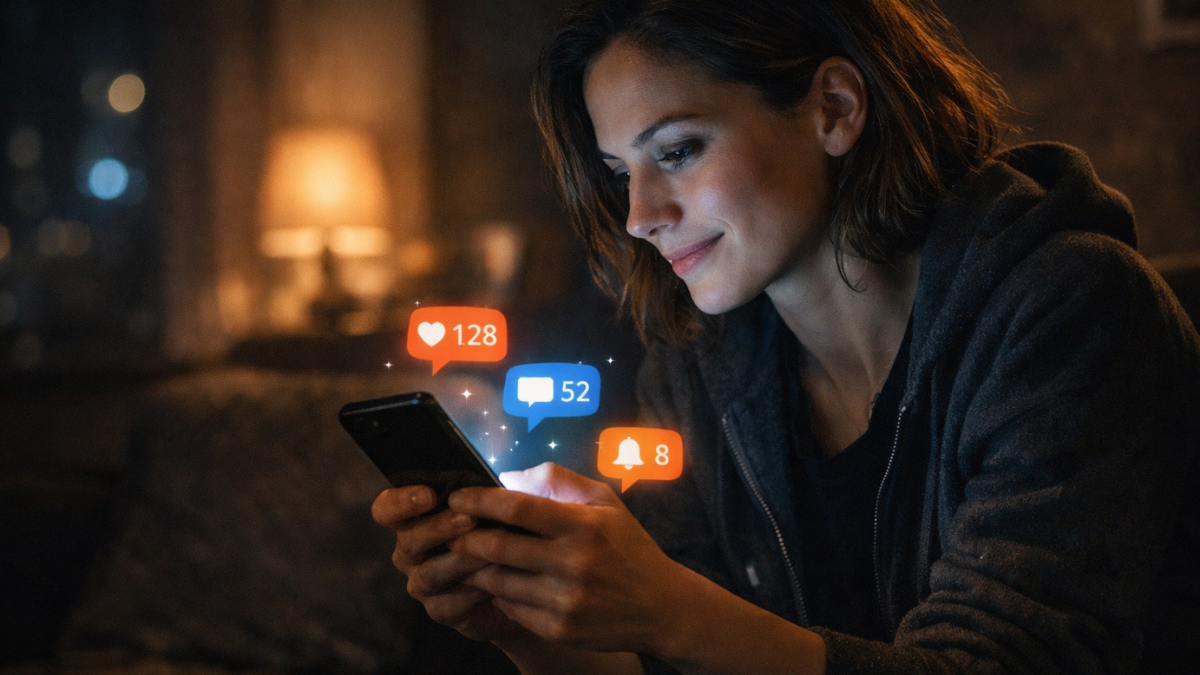
There’s a familiar scene playing out every evening across millions of screens. Someone sits alone, scrolling through short videos or watching a creator talk directly into the camera—laughing, sharing stories, responding to comments that feel oddly personal. The viewer smiles back, nods, sometimes even replies aloud.
It feels like a conversation. But it isn’t.
That quiet, one-sided bond—the sense that you know someone who has never met you—is what defines parasocial relationships. And in a digital world where attention is currency, these relationships are no longer incidental. They are structural.
What Parasocial Relationships Really Mean
The term itself isn’t new. It was first introduced in the 1950s to describe how audiences connected emotionally with television personalities. Back then, it meant feeling attached to a news anchor or a radio host.

But today, parasocial relationships operate on a completely different scale—and intensity.
Unlike traditional media figures, modern creators speak directly to individuals. They use language that mimics friendship:
- “You guys won’t believe what happened today…”
- “I was thinking about you all…”
- “Let me tell you something personal…”
The result is subtle but powerful. The audience doesn’t just watch—they feel included.
A parasocial relationship, at its core, is a one-sided emotional connection where one person invests time, attention, and emotional energy into someone who remains unaware of their individual existence.
But describing it clinically misses the point. These relationships don’t feel one-sided to the person experiencing them. That’s precisely why they matter.

Why Parasocial Relationships Are Growing Faster Than Ever
Something fundamental has shifted in how people consume content—and how content is created.
Earlier media kept distance intact. Actors performed. Audiences watched. The separation was clear.
Now, platforms reward intimacy.

Creators who appear “authentic” gain more trust. Those who share personal struggles build deeper loyalty. The algorithm amplifies relatability, not distance.
This creates a new dynamic:
- Content feels personal
- Communication feels direct
- Interaction feels mutual
Even when it isn’t
Parasocial relationships thrive in this space because they offer something traditional relationships often struggle to provide—consistency without complexity.
There are no misunderstandings, no conflicts, no expectations of reciprocity. The creator shows up regularly. The viewer receives emotional engagement without risk.
In a fragmented social world, that stability is appealing.
The Psychology Behind the Attachment
To understand why parasocial relationships feel so real, it helps to look at how the brain processes social interaction.
Human beings are wired for connection. Eye contact, voice tone, facial expressions—these cues signal relationship-building.
Digital content replicates many of these signals:
- Direct camera gaze mimics eye contact
- Conversational tone simulates dialogue
- Personal storytelling triggers empathy
The brain responds as if a real interaction is taking place.
But here’s the nuance:
The emotional response is real, even if the relationship isn’t mutual.
This is why someone might feel:
- Comforted by a creator during a difficult time
- Loyal to a public figure they’ve never met
- Hurt when that figure behaves unexpectedly
Parasocial relationships don’t replace real relationships—but they can begin to supplement them in meaningful ways.
When Connection Becomes Identity
What makes parasocial relationships more complex today is their overlap with identity.
People don’t just follow creators—they align with them.
A viewer might adopt:
- Opinions
- Lifestyle choices
- Language patterns
- Even emotional reactions
based on someone they watch regularly.
This isn’t entirely new—people have always been influenced by public figures—but the intensity is different.
When content is consumed daily, sometimes for hours, the boundary between influence and internalization begins to blur.
A creator’s worldview can slowly become the viewer’s default lens.
And because the relationship feels personal, the influence often goes unquestioned.
The Business Model of Emotional Closeness
There’s another layer that makes parasocial relationships particularly relevant today: they are economically valuable.
The creator economy doesn’t just run on views—it runs on trust.
The more emotionally connected an audience feels, the more likely they are to:
- Engage consistently
- Purchase recommended products
- Support paid content or memberships
- Defend the creator publicly
This turns emotional connection into a form of capital.
Brands understand this. Platforms optimize for it. Creators, consciously or not, build strategies around it.
And slowly, parasocial relationships move from being accidental byproducts of media to intentional outcomes of it.
That doesn’t mean every creator is manipulating their audience—but the system itself encourages deeper emotional investment.
The Subtle Risks No One Talks About Enough
Parasocial relationships aren’t inherently harmful. In many cases, they provide comfort, inspiration, and even a sense of belonging.
But the risks emerge when the illusion of reciprocity becomes too strong.
When viewers begin to:
- Expect acknowledgment from creators
- Feel betrayed by content decisions
- Prioritize online figures over real relationships
- Base self-worth on perceived connection
the imbalance becomes visible.
There’s also the issue of emotional dependency.
Unlike real relationships, parasocial bonds don’t offer feedback or mutual growth. They don’t challenge you, disagree with you, or evolve through shared experience.
They remain static—controlled entirely by one side.
And yet, the emotional investment can be just as deep.
Parasocial Relationships in the Age of Loneliness
One of the reasons these relationships are gaining prominence is tied to a broader social shift: rising loneliness.
Urban life, digital work, and fragmented communities have reduced traditional social interaction.
In that gap, parasocial relationships offer something accessible:
- Immediate connection
- Low effort
- Emotional familiarity
They don’t replace real relationships—but they can fill the silence between them.
For some, that’s harmless. For others, it becomes a substitute.
And that distinction matters.
Where This Is Headed
The future of parasocial relationships is likely to become even more immersive.
With advancements in:
- AI-generated personalities
- Virtual influencers
- Interactive content systems
the line between real and perceived connection will blur further.
Imagine a creator who responds to your messages instantly, remembers your preferences, and adapts content specifically for you.
That’s no longer theoretical.
The next phase of parasocial relationships won’t just simulate connection—it will personalize it.
Which raises an uncomfortable question:
If a relationship feels real, does it matter that it isn’t?
The Human Need Behind It All
At its core, the rise of parasocial relationships says less about technology and more about people.
It reflects a simple, persistent need:
to be seen, understood, and connected.
Digital platforms didn’t create that need. They just found a way to scale it.
The challenge now isn’t to eliminate these relationships—it’s to understand their place.
To recognize when they enrich experience, and when they begin to replace it.
Because the difference isn’t always obvious.
More Read
Conclusion
Parasocial relationships are not a glitch in the system—they are a feature of modern media.
They offer comfort without complexity, connection without obligation, and familiarity without friction.
But they also introduce a quiet imbalance—one where emotional investment flows in a single direction.
The question isn’t whether these relationships will continue to grow. They will.
The real question is whether people will remain aware of the line between connection and illusion.
Because in a world where everything feels personal, the ability to distinguish what actually is… becomes more important than even
Final Insight
In the digital age, connection has become easier to access but harder to define. Parasocial relationships are not replacing human bonds—they are reshaping how we experience them. Understanding that shift may be the first step toward using it wisely, rather than being shaped by it unknowingly.
Frequently Asked Questions
What are parasocial relationships?
Parasocial relationships are one-sided emotional connections where a person feels attached to a public figure, creator, or personality who does not know them personally.
Are parasocial relationships harmful?
Not always. They can provide comfort and inspiration. However, they become problematic when they replace real relationships or create unrealistic emotional expectations.
Why do people form parasocial relationships?
They form because digital content mimics real interaction—eye contact, storytelling, and relatability—triggering natural emotional responses in the brain.
Can parasocial relationships feel real?
Yes. The emotions experienced are genuine, even though the relationship itself lacks mutual interaction.
How are social media platforms influencing parasocial relationships?
Platforms encourage personal, relatable content, making creators appear more accessible and emotionally connected, which strengthens parasocial bonds.