The entrepreneurship ecosystem of India has grown in the last ten years tremendously. However, behind the measures of growth there is a structural question: how well Government Schemes of Startups help in providing sustainable business creation in place of temporary capital inflows?
On the first level of the Indian startup ecosystem, there is state intervention, which includes policy tools, fiscal stimulation, and credit guarantees as well as regulatory concessions. These are typically bundled together as startup subsidies India and similar programs. It is not subsidies that make sustainable companies, however. The actual effects of such schemes are related to their interaction with the capital market, regulations, and realities of our operations.
This paper discusses Government Schemes for Startups as economic infrastructure rather than promotional stories. It considers funding frameworks, the reasoning behind the policies, the complexity of compliance and long-term systemic consequences.
Startup Context: The existence of Public Intervention.
The structural friction points in the ecosystem of Indian startups are:
- Poor institutional capital (in small scale in early stages) beyond metro clusters.
- Regulatory compliance is very expensive and remains unaffordable to small entities.
- No risk aversion to collateral-based banking systems.
- Reduced spending on R&D compared to GDP.
- Micro-enterprise informalization.
Although the growth in private venture capital has increased, it is still clustered in technology driven, high-growth industries. Capital gaps are common to traditional businesses, deep-tech enterprises, and manufacturing startups.
Three main market failures that are being curbed by government intervention include:
- Credit access failure
- Innovation underinvestment
- Small business regulatory cost pressure.
Therefore, Government Schemes for Startups are viewed as risk-sharing tools, where a part of startup risk is transferred to the state by the company.
But the design of interventions defines them to be either catalytic or distortionary.

Structural Breakdown
A. Funding Structure
Government Programs on Startups take place via several channels:
- Direct financial support
- Indirect tax benefits
- Credit guarantees
- Fund-of-funds structures
- Incubation grants
- Sector-specific subsidies
Key schemes include:
- Startup India
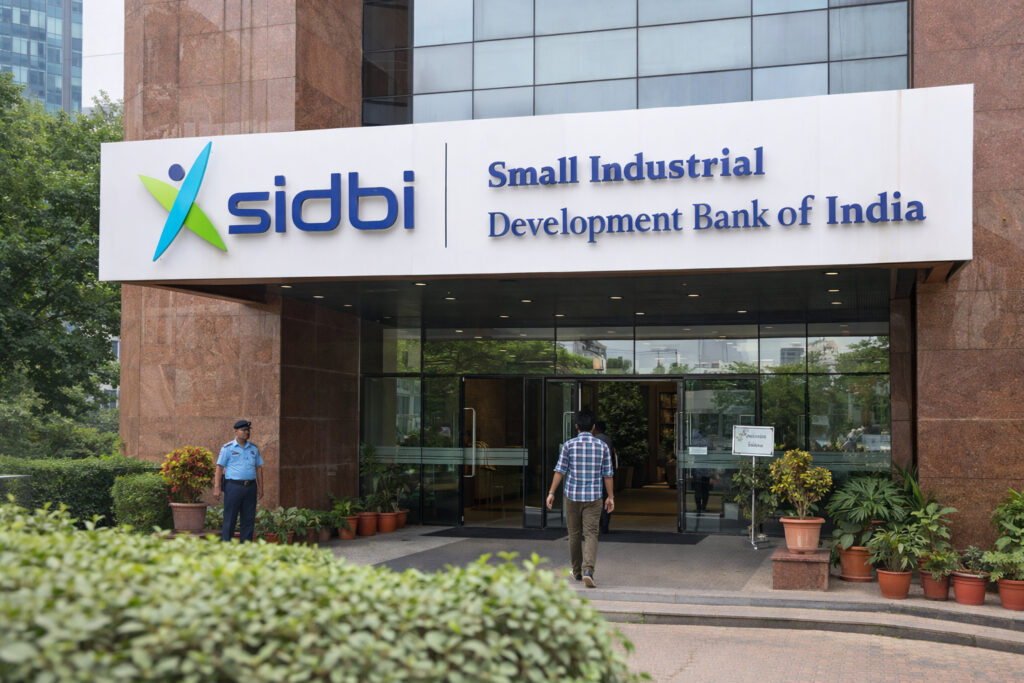
- Small Industrial Development Bank of India (SIDBI).
- Atal Innovation Mission
- Micro and Small Enterprise Credit Guarantee Fund Trust.
- Ministry of Micro, Small and Medium Enterprise.
These institutions carry out funding through:
Fund of Funds Model
SIDBI runs a Fund of Funds of Startups (FFS) under Startup India. The government will not directly invest in startups, but will invest in SEBI-registered Alternative Investment Funds (AIFs), which will invest in startups.
Structural logic:
- Capital of the government decreases the downside risk.
- The investment decisions are made by the private fund managers.
- Capital leverage ratio is improved.
Nonetheless, this structure suits startups which are already VC-ready. It is not much to informal founders or micro-founders.


Mechanisms of Credit Guarantee.
The scheme such as CGTMSE minimizes collateral requirement on loans. The government has ensured that there is a guarantee in bank lending.
Economic design:
- Indicators to banks to loan to more risky locations.
- Insures bank balance sheets.
Operational challenge:

- Guarantees do not make banks risk-averse.
- Documentation is also a burden.
Startup Subsidies India: Direct Incentives.
Subsidies include:
- Manufacturing unit subsidy on capital.
- Technology modernization concedes.
- Interest subvention
- Export promotion subsidies
- R&D grants
Subsidies lower cost of capital or cost of compliance, however, they have a tendency to be plagued by:
- Delayed disbursement
- High paperwork complexity
- Policy inconsistency at the state level.
B. Business Model Logic
Government programs presuppose that startups can act in formal patterns:
- Registered limited liability partnerships or LLP.
- DPIIT recognition
- GST registration
- Formal accounting systems
This forms a compliance filter. Unofficial entrepreneurs are left out.
Additionally:
- Tax exemptions and patent rebates may better serve technology startups.
- Capital subsidies are more beneficial to manufacturing units.
- Service startups will be more credit-guaranteed.
- Therefore, scheme impact depends on industry and capital intensity.
C. Regulatory Environment
The administrative climate is stratified:
- Policies of the central government.
- Policies at the state level on startups.
- Regulators like irdai, RBI and sebi.
For example:
- Fintech startups are influenced by the Reserve Bank of India.
- AIF structures are regulated by Securities and Exchange Board of India.
- Insurtech models are regulated by the Insurance Regulatory and Development Authority of India.
- Although Startup India offers relaxation on regulations, compliance in the sector is complicated.
Economic Logic: Why This Model Works or Fails.
Government schemes on startups operate on three economic principles:
Risk Sharing
The state absorbs risk at the early stage.
Capital investment is made in the private sector.
This works if:
- Investment decisions still are commercially disciplined.
- The extent of political interference is low.
It fails if:
- Communication of capital is made according to eligibility and not feasibility.
- Product-market fit is substituted with subsidy chasing.
Market Creation
The Innovation that is spurred by Subsidies includes:
- Clean energy
- Agriculture tech
- Defense manufacturing
Demand-side incentives are however not as substantive as supply-side funding.
Capital Multiplication
The goal of the fund-of-funds model is to increase government capital by co-investing with the partners privately.
But:
- VC capital is focused on high-paying areas.
- The concentration of capital in urban tech centers is still present.
- The non-scalable sectors get restricted advantage.
Operational Challenges
Implementation barriers continue to be a problem despite excellent policy branding.
A. Compliance Burden
Startups must navigate:
- DPIIT registration
- Exemptions on income tax.
- GST compliance
- State labor law filings
Intensity of documentation puts off micro-entrepreneurs.
B. Capital Timing Mismatch
Subsidies are usually paid on an after-expenditure basis.
For early-stage startups:
- Shortage of working capital is generated.
- Bank bridge financing is required.
This makes startup subsidies India programs less practical.
C. Banking Risk Aversion
Even with guarantees:
- Banks are fond of asset-backed loans.
- Lending based on cash-flow is limited.
- The credit scoring schemes are rigid.
D. Scalability Gap
The government schemes favor the early-stage entry however the scale-stage support is minimal.
Even at late stages of capital, it is unaware of:
- Private equity
- Foreign venture capital
- Strategic investors
Beyond seed and Series A, public capital is not a major factor.
Policy Interaction
Government Start up Schemes do not stand alone. They intersect with:
- Tax policy
- Foreign Direct Investment regulations.
- Labor reforms
- Insolvency law
For example:
- The abolition of the angel tax issues affected the mood towards early-stage funding.
- Alterations in FDI norms influence industry-specific inflows.
- Alternatively, state governments also provide their own programmes of startup subsidies India, which creates policy competition between states such as Karnataka, Telangana and Gujarat.
The competition is effective as it spurs innovation hubs but leads to uneven geographic distribution.
Founder Implications
In terms of making decisions, founders have to consider:
Eligibility vs. Effort Ratio
Is compliance granting a payoff greater than the subsidy?
Capital Structure Impact
Equity-free grants would be better than dilutive capital – although they may push-back the financing schedules.
Sectoral Alignment
- The founders of manufacturing benefit more on capital subsidy.
- Tax exemption is more advantageous to the founders of SaaS.
- R&D grants are advantageous to deep-tech founders.
Geographic Strategy
Location choice is under the influence of state incentives.
Comparative Framework
| Parameter | Direct Subsidy | Fund of Funds | Credit Guarantee | Tax Exemption |
| Capital Access | Moderate | High (VC-backed) | Moderate | Indirect |
| Compliance Load | High | Medium | Medium | High |
| Scalability Support | Low | High | Low | Medium |
| Risk Sharing | Low | High | High | Low |
| Sector Bias | Manufacturing | Tech-heavy | MSME | Tech/Innovation |
This shows no single scheme solves structural issues. Government Schemes for Startups are complementary instruments.
Future Outlook
The future path of Government Schemes of Startups in India will not be based on the headline allocations but rather based on structural refinement. Within the next ten years, such systemic changes as those will dictate whether the public capital will be catalytic or simply distributive.
To begin with, accessibility will be influenced by digital integration of compliance structure. The larger Indian digital populations such as GST systems, Aadhaar authentication, account aggregation systems, and API-based financial rails leave the opportunity to have automated eligibility evaluation and real-time subsidy monitoring. Friction costs would drop significantly in case the government portals combine banking data, tax records, and DPIIT recognition into a single dashboard. This would particularly benefit smaller startups which are currently not having committed compliance groups.
Second, capital pools related to the sector will become prominent. Generalized startup programs can eventually be replaced by selective intervention in strategic sectors like semiconductors, climate technology, defense production, biotechnology and advanced materials. The industries demand patient capital, longer gestation periods and greater initial investment in research and development. Such capital intensity cannot be supported on generic startup subsidies India programs. Thematic funds/blended finance vehicles which are backed by sovereigns may be more effective tools than grants, concessional debt, and private co-investment.
Third, decentralization will enhance experimentation of policies. The state governments are already trying to rival in the process of attracting startups by offering tax rebates, land subsidies and incubation facilities. Over a period of time, regional clusters of innovation can become specialized – deep-tech clusters, manufacturing clusters, or agri-tech ecosystems. Yet, this decentralization can easily lead to fragmentation of regulation unless there exists interoperability standards. There will be a need to have a compromise between national uniformity and local agility.

In addition to funding, the modernization of regulations will affect results. Streamlined labor, insolvency, and transparency are characteristics that will affect the calculation of start-up risk rather than incremental subsidies. Moreover, environmental and data governance policies will continue to influence business models in such industries as fintech, healthtech, and clean energy.
Finally, the fourth step of Government Scheme of Startups will be characterised by the quality of implementation as opposed to quantity of announcements. When the policy changes to speed, transparency and sectoral depth, there can be a significant impact on the structural barriers with the help of the government. The economic multiplier effect will be limited in case there are still procedural delays and administrative obscurity.
Conclusion
Government Schemes for Startups are considered as organized efforts to counteract capital inefficiency, risk concentration and underinvestment in innovation in India. They are neither universal nor symbolic gestures. They are affected by the quality of execution, simplification of the regulations and conformity to the commercial viability.

The program of startup subsidies India eliminates entry barriers but does not substitute the market validation. The fund-of-funds approach boosts venture ecosystems but puts more emphasis on scalable, VC-ready startups. Credit guarantees are trying to open the credit door of banks, but risk is still there.
The most important point this is that public capital should be used to supplement, rather than to replace, disciplined private capital by founders or policymakers.
Government Schemes to Startups in that situation should be seen as a stabilizer to ecosystems rather than growth assurances.