
Introduction
In today’s fast-moving digital world, information travels faster than ever—but trust in that information is steadily declining. The conversation around media bias in India has intensified in recent years, raising serious questions about how news is produced, presented, and consumed.
From television debates to social media headlines, audiences are increasingly questioning whether the news they see reflects reality or a particular narrative. This growing skepticism is not limited to one group—it cuts across political, social, and economic lines. At the same time, concerns about news credibility India have become central to public discourse, especially in an era where misinformation spreads rapidly.
Understanding media bias is no longer just a media issue—it is a societal issue. It affects public opinion, democracy, and decision-making at every level. This article takes a deep, balanced look at the origins, current state, controversies, and future of media bias in India.
Background and Context
To understand media bias India, it is essential to look at how the Indian media landscape has evolved.
Historically, Indian journalism was rooted in public service. During the independence movement, newspapers played a crucial role in shaping national consciousness. Post-independence, media institutions were seen as pillars of democracy—informing citizens and holding power accountable.
However, the media ecosystem began to change with liberalization in the 1990s. The rise of private television channels introduced competition, advertising-driven revenue models, and the need for higher viewership. Over time, this shift influenced editorial decisions.
The digital revolution further transformed the landscape. Online platforms, social media, and independent news portals created both opportunities and challenges. While access to information increased, the lines between verified journalism and opinion-based content became blurred.
Today, the discussion around news credibility India is deeply tied to this transformation—from public service journalism to a highly competitive, commercially driven ecosystem.
What Is Happening Right Now
Currently, the issue of media bias in India is more visible than ever. Several factors are driving this trend.
First, the rise of 24/7 news cycles has increased pressure on media organizations to produce constant content. This often leads to sensationalism, where speed is prioritized over accuracy.
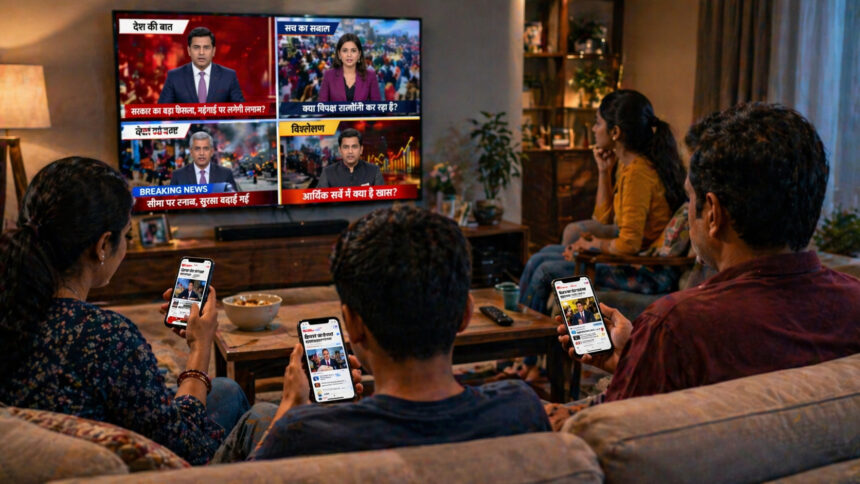
Second, social media platforms have become major news distributors. Many people consume news through short videos, posts, or headlines without verifying sources. This has amplified concerns about news credibility India, as misinformation can spread rapidly.
Third, political polarization has influenced how audiences perceive the media. Different groups often trust different news sources, leading to fragmented information ecosystems.
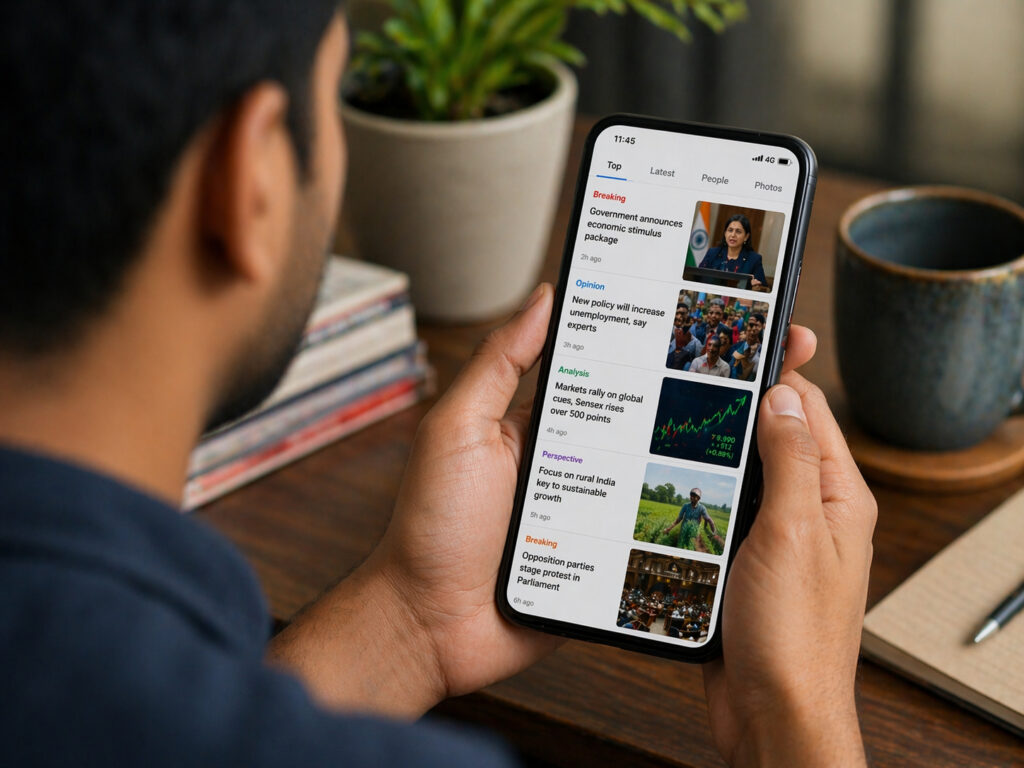
Finally, algorithm-driven content has created echo chambers. Users are more likely to see content that aligns with their beliefs, reinforcing existing opinions rather than presenting balanced views.
Why This Topic Is Controversial
The debate around media bias in India is controversial because it touches on sensitive issues such as politics, freedom of expression, and public trust.
One major trigger is the perception that media outlets may favor certain political ideologies. Critics argue that this undermines journalistic neutrality, while supporters claim that every media organization has a perspective.
Another source of controversy is the commercialization of news. Advertising revenue and corporate ownership can influence editorial priorities, raising concerns about independence.
Additionally, the role of digital platforms has added complexity. Unlike traditional media, online content is less regulated, making it harder to ensure accuracy and accountability.
These factors combine to create a highly debated topic where opinions are often strong and deeply divided.
Different Perspectives
Supporters’ View
Supporters of the current media ecosystem argue that what is often labeled as bias is actually diversity of opinion. They believe that multiple viewpoints are a sign of a healthy democracy.
From this perspective, audiences have more choices than ever before. Instead of relying on a single source, people can compare different narratives and form their own opinions.
Supporters also highlight the role of independent digital media. Many new platforms focus on investigative journalism and fact-based reporting, contributing positively to news credibility India.
Critics’ View
Critics, however, argue that media bias in India is a serious issue that affects public trust.
They point to instances of sensationalism, selective reporting, and lack of accountability. According to this view, some media outlets prioritize ratings or political alignment over factual accuracy.
Critics also raise concerns about misinformation. The spread of unverified content on social media has made it difficult for audiences to distinguish between facts and opinions.
For them, the decline in news credibility India is not just a perception—it is a structural problem that requires systemic solutions.
Facts vs Claims
Understanding media bias India requires separating verified facts from public claims.
Verified Facts
- Media consumption in India has significantly shifted toward digital platforms.
- Social media plays a major role in news distribution.
- Trust in traditional media varies across demographics.
- Competition among media outlets has increased dramatically.
Common Claims
- All media is biased toward a specific political ideology.
- News organizations intentionally manipulate information.
- Social media is more reliable than traditional journalism.
The reality lies somewhere in between. While bias can exist, it is not uniform across all platforms. Similarly, while misinformation is a concern, credible journalism continues to exist and evolve.
What People Might Be Missing
One of the most overlooked aspects of media bias India is the role of audience behavior.
Media does not operate in isolation—it responds to demand. High engagement often comes from sensational or emotionally charged content. As a result, media organizations may prioritize such content to maintain viewership.
Another hidden layer is algorithm influence. Digital platforms use algorithms to promote content based on user preferences. This can unintentionally amplify biased or one-sided narratives.
There is also a misconception that bias is always intentional. In many cases, it can result from editorial choices, time constraints, or incomplete information rather than deliberate manipulation.
Understanding these nuances is essential for a more balanced view of news credibility India.
Impact on Society, Economy, and Users
The impact of media bias India extends beyond journalism—it affects society at multiple levels.
On Society
Biased or inaccurate information can influence public opinion and create divisions. It can shape how people perceive events, policies, and social issues.
On Economy
Media plays a role in business and investment decisions. Misinformation or exaggerated reporting can affect markets, consumer behavior, and brand reputation.
On Users
For individuals, the challenge lies in navigating a complex information landscape. The decline in news credibility India makes it harder to identify trustworthy sources, increasing the risk of misinformation.
Role of Media and Narrative
Media is not just a source of information—it is a powerful tool for shaping narratives.
In the context of media bias India, the way stories are framed can influence how they are perceived. The choice of headlines, visuals, and language all play a role in shaping public understanding.
Digital platforms have further amplified this influence. Viral content, trending topics, and algorithm-driven visibility can determine which stories gain attention.
At the same time, the rise of independent journalism offers new opportunities. Many platforms focus on fact-checking, investigative reporting, and transparency, contributing to improved news credibility India.
Bigger Picture / Future Outlook
Looking ahead, the future of media bias India will depend on several factors.
Technology will continue to play a major role. Artificial intelligence and data analytics can help improve fact-checking and content verification. However, they can also be used to spread misinformation if not managed responsibly.
Regulation is another key factor. Policymakers may introduce guidelines to ensure accountability without restricting freedom of expression.
Audience awareness will also shape the future. As people become more critical of the content they consume, demand for credible journalism is likely to increase.
Ultimately, the evolution of news credibility India will depend on a balance between innovation, regulation, and ethical journalism.
Conclusion
The issue of media bias India is complex, multifaceted, and deeply connected to the changing nature of information in the digital age. While concerns about bias and credibility are valid, it is important to approach the topic with nuance and balance.

Media is influenced by multiple factors—technology, economics, audience behavior, and political dynamics. Understanding these influences helps in forming a more informed perspective.
As the media landscape continues to evolve, the responsibility is shared. Media organizations must prioritize accuracy and transparency, while audiences must engage critically with the information they consume.
In the end, the future of journalism in India will not be defined by the absence of bias, but by the presence of accountability, diversity of perspectives, and a commitment to truth.
FAQs
1. What is media bias India?
Media bias India refers to the perceived or actual partiality in how news is reported, presented, or framed by media organizations.
2. Why is media bias India controversial?
It is controversial because it involves issues of political influence, freedom of expression, and public trust in journalism.
3. What affects news credibility India?
Factors include misinformation, editorial decisions, digital platforms, and audience behavior.
4. Is all Indian media biased?
No, bias varies across platforms. Many organizations strive to maintain balanced and factual reporting.
5. How can users identify credible news?
By cross-checking sources, verifying facts, and relying on established and transparent media outlets.
6. What role does social media play in news credibility India?
Social media amplifies both credible and misleading information, making verification more important than ever.
7. What is the future of media bias India?
The future will depend on technology, regulation, and increased audience awareness, shaping a more accountable media ecosystem.