On Wednesday, the Sector 25 cremation ground, Chandigarh, was the very location to inter the late Haryana-cadres IPS officer Y Puran Kumar, who had allegedly committed suicide nine days prior. His two daughters gave him the last rites when the city witnessed a tear-filled farewell with full state honours, high security level, and several top-rank officials and dignitaries present.
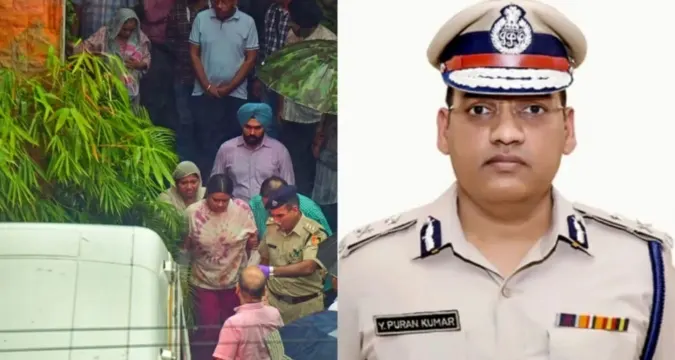
The event that sparked the release of hundreds of colleagues, friends, and officials came after a long battle between the authorities and the family of the officer on the terms of the investigation on his death. The Haryana Government and Chandigarh Police assured the family of a fair and transparent investigation, and it was only when the family was given formal assurance of such that the consent to the autopsy and cremation was given.
Consent with Fair Probe Condition
In the case, IAS officer Amneet P Kumar, who is the spouse of the officer, was in attendance. Several days later, she agreed to the post-mortem early Wednesday morning claiming that she trusted the system of courts and the investigation process.
“In view of the assurance extended by the UT police for a fair and impartial investigation, and the commitment of the Government of Haryana to take appropriate action against any erring officials, I have consented to the post-mortem examination.” Amneet, in a written statement, had all the confidence of the judiciary and the police authorities and hoped that the truth could be revealed as per the law.
Her ruling broke a four-week emotional stalemate that had held the autopsy for more than a week.

Judicial Supervised Autopsy
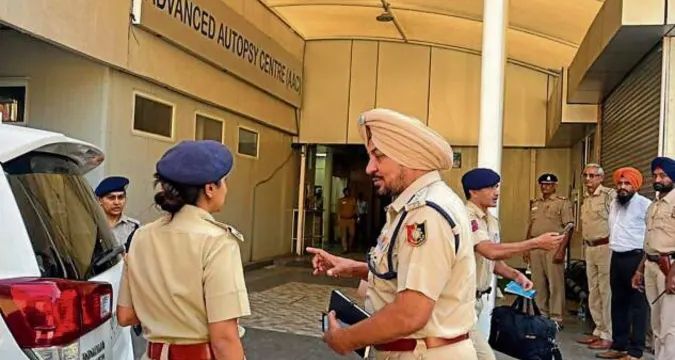
It involves the post-mortem examination at Postgraduate Institute of Medical Education and Research (PGIMER) under the strict security and judicial supervision. Access to the Advanced Anatomy Centre (AAC) was highly controlled and police barricades were set up at all entrance roads by early morning.
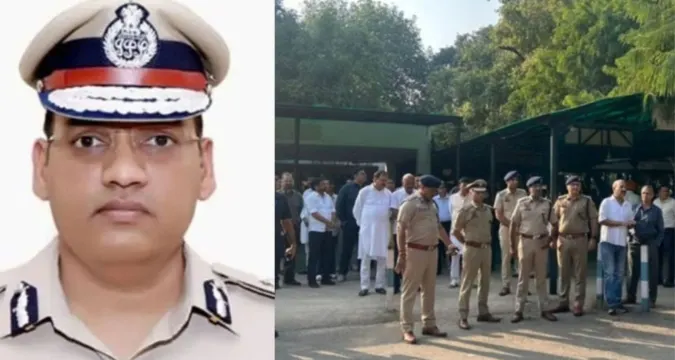
The autopsy performed by a four-member medical board under the supervision of Dr Jasbir Singh, an Associate Professor at the Department of Forensic Medicine, took close to two and a half hours. The whole process was videographed to transparency.
Officials affirmed that forensic testing on viscera, DNA samples, and clothing samples has been saved.
PGIMER, in an official statement, documented that the post-mortem was carried out in accordance with due legal processes and that these reports will be handed over to the Special Investigation Team (SIT) that is headed by the case. The family was then given the mortal remains.
Sentimental Break Up with State Honours
Hundreds of people came to see him off by afternoon by the Sector 11 home of the officer, and subsequently to the cremation ground. It was a sad and yet at the same time tense event as there were those present who were openly emotional at times during the rituals the daughters of the officer were offering.

Others present included the Haryana DGP OP Singh, Chandigarh DGP Dr Sagar Preet Hooda, the Additional Chief Secretary (Home) Sumita Misra, the Punjab Assembly Speaker Kultar Singh Sandhwan, former Union Minister Pawan Bansal and the Chief Principal Secretary to the Haryana CM Rajesh Khullar.
Top bureaucrats such as Haryana Chief Secretary Anurag Rastogi, ADGP Alok Mittal and Commandant General Muhammad Akil, also attended the services. Cabinet Ministers Krishan Lal Panwar and Shyam Singh Rana then represented the Haryana Government.
Even though this was a somber moment, there are reports of short protests at the cremation field as some people voiced slogans that the state administration needed to take responsibility. Riot control police together with several groups of UT police were deployed to control the riots.

Police Staffing and Patrol
Sensitivity on the area on both sides of the PGIMER and the area of the cremation area was still high throughout the day. Personally, the organization was under the control of SSP (UT) Kanwardeep Kaur, with the support of the Sector 11 SHO Jaiveer Rana and the SI Babita in charge of the police post PGI. IGP Pushpendra Kumar also attended the cremation area to control the crowd.
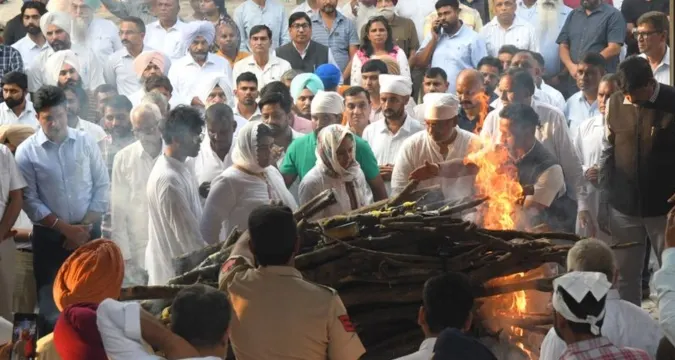
Traffic cops kept the situation to a minimum but temporary congestion was reported just around Sector 25, as the funeral procession went by. The SSP subsequently took the family back home to their Selector 24 residence to facilitate coordination of the procedural aspects with the investigation authorities.
A Case that Stirred the State
The burial of the body signifies the end of an immensely heart-wrenching period that started on October 7 when IPS officer Y Puran Kumar had been discovered dead at his place of residence in Sector 11. When he died the international community was outraged, especially following the claims by his family that he had been harassed and discriminated against by senior officers.
The family had charged Haryana DGP Shatrujeet Kapur and Rohtak SP Narendra Bijarniya with misconduct at work and wanted to remove them and probe them. The Haryana Government suspended both the officers on leave after increasing political and popular pressure. Surinder Singh Bhoria was selected as the new SP of Rohtak and Om Prakash Singh Managing Director of the Haryana Police Housing Corporation was granted further charge of DGP.
The Chandigarh Police Special Investigation Team (SIT) is currently investigating the case and has been gathering the documents and evidence of the Haryana Police and other related agencies. Those with official involvement in the matter stated that forensic evidence at PGIMER will be very instrumental in establishing the cause and conditions under which the officer had died.
Long Wait for Justice by a Family
To the family, the nine days between death and cremation was a very emotionally stressful time. Puran Kumar was described by his friends and colleagues as a dedicated officer who was also professional and upright. The fact that so many people attended his funeral was an indication of the respect that he enjoyed in the police and administrative fraternity.
Since the investigation is ongoing, now the attention is turned to the result of the SIT and what is going to be the subsequent step of the state. The case has brought up in the minds of many people the force issues relating to mental health, workplace pressure, and responsibility within the policing system in India.
Conclusion
The sadistic killings of IPS officer Y Puran Kumar have generated a legacy of sorrow, inquisitiveness and a new demand to look within the system. His family desires justice but the police fraternity is at a crossroads, having come to terms with ensuring transparency, restoring faith and making sure that such tragedies never recur.