It’s a small moment most people don’t think twice about. You open your phone, check your balance, and realise your plan has expired—again. It feels oddly frequent, almost faster than a “monthly” routine should be. And that’s precisely where the discomfort begins.
Across India, millions of prepaid users have quietly adapted to a system where a “monthly recharge” doesn’t really mean a month. It means 28 days. Over time, this subtle shift has started to draw attention—not just from consumers, but now from lawmakers as well. The Mobile Recharge 28-Day Cycle: Why This Issue Is Being Questioned in Parliament is no longer just a billing detail; it has turned into a broader conversation about fairness, transparency, and how telecom companies design their pricing strategies.
The 28-Day Cycle Isn’t New—But Its Impact Is Now Visible
For years, telecom operators have structured prepaid plans around a 28-day validity. On paper, it seems harmless. But when you stretch that across a full year, the math changes dramatically.
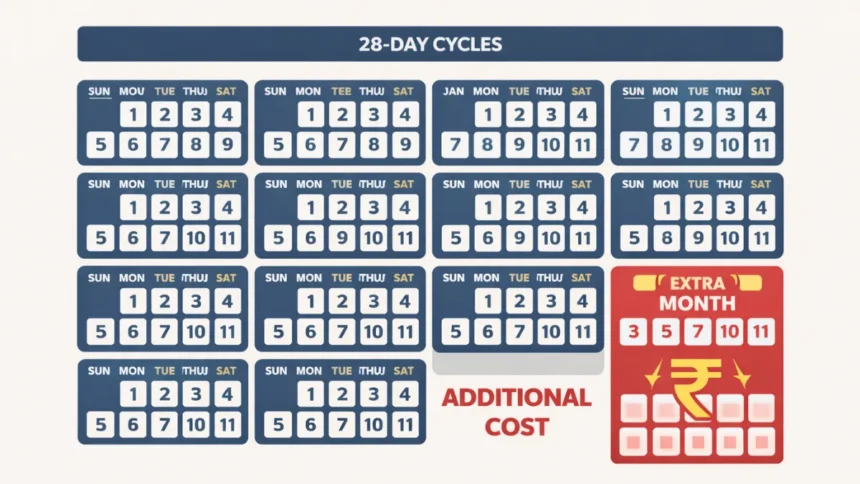
A 28-day cycle results in 13 recharges annually, not 12.

That means consumers effectively pay for an extra cycle every year—without necessarily noticing it in the moment. The difference doesn’t hit instantly; it accumulates quietly. For a user spending ₹300–₹500 per recharge, that additional cycle translates into a noticeable annual expense.
This is where the issue starts shifting from “pricing strategy” to “consumer perception.”
People don’t track recharge frequency as carefully as they track monthly rent or subscriptions. Telecom companies, however, understand behavioral patterns deeply. The 28-day structure isn’t accidental—it aligns with a business model designed around recurring engagement and revenue optimization.

Mobile Recharge 28-Day Cycle: Why This Issue Is Being Questioned in Parliament
The growing concern around this practice has now reached Parliament, where questions are being raised about whether telecom companies are subtly overcharging users through structural design rather than direct price hikes.
The debate isn’t just about legality—it’s about intent and transparency.

Lawmakers are asking:
- Should telecom plans be aligned with calendar months (30–31 days)?
- Are consumers being clearly informed about the effective annual cost?
- Does this structure exploit behavioral assumptions around “monthly” spending?
At the heart of the issue lies a simple question:
If something is marketed as a monthly habit, should it actually follow a monthly timeline?
The discussion has also triggered calls for regulatory intervention, potentially involving the Telecom Regulatory Authority of India, which has previously stepped in on issues like tariff transparency and minimum validity plans.

Why It Matters More Than It Seems
At first glance, this might look like a minor technicality. But its implications stretch further.
1. The Illusion of Affordability
A ₹299 plan feels affordable in isolation. But multiplied over 13 cycles, it becomes ₹3,887 annually instead of ₹3,588—a difference that isn’t always obvious to the user.
2. The Psychology of “Monthly Thinking”
Consumers think in months. Salaries, bills, rent—all operate on a monthly rhythm. The telecom industry’s 28-day cycle disrupts that alignment subtly, creating a disconnect between perception and reality.
3. Impact on Low-Income Users
For users in lower income brackets, prepaid plans are not just convenience—they are necessity. An extra recharge per year can strain budgets, especially in households where multiple members rely on mobile connectivity.
4. Digital Dependence Has Increased Stakes
In today’s India, mobile data isn’t optional. It’s tied to education, work, banking, and communication. That makes pricing structures more consequential than ever before.
How the Telecom Industry Sees It
From the telecom companies’ perspective, the 28-day cycle is not positioned as a hidden charge but as a standard industry format.
Their argument rests on three pillars:
- Operational Consistency: Uniform cycles simplify billing systems.
- Competitive Pricing: Plans are priced competitively per cycle, not per month.
- Market Transparency: Plan validity is clearly mentioned; users are aware of what they’re buying.
There’s also a larger economic context. Telecom companies in India operate in one of the most price-sensitive markets globally. Profit margins are tight, infrastructure costs are high, and competition has historically pushed tariffs downward.
Seen through this lens, the 28-day cycle becomes less about manipulation and more about sustaining revenue without directly increasing plan prices.
But Where Does Transparency End and Design Begin?
This is where the debate becomes more nuanced.
The issue is not that telecom companies are hiding the 28-day validity—it’s printed clearly. The real question is whether clarity equals understanding.
Most users don’t calculate annual costs based on recharge cycles. They operate on mental shortcuts: monthly budget, monthly expenses, monthly planning. When a system deviates from that mental model, it creates a gap—not of information, but of interpretation.
This gap is what policymakers are now examining.
Is it enough to disclose the number, or should pricing structures align with how people naturally think and budget?
A Pattern Seen Beyond Telecom
Interestingly, this isn’t an isolated phenomenon. Subscription-based industries—from streaming services to gym memberships—often design pricing models around behavioral patterns.
What makes telecom different is its essential nature. Unlike entertainment subscriptions, mobile connectivity is no longer discretionary. That raises the bar for fairness and transparency.
When essential services adopt pricing structures that rely on behavioral blind spots, scrutiny becomes inevitable.

What Could Change Going Forward
The parliamentary discussion around the Mobile Recharge 28-Day Cycle: Why This Issue Is Being Questioned in Parliament could lead to multiple outcomes.
1. Push for 30-Day or Calendar-Based Plans
Regulators may encourage or mandate plans that align with actual calendar months, making costs easier to understand.
2. Dual Pricing Models
Telecom companies might offer both 28-day and 30-day options, giving users a clearer choice.
3. Enhanced Disclosure Norms
Operators could be required to display effective annual cost alongside plan prices, improving transparency.
4. Market-Led Adjustment
Even without regulation, public awareness alone might push companies to tweak their offerings to maintain trust.
The Larger Question: Convenience vs Clarity
At its core, this debate isn’t just about telecom pricing. It reflects a broader shift in how consumers are beginning to question everyday systems.
People are no longer just asking, “How much does this cost?”
They’re asking, “How is this cost structured—and why?”
That shift matters.
Because in a digital economy, where services are recurring and invisible, the design of pricing becomes just as important as the price itself.
More Read

Conclusion
The controversy around the 28-day recharge cycle reveals something deeper than a billing quirk. It exposes the quiet tension between business strategy and consumer perception.
Telecom companies optimized a system that works efficiently for them. Consumers adapted—until they started noticing the pattern.
Now, with Parliament stepping in, the conversation has moved from individual inconvenience to public policy.
And perhaps that’s the real significance of this debate:
It’s not about one extra recharge. It’s about whether everyday systems should align with how people live—or continue to rely on how people overlook.
Final Insight
The smartest pricing models are not the ones that maximize revenue silently—they are the ones that sustain trust visibly. As India becomes more digitally aware, the line between clever design and perceived unfairness will only get sharper. And industries that fail to notice that shift may find themselves answering harder questions than just pricing.-The Vue Times
Frequently Asked Questions
What is the 28-day mobile recharge cycle?
It is a prepaid plan validity model where a recharge lasts for 28 days instead of a full calendar month. This results in 13 recharge cycles per year.
Why is the 28-day cycle being questioned in Parliament?
Lawmakers are examining whether this structure leads to indirect extra costs for consumers and whether it aligns with transparency and fair pricing principles.
Do telecom companies hide the 28-day validity?
No, the validity is clearly mentioned. However, the concern is whether consumers fully understand the annual cost impact of this cycle.
Will telecom plans change to 30 days?
There is no confirmed change yet, but regulatory pressure and public awareness could push companies toward calendar-based plans.
How much extra do users pay due to the 28-day cycle?
Users effectively pay for one additional recharge annually, which can increase yearly costs depending on the plan price.