What Is Digital Twins? The Technology Creating a Second Life for the Physical World
Walk through a modern factory, an airport control room, or even a city planning office, and you’ll notice something odd: more and more decisions are being made about places and machines that are not physically in front of anyone. Engineers stare at dashboards. Operators examine simulations. Planners study models that behave less like diagrams and more like living systems. Somewhere between software and reality, a second version of the physical world has been taking shape.
That is the space where the question What Is Digital Twins? starts to matter.
The phrase can sound technical enough to scare people off, and vague enough to invite overuse. It has become one of those terms that executives mention in keynote speeches and consultants slide into presentations with suspicious ease. Yet behind the buzz lies a genuinely important shift in how organizations understand the world around them. A digital twin is not just a 3D model, and it is not merely a fancy dashboard. It is a virtual representation of a physical object or system that is updated with real-world data so it can reflect behavior, conditions, and performance over time. IBM describes it as a virtual representation of an object or system that spans its lifecycle and is updated from real-time data to support monitoring, simulation, and decision-making.
That definition sounds straightforward. The implications are not.

What Is Digital Twins? A Clearer Way to Understand It
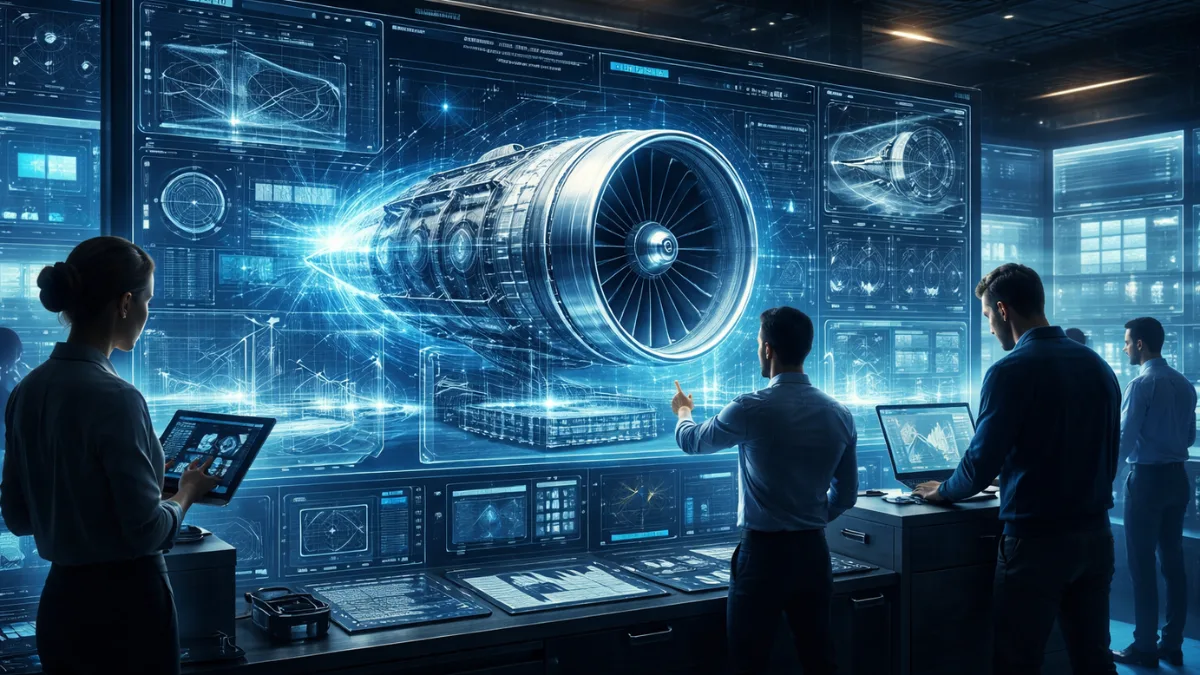
A useful way to think about digital twins is to forget the jargon for a moment and imagine a bridge, a wind turbine, a delivery network, or even an entire city with a digital counterpart that is constantly learning from the real thing. Sensors feed in data. Software models translate that data into an evolving picture of current conditions. Analysts and operators then use that picture to test scenarios, predict failures, improve performance, or simulate what might happen next.
That is why asking What Is Digital Twins? is really asking how closely software can mirror reality.
The crucial detail is that a digital twin is dynamic. A static CAD file is just a design asset. A spreadsheet of machine readings is just a record. A digital twin sits somewhere beyond both. It combines real-time and historical data, engineering models, and sometimes machine learning to create a system that can be observed, analyzed, and, in some cases, used for prediction. IBM’s recent explanations emphasize that digital twins support continuous monitoring, simulation, and analysis across an asset’s lifecycle, from design to maintenance and even decommissioning.
That lifecycle point matters. The technology is appealing not because it creates a flashy visual copy, but because it helps people make better decisions before problems become expensive.
Where the Idea Came From
Like many technologies that now sound fashionable in boardrooms, digital twins have older and less glamorous roots.

NASA’s archival material traces the concept back to the 1960s, when the agency used “living models” during the Apollo era. In later summaries, NASA researchers describe digital twins as growing out of those efforts to pair physical systems with models that could help analyze performance and respond to failures. That heritage makes intuitive sense. Aerospace has always had little patience for guesswork.
Over time, the idea moved beyond space programs and into manufacturing, energy, transportation, healthcare, and urban systems. The term matured alongside the rise of IoT sensors, cloud computing, simulation platforms, and AI tools capable of processing huge volumes of operational data. The result is that digital twins are no longer niche prototypes. They are becoming part of the standard toolkit for organizations that manage complex physical systems.
Why What Is Digital Twins? Is Suddenly a Trending Question
Technology trends often go mainstream when they stop being experimental and start producing measurable value. That is where digital twins now sit.

The rise in interest comes from a very practical business reality: physical systems are expensive to build, maintain, and fix. Downtime costs money. Poor forecasting costs money. Inefficient operations cost money. A digital twin offers a way to see trouble earlier and test decisions before making them in the real world.
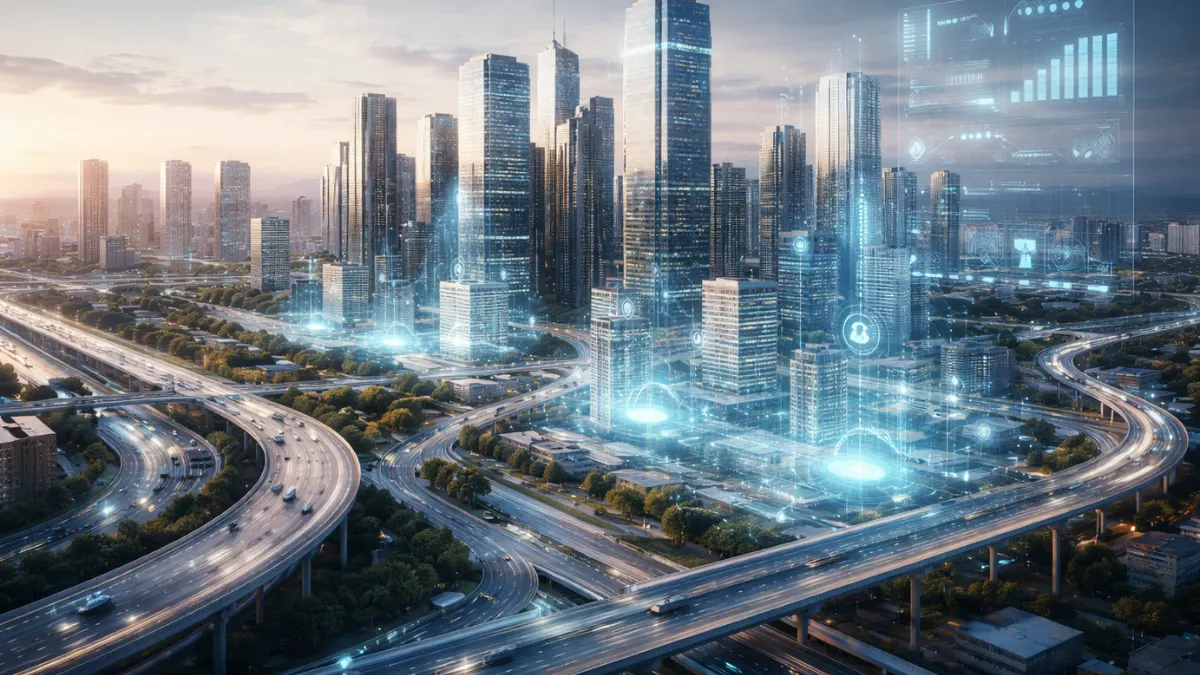
That pitch is powerful because it is rooted in a familiar managerial desire: reduce uncertainty without slowing down. A factory wants to know when equipment will fail. A city wants to model traffic or flood risk. A utility wants to monitor assets under changing demand. NASA, for its part, is now using digital twin approaches not only in aerospace contexts but also in Earth-system science, including wildfire forecasting and environmental monitoring. NASA notes that its wildfire digital twin merges sensor data with AI and machine learning to forecast potential burn paths and support more precise modeling.
That is one reason the term keeps appearing in discussions about infrastructure, climate resilience, logistics, and industrial AI. Digital twins are not trending because they sound futuristic. They are trending because they promise a more informed version of operational control.
What Digital Twins Actually Look Like in the Real World
The easiest mistake is to imagine digital twins as something abstract. In practice, they are often quietly embedded inside systems people already rely on.
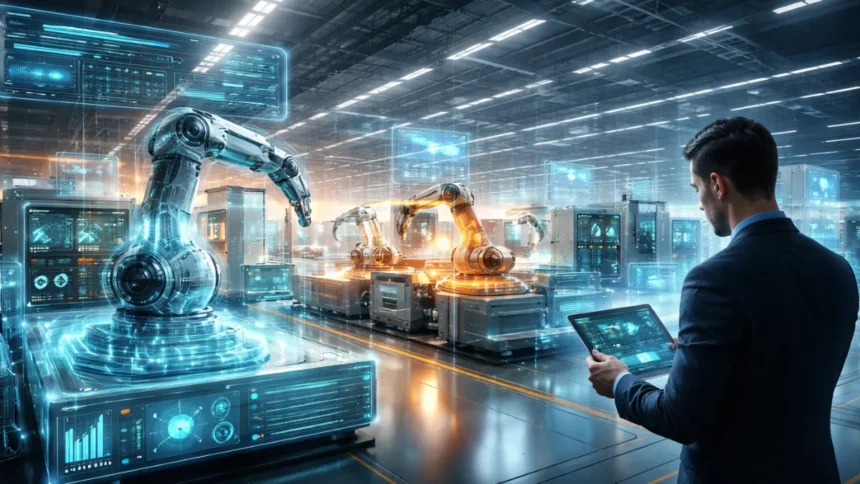
In manufacturing, a digital twin might track the health of a machine on a production line, comparing expected and actual performance to flag anomalies before breakdowns occur. In aviation or airspace management, NASA has described a digital twin simulator of the National Airspace System that enables offline simulations using historical and real-time operational data. In energy, a digital twin can model turbines, grid assets, or pipelines to improve maintenance timing and performance. In healthcare, the idea is extending toward systems-level simulation and, in some research contexts, toward patient-specific modeling, though that remains more complex and sensitive than marketing materials sometimes imply.
Then there is the larger-scale version: the digital twin of an organization. Gartner’s category overview describes a Digital Twin of an Organization as a dynamic software model that uses operational and contextual data to understand how a business functions, responds to change, deploys resources, and simulates future states. That is a sign of how far the concept has stretched. We are no longer talking only about machines. We are talking about processes, environments, and even institutional behavior.
The Business Case Behind the Hype
For all the futuristic language surrounding digital twins, the core business argument is almost boring in its logic. Better visibility leads to better timing. Better timing leads to lower costs and fewer surprises.
That is why executives like the concept. A good digital twin can support predictive maintenance, faster scenario testing, improved design, and more efficient operations. It can help teams understand not just what is happening, but what is likely to happen next. In sectors where errors are costly or dangerous, that is not a luxury. It is a strategic advantage.
There is also a subtler reason businesses care. Digital twins change the culture of decision-making. They move organizations away from reacting to visible failures and toward anticipating hidden ones. That sounds obvious, but it often requires a shift in mindset. Many businesses still operate on lagging signals. Digital twins, at their best, push them toward leading indicators.
The catch is that the technology is only as good as the data, models, and governance around it. A digital twin built on patchy sensor feeds, bad assumptions, or siloed systems can create the illusion of insight rather than the real thing. This is where the sales language gets ahead of reality. Not every shiny control interface is a meaningful digital twin. Sometimes it is just a prettier dashboard.
What Is Digital Twins? The Bigger Technological Shift Behind It
The deeper significance of digital twins is not just technical. It is philosophical.
For decades, most organizations treated the physical world and the digital world as separate domains. Operations happened in one place; reporting happened in another. Design sat in one system; maintenance sat in another. Strategy was often based on delayed information, partial visibility, and educated guesswork.
Digital twins challenge that separation. They suggest that physical systems can have persistent digital counterparts detailed enough to support simulation, forecasting, and intervention at much higher speed. The ambition is not simply to observe reality, but to create a synchronized environment where reality can be tested, interpreted, and improved continuously.
That is a very modern instinct. It reflects a broader cultural preference for live feedback, optimization, and predictive control. Businesses want fewer blind spots. Cities want smarter infrastructure. Governments want more resilient systems. Engineers want fewer surprises. Digital twins fit all of those desires, which is why they sit comfortably beside AI, automation, and IoT in the current technology conversation.
The Limits No One Should Ignore
It would be easy to make digital twins sound like a universal answer. They are not.
A twin is only useful if the physical system can be measured with enough accuracy and updated at an appropriate frequency. NASA’s recent technical material points to a major challenge here: interoperability. Different twins, models, and systems need standards-based interfaces if they are going to work together at scale. That is not a small detail. It is one of the main reasons ambitious digital programs often struggle.
There are also cost and complexity issues. Building a trustworthy twin requires instrumentation, integration, computing resources, model validation, and people who know how to interpret outputs sensibly. Add security and privacy concerns, especially when the systems involve critical infrastructure or human data, and the picture becomes more sober.
So yes, digital twins are powerful. They are also demanding. The organizations that benefit most are usually the ones willing to treat them as long-term operational infrastructure rather than short-term innovation theater.
Where Digital Twins Are Headed Next
The future of digital twins will likely be less about flashy visuals and more about invisible intelligence.
As AI systems improve, digital twins are becoming better at interpreting streams of operational data and generating more useful predictions. IBM has already positioned generative AI as a way to enhance digital twin workflows in sectors like energy and utilities, combining real-world data with engineering and ML models to support human decision-making. At the same time, broader ecosystem work is pushing toward connected twins rather than isolated ones, particularly in climate science, smart infrastructure, and large-scale industrial systems. NASA’s Earth-system twin work points in that direction, emphasizing integrated, multidomain digital replicas built to monitor and simulate complex environments.
That shift matters. The next phase is not just twin a machine, then a factory, then a city. It is about linking those layers into systems that can reason across environments, supply chains, and risks. Done well, that could change how industries plan and how public systems respond to stress.
More Read

Conclusion
Digital twins are not compelling because they create a flashy digital copy of the real world. They matter because they give businesses, engineers, and institutions a smarter way to understand what is happening now and what could happen next. In a time when delays, downtime, and uncertainty carry a real cost, that kind of visibility is no longer optional for many industries.
What makes digital twins especially important is that they represent a broader shift in how the physical world is managed. Decisions are moving away from guesswork and after-the-fact reporting toward live data, simulation, and prediction. The organizations that embrace that shift will not just operate more efficiently; they will think differently. And in the years ahead, that difference may prove far more valuable than the technology itself.
Final Insight for The Vue Times
At The Vue Times, the real story behind digital twins is not the novelty of building a virtual copy. It is the growing belief that the physical world can no longer be managed well with delayed information and static models.
Businesses that understand digital twins early are not just adopting another tech trend. They are preparing for a world where simulation, prediction, and real-time operational intelligence become standard expectations rather than competitive extras.
The physical world is still stubbornly real. Machines still break. Weather still disrupts. Systems still fail. But the organizations that can see those failures coming—through a live digital reflection of reality—will have a very different future from those still relying on yesterday’s data.
Frequently Asked Questions
What is digital twins?
Digital twins are virtual representations of physical objects, systems, or processes that are updated using real-world data. They help organizations monitor conditions, run simulations, and make better operational decisions.
How do digital twins work?
They combine sensor data, historical records, software models, and sometimes AI to mirror the behavior of a real-world system. This lets teams analyze performance, predict issues, and test changes before applying them physically.
What are digital twins used for?
Digital twins are used in manufacturing, aerospace, energy, logistics, smart cities, and environmental monitoring. Common uses include predictive maintenance, scenario simulation, asset optimization, and risk forecasting.
What is an example of a digital twin?
A common example is a factory machine with a virtual counterpart that receives real-time sensor data and warns operators before a likely failure. NASA’s wildfire digital twin is another example, using data and AI to forecast burn paths.
What is the difference between a digital twin and a digital model?
A digital model is usually static, while a digital twin is connected to real-world data and updates over time. The twin is meant to reflect ongoing performance and support analysis, not just represent design.