
It often starts with something so ordinary that nobody thinks of it as transformation. A customer sends a message and gets an instant, relevant reply. An invoice is processed without a human chasing approvals across email threads. A sales team wakes up to neatly prioritized leads. A recruiter no longer spends half the day sorting applications that clearly do not fit. Somewhere in the background, software is making decisions, triggering actions, moving information from one place to another, and doing it with a level of speed that human workflows rarely sustain for long.
That is the real entry point to the question What Is AI Automation? It is not just about robots, factories, or futuristic machines replacing people. More often, it is about invisible systems that reduce repetitive work, improve decision-making, and make modern organizations run with less friction. The reason the term has exploded in business conversations is simple: companies are no longer asking whether automation matters. They are asking how much of their existing work can be redesigned around it.
What Is AI Automation?
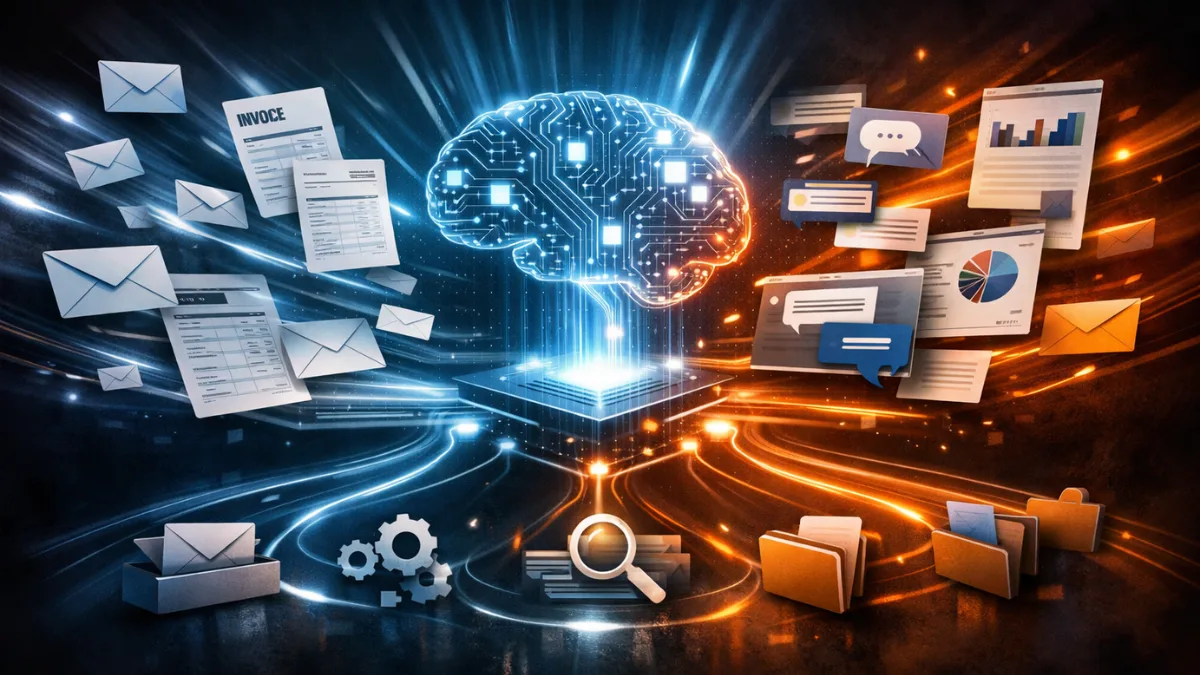
At its core, AI automation is the use of artificial intelligence to perform tasks, make predictions, or trigger actions with limited human intervention. Traditional automation follows fixed rules: if X happens, do Y. AI automation goes further. It can interpret language, identify patterns, classify information, generate responses, learn from data, and adapt its outputs based on changing inputs.
That distinction matters. A regular automated workflow might send an invoice reminder after seven days. An AI-powered version might analyze payment behavior, adjust timing based on the customer profile, generate a customized message, and escalate only when the pattern suggests real risk. The process is still automated, but it is no longer purely mechanical.

This is why What Is AI Automation? has become a bigger question than it first appears. It is not simply a technical term. It describes a shift from software that only executes instructions to software that can interpret context, approximate judgment, and support decisions once thought too variable to automate.
Why the Term Is Suddenly Everywhere
Part of the answer is hype, of course. Every few years the tech industry finds a phrase that gets stretched across marketing decks until it starts to lose meaning. But AI automation is not just another empty buzzword. It is showing up everywhere because the economics behind it are unusually strong.
Businesses want faster workflows, lower operational drag, better use of staff time, and more consistency in tasks that are repetitive but still cognitively demanding. AI automation promises all four. It can answer common customer queries, summarize meetings, extract information from documents, route support tickets, flag anomalies, generate first drafts, and monitor systems in real time. None of that sounds cinematic. That is exactly why it is powerful. The biggest shifts in work are often boring at first glance.
The timing also matters. Companies are generating more data, handling more digital interactions, and operating under more pressure to move quickly without expanding headcount at the same rate. AI automation fits neatly into that environment. It is not only about cost savings, though those matter. It is also about scale. A human team can only review so many emails, contracts, claims, or support requests in a day. Automated systems can process them continuously.
The Difference Between Automation and AI Automation
This is where people often get confused. Automation is not new. Businesses have automated payroll, inventory tracking, manufacturing processes, and standard communication for years. What changes with AI is the kind of work that becomes automatable.

Older systems were best at structured, repetitive, rule-based tasks. They struggled when information was messy, ambiguous, or language-heavy. AI changes that boundary. A system can now read a customer complaint, detect sentiment, pull account history, draft a response, and route the issue to the right team with far less manual sorting.
That does not mean AI understands the world the way humans do. A lot of exaggerated claims collapse under scrutiny. But it does mean organizations can automate tasks that used to require human pattern recognition, not just human clicking.
A useful way to think about it is this: traditional automation removes manual steps; AI automation removes manual interpretation from parts of a workflow.

Where AI Automation Is Already Changing Work
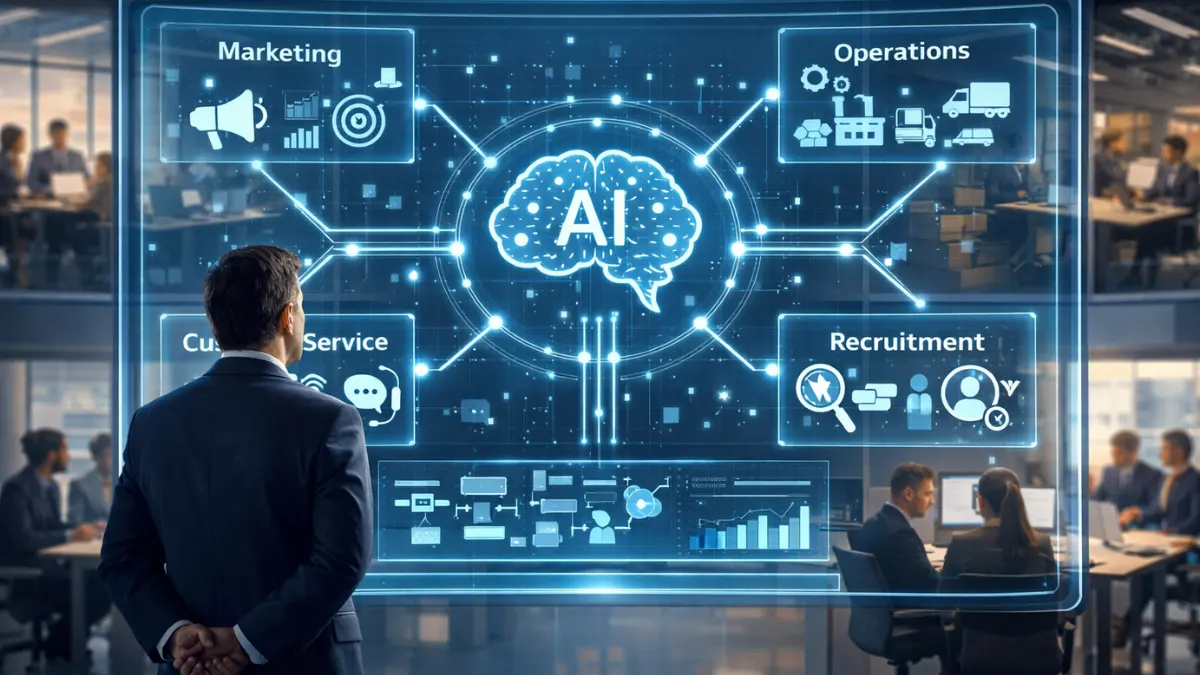
The clearest examples are not always the flashiest ones. Customer support is an obvious case. AI systems can answer routine questions, summarize long chat histories, suggest responses for agents, and triage more serious cases. In finance, they extract data from invoices, detect anomalies, and support fraud monitoring. In HR, they help screen applications, schedule interviews, summarize feedback, and manage internal requests. In marketing, they generate content variations, analyze audience behavior, and automate campaign adjustments.
Healthcare, logistics, retail, manufacturing, legal services, and education are all experimenting in their own ways. Sometimes the use case is simple. Sometimes it is highly specialized. The common pattern is that AI automation thrives where there is a large volume of repeatable work mixed with enough complexity to frustrate older rule-based systems.
This is why the technology feels less like a gadget and more like infrastructure. Once it enters the workflow, it starts reshaping how teams allocate attention.
The Business Appeal Is Easy to Understand
The attraction is not mysterious. AI automation can reduce delays, increase throughput, and allow skilled employees to spend less time on low-value administrative work. That is the polished executive version, and often it is true.
But there is another layer to the appeal: control. Businesses love systems that make operations more measurable. AI automation creates data trails, standardized decision points, and process visibility. Managers can see bottlenecks more clearly. Tasks can be monitored, timed, refined, and compared. Operations become more legible.
That sounds efficient because it is. It can also create new tensions. When work becomes more trackable, employees may feel more observed. When outputs are accelerated, expectations rise. A team that once took three days to deliver a report may now be expected to deliver it in three hours because the first draft is automated. Productivity gains do not always become leisure. Sometimes they become new baselines.
That is one of the quiet truths of technology at work: efficiency rarely arrives alone. It changes pressure as much as it changes process.
Why AI Automation Feels Different Psychologically
There is a subtle reason AI automation makes people uneasy even when the use case is clearly practical. It blurs the line between assistance and replacement.
A spreadsheet never threatened anyone’s identity in quite the same way. AI automation often reaches into tasks that people associate with competence: writing, judging, responding, prioritizing, analyzing. Even when the system is only partially effective, it changes how workers see the value of their own routine expertise. That can trigger defensiveness, overconfidence, or quiet anxiety.
The reality is more complicated than the loudest narratives suggest. Most organizations do not replace an entire function overnight. They reassign, compress, redesign, and expect people to work differently. Jobs evolve unevenly. Some tasks disappear. Others become more supervisory. Still others require more human input because AI outputs need review, correction, and contextual judgment.
So the real issue is not whether AI automation replaces all human work. It does not. The harder question is which parts of human work become less central, less visible, or less rewarded when software handles the first pass.
The Limits Nobody Should Ignore
For all the excitement, AI automation is not magic. It can be brittle, wrong, biased, overconfident, and dependent on poor-quality data. It can automate mistakes at scale. A broken manual process is frustrating. A broken automated process is fast.
This is where companies often get careless. They buy tools before understanding their workflows. They automate around messy data. They assume AI outputs are reliable because they sound polished. They underestimate the importance of governance, human review, and domain expertise.
There is also the problem of fit. Not every process benefits from automation. Some tasks require trust, discretion, empathy, or deep contextual awareness that current systems do not handle well. Other tasks are too inconsistent to justify the setup cost. The smartest organizations are not automating everything. They are identifying where automation creates genuine value and where it simply creates the illusion of modernity.
The Future of AI Automation Will Be Less Visible, Not More
Right now, AI automation still gets presented as a feature, a selling point, something companies brag about. That phase will not last forever. The technology is likely to become more invisible as it becomes more embedded.
Soon the interesting question may not be whether a workflow uses AI automation, but how much of business software quietly depends on it by default. Email systems will draft more. CRMs will prioritize more. Enterprise tools will predict, summarize, route, and generate without asking for applause. Automation will become part of the furniture.
That future brings both convenience and risk. When systems become invisible, people stop questioning them. Yet that is exactly when oversight matters most. The organizations that handle AI automation well will not be the ones with the most impressive demos. They will be the ones that know where to insert human judgment, where to demand transparency, and where not to automate at all.
More Read
Conclusion
What Is AI Automation? It is the growing use of intelligent systems to handle tasks, decisions, and workflows that once required far more human effort. It is changing customer service, operations, hiring, finance, marketing, and countless other functions not through dramatic spectacle, but through quiet redesign.
That quietness is precisely why it matters. AI automation does not just speed things up. It changes what work looks like, what employees are expected to do, and what organizations consider efficient, normal, or valuable. The real story is not that machines are taking over. It is that software is increasingly becoming the first layer through which modern work gets organized, filtered, and acted upon.
Final Insight
At The Vue Times, we look past the slogans and study the systems quietly reshaping modern business. AI automation is not just a tech trend; it is becoming a management philosophy, an operations tool, and a new test of how organizations balance speed with judgment.
Frequently Asked Questions
1. What is AI automation?
AI automation is the use of artificial intelligence to perform tasks, analyze data, make predictions, or trigger actions with limited human involvement. It goes beyond fixed-rule automation by handling more complex and context-based work.
2. How is AI automation different from traditional automation?
Traditional automation follows pre-set rules for repetitive tasks. AI automation can interpret language, identify patterns, and respond to changing inputs, making it useful for more dynamic workflows.
3. Where is AI automation used?
It is used in customer service, marketing, HR, finance, healthcare, logistics, retail, and many other industries. Common uses include chat support, document processing, fraud detection, lead scoring, and workflow management.
4. Is AI automation replacing jobs?
It is changing jobs more often than eliminating them outright. Some repetitive tasks are reduced, while many roles shift toward supervision, strategy, and reviewing AI-generated outputs.
5. What are the risks of AI automation?
The main risks include inaccurate outputs, biased decisions, poor-quality data, over-automation, and weak human oversight. When implemented carelessly, AI automation can scale errors quickly.