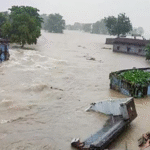
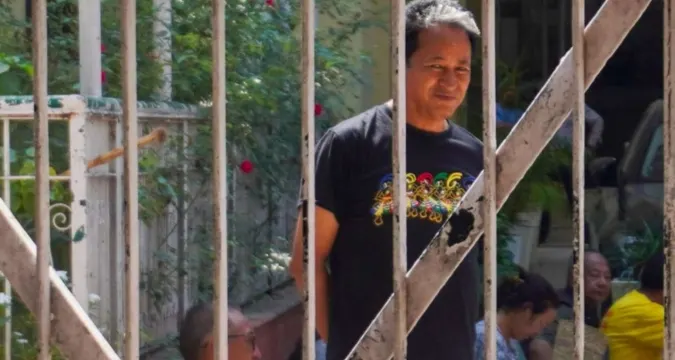
Incarcerated Ladakh innovator and education reformer Sonam Wangchuk is imprisoned in Jodhpur, having been arrested under the National Security Act after violent demonstrations in Leh on 24 September 2025 resulted in the deaths of four people. Out of jail he issued a plea of non-violent Gandhian passive resistance and demanded an independent judicial investigation into the murders. This imprisonment, the suspension of his NGOs, FCRA registration and the cancellation of local discussions have significantly intensified the political crisis in Ladakh and brought up legal, constitutional and governance issues that will inform short term stability as well as long term solutions to the region.
Why This Matters Now
The call of Ladakh to get greater constitutional protection and statehood is not a novel development. This aggressive transition on 24 September has intensified a long-standing agitation into a political and legal emergency on the national scale. The reaction of the New Delhi, Ladakhi representation bodies, courts and rights organizations will lead to either dialogue and accountability management of the conflict or polarization and new instabilization will review the situation. The most important short term events to be observed include the Supreme Court petitions against the detention and how a judicial investigation into the killings could look like.
Who is Sonam Wangchuk and why do we want to hear his voice?
Sonam Wangchuk is an innovator-educator mostly known as a person of Ladakh. He was the founder of the Students Educational and Cultural Movement of Ladakh, co-designer of inexpensive, high-performance solutions to Himalayan communities such as the ice stupa water-storage system, and the winner of the Ramon Magasaysay Award in community-based education reform. He made years of local education reforms, joined the climate and rights movement, and by 2025 appeared on the list of visible leaders of the movement where Sixth Schedule protections and statehood of Ladakh were being demanded. The moral weight of his calls to non-violence and responsibility carried with it the real reputation, as a pragmatist innovator, which he had gained publicly.
The Chronology: An Account of Events
A close effort is made here to reconstruct the same, based on coverage by various sources and human rights activists.

10 September 2025
Wangchuk initiates hunger strike in demand of Sixth Schedule status and statehood of Ladakh. Reporting on exact lengths claims is inconsistent, however, there are numerous sources that document the fast as mass and designed to gnash the fibre centre.
24 September 2025
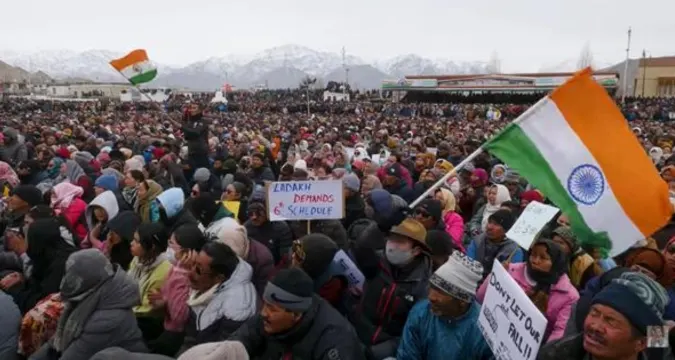
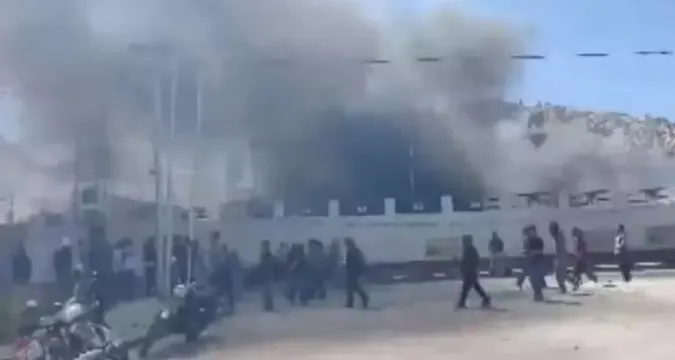
A great demonstration took part in Leh to demand Sixth Schedule and statehood, and it ended in violence. Demonstrators burned different vehicles and a regional BJP office; violence against security services also increased and police fired on participants in the procession. The killing of four individuals during the firing and dozens wounded were reported by Human Rights Watch and international media. Reporting in the area had varying numbers of injuries; this remains an ongoing area of research. The violence then ended when Wangchuk lifted his hunger strike and made a plea for calm.
25-26 September 2025
The FCRA registration of the SECMOL of Wangchuk was revoked by the Union Home Ministry. Investigations were initiated and the administration has put curfew and halted internet services in Leh. After being stopped on 26 September by the authorities under the National Security Act, Wangchuk was taken into custody and appropriate authorities sent to Jodhpur Central Jail. The police have charged him with incitement, Wangchuk denies promoting violence and has requested the independent judicial review on the killings.
Next: Late September-Early October of 2025.
The Leh and Kargil based representative bodies such as the Leh Apex Body and Kargil Democratic Alliance declared the suspension of planned talks with the Centre pending a judicial enquiry and freedom of imprisoned activists. The wife of Wangchuk petitioned to the Supreme Court over his detention; the case was to first be settled in the first sitting of the Court after the Dussehra vacation.
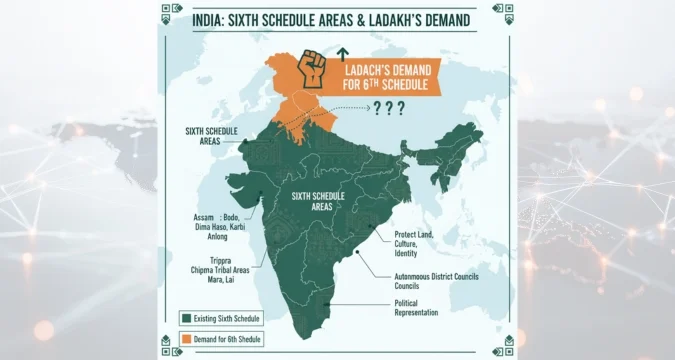
What the Sixth Schedule demands in fact demands and why it is the most important.
The constitution has secured a high level of autonomy of the tribal regions under Autonomous district councils which have legislative, executive and limited judicial power over lands, forests, customary laws, village counsel and minor courts. It is now being utilized in sections of the Northeast, and is the constitutional means that local leaders in Ladakh are seeking in order to formally establish land rights, culture and local control of resources as the region seeks to reap the benefits of rapid centrally-led development. The Sixth Schedule inclusion is a complex and legally relevant matter; it would refine local governance and establish legal defenses against Ladakhi leaders necessary, they believe, to maintain identity and resources.

The law instrument employed: meaning of detention under the National Security Act.
The National Security Act, 1980 establishes a procedure under which preventive detention is carried out based on national security interests, international relations, domesticing social order or supporting basic services. Competent authorities may issue the order and detention may take up to 12 months as defined by the law and subject to review by advisory boards. The Act has generated unpopularity as it allows preventive detention bypassing the criminal charging and trial processes that apply in the case of arrests. There are remedies: detainees will be able to represent themselves before the government, there should be advisory boards that will examine the detention and petitioners may petition to High Courts and Supreme Court based on Articles 226 and 32. Retaliation of any NSA usage will be subject of appraisal by legal circles and civil liberty organizations due to the Act’s contentious history of use.

The disputed positions on either side.
The government claims that the arrest and the cancellation of FCRA registration were required by reasonable inputs that Wright’s rhetoric and network incited unrest, and that the operation at SECMOL showed financial and procedural anomalies to justify FCRA intervention. The Ladakh government and the Centre believe the measures have evidence-based grounds and are required to maintain order. The Ladakhi civil society and representative bodies decline the version of incitement, demand an urgent judicial investigation of the death in the cause of lethal force and argue that the retaliation against this movement has a political motive. Opposition rights groups have catalyzed issues regarding use of preventive detention and necessity of objective investigation into the murders. This is a very formative phase of verbal contention and the courts, and a forensic investigation into the case where it is mandated, will serve as facts.
The figures of casualties and injuries: why and what we know.
Claims of four police deaths were registered in several sources due to police shooting on 24 September. Sources have differed in the number of those injured with about 50 up to almost 90 in some local counts. Gaps are present due to chaotic reporting on clashes and afterwards, varying local and official counts, and delays in official hospital confirmations. How Human Rights Watch and international news agencies did confirm four deaths as a signature fact as they underlined the necessity of an independent investigation warrant to ascertain the use of force and determine responsibility.

Implications of politics and governance.
- Dialogue is stalled: The killing and the arrests caused the central-Ladakh talks that had been scheduled to take place, to be suspended. The official line of negotiation is already destabilized by the refusals to participate in the Apex Body and the Kargil bloc until there is evidence of progress on accountability and releases. That adds to the prolonged turmoil.
- Legal test for NSA: Procedural fairness and sufficiency of grounds under which preventive detention was relied upon is likely to face the challenge posed by the Supreme Court over the detention. Judicial review can limit improper or arbitrary use, even portentous judicial review may be permitted to impose limits on such detention by law. Past judicial decisions have demanded that the process of preventive detention meets constitutional requirements. Should anticipate judicial review in the realization that adequate reasons were provided and that the practice of advisory boards is being respected.
- Civil society and foreign notice: New Delhi may face reputational costs with Human Rights Watch and other international legal watchdogs reporting the killings and the detention, and if a review of their legal actions or an independent investigation identifies excessive force or procedural flaws. This could impact on international advocacy and funding channels of local NGOs.
- Long term governance design: Provided that the demand of Ladakh in the 6th schedule protections and Article371 like protections gather political traction, New Delhi will have a complex constitutional and governance exercise. Any re-orientation will necessitate legislation and institutional redesign to bring the balance between regional jurisdiction and state administration.
What an independent judicial inquiry ought to have.
In case the Centre is earnest in regaining trust and making discussions resume, an effective judicial audit must be commissioned and publicly affixed to the subsequent components:
- References which entail use of forensic investigation of use of force, chain of command, crowd control, medical ascertainment of cause of deaths.
- Chair by a retired Supreme Court judge or a chief justice of a high court to provide the legal seriousness.
- Reporting with time constraints and periodic updates of scope and method.
- Civil protection and safe evidence utilization of civilians, security forces, and medical workers.
- Public openness and procedural secrecy where necessary.
- Those are conventional best practices in the democratic context of disputed applications of force and would be fundamental to restoring confidence. What we are exactly asking before we go to negotiation once again are the same kind of conditions we had publicly said before.
Realistic and progressive suggestions to the Centre and Ladakhi leadership.
For the Centre
- Immediately call / request an independent judicial investigation and turn it public. This is the one step which will most likely defuse the current tensions.
- In order to eliminate the impression of collective punishment, temporarily place administrative sanctions that are not relevant to criminal investigations in the short term.
- Restart dialogue channels after the terms and inquiry head are agreeable to representative local bodies.
Ladakhi leaders and civil society.
- Secure documentation of administrative witnesses who can provide credible eyewitness testimonies, medical documents and physical evidence as part of the investigation and legal petitions.
- Continue to mobilise centered on articulated legal and constitutional goals to maintain popular sympathies and prevent additional escalatory events.
- Seek redress in the Supreme Court and insist on peaceable action and positive initiatives on institutional protection.
To independent observers and the press.
- Verify casualty and injury figures with hospital and official figures.
- Monitors track advisory board timelines and court orders and report the legal reasoning that informs the outcomes of detention.
- Keep balanced reporting that channels out the confirmed facts and partisan asserts.
Expectancies and possibilities within 4-12 weeks.
- Defuse with questioning and negotiations: However, in case an investigation is demanded in a short period and its conditions meet with the approval of the local leaders, the Apex Body and KDA might revert to official discussions and the nature of tension might drop. This would be optimal institutional resolution.
- Long staying points and intermittent disturbance: Without a plausible investigation, representative institutions might keep boycotts going, and upheaval might continue periodically, should the Centre continue with preventive detention and punitive administrative sanctions.
- Judicial intervention: Conditional release may be ordered by the Supreme Court, grounds to order immediate disclosure, or remand may be ordered after an advisory board review of the matters. In this case, legal constraints of the NSA application will be determined by judicial results.
Concluding analysis and a note of encouragement.
This is an institute test. Provided New Delhi opts in favor of open investigation and well-founded consultation, it can turn a crisis into an opportunity to establish legally sound safeguards of Ladakh. When opaque administrative action and extended preventive imprisonment become the standard reaction, chances that future unrest and reputational expense will escalate will increase. To reform-minded journalists, lawyers and civil society actors the practical work is evident: write down, check, insist on independent review, and suggest constitutional remedies that would apply land and cultural protections without compromise of rule of law. That pragmatism course of action offers Ladakh the finest prospect of lasting independence within the Constitution, and of the region blossoming without recurrent clashes.