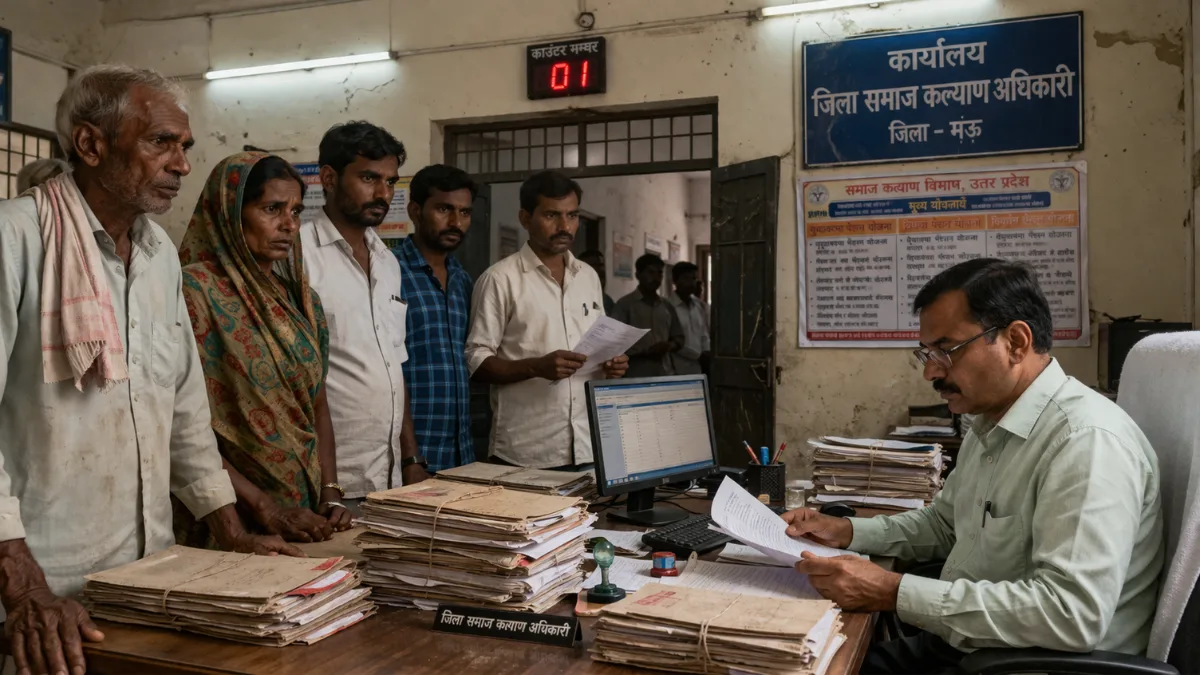
On a humid afternoon in a district office somewhere in northern India, a farmer waits quietly on a wooden bench. He holds a file—creased, over-handled, and thick with photocopies. Inside it is a story: a government scheme approved on paper, but stalled somewhere between intention and execution. He has come for the third time this month. The scheme exists. The funds exist. The policy exists. Yet, for him, it might as well not.
This quiet distance between what is announced and what is delivered is where the real story of Policy Execution in India unfolds.
The Gap Between Policy and Reality
India is not short of policies. In fact, it produces them with remarkable frequency—ambitious, layered, often globally applauded. From welfare schemes to digital governance initiatives, policy design in India has steadily improved over the years.
Execution, however, remains uneven.

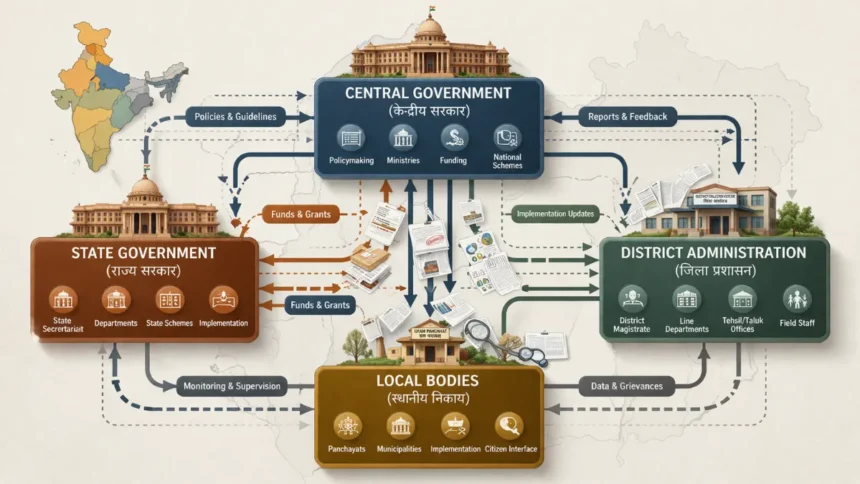
The issue is not always incompetence. Nor is it simply corruption, as is often casually assumed. The problem is more structural, embedded deep within the architecture of India’s bureaucratic system. Policies move through layers—central ministries, state departments, district offices, block-level functionaries—each layer adding its own interpretation, delay, or constraint.
By the time a policy reaches its intended beneficiary, it has often been reshaped by the system itself.
Why Policy Execution in India Is Structurally Complex
India’s administrative system carries historical weight. Much of its bureaucratic design traces back to colonial governance—centralized control, rule-bound procedures, and a deep emphasis on documentation.
That legacy still shapes how policy execution operates today.
1. Layered Governance Structure
India is a federal system, but policy execution is rarely straightforward. A centrally designed scheme must be implemented by states, which in turn rely on district and local bodies.

Each level has:
- Its own priorities
- Resource constraints
- Political considerations
The result is variation. A policy that works efficiently in one state may struggle in another—not because the policy itself is flawed, but because execution ecosystems differ.
2. Rule-Based vs Outcome-Based Administration
Indian bureaucracy traditionally functions on compliance. Officers are trained to follow procedures meticulously. Deviations—even if well-intentioned—can invite scrutiny.

This creates a mindset where:
- Process becomes more important than outcome
- Risk-taking is discouraged
- Innovation remains limited
The system rewards caution, not necessarily effectiveness.
Policy Execution in India: Where It Breaks Down
Despite improvements in governance technology and monitoring systems, certain recurring bottlenecks continue to shape outcomes.
Administrative Overload
A single district officer may be responsible for dozens of schemes simultaneously—health, education, rural development, infrastructure, welfare programs. Each comes with reporting requirements, deadlines, and inspections.
Execution becomes fragmented. Prioritization becomes reactive rather than strategic.
Data Without Ground Reality
Digitization has transformed governance in India. Dashboards track progress. Targets are updated in real time. Reports are generated with impressive precision.
But data often reflects what is reported, not necessarily what exists.
There is a subtle but critical gap between:
- Administrative data
- Lived experience
A scheme may show 95% completion on paper while still facing access barriers on the ground.
Incentive Misalignment
Policy execution systems often reward:
- Speed over depth
- Targets over outcomes
Officials are evaluated based on measurable indicators—number of beneficiaries enrolled, funds disbursed, projects completed.
What is harder to measure—quality, accessibility, long-term impact—often gets sidelined.
The Human Layer of Bureaucracy
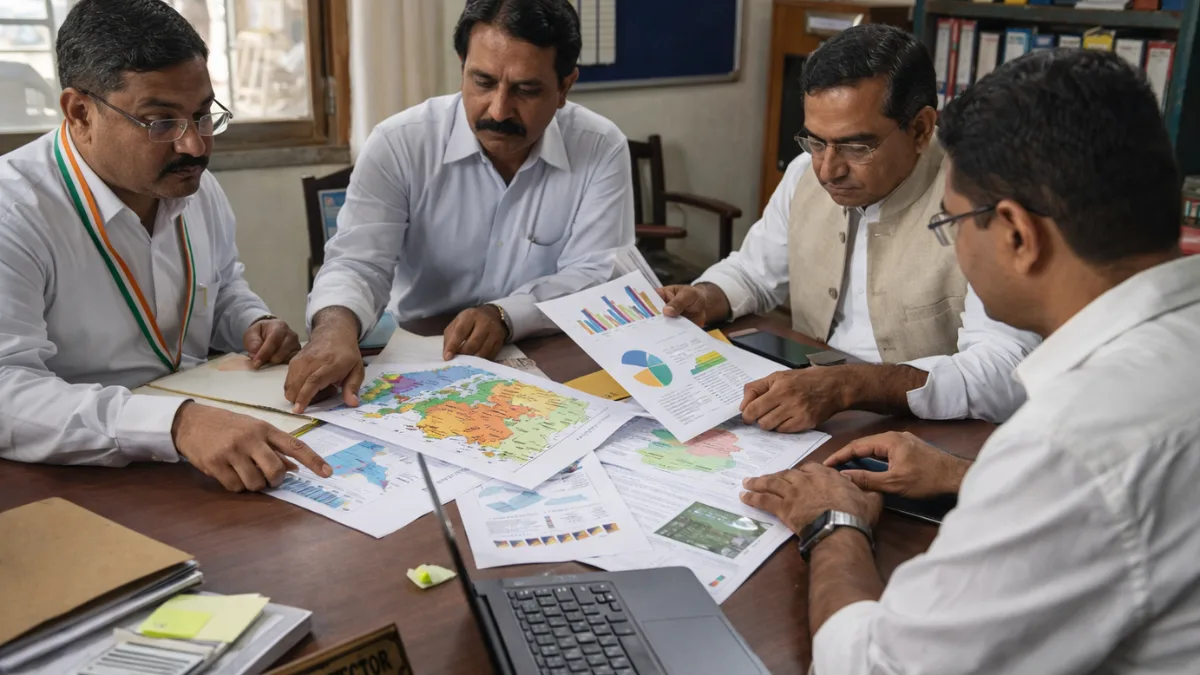
It is easy to view bureaucracy as an abstract system. In reality, it is deeply human.
Every file moves through individuals—clerks, officers, administrators—each operating under constraints. Transfers are frequent. Tenures are short. Institutional memory is fragile.
A newly appointed officer may inherit:
- Incomplete projects
- Local resistance
- Administrative backlog
Continuity suffers. Execution slows down.
At the same time, the system often underestimates the cognitive load placed on bureaucrats. Decision-making is rarely linear. It involves balancing policy guidelines, political expectations, public pressure, and resource limitations—all within tight timelines.
Why It Matters Now
The question of Policy Execution in India is becoming more urgent.
India is at a stage where policy ambition is rising—large-scale infrastructure, digital transformation, climate commitments, social welfare expansion. The scale of intervention is unprecedented.
Execution, therefore, becomes the defining variable.
A well-designed policy that fails in implementation does more than waste resources—it erodes public trust. Citizens begin to disengage. Skepticism grows. The legitimacy of governance itself comes into question.
At the same time, effective execution can amplify impact dramatically. When systems work—even in small pockets—they demonstrate what is possible.
The Digital Turn: Progress with Caveats
Over the past decade, digital governance has been positioned as a solution to execution challenges.
Direct Benefit Transfer (DBT), Aadhaar-linked systems, online portals, real-time monitoring dashboards—these have reduced leakages and improved transparency in many areas.
But technology does not eliminate structural issues. It often shifts them.
For instance:
- Digital systems require digital literacy
- Authentication failures can exclude beneficiaries
- Technical glitches can delay service delivery
Execution becomes dependent not just on administrative capacity, but also on technological reliability.
A Quiet Shift: From Control to Facilitation
There are signs of change.
A new generation of administrators is gradually moving toward outcome-based governance. Pilot projects, decentralized decision-making, and collaborative approaches are gaining space.
In some districts:
- Officers engage directly with communities
- Feedback loops are actively used
- Local innovations are encouraged
These are not systemic changes yet, but they indicate a shift in mindset.
Policy execution is slowly being reimagined—not as control, but as facilitation.
The Business and Economic Angle
For businesses, the execution gap is not an abstract issue—it has direct consequences.
- Infrastructure delays increase costs
- Regulatory uncertainty affects investment decisions
- Implementation inconsistencies create uneven playing fields
A policy that promises ease of doing business must deliver it on the ground. Otherwise, it remains a signal, not a reality.
Global investors often assess not just policy frameworks, but execution reliability. Predictability matters as much as ambition.
What Could Improve Policy Execution in India
There is no single solution, but certain structural shifts could make a difference.
1. Incentivizing Outcomes
Evaluation systems need to move beyond targets. Measuring impact—however complex—must become part of performance assessment.
2. Strengthening Local Governance
Empowering local bodies with resources and decision-making authority can reduce execution delays. Centralized control often slows down localized implementation.
3. Reducing Administrative Load
Streamlining schemes, integrating reporting systems, and prioritizing key programs can improve focus.
4. Building Institutional Continuity
Longer tenures and better knowledge transfer systems can reduce disruption caused by frequent transfers.
5. Designing for Implementation
Policies must be designed with execution realities in mind—simpler processes, fewer compliance layers, clearer accountability.
Looking Ahead
India’s policy ecosystem is evolving. The ambition is visible. The intent is rarely in question.
The real challenge lies in translation.
Execution is not a technical step—it is a systemic process shaped by structure, incentives, and human behavior. It determines whether policy remains a document or becomes a lived experience.
And perhaps that is where the conversation needs to shift.
Not just what policies India creates, but how it makes them work.
More Read

Conclusion
The story of Policy Execution in India is not one of failure, but of friction. A system carrying historical weight, operating under modern expectations, and slowly adapting to new realities.
The gap between policy and practice is narrowing in some areas, widening in others. Progress is uneven, but not absent.
What remains constant is this: execution is where governance becomes real.

Final Insight
Policies don’t fail in headlines—they fail in handoffs. The future of governance in India will depend less on what is announced, and more on what quietly reaches the last mile.
Frequently Asked Questions
What is policy execution in India?
Policy execution in India refers to how government policies are implemented on the ground through administrative systems at central, state, and local levels.
Why is policy execution challenging in India?
It is complex due to layered governance, bureaucratic procedures, resource constraints, and coordination issues across multiple administrative levels.
How does bureaucracy affect policy implementation?
Bureaucracy ensures structure and accountability but can also slow down execution due to rigid procedures and risk-averse decision-making.
Has digital governance improved policy execution in India?
Yes, it has improved transparency and reduced leakages, but challenges like digital access and system reliability still affect outcomes.
What reforms can improve policy execution in India?
Outcome-based evaluation, stronger local governance, simplified processes, and better administrative continuity can significantly improve execution.