Introduction
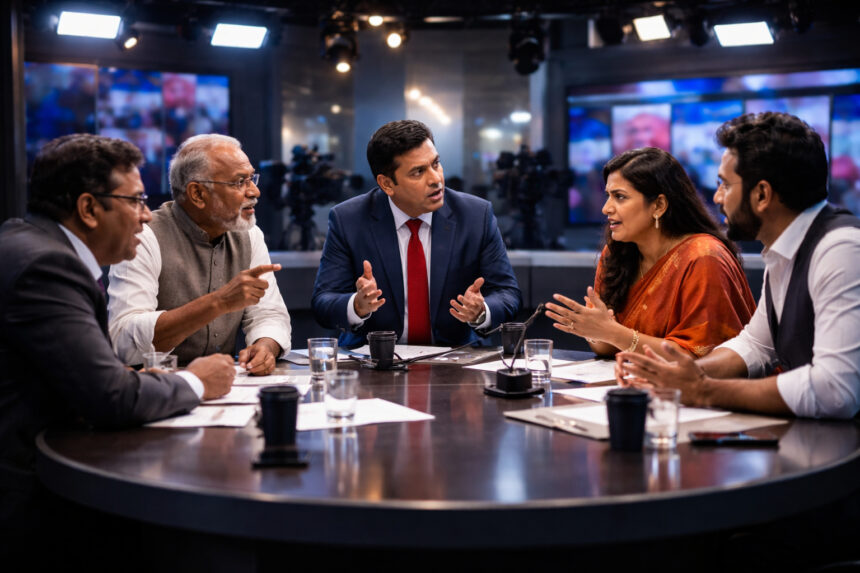
The Kerala story controversy has become one of the most controversial cultural and political issues of recent years in India. What started as a movie release turned out to be a national debate with political, media discourse, free speech, and social viewpoint.
In its simplest form, the controversy is connected with the assertions of the film The Kerala Story that introduces a story about the supposed instances of forced religious conversion and radicalization. Though the filmmakers claim that the plot is founded on real events, the critics state that it is too exaggerated and creates a specific opinion.
The problem is important as it does not just pertain to cinema. It raises such delicate issues as religion, national security, gender, and fake news. It is important to know the Kerala story controversy not only to film audiences but also to those who seek to make sense of the contemporary information ecosystems in India in a digital era.
Background and Context
It is important to first look at the context in which the film was produced and released to interpret the Kerala story controversy.

Directed by Sudipto Sen, The Kerala Story purports to narrate about the lives of Kerala women who had allegedly been radicalised and recruited by extremists. The first promotional media announced that thousands of women had been impacted, and this was what immediately raised suspicion.
The state of Kerala is a progressive state and has commonly been described with regards to its high literacy rate and social development indicators. Any story, which implies large-scale radicalization, questions this image, so the subject is very sensitive.
Religious conversion and extremism are historically a politically charged issue in India. People have raised similar arguments before, yet the magnitude of the impact on the masses in this instance was exaggerated by the film element and the pushy advertising tactics.
What Is Happening Right Now
The controversy about the Kerala story lasted until the release of the film. A number of events led to its broad conversation:
- Legal petitions were filed against the claims in the film.
- There were some states that contemplated banning or limiting its screening.
- The film was openly supported or condemned by political leaders.
- Arguments about social media got heated, and hashtags were trending throughout.
In certain cases, courts interfered demanding disclaimers or amendments. Back home, the movie was still drawing crowds, in part due to the controversy itself.

The case displays a trend that is typical to media today: the controversy usually sparked the popularity, bringing the film to become a larger socio-political phenomenon.
Why This Subject is Scandalous.
There is no one issue behind the kerala story controversy- it is an outcome of several sensitive layers intertwining simultaneously. That is why the discussion has been heated, passionate and highly polarizing among audiences.
Claims vs Evidence
The discrepancy between what is alleged and what can be proved is one of the greatest catalysts that have precipitated the controversy. The initial advertisements of the film had implied that thousands of women were victims to radicalization and recruitment into extremist groups. This figure soon became the subject of attack.

Critics, reporters, and fact-checkers started to cast doubt upon the validity of such numbers. Here is a simple yet important question they posed: Where is the data? Although cases of radicalization have been recorded, the number projected in the film seemed to be a lot higher than the number of cases on record.
This discrepancy caused confusion to viewers. The movie was something of an eye-opener to some. To some, it appeared to be a farfetched story that would deceive the masses. The ambiguity over the figure obsessed the discussion to narration over truth and responsibility.
Religious Sensitivity
The other significant cause of the controversy of the Kerala story is its relation to religion. The movie also explores issues that relate to certain communities, and this, naturally, makes the subject matter very delicate in a multinational nation such as India.
When a story is about religion, it is oftentimes more than true, and becomes more of an identity and faith. Individuals can respond not necessarily logically, but emotionally. This may prompt a powerful response such as support, criticism or even outrage.
In this instance, a number of viewers felt that the movie was just singling out a given community and others thought that it was raising a real issue. This gap resulted in the impossibility of a calm, objective, discussion because emotions and own beliefs began to take on a larger role.
Political Context
The issue of the kerala story cannot be isolated either as far as the political climate under which it came about. Various political parties viewed the movie in terms that would suit their ideologies.
Other leaders even came out in support of the film citing it as a necessary exposure of understated matters. Others condemned it terming it as propaganda or something that aims to sway the masses. When the political voices appeared on the scene, the question of cinema began to be replaced by the one of ideology and the control of narrative.
This political implication increased the controversy even more. The Kerala Story was not viewed as a film per se but was a piece of the bigger discussion about the governance system, social issues and national identity.
Freedom of Expression
The crux of the discussion is simple: How far can creative freedom go?
In its defense, filmmakers believe they should be allowed to narrate stories no matter how uncomfortable or controversial they may be. They think that cinema does not have to be entirely factual and should be free to dive into sensitive subjects.
Conversely, the opponents stress the fact that freedom is accompanied by responsibility. According to them, when a movie claims to be rooted in actual events, it must be accurate and particularly when it concerns sensitive issues.
Such a conflict between the freedom of creativity and the responsibility to the facts is a cliche in a lot of controversies, and it is the focus of this one, too.
Media Amplification
The other reason that exacerbated the kerala story is the media and social platforms. News discussions, video viralization and trending hashtags made the issue a national discussion.
In most instances, individuals made judgments based on the brief clips or even the headlines instead of the entire content. The result of this speedy dissemination of partial information was an increased difficulty in distinguishing between fact and interpretation.
Consequently, the scandal became bigger than the movie itself and an extension of the role of modern media ecosystems.
Different Perspectives
Supporters’ View
Followers of the film regard it as a significant story that draws the focus on the matters that are usually overlooked or under-reported. They say that the Indian perspective of the real story does not refer to numbers but simply includes the realization that such cases do exist.
They claim that cinema is always a form of narration, rather than a form of absolute documentation. On their part, although the scale may be a subject to argument, the ultimate meaning of the movie still applies. They consider that the movie inspires the creation of awareness and initiates the needed discussions regarding security and social issues.
There are also those who are in support of the film and believe that the attack on the movie is an effort to cover up unpalatable realities. In their eyes, the scandal itself is an indicator of the fact that the subject matter had to be addressed.

Critics’ View
Critics are more hesitant though. They claim that the movie is also a blur when it comes to fiction and reality, particularly with exaggerated numbers that are not backed up well.
On their part, these narratives may result in misinformation and developing unnecessary fear. They also express worries on the possible effects on social harmony especially when some groups of people are being deprived in a negative manner.
Critics underscore the fact that story telling is as powerful as it needs to be responsible; particularly when it purports to depict actual events. To them, it is not a matter of one movie but the overall outcome of propagating unsubstantiated stories.
Facts vs Claims
To get the facts of the Kerala story, it is important to make a difference between what has been verified and what is being said in public discourse.
Verified Facts
- Some case reports indicate that radicalization has been occurring in India.
- The governments have examined and acted in such instances.
- The movie is not a documentary but a dramatized version.
Public Claims
- It is claimed that thousands of women were affected.
- The problem is systemic and rampant.
- The story represents some concealed mass reality.
Key Observation
The issue with the controversy of the kerala story is based on the discrepancy between documented evidence and claims based on scale. This loophole brings about doubts, something that leads to debate, speculation and firm opinions.
To the viewers, it is not easy to watch the film and simply accept what is being told, but to critically analyze the information. The ability to perceive this distinction between facts and claims cannot be understood in the modern information-rich world more than ever.
What People Might Be Missing
The interpretation of narratives and their consumption is one of the forgotten components of the Kerala story controversy.
Role of Marketing
Dramatic factors tend to increase in promotional strategies to capture attention. This may blur fact and fiction.
Audience Interpretation
The same content has different interpretations to different viewers depending on their beliefs and sources of information.
Data Complexity
Social problems seldom have direct answers. Making them individual stories may result in over simplification.
Emotional Impact
Personal stories with elements of identity and safety are known to be emotional and therefore they may carry away critical thinking.
Society, Economic, User Impact.
There have been several practical implications of this controversy about the kerala story:
Social Impact
- Greater polarization of sensitive issues.
- Greater debate of religion and identity.
- Cinema is not the only topic of public debates.
Economic Impact
- Fueled controversy is boosting box office earnings.
- More emphasis on local cinema.
- Peaks of revenues through marketing.
User Impact
- Viewers were subjected to mixed messages.
- Inability to separate fact and opinion.
- Increased dependence on online sources of information.
Role of Media and Narrative
The media was very instrumental in the controversy surrounding the Kerala story.
Traditional Media
- The news houses gave more prominence to debates by the use of panel discussions.
- The editorial biases were common in coverage.
Social Media
- The speedy dissemination of views and hash tags.
- Viral clips affected the thinking of the masses.
- Echo chambers confirmed the prevailing ideologies.
Narrative Dynamics
- There is no central authority of narratives in the digital era. Rather, they develop in a process of interrelations between creators, media and audiences.
Larger Picture / Perspective.
The kerala story scandal is a sign of wider tendencies in contemporary society:
Content vs Responsibility
The more content is made available, the more important the role of creators is.
Information Ecosystem
Fact, opinion, and propaganda are more and more generally confused.
Policy Implications
The governments might be under pressure to control the content without infringing the freedom of expression.
Audience Awareness
Media literacy is increasingly required to aid viewers in being critical of information.
Conclusion
This case of Kerala story is not merely about a film, but the question of how a narrative, a fact and perception interplay in the information-sharing world of today.

It brings out the inquiries of freedom of expression and social responsibility particularly in a multi-ethnic multi-layered society as in the case of India. On the one hand, it appears to be a conversation starter that is necessary to be brought up by supporters, and on the other hand, critics view it as a distortion of the narrative.
Finally, the scandal highlights one very important fact: the influence of a story in the contemporary media world can be as much about the manner of telling it as it is about what it narrates. This dynamic is imperative to comprehend in order to avoid not only this problem, but various other similar discussions in the future.