The 21st century has brought a new face of terrorism. Lone-wolf terrorism and family-cell terrorism, where an individual or a small group of people are independent, having often been radicalized on-line and being unseen to traditional intelligence means, has slowly replaced the era of large hierarchical terror networks. Since the attacks on the mosque in Christchurch, New Zealand or new cases of terrorists in Sydney, these terrorism trends in modern times are an indication of a worldwide challenge that does not only apply to the Australian continent, but to all the international security community, including India.
This deep terrorism review follows the evolution of attacks such as the one at Christchurch and how extremist psychology has been transformed by attackers who are self-radicalized, the manner in which small-cell groups are becoming difficult to identify. It even dwells on lessons to India and other democracies as they deal with a changing international terror threat.
An International Change in the Terrorist Patterns
Decades ago, terrorism was linked to organized groups, training camps and funds across borders. The focus of the Intelligence agencies was on intercepting communications, tracing finances and destroying the leadership structures. That is a model that is ever growing obsolete.
The current trends in terrorism transition to a clear debate to decentralized violence. Single individuals or family networks are autonomous cells that do not incorporate any formal leadership. They are guided by ideology as opposed to structure, grievance as opposed to hierarchy.

The significant features of this change are:
- Homegrown terrorists with inspiration by online propaganda.
- No communication with established extremist networks to a considerable degree.
- Utilization of ordinary resources instead of complicated logistics.
Goals that are selected on symbolic representation instead of strategic benefits.
This has evolved counter-terrorism to be more complicated. In the absence of an organization to compromise, prevention is a matter of time and technology.

Christchurch Attack: The Defining Moment
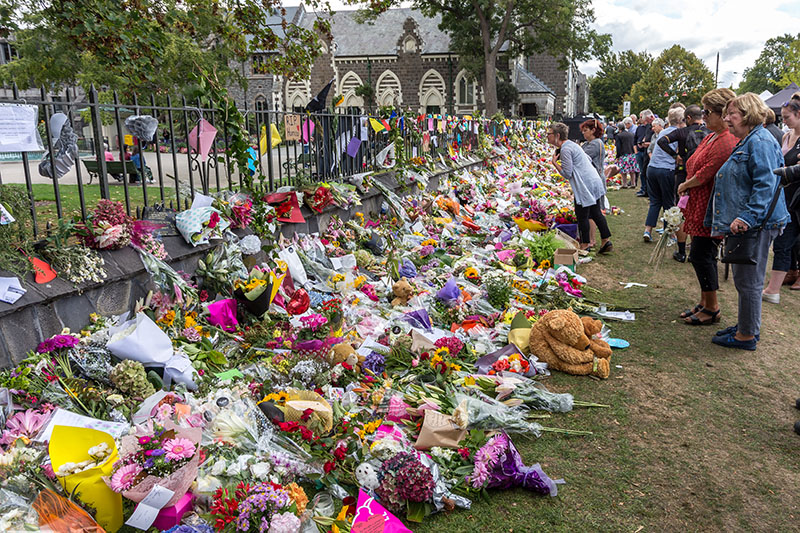
In March 2019, the terrorism in Christchurch was a watershed event on a global scale. The attack that occurred at two mosques during the Friday prayers not only shocked the world due to its brutality, but the nature of the attack method.

The attacker was a lone resident, who acted based on right-wing extremism, and increased the violence with the help of online courses. The carnage in the Christchurch mosque has shown that terrorism was no longer necessary to have a network, funding, or a foreign handler.
Such factors that transformed the worldly counter-terror thinking are:
- The attacker had been self-radicalized on the internet.
- It was not operationally linked to an organized terror organization.
- The law did not provide territorial control, but digital virality.
This event took the form of a reference point to the extremists in the world. It demonstrated how one person could make a global impact, making ideologies that would be imitated across boundaries.

Christchurch to Sydney: Continuity of Ideologies
Although Christchurch happened in New Zealand, the same ideological effects were experienced in Australia. In Christchurch to Sydney, security agencies noted that extremist narratives traveled between national borders without any difficulty.
These warning signs were evident in the following years of Sydney terrorism cases:
- People reading extremist material individually.
- Extreme ideologies supported by online echo chambers.
- Personal complaints were merged with universal ideological stories.
The case of Australia highlights a very important fact: the geography does not protect much against digital radicalization. Extremist ideologies are moving more quickly than the physical network.
A Lone Wolf Terrorism Explained
Lone-wolf terrorism is the term used to describe those attacks which are conducted by the individuals themselves, without being organized. These agents might be followers of an ideology, nonetheless, they conceive and commit violence on their own.
The reason lone-wolf terror is on the increase:
- Availability of extremist material on Internet.
- Large networks are potentially dangerous as a result of increased surveillance.
- Exploitation of social alienation and identity crisis by propaganda.
Lone-wolf attacks are unexpected in contrast to organized terrorism. The number of communications to intercept is reduced, financial trails of funds trailed are reduced, and associates to monitor are reduced.
This is the key challenge that faces counter-terrorism Australia and international security providers face.
Family-Cell Terrorism: Radicalization going Home
Worse of all is the emergence of family-cell terrorism whereby radicalization takes place in families. The extremist beliefs are strengthened by spouses, siblings or parents and children and this forms a closed eco system of ideology.
Family-cell terrorism is contrasted with lone-wolf attacks in many important aspects:
- The family acts as an enforcer of radicalization.
- The observance of operational secrecy prevails because of trust bonds.
- It is more difficult to detect as the behavior seems to be normal on the outside.
There are numerous cases in the world that families have engineered or funded extremist activities without external help. This behavior poses a challenge to the conventional profiling techniques and shows some complicated ethical and legal issues.

Online Radicalization: The Battlefield that no one sees
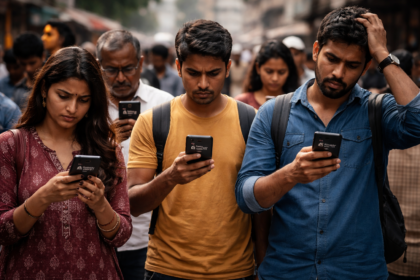
Online radicalization is at the centre of lone-wolf terrorism and family-cell terrorism. Fringe forums, social media sites and coded communication systems have turned into breeding grounds of ideology.
The Radicalization of the Internet:
- Algorithms encourage more and more radical content.
- Complaints are justified and magnified.
- Acts of violence are being praised as heroic struggles.
The uses of digital platforms showed how violence may be turned into propaganda by the Christchurch attacker. This model has been researched, imitated and perfected by extremists all over the globe.
Right-Wing Extremist Australia: An Emerging Issue
Australia has been exposed to greater questioning on right-wing extremism. Although Islamist terrorism dominated in the world headlines over the years, right ideologies have become a big threat.
Key drivers include:
- Anti-immigration sentiment.
- Nationism mixed with conspiracy theories.
- Feeling of cultural displacement.
Security agencies have now accepted that right-wing extremism Australia is a constant threat, especially in a combination with the lone-wolf tactics.
Operational Simplicity and Small-cell Terrorism
Small-cell terrorism maintains itself on unpretentiousness. The contemporary attacks may need very little planning and resources, unlike the intricate plots in the past.
The rationale behind small cell size:
- The smaller the number of participants, the less the exposure.
- Planning is done in a physical or closed digital place.
- Ordinary implements escape suspicion.
Such simplicity helps extremists to circumvent conventional security systems. It also heightens the psychological effect, since the society understands that threats could emanate in normal environments.
The Indian analysis: Global Trends Learning
Although one can speak about Australia, India cannot afford to take these developments as a far-off country. India too has a history of terrorism, but the changing characteristic of threats necessitates changes.
Going by the noticeable trends by Indian security agencies, the growing concerns revolve around:
- Homegrown terrorists that are inspired by events happening around the world.
- Youth propaganda on the internet.
- Amalgamation ideologies borrowing local resentment combined with foreign accounts.
Government agencies have declared the use of community policing, digital surveillance, and counter-narratives to be important.
India Policy Thinking and Government Insights
The government briefings and inputs made by the Indian institutions, like NITI Aayog, emphasize the role of social resilience. The emphasis has now been laid on reactive policing as opposed to preventive structures.
The priority areas of the policy are:
- Enhancing cyber surveillance practices.
- Advocating digital literacy to defeat fake news.
- Promoting community and interfaith dialogue.
These actions are acknowledging the fact that terrorism is more of a social problem than a security issue in the present day.
International Terror Threat: Borderless Reality
The decentralization of organized terror networks into lone actors has made risk globalized. The global terror menace is no longer tied to the cross-border movement or training in a foreign country.
According to modern patterns of terrorism:
- Ideologies are not limited to a particular nation.
- Actors are inspired by the attacks of another country.
- International cooperation is necessary to counter-terrorism.
Christchurch to Sydney, and even the rest of the world, we are all confronted by a common challenge which is to be dealt with by common solutions.

Counter-Terrorism Australia: Fitting in with New Realities
The counter-terror system in Australia has been developed since the Christchurch incident. The governments have invested in early intervention, outreach mental programs, and internet-based surveillance.
Key adaptations include:
Pay attention to the initial radicalization symptoms.
Reporting systems in the community.
Cooperation with technological firms.
Although no system can be described as foolproof, such measures have shown a response rather than reactive approach to the problem.
Media, Accountability and the danger of Enhancement
The importance of media emerged as one of the lessons of Christchurch. Extremist messages can be accidentally enhanced due to the sensational coverage.
Good journalism has become a focus on:
- Prevent glorification of attackers.
- Focusing on resilience of the victims and communities.
- Giving background and not show business.
This is a serious measure in downplaying the propaganda worth of terror actions.
The Psychological Aspects of Lone-Wolf Terrorism
It is crucial to know how the psychology of lone actors works. Most of the attackers portray alienation, grievance or injustice.
The typical psychological aspects in this case are:
- Identity crises.
- Desire for recognition.
- Validation of extremists on the internet.
A long-term counter-terror strategy would be educating and supporting these vulnerabilities with mental health.
The role of the technology companies
The digital realms now play first line roles in counter-terrorism. Moderation of content, the transparency of algorithms, and collaboration with the government are vital factors.
Despite some obstacles, it is clear that there is an increasing understanding that radicalization can be fast-tracked in unregulated digital environments.
Future Prognosis: Terrorism Where It is Going
In the future, the specialists caution that lone-wolf and family-cell terrorism might only increase. Due to enhanced surveillance, the extremists will become more decentralized.
Future risks include:
- Heightened application of encrypted platforms.
- Ideological hybridity.
- More focus on symbolic targets.
The preparation, therefore, should be dynamic and participatory.
What The World and India Can Do
Terrorism prevention is no longer the prerogative of the security agencies. It involves a social-wide strategy.
The implications that can be taken are:
- To governments: Fund early-warning and digital surveillance.
- To professionals: Advance media ethics and participation in the community.
- To the citizens: Report suspicious activity on the Internet and promote social belonging.
To teachers: Educating against online radicalization.
More Read
Australia, based on lessons from Christchurch to Sydney
Since the attack in Christchurch to issues of emerging terrorism threats in Sydney, the world has gotten into a new stage of extremist violence. Lone-wolf and family-cell terrorism defy conventional theories regarding operation in the field of security, ideology, and prevention.
To India, Australia and the rest of the world, the learning is unmistakable: today terrorism is decentralized, cybernetic as well as profoundly psychological. It should be countered through vigilance, empathy, policy innovation and cooperation on the international level.
The way to go is not only in stricter laws, but in stricter societies.