

Cyclone Akvan: Safety Measures to Take Before, During and After a Cyclone
Cyclones can cause severe damage through strong winds, heavy rainfall and flooding. Learn essential safety measures to take before, during and after a cyclone to protect your family, home and community.

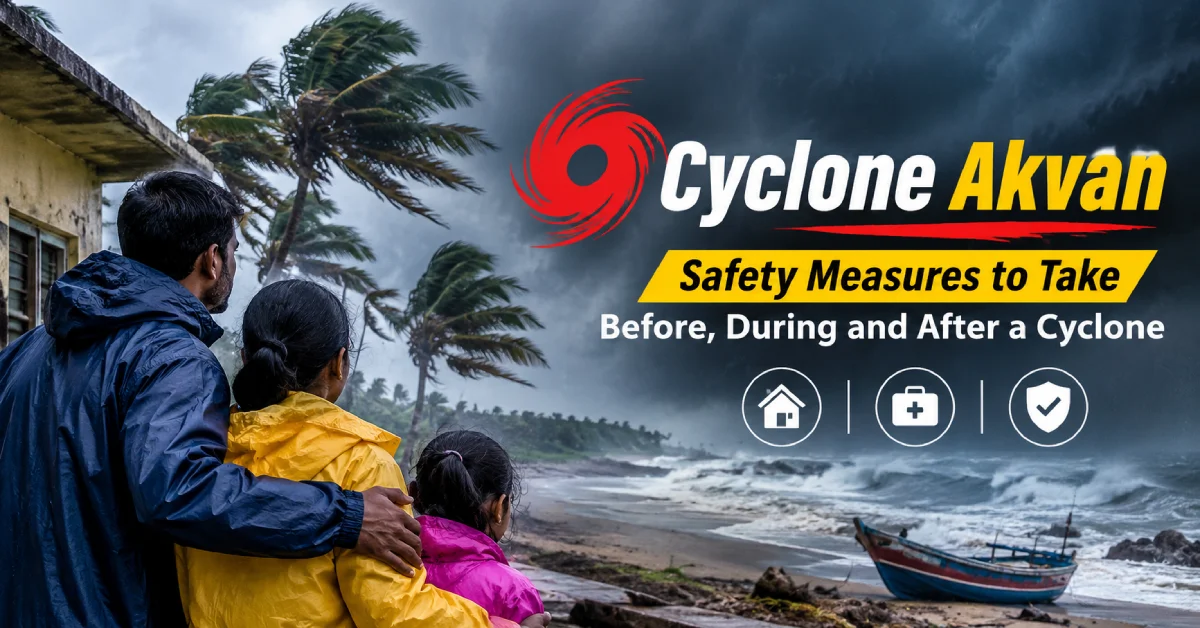
In just hours, a normal day can become an emergency due to cyclones. Thousands of people are potentially risk if strong winds, heavy rainfall, flooding or a loss of power occurs, particularly to those who live close to the coast.
It became a reality when Cyclone Akvan formed over the Bay of Bengal in November 2026 and headed towards the Indian eastern coast. The India Meteorological Department (IMD) had warned for the landfall over parts of Andhra Pradesh and Odisha on November 20.
Weather forecasting and early warnings are vital to help authorities get ready, but there is a need for people to be aware too. Having information on how families can respond to a cyclone in a calm manner in the event of a cyclone before, during and after the cyclone can save lives and minimize damage to property.
So, what should you do, if a cyclone warning is issued for your area? Here is a practical Safety Guide.
1. What Is a Cyclone and Why Are They So Dangerous?
A cyclone is a large rotating weather system that forms around a low pressure area typically over warm oceanic waters. It can cause very strong winds, heavy rain, storm surges and rough seas.
Damage does not only take place in the area where a Cyclone touches the coastline. Islands can be affected by heavy rain causing inland flooding, strong winds can damage homes, knock down trees, and interfere with and damage transportation systems.
Cyclone Akvan has once again brought home the message that coastal communities have to be prepared to take the warning seriously and prepare for the danger of the cyclone.
2. Safety Measures to Be Taken Before a Cyclone
Cyclone related risks can be minimised by preparation, the foremost action to be taken. Do not wait until strong winds or heavy rain start to occur.
Make an Emergency Kit
Prepare a simple Emergency Kit in an easily-accessed location. It should include:
-
Ready to eat, non perishable foods and drinking water.
-
First aid box and medicines.
-
Torches, extra batteries & battery radio.
-
Fully charged Mobile Phones and Power banks.
-
Waterproof bags containing important documents.
-
Money, essential toiletries and baby and/or elderly needs.
Do store enough supplies of food and drinking water for a few days in accordance with disaster management recommendations by local authorities.
Secure Your Home
Loose outdoor objects can become a dangerous projectile when strong winds blow. Move garden furniture, tools, buckets, pots or other portable items into the house or securely anchor them.
Inspect doors, windows and roof for damage. Avoid proximity to large trees, weak structures and loose electrical equipment.
In low-lying or flood-prone areas, locate the nearest cyclone shelter (or higher ground area) to move to.
Please Listen to Official Weather Updates
Follow the IMD predictions and announcements from the relevant authorities regularly. Know the warning level and take evaculations seriously – leave immediately.
Don't pass on unverified messages on WhatsApp or social media. Mistaking information for incorrect information can cause panic and delay emergency action.
Make a Family Emergency Plan
Discuss with everyone the place to go in case of evacuation. Have emergency contact numbers written down, particularly if cell phone coverage is unavailable.
Consider the children, elderly, handicapped and pets too.
3. What to Do During a Cyclone
Seek Shelter Indoors
After a cyclone has hit your area, you should seek shelter indoors or to a safe building, as identified by the local authorities.
Remain at least a mile away from the windows and do not go near any windows.
Keep doors and windows shut and seek refuge in a sturdy room with no glass, preferably not near windows. Avoid going outside and videotaping or photographing the storm.
When the authorities advise you to evacuate, go to a shelter if your home is no longer safe.
Turn Off the Electric Power When Recommended
Turn off the main power to the home and unplug appliances if safe to do so if flooding is imminent or has been recommended by the official.
Do not touch electrical switches or equipment if standing in water. Do not come into contact with downed power lines or broken poles.
Stay Out of Flood Water and Coastal Areas
NEVER walk, swim or drive through flood water. Even water that's flowing slowly can be hazardous, and roads can have open drains and/or damaged surfaces.
Fishermen and boat operators are to obey the official marine warnings and are not to go out to sea when a cyclone warning is issued.
Don't Assume the Storm Is Over
A calm period of weather may sometimes be experienced in the centre or eye of a cyclone. But strong winds can blow in from another direction, though.
Do not leave until a warning to evacuate is not given.
4. Precautions to Be Taken Following a Cyclone
A cyclone may weaken or leave before the end, but there are several hazards that may persist. Communities may still be at risk from flooding, damaged buildings and downed trees or electrical hazards.
Please Wait for Official Permission to Return
If you are evacuated do not return home until local authorities say it is safe.
Stay out of damaged buildings or walls, broken bridges or flooded roads. Notify appropriate public agencies of hazardous buildings.
Keep Away from Downed Power Lines!
Do not contact downed wires, watered poles or water damaged electrical equipment. Do not allow kids and pets on these areas and notify the electricity department of hazards.
Never turn on any appliances when they are damaged until they have been checked by a qualified electrician.
Use Safe Water to Drink and Food That Has Been Stored Safely
Drinking-water sources can be contaminated by flood water. Drink boiled or treated water and don't eat food that has been in contact with flood water.
Keep basic hygiene practices in place, wash hands frequently to minimise risk of infections.
Verify Your Home and Record the Damage
The minute authorities say it is safe, thoroughly check your property. Check for structural issues, leaks and electrical issues.
Make photographs of damage - where applicable, for insurance or assistance claims. Report to relevant officials about significant losses.
Support Vulnerable People and Neighbours
Ensure that elderly neighbours, children, persons with disabilities or families requiring medical assistance are safe.
Community support can help recovery to occur more quickly, particularly if roads, communications and services are interrupted.
5. Common Errors to Be Avoided in Cyclone
Sometimes, small mistakes can increase the risk of serious injuries. Steer clear of these bad habits:
-
Failure to follow official weather warnings and/or evacuation directions.
-
Outside for strong winds, viewing or recording.
-
Under trees, close to electric poles or around damaged buildings.
-
Using roads that are flooded.
-
Sending out rumours or unverified cyclone updates.
-
Evacuating before the authorities say it's safe to go back home.
Keep in mind: It's survival, not property, that's at stake.
6. How to Get a Trusted Cyclone Alert in India?
Always rely on official information for accurate information, not on unverified social media posts.
Below are a few resources that may be helpful:
-
India Meteorological Department (IMD): Weather forecast, cyclone tracking and official warning.
-
National Disaster Management Authority (NDMA): Guidelines for Disaster preparedness and safety instructions.
-
SACHET National Disaster Alert Portal: Official disaster alerts and location based warning.
-
Local District Administration: Evacuation instructions, shelter information and emergency assistance.
Be sure to have these resources stored up before cyclone season.
Final Thoughts
Disaster preparedness shouldn't be an afterthought as demonstrated by Cyclone Akvan. Forecasting systems have become highly valuable assets for issuing early warnings, but awareness and preparedness from individuals and communities are equally important.
Making an emergency kit, securing your home and adhering to instructions from authorities and staying away from unnecessary travel can minimize risks.
Though a cyclone may be beyond our control, the way to prepare for it is not. When severe weather occurs, it makes a difference to know what's happening, act quickly and take the time to help others.













Comments (0)