The middle class in India is said to be the strength of the economy of the country. It pays her taxes with sincerity, dreams big on behalf of its children and labours like Trojan horses to stay afloat. However, even with incomes and hard labour, most middle-class Indian families still cannot make a living.
This is not necessarily the issue of low income. More frequently, it is typical money errors, financial misuse, and ignorance. Such errors gradually undermine financial security and cause long-term tension.
This detailed guide discusses the top prevalent monetary errors middle-class Indian people need to ransom, the reasons as to why these errors arise, and how they could be remedied. It is practical, realistic and based on the daily experience of the Indian.
The financial reality of the Middle-Class in India
The middle-class of India has been increasing rapidly in the last 30 years. Urbanisation, education and economic reforms as well as employment of the private sector have enhanced earning opportunities. Based on government estimates and policy debates quoted by NITI Aayog, the Indian middle class comprises a great part of the population now.

Nevertheless, the growth has been associated with challenges:
- Increasing costs of household in India.
- Raising expenses of education and healthcare.
- The issue of housing EMIs turning inevitable.
- Social media induced lifestyle inflation.
- Unemployment and unemployment pressure.
Although middle-class families are earning much more than earlier generations, they are trapped in their finances. This paradox is at the center of the money troubles of the Indian middle classes.

1: Living: No monthly budget
Failing to stick to a proper budget is one of the most prevalent money mistakes of the Indians.
There are numerous middle-income families who think that budgeting is the prerogative of the low-income earners. The situation is that in reality, increased income and lack of budgeting results in increased financial risk.
Without a budget:
- Expenses increase silently
- Savings become irregular
- EMIs dominate income
- Financial objectives are not definite.
One of the software executives in Bengaluru with a salary of [?]60,000 per month told us that he had never followed spending. The 70 percent of his income alleviated gradually in food delivery, subscriptions, and impulsive shopping. He was forced to borrow money when his medical emergency arose.

Mistakes done in budgeting by Indians consist of:
- Even estimating costs rather than monitoring them.
- Leaving minor daily costs aside.
- Failure to review the budget on a monthly basis.
Budgeting does not mean restriction. It is financial awareness.
2: Overreliance on EMIs
EMIs become a routine of the Indian middle-class life. There are home loans, car loans, phone EMIs and even furniture EMIs.

Although the EMIs enable one to live a comfortable life, EMI debt issues in India tend to occur when loans are more than one can afford.
A good deal of what are called middle-class Indians get into this trap:
- Eligibility To take EMIs, not need.
- Conducting assorted EMIs at the same time.
- No consideration of interest cost with time.
One of the teachers in a government school in Uttar Pradesh borrowed a car loan, phone EMI, and personal loan. Almost forty five percent of her earnings were allocated to EMIs. Once there was a delay in receiving payment by way of salary credit, panic ensued.
Rule often ignored:
EMIs ought to be preferably not more than 30-35% of monthly income.
3: Lack of Crisis Situation Emergency Fund
India is one of the countries where it lacks savings. Lots of middle-income families save, however, not in case of an emergency.
An emergency fund will defend against:
- Medical emergencies
- Job loss
- Salary delays
- Family responsibilities
The policy debate frequently used as the justification that PIB financial literacy drives, claims that a significant proportion of Indians cannot afford three months of costs without going into debt.
India: mistakes in its emergency funds:
- Spending money on lifestyle items with the savings.
- Having emergency cash as a lock-up scheme.
- It is sufficient to assume insurance.
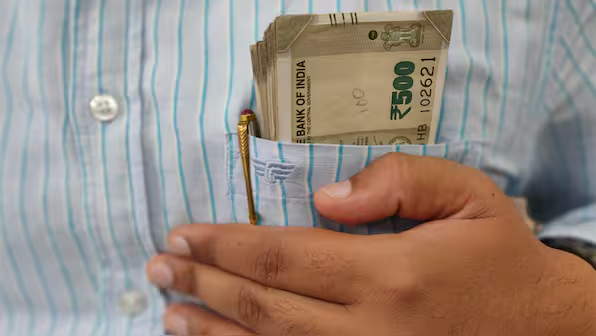
A disaster fund shall include 6 months of living allowanced funds that are readily available.
4: Mixing Investment With Insurance
This is considered to be one of the largest financial planning errors the nation has been experiencing in decades.
Lots of middle and higher classes Indians purchase insurance products:
- To save tax
- As an investment
- On advice from agents
The consequence of this is low returns and poor coverage.
Insurance is not supposed to be profitable.
Common mistakes:
- Purchase of high cost endowment policies.
- Lack of adequate insurance in health care.
- Ignoring term insurance
A worker in the private-sector in Delhi who paid 12 years in premiums ended up knowing that the payout was less than the inflation.
Correct approach:
- Take life cover under term insurance.
- Health insurance on medical expenditure.
- Investment use separate instruments.
5: Reckless Inflation Disregarding
Purchasing power is blown away in silence through inflation. Most of the Indian middle-class families however, budget thinking that their current expenses will be the same.
This is dangerous.
Education expenses, medical care, accommodation and foodstuff expenses continue to increase on a yearly basis. What a child is currently being educated costs [?]5 lakh, but in the future, it will be costing 20 lakh.
The errors in financial planning that are common in India:
- No growth in fixed savings.
- Long term non inflation-adjusted goals.
- This will underestimate costs in the future.
Planning in flowers grow in cloudy skies and having no regard to inflation is sounding plans on yesterday and tomorrow.
6: Saving the Right Way and Saving Without Investing
Having a low cost mentality is something that is very strong in the Indian culture. Nonetheless, the problems of money saving in India occur when there is no increase in savings.
Many middle-class Indians:
- Maintain huge sums in savings accounts.
- Fear of market-related investments.
- Behind schedule investing out of ignorance.
On the one hand, it is always safe; however, on the other hand, money needs to increase in order to overcome inflation.
A staff member of a rural bank, Maharashtra was a consistent saver who never made investments. His savings also lost value after 15 years.
The solution is investment awareness other than speculation.
7: Mimicking the financial judgments of other people
“Everyone is buying this.”
My colleague had put money into this scheme.
These lines describe one of the primary Indian middle-class financial problems.
The decision regarding finances should be individual and not collective.
Common errors:
- Purchasing property due to the purchase of relatives.
- Purchasing items on the hype, without knowledge.
- Acting blindly to advice.
Things that can make one family work may even ruin the finances of another family.
8: Poor Tax Planning
Tax planning is a hasty one that is usually done at the end of the financial year.
This leads to:
- Wrong investments
- Locked money
- Missed deductions
The Indians in the middle class tend to conflate wealth creation with tax saving.
Proper tax planning:
- Should start early
- Should align with life goals
- Should be reviewed annually
The management of taxes should not be feared.
9: Underestimating the Healthcare Costs
One of the largest middle class financial issues in India is healthcare costs.
Out-of-pocket medical care costs are still high in spite of government schemes and employer insurance.
Mistakes include:
- Low health insurance cover
- No family floater policy
- Lack of focus on preventive healthcare.
- One hospitalisation will ruin years of savings.
Healthcare planning is not an option anymore.
10: Lack of Transparent Financial Objectives
There are numerous Indian families which save blindly.
Without goals:
- Motivation fades
- Money gets misused
- Long-term planning fails
The financial objectives should involve:
- Short term (emergency fund, travel)
- Medium-term (car, house renovation)
- Retirement, education of children, long-term.
Money has a purpose because of goals.
Historical Background: What Made these errors so prevalent
Previous generations were dependent on:
- Stable government jobs
- Joint families
- Lower living costs
Modern India has:
- Nuclear families
- Private-sector instability
- Higher aspirations
The increase in the financial literacy was not as high as income.
The initiatives of government referred to by NITI Aayog and PIB are currently concentrated on:
- Financial inclusion
- Digital payments
- Investment awareness
Nevertheless, behavioural change is a long process.
Current Financial Crises in the Middle Class India
Today’s middle-class faces:
- Inflation pressure
- Job market uncertainty
- Rising aspirations
- Social comparison culture
Lifestyle pressure has been increased by social media. Expenditures turn out to be emotional but not rational.
The money management India requires nowadays is deliberate, knowledgeable and controlled.

Future Analysis: What the Future Requires
The future will demand:
- Better financial literacy
- Smarter investment choices
- Emergency preparedness
- Retirement planning
Individuals who change early will not succeed. The ones which fail to notice basics will find it difficult, no matter the earnings.
Actionable Measures the Middle-class Indians may do nowadays
- Keep records of monthly revenues and costs sincerely.
- Develop a budget that is real and adhere to it.
- It should slowly accumulate an emergency fund.
- Reduce unnecessary EMIs
- Individual insurance and investment.
- Begin investing at an early stage, with minimal investment.
- Go through financial plans every year.
- Never engage in financial hasty judgments.
- Long-term stability is achieved by small steps, which should be taken regularly.
Important Family Lessons of Indians
- Security is not generated only by income.
- Financial stress is avoided through awareness.
- Discipline beats shortcuts
- Planning beats panic
Financial security in the middle classes does not mean getting rich in one day. It is regarding preventing the popular money failures and taking wise decisions.
More Read
The First Wealth Is Awareness
- Failure to spend money is not the greatest financial error that middle-class Indians commit, but rather lack of awareness.
- Knowing these money traps and avoiding them at the first stage, Indian families can secure their own future, lower the stress level, and live a confident life.
- Money freedom does not make people earn more, but it is about managing money better.