
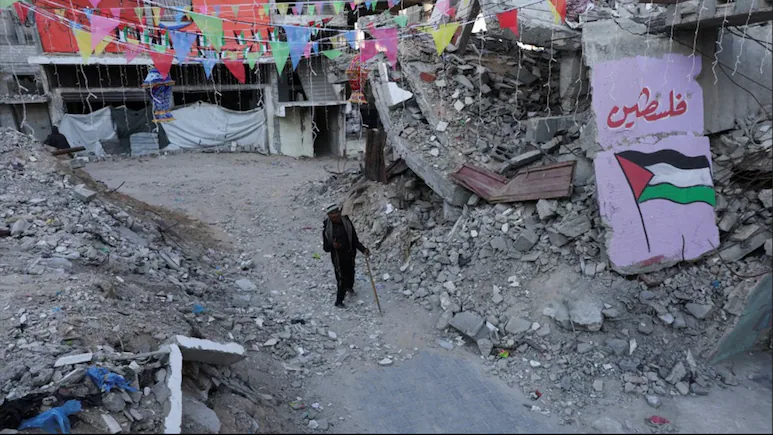
Breaking News Recap
Taking place in the evening of August 10, 2025, in the Gaza Strip, a deadly airstrike is now the focus of the intrigued world on the issue of press freedom, military ethics, and the place of journalists in the time of a conflict.
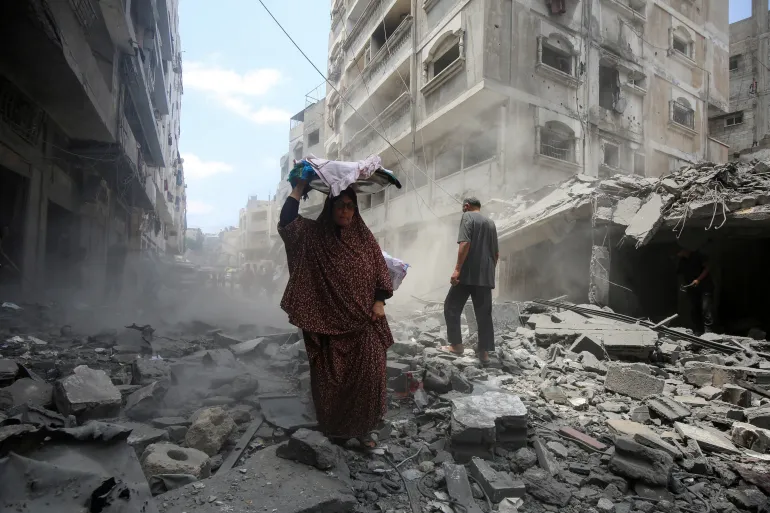
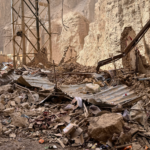
An Israeli Air raid had targeted a makeshift press tent near the Al-Shifa Hospital in Gaza City killing five Al Jazeera journalists. According to eyewitnesses, the victims were all wearing press vests, as they were reporting on the aftermath of the previous bombing.
The deceased are (identified as):
- Anas al-Sharif veteran correspondent and a familiar face on Al Jazeera in Gaza
- Mohammed Qreiqeh- field cameraman
- Ibrahim Zaher production and local fixer
- Mohammed Noufal sound technician
- Moamen Aliwa: an assistant and a driver
Al Jazeera instantly appealed against the assault, terming it a premeditated effort to send off voices of fact.
However, hours later, the Israeli Defense Forces (IDF) said something vastly different, their statement was that one of the journalists was not a journalist to begin with, but a Hamas cell leader.
The Journalists: Lives and Legacies
Anas al-Sharif: The Voice from Gaza
Anas al-Sharif was a household name of Al Jazeera viewers. Respected within the company as the man of constant, unfading deep tone when reporting even when in the grip of shell fire, al-Sharif had been in Gaza since his early 20s covering the Gaza conflict.
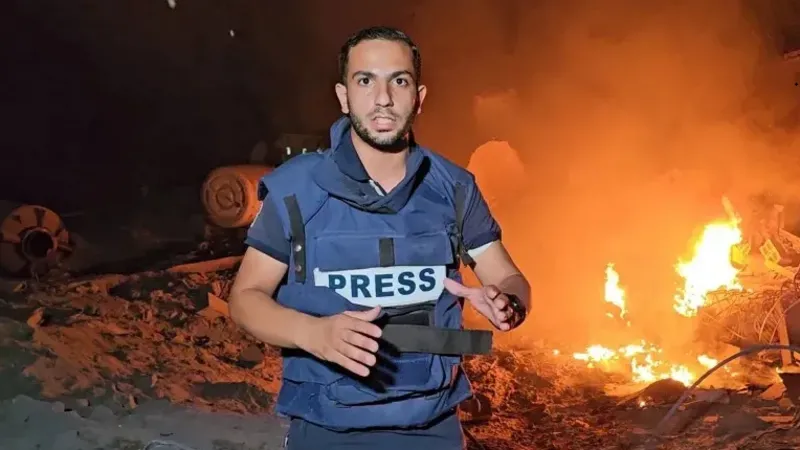
He was also an active face on social media with unedited, unfiltered images on the ground.
Al-Sharif made a voice recording hours before his death:
“And even when you receive my words know that Israel has succeeded in killing me and stopping my voice. Remember Gaza.”
That message has since been retweeted millions of times – making him martyr of press freedom as well as a symbol of the hazard journalists face in warzones.
The Others Who went down
- Mohammed Qreiqeh had spent more than ten years as a cameraman and was often witness to things too gruesome to be shown on prime-time television.
- Ibrahim Zaher was a fixer, an essential but low-profile occupation, securing interviews, dealing with checkpoints, and civic safety of foreign reporters.
- He particularly excelled in his ability to capture ambience, which is what meant that the reality of Gaza filtered into living rooms everywhere, be it the hum of generators, or the distant thud of artillery, as captured by Mohammed Noufal.
- The youngest, only 24 years of age, was Moamen Aliwa, taking charge of transport and logistics.
- These were not in any conventional sense soldiers. They were war journalists, members of the unseen skeleton of the news coverage of war.
Israel’s Official Statement & Claims
The IDF acknowledged the airstrike, which it justified by reference to the “elimination of a terror threat”.
They claimed that Anas al-Sharif led a Hamas rocket-launch cell, publishing and broadcasting so-called terror propaganda as a journalist. As per the IDF:
- Intelligence reports put al-Sharif at several Hamas operational meetings.
- Training rosters and documents connected him with the work of rockets.
- He also entered military territory allegedly under the claimed press privileges.
The military added:
- Press badge is not a license to terrorism. Members who conduct acts of hostility become targets by the laws of armed conflict.
- Israel has, however, not yet produced any verifiable evidence to the rest of the world- an aspect that has been used as the point of negligence.
Media and Human Rights Pushback — A Louder Chorus of Dissent
The world, which initially showed shock over the killings, turned into a concerted call by press freedom champions and human rights organizations to condemn the killings.
Within hours, the Committee to Protect Journalists (CPJ) posted a stern statement:
The act of journalists getting killed at a continuous rate in Gaza has been very disturbing. Irrespective of any claims, the murder of the media personnel without due process violates the international law and endangers the possibility of the press to act with freedom.
Reporters Without Borders (RSF) said Israel was weaponizing counterterrorism narratives to escape responsibility and on past occasions, military allegations of militant links with reporters had not stood the test in the independent world.
The UN Office of the High Commissioner for Human Rights (OHCHR) urged that there should be an independent investigation headed by a credible institution and should begin immediately before the same thing happens, again, saying that impunity must not be condoned as this will encourage such a phenomenon.
Even the UNESCO Director-General Audrey Azoulay commented on this and said that Journalists should be allowed to work freely without the fear of life. The press is being attacked and that in itself is a threat to democracy.”
The editorial team of Al Jazeera took it a step further observing that this was part of a calculated plan to intimidate all journalists in Gaza.
The Qatari government supports their request to have an international investigation into the nature of the attack because it is all part of a tendency of silencing pro-Palestinian expression.
The Laws of War and Press Protections — What the Geneva Conventions Really Say
The legal controversy on whether this strike was lawful or unlawful all revolves on Article 79 of the Geneva Convention of 1977 the so-called Additional Protocol I which says:
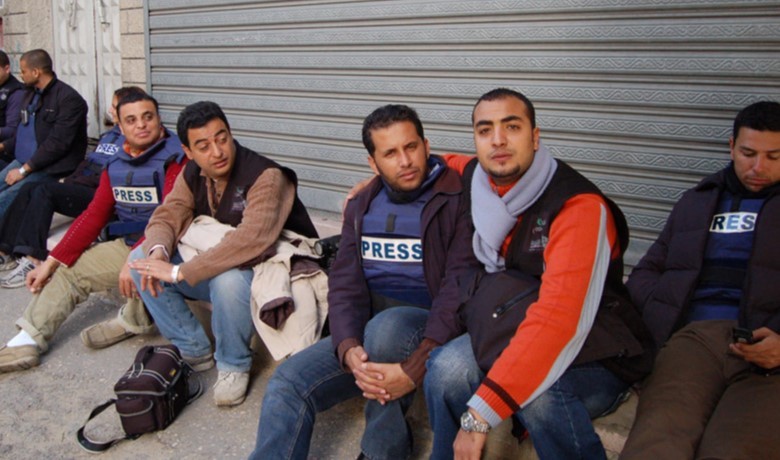
“This means that when it comes to journalists trying to go on dangerous professional missions in the fields of armed conflicts, (they) shall be regarded as civilians… and as civilians, they shall be treated as such.”
A critical caveat, however, applies: A journalist who “directly participates in hostilities” also forfeits the protection of a civilian at the time and during the extent of such participation in hostilities.
Israel claims that the fact that al-Sharif was the head of a Hamas cell makes him a direct participant. It is here that the issue of burden of proof takes its front seat, under the rules of international humanitarian law the side that is attacking must be able to prove, with plausible evidence that such participation was indeed there when the strike was taking place.
Past precedents:
- During the war in Iraq (2003), the correspondent of Al Jazeera Tareq Ayyoub was killed by U.S. troops, who said that they confused his camera with a weapon of the enemy. No evidence of hostile activity was found afterwards.
- In Ukraine (2022), both sides claimed that the other had journalists of a combatant nature but the majority of claims fell apart under the light of investigators who did not take sides in the conflict.
The allegations, like those addressed by Israel, unless with hard evidence such as intercepted communications or provable operational commands, will remain theories of law.
The Broader Context of Journalism in Gaza — A Warzone Without Safe Ground
Reporting in Gaza is neither unique nor dangerous, it is simply lethal. Journalists in the country work under far different conditions than other war correspondents in other parts of the world:
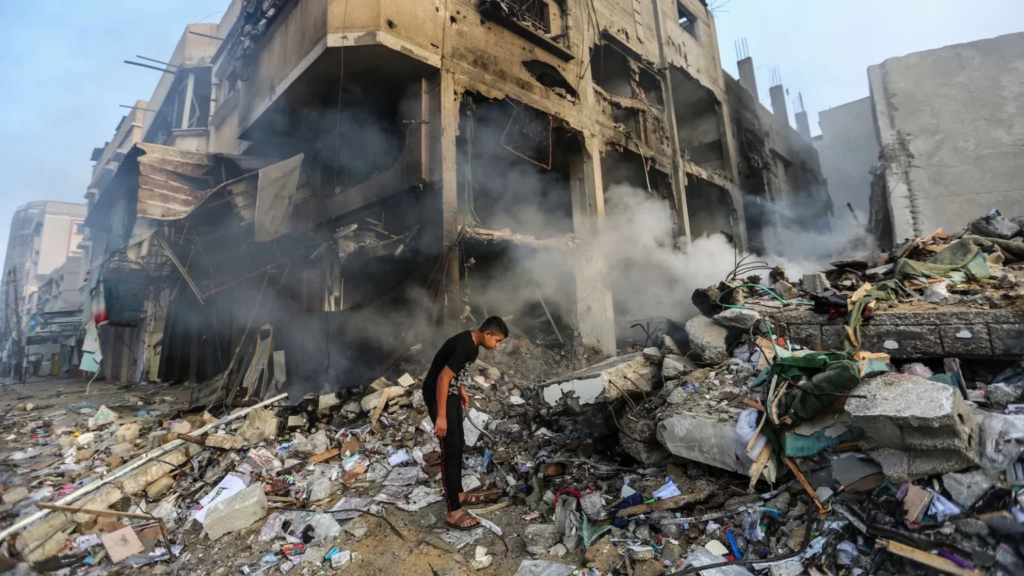
- No turnaround: Closed or limited borders imply that journalists cannot rotate in and out of their high intensity battles anymore.
- Risk of conceding to double targeting: During and after conflicts, journalists are by turn accused of bias or collusion by both sides of the fighting.
- Critical infrastructure failure: A string of power cuts, the devastation of communication towers, and a lack of fuel cause even basic reporting tasks to become difficult.
- Psychological trauma: Much of the Gaza-based journalists are reporting on their own neighborhood, families and friends- transforming objective reporting into an intensely personal, emotionally draining job.
The result? Gaza is the global leader in journalist death rate per capita.
CPJ statistics show that the number of media workers killed there in the last two years exceeds those killed in Afghanistan in the midst of some of its fiercest battles.
International Reactions and Diplomatic Fallout — A Split Global Response
This has aggravated diplomatic tensions:
- Qatar: Qatari Foreign Ministry claimed that Israel committed a blatant act of war crimes and threatened to bring them before the International Criminal Court.
- Turkey: President Erdoğan referred to the strike as state terrorism against the truth, and vowed to take it to the UN General Assembly.
- Malaysia: Decried the assault and said it would lobby a United Nations-mandated press protection system.
- European Union: Made a statement with measured words urging a complete thorough and open inquiry.
- United States: Declared a level of concern, saying the move was of great concern and needed to give its intelligence to trusted partners-did not condemn outright.
The split reaction equals further geopolitical alliances: those who support Palestinian causes want to see some accountability, and the Western friends of Israel want to check what really happened.
There are practical ramifications of this diplomatic rift. The possibility of a binding global inquiry is bound up with agreement within organisations such as the UN Security Council, where resolutions against Israel require American approval.
The Historical Pattern of Journalists Targeted in Conflict — Lessons from the Past
When we look at the past warriors of the last 25 years, we notice that the same pattern reoccurred:
- The strike or surgical raid kills journalists.
- The military accuses the association with hostile forces.
- Human rights agencies insist on evidence.
- Scant evidence is being put forward.
- The trial loses its headlines-but skepticism increases.
Examples:
- Baghdad, 2003- killing of two journalists in Palestine Hotel was targeted by the United States because of sniper fire by the Pentagon. Subsequent independent investigation could not establish the existence of snipers.
- Gaza, 2012 Two journalists were killed in an Israeli attack; IDF stated they were Hamas terrorists. Public evidence had not been produced.
- Ukraine, 2023 Russian troops blamed a slain Ukrainian journalist as a spy. OSCE did not find any ground to claim.
The trend is obvious: during war times when the distinction between journalist and combatant status becomes a political issue, and the reality is usually covered by propaganda and its counterpart.
The Future of Press Safety in Warzones — Beyond Condemnation
The discussion cannot continue to be about outrage, it must change to action, otherwise, this tragedy will be meaningless.
Proposed reforms:
- UN Press Protection Force: An armed, neutral and small force whose responsibility is to accompany journalists in the war region.
- Encrypted Live Archiving: Cameras with real-time uploads to encrypted servers out of the warzone area which makes it much harder to destroy evidence by murdering the journalist.
- Tactical press locator beacons: GPS transmitters that broadcast the position of the journalists to both sides of the battlefield so that nobody could accidentally fire upon the presence.
- Legally binding agreements on press targeting: Expanding the Geneva Conventions with definition and quicker systems of responsibility.
It won de measure the problem with technology only, it requires political will. Otherwise, the journalists will keep walking into battlefields with nothing more than cameras and optimism.
More Read

Memory, Justice, and the Unfinished Story
The killing of Al-Sharif, Qreiqeh, Zaher, Noufal and Aliwa leaves a gap in the already devastated media community in Gaza. So their microphones are off and their cameras have shut down, yet here is their work, evidence of the human toll taken in the act of bear witness.
There will be contradictory stories gaining impregnability:
- Israel argued it made a valid attack on a combatant.
- Al Jazeera, its demand for some premeditated surrender of press freedom.
- The truth is somewhere between these stories, and it is going to need some bravery, insistence and maybe some more sacrifice to unearth it.
This case cannot be allowed to die away in the world. Since once the killing of the journalists is normalized as an accepted risk of war, then the ability to bring power to account would perish with them.