
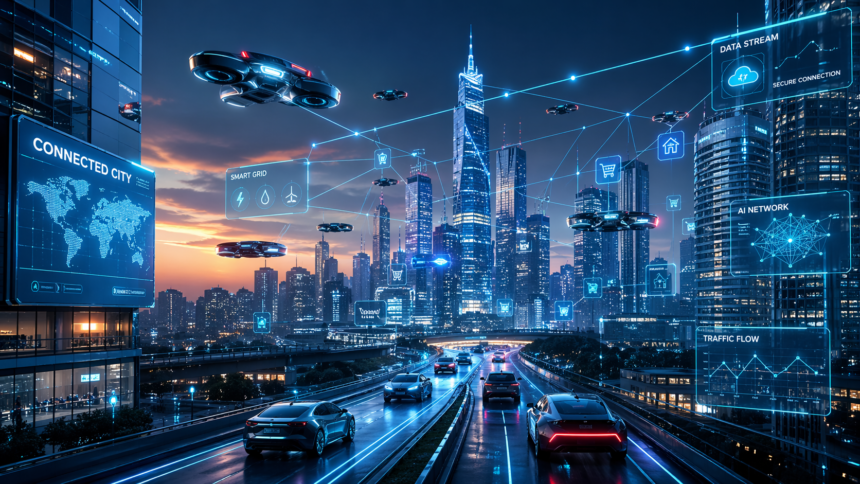
A few years ago, opening a browser felt like stepping into a library—pages, links, and information neatly arranged. Today, it feels more like entering a living system. Feeds respond, algorithms predict, devices listen. The internet no longer sits still; it reacts, adapts, and quietly shapes how we think and act.
That shift raises a deeper question: What Is Future Internet?
Not just faster speeds or better apps—but something more fundamental. Something that changes the very nature of digital interaction.
What Is Future Internet? Beyond Just Faster Connections
At its simplest, the future internet refers to the next stage in the evolution of how people, devices, and systems connect and interact. But reducing it to speed or infrastructure misses the point.
It’s not just about accessing information—it’s about the internet anticipating needs, automating decisions, and blending seamlessly into the physical world. Think of it less as a tool and more as an environment.
In practical terms, this includes:
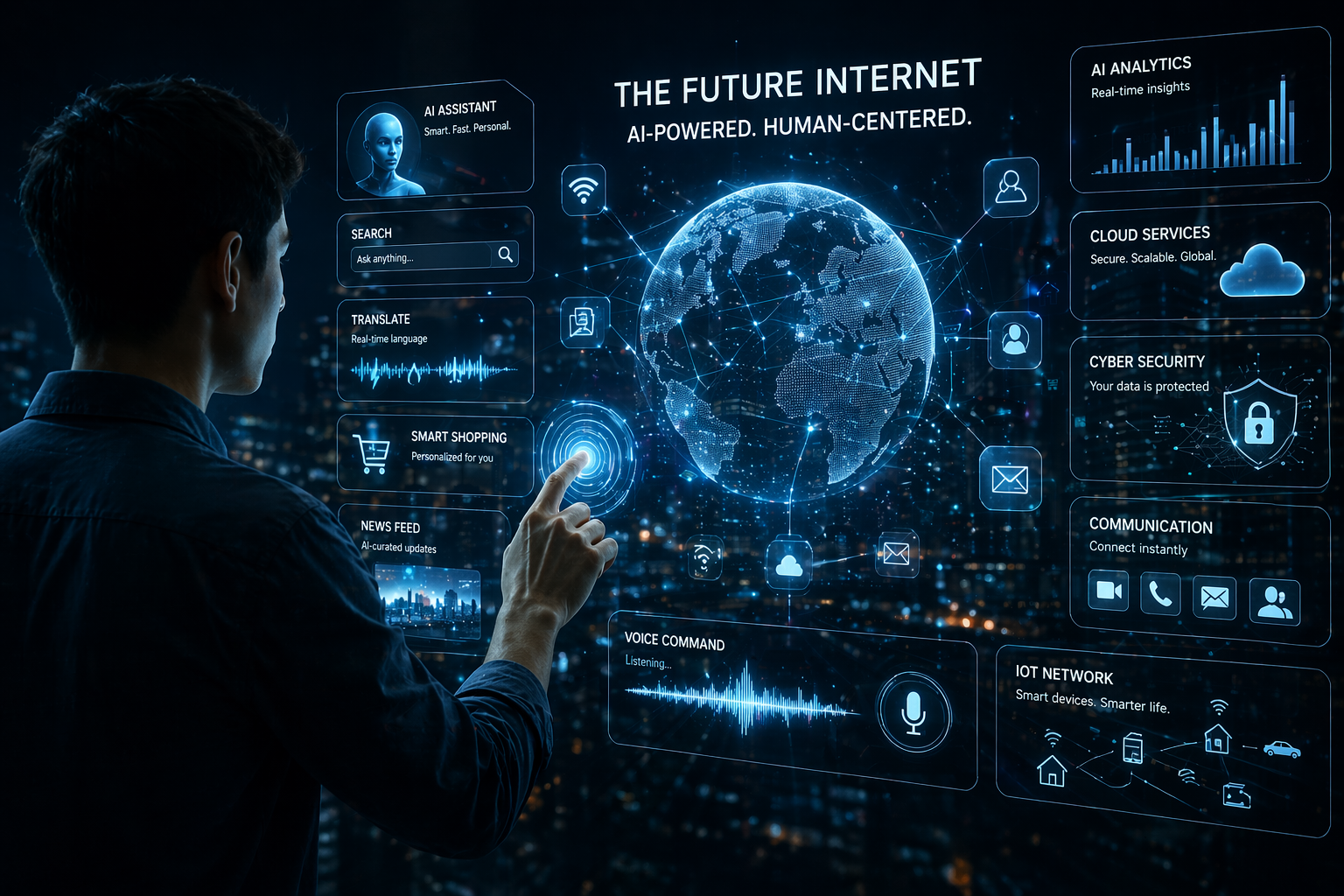
- AI-driven networks that optimize themselves
- Decentralized systems where users control their data
- Immersive experiences powered by AR/VR
- Hyper-connected ecosystems through IoT devices
This isn’t a single technology upgrade. It’s a layered transformation.

From Static Pages to Living Systems: The Evolution
The internet didn’t leap into complexity overnight. It evolved in stages.
Web 1.0 was static—read-only pages, minimal interaction.
Web 2.0 brought social platforms, user-generated content, and engagement.
Now, we are entering a phase where the internet becomes predictive and autonomous.
The shift is subtle but powerful. Earlier, users searched. Now, systems suggest. Soon, systems may act before you even ask.
That progression explains why discussions around What Is Future Internet? are gaining momentum. It’s no longer about what we do online—but what the internet does for us.
Why “What Is Future Internet?” Is Trending Now
There’s a reason this conversation feels urgent today.
Three forces are converging:
1. Artificial Intelligence Everywhere
AI is no longer confined to labs or niche applications. It’s embedded in search engines, recommendation systems, customer service, and even decision-making tools.
The future internet will rely heavily on AI not just to process data—but to interpret context, behavior, and intent.
2. Data Ownership Concerns
Users are becoming more aware of how their data is used—and misused. This has sparked interest in decentralized systems like Web3, where control shifts back to individuals.
3. Immersive Digital Experiences
The rise of augmented and virtual reality is redefining interaction. Instead of scrolling through a feed, users may soon “walk” through digital spaces.
Together, these trends are pushing the internet toward something more dynamic—and more personal.
The Deeper Layer: Control, Identity, and Power
Beneath the technical upgrades lies a more complex shift—one that isn’t often discussed openly.
The future internet isn’t just about convenience. It’s about control.
Who controls the data?
Who controls the algorithms?
Who shapes what users see and believe?
Today’s internet is largely platform-driven. A handful of companies influence visibility, engagement, and even perception. The future internet could either deepen that control—or disrupt it entirely.
Decentralization promises freedom. AI promises efficiency. But both raise questions:
- Can decentralized systems truly scale without central authority?
- Can AI remain unbiased when trained on human data?
The answers will define not just the internet—but digital society itself.
What Will the Future Internet Look Like in Daily Life?
To understand What Is Future Internet?, it helps to imagine how it shows up in everyday moments.
- Your home devices communicate with each other without manual input
- Your digital identity travels securely across platforms without repeated logins
- Workspaces exist in virtual environments where geography no longer matters
- Search engines don’t just answer questions—they solve problems proactively
The boundary between online and offline begins to blur.
You won’t “go online.”
You’ll simply exist within a connected system.
Business and Economic Impact
For businesses, the future internet isn’t optional—it’s a survival shift.
Companies will need to adapt to:
- AI-driven customer behavior analysis
- Decentralized marketplaces
- Real-time personalization at scale
- New forms of digital ownership (NFTs, tokenized assets)
Traditional business models may struggle to keep up.
The power dynamic will shift toward those who understand data, networks, and user trust—not just products or services.
Startups may gain an edge here. They’re not burdened by legacy systems and can build directly for the future internet environment.
The Human Angle: Convenience vs Overdependence
There’s also a psychological layer to consider.
The more intelligent the internet becomes, the more decisions it makes on behalf of users. That convenience can quickly turn into dependency.
When systems predict what you want, recommend what you should watch, and guide what you should buy, a quiet question emerges:
Are users still choosing—or just following?
The future internet could amplify efficiency.
But it could also reduce friction to the point where critical thinking takes a backseat.
That tension—between ease and autonomy—will define how people experience the next digital era.
Challenges That Could Shape the Future Internet
The path forward isn’t smooth.
Several challenges will influence how the future internet develops:
- Cybersecurity threats becoming more sophisticated
- Regulation gaps across global digital systems
- Ethical concerns around AI decision-making
- Digital divide issues, where access remains unequal
Technology tends to move faster than policy. That gap often creates friction—and sometimes risk.
The future internet will not just be built by engineers. It will be shaped by governments, businesses, and users alike.
Where This Is Heading
The trajectory is clear: the internet is becoming more invisible yet more powerful.
It will fade into the background while quietly influencing everything—from how people work to how societies function.
Understanding What Is Future Internet? is less about predicting specific technologies and more about recognizing a pattern:
- Increased automation
- Greater personalization
- Blurred digital boundaries
- Rising questions of control
The future internet won’t arrive as a single moment. It’s already unfolding—layer by layer.
More Read

Conclusion
The internet began as a network of information. It is evolving into a network of intelligence.
That shift changes everything.
The real question isn’t just What Is Future Internet?
It’s whether users will adapt to it consciously—or simply be carried along by it.
Final Insight
The future internet will not announce itself loudly. It will integrate quietly—into habits, decisions, and everyday life. Those who understand its direction early won’t just use it better—they’ll shape how it evolves.-The Vue Times
Frequently Asked Questions
What Is Future Internet in simple terms?
The future internet refers to the next generation of digital networks that are smarter, faster, and more integrated into daily life using AI, decentralization, and immersive technologies.
How is the future internet different from today’s internet?
Today’s internet focuses on access and interaction, while the future internet focuses on automation, personalization, and predictive systems that act on user behavior.
What technologies will power the future internet?
Key technologies include artificial intelligence, blockchain (Web3), Internet of Things (IoT), 5G/6G networks, and augmented/virtual reality.
Will the future internet be safer?
It has the potential to be more secure with advanced encryption and decentralized systems, but new cybersecurity challenges will also emerge.
Why is “What Is Future Internet?” becoming important now?
Because rapid advancements in AI, data privacy concerns, and immersive technologies are reshaping how people interact with digital systems.