Democratically, in a major and visibly shaking of the religious and administrative spheres in Kerala, Special Investigation Team (SIT), which is appointed by Kerala High Court, arrested a key suspect Unnikrishnan Potti, the prime suspect behind the alleged inappropriate of gold-plated artefacts in Sabarimala Ayyappa Temple. Arrested at the beginning of the morning, it is the first significant lead in one of the most sensitive inquiries in the state regarding temples in recent years.

Mr. Potti was taken to the General Hospital in Thiruvananthapuram before he was arrested to receive a close medical assessment according to the procedure requirements. After this, he was also allowed to contact his family to ensure that he was safe and where he was, and the hours of guessing where he was came to an end.
Officials verified that SIT will take him before a magistrate at Ranni, Pathanamthitta district later today to request the police custody to interrogate him intensively.
Genesis of the Controversy: Ritual Faith versus Administrative Negligence
The case of the Sabarimala gold artefact began as an apparently innocent temple restoration initiative that turned into a multi-level controversy of embezzlement, process flaws and ritual indecency.

The rich veneers of golden copper that covered the sacred stone structures and carvings were initially installed in the late 1990s in the temple. They belonged to a huge beautification initiative that was financed by donations, such as the gifts of the leading industrialists and adherents.
Late in the 2010s, though, corrosion and discoloration began to attract the attention of Travancore Devaswom Board (TDB) to starting restoration and electroplating projects. What started as a repair job had quickly escalated into a legal and ethical nightmare, as it was revealed that some artefacts which were returned to the restorer had vanished, were copied, or substituted with imitations made of copper.
The storm was centered on Unnikrishnan Potti who was a temple insider, and close associate of the priestly community, and who participated in temple rituals in previous decades.
The Role of the Prime Accused
The story of Unnikrishnan Potti who began as an assistant in the temple management all the way to the prime accused underlines the underlying intricacies of the temple management in Kerala. Potti is alleged to have been trusted because of his religious devotion and at one time was granted access to certain artefacts in the temple to be restored, an action that was later questioned by the courts on the grounds that it violated the norms in the manual of a temple.
According to the investigators, it was more than a Kerala network; Potti had workshops in Chennai, Hyderabad, and perhaps in Bengaluru as well.

The vigilance team designated by the High Court previously complained that artefacts to be restored were on a 39-day detour prior to delivery to their destination, creating suspicion that original gold panels were stolen, reproduced and sold to private collections or the wealthy to worship the idols themselves.
It was reported that some of the recovered artefacts were later discovered at the establishment of relatives of Potti at Thiruvananthapuram, the revelation that changed the swag of the probe to focus not on administrative negligence but on criminal intent.
Formation of the SIT and High Court Intervention
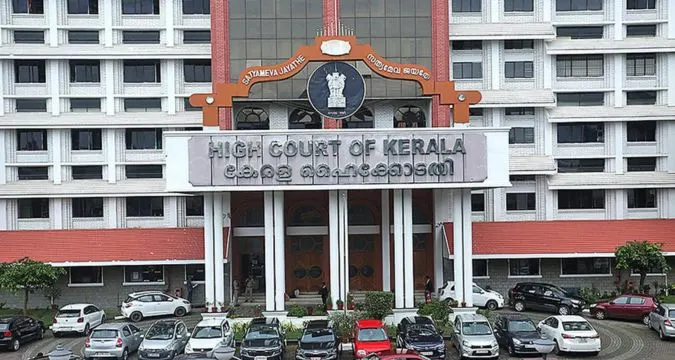
When citizen anger neared its peak, particularly among the temple followers and temple trustees, the high court in Kerala came in and observed that internal controls of the temple board had failed miserably. What at first was considered a misappropriation, but has since become a criminal investigation, spanning numerous states, was the creation of a Special Investigation Team (SIT).


Under the instructions of the High Court, the SIT is charged with a responsibility of providing accountability to the custody, movement, and recovery of sacred artefacts of the Sabarimala which is regarded as one of the most sacred pilgrimage centers in India.
To date, the SIT has indicted seven each, former and serving officials of the TDB, with their suspected participation in facilitating procedural breaches and not upholding transparency in records.
How the Case Unfolded
The controversy escalated when in 2024 Potti himself publicly asserted that two copper-gold overlays that he had earlier donated to the temple were missing. What seemed a subjective complaint at first sight proved to be a horrifying revelation — and so led the temple vigilance wing to investigate previous restoration deals.
The findings were explosive. Items recorded in the ledgers of the temple as being of copper turned out to be originally gilt. The Vigilance report was recommending intentional misreporting of some officials as a way of concealing the disparity.
This was additionally found to involve rogue handovers of sacred objects to the private restoration companies without the written consent of the Devaswom Board or the government.
Practices that are claimed to be violated and irregular
Insiders of SIT argue that a number of major violations are in investigation:
Breach of Temple Manual:
Entrusting sacred things to individuals outside the board is also a strong No No in the manual. This rule was breached by Potti who was not on official contract but a non-official contractor.
Inventory Transparency not present:
Artefacts were said to be moved without appropriate documentation or serializing, which created a challenge of recognizing the original artifact and its copies after restoration.
Diversions:
Route Mates will utilize those parts of the route that the company has not verified, causing divertions.
The long distance relocation of the artefacts among Kerala, Tamil Nadu and Telangana including being used at the homes of individuals has cast tremendous doubts on the desecration of the ritual and even on the motive of murder.
The allegations which the church must present to us concerning the issue of private Worship:
There has been early evidence that certain artefacts might have been stored temporarily at the personal residences of celebrities and influential citizens, supposedly to worship. This would be on proving a grave offense against temple sanctity.
Manipulation of Ledgers:
Records maintained within the temple were changed to change gold-plated items into copper, a change which would have made it easier to hide theft or replacement.
Political Retaliation and Social Response
This gold case of Sabarimala has turned into a political hot potato in Kerala. The Devaswom Minister and Travancore Devaswom Board (TDB) President have been accused by the opposition of institute complicity, which has forced them to resign. Demonstrations by other political and youth agitations including temple devotees associations have seen a surge in Pathanamthitta, Thiruvananthapuram and Kottayam districts.
To the government of the day, it could not come at a worse time. The scuffle coincides with plans to host the Global Ayyappa Sanghamam, which is a ceremony meant to show the state of Kerala dedicating itself to building temples and welfare of the pilgrims.
Not only has the scandal tarnished these efforts, it has also brought back debate of the handling of temple wealth, a theme that has been revisited in the socio-political discourse of Kerala since the revelations of Sree Padmanabhaswamy Temple a decade ago.
The challenge of SIT Investigation
Under the strict court supervision, the Special Investigation Team has been operating under a low profile in order to deal without political interference. Its core focus areas include:
- Digital Forensics: to analyze the mobile phone and communication history of Potti in 2019 and to reconstruct the path of the artefacts movement.
- Financial Analysis: Tracking possible transactions that could be aimed at the sale or smelting of original artefacts.
- Testimonies: Interviewing of the personnel, construction companies and restoration professionals related to the transfer of the artefacts.
- Forensic Metal Testing: Lab analysis to determine whether recovered panel material is genuine or fired.
Officials insist that the investigation is in its initial phases though they expect more arrests as evidence is gathered.
Faith and Accountability: It is a Complex Intersection
Along with the legal aspect, the case has also sparked a discussion on the management of faith and institutional integrity on a more profound scale. Sabarimala is not merely a temple; it is an enormous system of rituals, worshippers and cultural continuity. Even the perceived mismanagement of its artefacts can be seen as an explicit insult to faith and the responsibility of the state.
According to Temple ethics specialists, sacred objects possess ritual purity, and disturbance in their chain of sanctity is considered a gross religious offense through stealing, imitating, or mishandling.
The case consequently puts the temple administration in Kerala in an awkward position to ask themselves the following question: “Can religious holiness and the presence of modernity in administration co-exist without conflict?”
A Pattern of Negligence?
As it is observed, this is not even the first occasion that boards of the temples in Kerala have been accused of procedural lapses. Audits carried out in earlier years in Devaswom institutions showed that there were institutional flaws in the management of the inventories, ingredients and monetary control.
Scholars believe that the case of the Sabarimala gold artefact can exemplify a bigger trend of administrative laziness, in which the rigid traditional forms of authority have failed to modify themselves to the realm of openness and contemporary administration.
Judiciary’s Watchful Eye
Supervision of the SIT Kerala High Court, which presides over temple affairs in a special bench, has also been proactive in the achievement of independence of the SIT. The court receives periodic progress reports, and it is up to the court to check the investigation approach and procedural adherence.
According to judicial sources, even long-term reforms in managing temple assets are being considered by the bench to ensure further incidents are avoided in future, perhaps through digital asset tracking, mandatory auditing and other means whereby major temple donations must be disclosed publicly.
Voices from the Ground
As the legal discussion persists, the emotional dimension of the matter is being felt by those who follow the devotees and worship in temples. Sabarimala is regarded as a place of spiritual punishment and ethical integrity to millions of Ayyappa devotees. The accusations of the misappropriation of gold are perceived not only as a criminal act of a financial nature but also as a betrayal of the spiritual trust.

Distressed cries by local priests and devotees have been made, demanding that the authorities be compelled to restore the ritual sanctity together with the trust of the people in the care of the temple authorities. It is often said that the only solution to the growing disillusionment is an open and time-limited process of justice.
What Lies Ahead
By Friday, SIT has stepped up searches in Thiruvananthapuram, Pathanamthitta and Chennai and is looking into potential interstate connectivity to smelting/replication groups. In the probe, officials of temples may not be the only suspects but may also include private contractors, middlemen and trade merchants of metals.
In the meantime, Kerala political parties have made the issue a campaign slogan to increase accountability in the temple management. The opinion of people is also split – some people want the CBI to investigate, and other people want the SIT which is under the observations of the High Court to finish its work without any interference.
The next few weeks should be crucial since investigators will be ready to show their results to the judges. The result can transform the manner in which temples in Kerala, which are hubs of religion plus vast wealth, will be operated in the contemporary world.
Editorial Reflection: Beyond the Gold The Question of Trust
The case involving the Sabarimala gold artefact is not just a simple theft case but it is a reflection of bad judgment of the weak interplay between religion, government and humanity.
Collective trust takes the form of temples of the Indian civilizational story. The repercussions of failing to keep that trust intact when administrative corruption or personal greed come into play are well to be found outside of courtrooms – they are eating into the very heart of faith-based institutions.
Kerala is watching this case unravel, but the bigger hope behind its resolution is not only that those who have violated their cause should be punished but also that the culture of transparency and accountability will be rejuvenated in the management of the sacred spaces that make up the spiritual identity of India.