

A job application is rejected before an interview even happens. A loan gets approved in seconds. A stranger trusts you enough to send money based purely on your profile. None of these decisions are made in a room. They’re made silently, through data — through who you are online.
The Rise of Digital Identity is no longer a future concept. It’s already shaping how people are judged, trusted, hired, and even remembered. And in many ways, your digital identity is beginning to matter more than your physical presence.
Understanding the Rise of Digital Identity
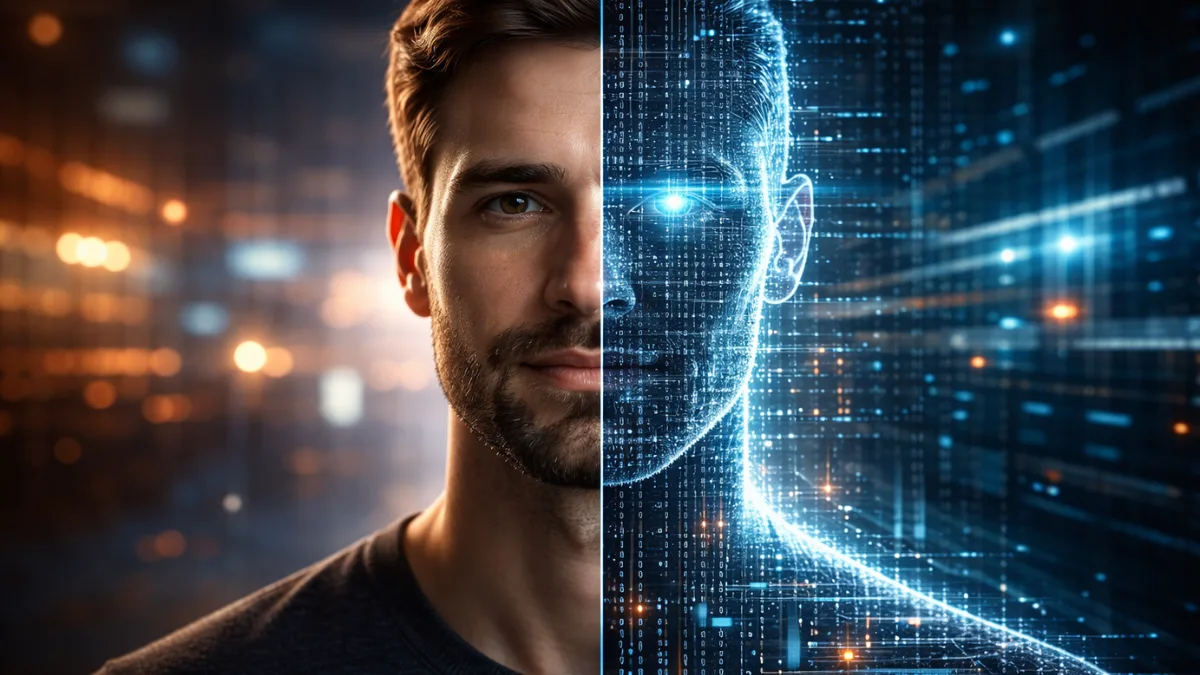
The phrase Rise of Digital Identity isn’t just about social media profiles or email accounts. It’s about the layered version of yourself that exists across platforms — your browsing habits, financial history, professional footprint, online behavior, and even how algorithms interpret your preferences.
A decade ago, identity was something you carried — an ID card, a passport, a set of documents. Today, identity is something that exists in fragments across systems. Banks see one version of you. Social media platforms see another. Employers see a carefully curated version. Algorithms, however, see everything.
This shift didn’t happen overnight. It evolved with the growth of platforms, data collection systems, and digital ecosystems. Every login, every click, every search quietly contributed to building a parallel version of you — one that never forgets.
Why the Rise of Digital Identity Is Accelerating Now
The acceleration isn’t accidental. It’s being driven by three powerful forces.
First, digital convenience. From payments to verification systems, everything is moving online. Governments and companies alike are investing in digital identity frameworks to reduce friction. Faster onboarding, instant verification, seamless transactions — all of it depends on knowing who you are digitally.
Second, trust in a digital world. In physical interactions, trust is built through presence. Online, trust is built through data. Ratings, reviews, transaction history, and behavioral signals have become proxies for credibility. Your digital identity is increasingly acting as your reputation.
Third, the rise of AI and data analytics. Modern systems don’t just store identity — they interpret it. They predict your behavior, assess your risk, and influence decisions about you. This is where digital identity moves from passive data to active influence.

The Psychology Behind Digital Identity
There’s a subtle but powerful psychological shift happening. People are no longer just using the internet — they are living through it.
Your digital identity is not just how others see you. It’s also how you begin to see yourself.
Think about it. A person with a strong professional presence on platforms like LinkedIn starts identifying with that version of themselves. A creator with a growing audience begins to align their behavior with audience expectations. Even ordinary users shape their opinions based on what their feeds reflect back to them.
Over time, the line between real identity and digital identity blurs. The feedback loop is constant. You post, you get validation (or criticism), you adjust. Your identity evolves — not just internally, but externally, in real time.
This creates a new kind of pressure. Not just to be someone, but to be consistently visible as that someone.
Business and Power in the Age of Digital Identity
From a business perspective, the Rise of Digital Identity is transformative.
Companies no longer need to rely solely on traditional verification methods. Your digital footprint can reveal patterns — spending habits, preferences, reliability. This is why fintech platforms can approve loans instantly, why e-commerce platforms can personalize experiences, and why advertisers can target you with uncanny precision.
But this also shifts power.
Data becomes leverage. Platforms that control identity data gain influence over both users and markets. The ability to interpret identity — not just store it — becomes a competitive advantage.
This is why companies invest heavily in identity ecosystems. Not because identity itself is valuable, but because what it enables — prediction, personalization, and control — is even more valuable.
Previous vs Convenience: The Silent Trade-Off
Here’s where the conversation becomes uncomfortable.
Every convenience comes at a cost. And in the case of digital identity, the cost is often invisible.
When you sign up for a service, you exchange data for ease. When you use a platform, you leave behind behavioral signals. Over time, these fragments combine into a detailed profile — one that you don’t fully control.
The challenge is not just privacy, but awareness.
Most users underestimate how much of their identity is already mapped. They think in terms of accounts and passwords. Systems think in terms of patterns and probabilities.
And once identity becomes data, it becomes transferable, analyzable, and sometimes exploitable.
The Rise of Digital Identity and Governance Challenges
Governments are now stepping into this space, attempting to formalize digital identity systems. National digital ID frameworks promise efficiency — faster services, reduced fraud, better targeting of benefits.
But they also raise questions.
Who owns identity data? Who controls access? What happens if systems fail or are misused?
In countries with large populations and complex governance structures, digital identity can be both a solution and a risk. It can streamline services, but it can also centralize power.
The challenge lies in designing systems that are secure, inclusive, and accountable — without becoming intrusive.
Future Direction: From Identity to Reputation Economy
The future of digital identity is not just about identification. It’s about reputation.
We are moving toward systems where your digital history will influence opportunities — jobs, financial access, collaborations. Your credibility will be algorithmically assessed.
This doesn’t mean a dystopian future, but it does mean a structured one.
Your online behavior will matter more. Consistency will matter more. Transparency will matter more.
At the same time, new technologies like decentralized identity aim to give users more control — allowing them to own and manage their identity rather than surrender it to platforms.
Whether this balance is achieved remains uncertain.
More Read

Conclusion
The Rise of Digital Identity is not just a technological shift. It’s a societal transformation.
Identity is no longer something you declare — it’s something that is continuously constructed, interpreted, and evaluated.
And perhaps the most important question is not how systems see you, but whether you understand what they see.
Because in a world where identity is data, invisibility is no longer possible — only awareness is.
Final Insight
At The Vue Times, we don’t just track trends — we decode what they mean for real people navigating a rapidly changing world. The Rise of Digital Identity is not just about technology; it’s about control, perception, and the future of human interaction. The question is not whether you have a digital identity — it’s whether you’re consciously shaping it.
Frequently Asked Questions
What is digital identity?
Digital identity refers to the data and information that represent a person online, including profiles, behavior, transactions, and digital footprints across platforms.
Why is the Rise of Digital Identity important?
It influences how individuals are verified, trusted, and evaluated in digital systems, impacting areas like jobs, finance, and online interactions.
Is digital identity the same as social media presence?
No. Social media is just one part. Digital identity includes financial data, browsing history, professional records, and behavioral patterns.
What are the risks of digital identity?
The main risks include privacy concerns, data misuse, identity theft, and lack of control over how personal data is used or interpreted.
Can individuals control their digital identity?
Partially. While users can manage visible profiles, much of their digital identity is shaped by systems collecting and analyzing data behind the scenes.