
In Kozhikode, a nine-year-old girl developed a fever and was rushed to the hospital. Within a single day, her condition worsened, and she passed away. Doctors later confirmed the cause: Primary Amoebic Meningoencephalitis (PAM), triggered by the “brain-eating amoeba.”
A New Health Crisis in Kerala: “Brain-Eating Amoeba”
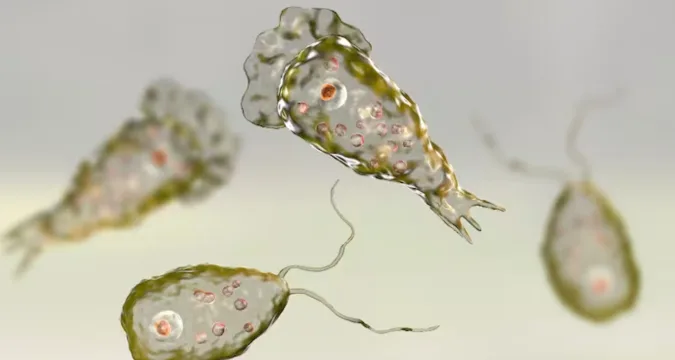
Kerala is a state, which has been long celebrated since the number of people with good healthcare and literacy is high but it is working through a new health scare that has brought panic to the people and health care professionals. The offender is Naegleria fowleri which should be better described by its shocking informal name-the brain-eating amoeba.
Even in 2025 alone there have been reported 69 confirmed and 19 people died in the tragedy. Not only numbers, each of them is a family, a community facing the impact of a disease that kills with sickening pace. The unnerving fact about this crisis is the fact that the cases are no longer related to a single bad source of water. They are instead appearing here and there throughout the state which makes containment much more difficult.
To put it into perspective, in 2024 there were 36 cases and 9 deaths in the state of Kerala. The numbers this year are almost twice as many, indicating how fast the challenge is increasing.
What Exactly Is Naegleria Fowleri?
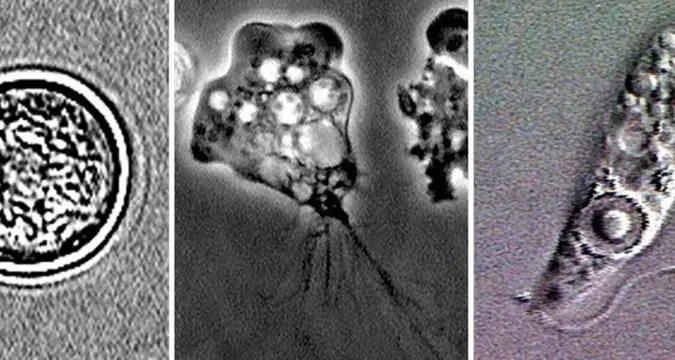
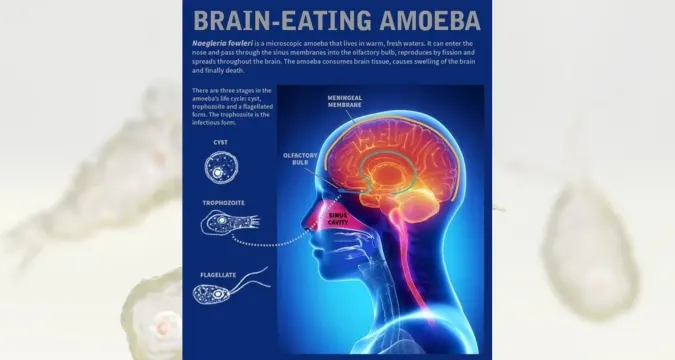
Naegleria fowleri is a free amoebic that grows in stagnant and warm water. Consider ponds, rivers, poorly cared for swimming pools, untreated wells, or water tanks that are exposed to direct sunlight.
Here’s how it works:
- The amoeba coexists harmoniously with the environment where he preys on bacteria in the soil and water.
- Misery sets in as the impure water is forced down the nostrils, like diving, swimming or even when rinsing off the sinuses with impure water.
- After being inside, the amoeba goes directly into the brain through the olfactory nerve.
- There, it produces Primary Amoebic Meningoencephalitis (PAM), a fast moving illness, and nearly always fatal, infection of the brain.
Important fact: This infection is impossible to contract after drinking water. It just occurs only when the water is in through the nose. Nor is it contagious, person to person cannot be gotten.
Naegleria fowleri infections are almost nonexistent globally; however, when a disease does take place, it is catastrophic. The mortality rate exceeds 95% across the world. The majority of patients succumb to death between 3-7 days after the symptoms appear.
As Dr. Swati Rajagopal, Infectious Disease Specialist at Aster CMI Hospital, explained to The Financial Express: “The infection occurs when water containing the amoeba enters the nose. Once inside, the amoeba travels to the brain and causes a life-threatening infection called Primary Amoebic Meningoencephalitis.”
Why Kerala’s Outbreak Is Especially Worrying
- Scattered, Isolated Cases
Previous outbreaks would even be traceable to a single polluted tank or pool. Today we are seeing infections appear in various, distant places. That implies that the amoeba might be hiding in most small, private or community water bodies- psyche-ward.
- Quick & Bang Bang Disease Progression.
PAM doesn’t give much warning. Initially, the symptoms (headache, fever, nausea) are similar to the infections of a virus. The brain may be permanently damaged by the time confusion, seizures, or loss of balance develop. Survival rates are very low even in the presence of aggressive treatment.
- Difficult Diagnosis
The first reason why physicians do not immediately consider PAM is its infrequence when compared to either bacterial meningitis or viral encephalitis. Misdiagnosis takes many precious hours.
- Environmental Factors
Kerala has a tropical warm, humid climate, a good environment to N. fowleri. The amoeba also feels more welcomed in water bodies as a result of climatic changes where the rise in temperature and alteration of the rainfall are more favored.
- Public Health Burden
This outbreak requires resources in terms of testing water sources, as well as community education. The health system in Kerala is robust and is being overwhelmed by dengue, chikungunya and other seasonal diseases.
“The biggest challenge with brain-eating amoeba infections is timely diagnosis,” said Dr. Subhajit Pal, a neurologist at CMRI Kolkata. “Its early symptoms often mimic viral meningitis, and by the time PAM is suspected, every hour counts.”
The Human Cost Behind the Numbers
It can seem that statistics are abstract, not until you understand their meaning. Consider this case of a family taking their child to swim in a local village pond in the evening and the child after some minutes or so catches a fever and dies after a span of one week. That is the truth which PAM leaves, shocking, sudden, and usually causing family and doctors to look powerless.
Parents are particularly apprehensive since children and the youth are at the most risk of this type of water activities, such as swimming, diving, which is primarily associated with the highest risk.
Kerala’s Response
The good news? Kerala is not standing still.
- Miltefosine Deployment
The state has started administration of the miltefosine drug, which is an antiparasites medication first created to attack leishmaniasis. It has now become frontline therapy for PAM. Although it is not a sure solution, when used at the same time with other anti-fungals and antibiotics, it has increased survival chances.
- Diagnostic Expansion
Kerala has enhanced its laboratory infrastructure so as to be able to identify PAM cases at an earlier stage. Hospitals are undergoing training on how to diagnose symptoms and start early treatment.
- Public Awareness Drives
Law enforcers are even advising that individuals should not swim in the warm fresh waters, chloritize their wells and have nose clips should they get in the ponds or rivers.
- Water Safety Measures
The local governments are upgrading the chlorification of their public water bodies and recommending households to clean up water tanks and cover them regularly.
These measures already have an indicational difference: in Kerala, the survival rate in PAM is approximately 24% which is significantly higher than the level in the global scale.
What People Can Do to Stay Safe
Prevention is the best safeguard. These are main precautions that must be followed by each individual and family:
- Avoid risky water
Do not swim and dive or bathe in warm stagnant water. Instead use chlorinated pools or the salt water, the amoeba cannot endure in saltwater.
- Use nasal protection
When you have to swim in fresh water, take your nose clips, or you can put your head under.
- Maintain water hygiene
Maintain wells and tanks used in houses, cleaning and chlorinating.
Cover tanks to prevent any contamination by animals, debris or sunlight heating of water.
Be alert to symptoms
Should fever, headache, or vomiting set in, and nerve disorders occur following any exposure of freshwater, seek immediate medical attention. Report potential contact with freshwater to physicians, this may be life-saving.
Why This Matters Beyond Kerala
The outbreak in Kerala serves as an opportunity to remember the fact that rare diseases can very quickly turn into a major problem in terms of their molecular dynamics. Changing climatic conditions, urbanization, and growing population are providing an environment in which organisms like Naegleria fowleri could survive.

The rest of India, and even other tropical economies, is supposed to be looking abroad and equipping the surveillance systems. What is going on in Kerala may serve as an alert in the future of the rest of the world.
The Road Ahead
Kerala Health Minister Veena George showed how challenging it is as she remarked: We are not witnessing clusters associated with one source of water as was the case in the past year. These are one-off cases, and this has made it difficult to investigate epidemiologically.
The amoeba that eats the brain is not completely finished in Kerala. The figures are highly disturbing, but the active sustainability of the state, implemented through medical creativity, social mass consciousness, and community integration has brought a shepherd on the horizon.
But there are larger truths that are served in the battle:
- The health systems should be responsive to the unusual yet fatal threats.
- Water hygiene is something that communities should not ignore.
- Researchers have to hurry in researching better remedies.
In the meantime, we cannot be adequately defended except by knowledge and prudence. Naegleria fowleri is as scary a sound as it is, but infections can be prevented. Be careful of the dangers, take care of your water supply, and take immediate action in case of the symptoms.
Final Word
The increase in the cases of infection by brain eating amoeba in Kerala is not merely a medical narrative, but rather a health test. The statistics are 69 infections and 19 deaths, which can be employed as a wake-up call, but not an alarm. With witty preventive steps and in the company of health officials, communities will manage to hold this tiny killer at bay.
Dr. Anshu Rohatgi of Sir Ganga Ram Hospital noted: “Previously, people said the mortality rate was 100%, but this is not true. In Kerala, early diagnosis and treatment have significantly reduced mortality.”
The lesson for the rest of us? A thousandth part of nature should not be underestimated. They usually make us aware of the fact that we have to learn, of all the things that we must prepare for, when the world keeps changing.