Introduction
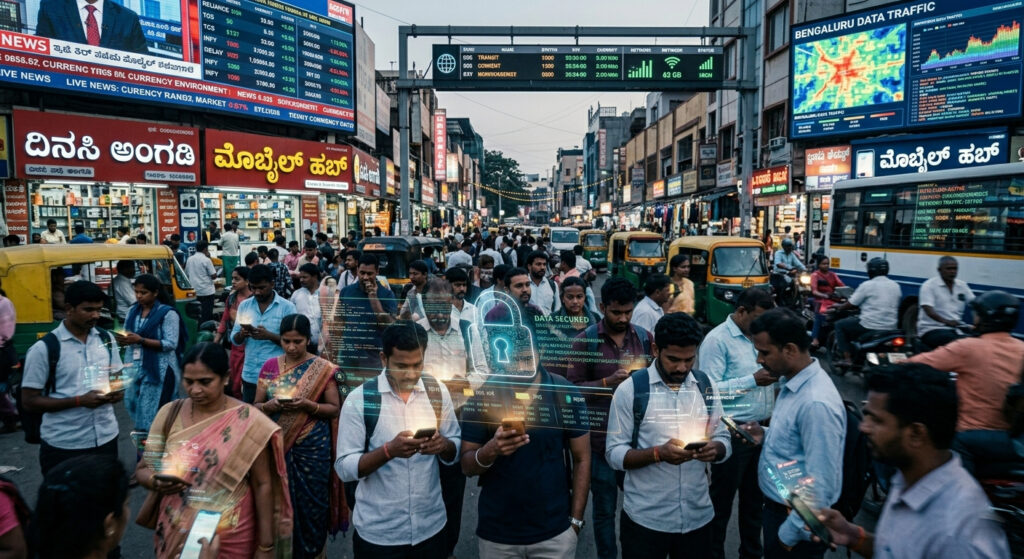
Whenever you download an application, shop over the net, or even just scroll through the social networking sites, you leave a trail of personal information behind. In the digital-first world, this information has become one of the most valuable resources, also known as the new oil. However, who is the owner of this data? Who controls it? And, more to the point, how safe is it?
The questions have placed the law of data privacy India in the limelight. With India quickly going digital, with programs such as UPI, Aadhaar and the proliferation of the internet, the necessity to secure user information is now more than ever before. Simultaneously, data is essential to businesses in terms of expanding, personalizing, and innovating.
This puts a fine line between safety of user data in India and economic growth. The current development of the data protection system in India is not only a legal problem, but a social, technological and economical concern, which concerns millions of users, companies, and policy-makers.
Background and Context
The process of development of a system of data protection in India is a fairly new process compared to other world leaders, such as the GDPR in the EU.

Until recently, information privacy in India was regulated by a patchwork of rules by the Information Technology Act, 2000. Although this law helped to cover cybersecurity and some of the aspects of data handling, it did not provide an extensive framework on how to protect personal data.
The situation changed in 2017, when the Supreme Court of India declared privacy as a fundamental right. This historic case formed the basis of the current law on data privacy in India.
This was followed by various versions of data protection bills which were proposed, discussed and amended. The purpose was evident: to establish a legal framework that would guarantee data safety of users in India and still enable innovation and digital development.
India has gone its own way- it attempts to strike a balance between the individual rights, national security and economic interests, instead of directly emulating the western models.
What Is Going on at the Moment?
In recent times India has made strides towards a more formalized legal framework of data protection. Digital Personal Data Protection Act (DPDP Act) is an important move towards defining the collection, storage and processing of personal data.

Key highlights include:
- Consent-based data collection
- User rights to read and delete their data.
- Responsibilities towards companies to provide data security.
- Penalties for data breaches
Meanwhile, there is ongoing debate regarding implementation, enforcement and scope.
There are a number of reasons behind the urgency:

- Blistering development of online platforms.
- Growing number of data breaches and cyber threats.
- Growth of AI and information technologies.
- Increased awareness of users’ privacy.
Consequently, the law of data privacy India is no longer a niche issue, it is discussed on the level of the mass media and of corporations.
Why it is a controversial topic.
Although it is important, the issue of data privacy regulation in India remains controversial.
Key Triggers of Debate:
- Finding a balance between privacy and national security.
- Personal data of access by the government.
- Burden on small businesses and startups in terms of compliance.
- Data localization requirements
- Enforcement challenges

Some say that effective data protection laws are needed to keep the user data safe in India. Others fear that the excessive regulation would incur high costs of operation and make innovation sluggish.
The dilemma is to strike the right balance- difficult to say the least.
Different Perspectives
Supporters’ View
Advocates of strict data privacy India law underline that people have to be safeguarded in a digital economy.
They point out that their main arguments are:
- One of the rights is on personal data.
- Powerful legislation instills trust in the online platforms.
- Information security minimizes chances of abuse and fraud.
- International alignment enhances credibility of international business.
In this light, the safety of user data in India cannot be compromised. In its absence, the digital economy will not be able to grow in the long term.
Critics’ View
However, critics have issues of pragmatics and unforeseen effects.
Their arguments include:
- Unfavorable start up compliance expenses.
- Vagueness of the law.
- Threat of power abuse by the government.
- Difficulties with implementation and enforcement.
It is also claimed that over-regulation might demoralize innovation and stagnate the tech ecosystem in India.
To them, it is not a question of not wanting to have any laws on privacy; it is about having balanced, clear and business-friendly laws on privacy.
Facts vs Claims
To see the facts of the matter, it is necessary to distinguish between facts and assumptions.
Verified Facts
- India has put in place a systematized framework of data protection.
- Privacy is considered as a basic right.
- Companies must conduct data practices in consent.
- There are penalties that are associated with data breaches.
Common Claims / Narratives
- The laws on data privacy will destroy startups.
- India has absolutely no security in the user data.
- Control will put an end to creativity.
It is a fact that it is in the middle. Despite these obstacles, the law of data privacy in India is still in its developmental stages, and its effectiveness in the long-term will rely on its enforcement.
What the People may be missing.
The intersection of data privacy with day to day conduct is one of the least considered issues.
Many users:
- Agree with the terms and conditions without reading.
- Share information about yourself without restrictions.
- Use unsecured networks
The best laws are not enough to guarantee user data protection in India without the involvement and responsibility of users.
The other latent layer is the contribution of data to the emergent technologies such as AI. Protection is not the only issue of data privacy, but also governance, ethics and control.
Societal, Economic and User Impact.
For Users
- Increased privacy of personal information.
- Greater company disclosure.
- Enhanced safeguarding of abuse.
- Nonetheless, users might also experience:
- More consent requests
- Poor accessibility to some services.
For Businesses
- Have to invest in compliance systems.
- Modifications to data collection plans.
- Increased accountability
This can be costly, but it also wins goodwill- a key ingredient in the long term development.
For the Economy
- Stronger digital ecosystem
- Improved global credibility
- Potential increase in data innovation.
Simultaneously, too strict rules might cause a clash when this is not done with caution.
Media and Narrative.
The media has a huge influence in formulating the perceptions of people about data privacy India law.
Headlines tend to concentrate on:
- Data breaches
- Government policies
- Tech company practices
Although this increases awareness, it may also instill fear or confusion.
Social media enhances these stories, and in some cases, out of context as well. Consequently, biased information tends to shape the general perception of the safety of user data in India.
Significant dialogic interactions between the citizens require balanced reporting and informed discussions.
Bigger Picture / Future Prospect.
Three key forces will probably determine the future of the law on data privacy in India:
- Technology Evolution
Big data, AI and machine learning will keep on questioning the old frameworks of privacy.
- Policy Development
Rules will change according to practical use and comments.
- User Awareness
With more knowledge about the user, the demand to be transparent and have control will rise.
The strategy of India is expected to be dynamic – it will follow the global trends but will consider the local needs.
Compliance is not an end, but in the long-term, the development of a reliable digital ecosystem where privacy and innovation go hand in hand.
Conclusion
The debate on data privacy law in India is not yet over. It is a compound point of technology, law, economics and human rights.
More Read

Although there have been notable strides, the issues are in implementation, awareness and balancing competing interests. The success of these laws will still be determined by the level at which they are enforced and the level at which the stakeholders; governments, businesses and users will be responsible.
With India in the process of its digital transformation, the security of user data India will be extremely important not only to safeguard the users, but to maintain trust in the whole ecosystem.
The fact of the matter is not whether data privacy is an issue or not- but what India decides to mean and how it will protect it in the coming years.
FAQ
What is the law on data privacy in India?
It is the legal framework that regulates the collection, storage, and use of personal data in India, such as the Digital Personal Data Protection Act.
What is the controversy about this subject?
It is challenging as it requires a tradeoff between user privacy and business requirements, innovation, and national security issues.
What are the important facts?
In India, privacy is a fundamental right and data practices based on consent must be adhered to by companies with reprisals in case of violations.
What impact does it have on users?
Users also have greater control of their data such as access, modification and deletion rights of personal information.
What does it imply to businesses?
Companies should adhere to more stringent data protection policies, which can be more expensive, yet create trust.
Is there an improvement in user data safety in India?
Yes, new laws and awareness, yet there are still obstacles to implementation and user behavior.
How will data privacy in India evolve?
It will be changing with technology, changes in policies, and the growing need for transparency and accountability.