Thursday, 9 Apr 2026
The Vue Times
  • Home
  • About Us
  • Blog
  • Social
  • Contact
  • My Account
  • Login
  • Logout
  • 🔥
  • India/National
  • Latest
  • General Awareness
  • Technology
  • Politics
  • Crime & Law
  • Cybersecurity
  • Business & Economy
  • Environment & Climate
  • Science & Tech
  • World/International
Font ResizerAa
The Vue TimesThe Vue Times
  • Entertainment
  • Technology
Search
  • Home
  • About Us
  • Blog
  • Social
  • Contact
  • My Account
  • Login
  • Logout
Have an existing account? Sign In
Follow US
© 2022 Foxiz News Network. Ruby Design Company. All Rights Reserved.
The Vue Times > Blog > Business & Economy > Government Policies > Atmanirbhar Bharat Meaning: Impact on India’s Economy & Future
Government PoliciesEducation & CareerIndia / NationalOpinion & EditorialPolitics

Atmanirbhar Bharat Meaning: Impact on India’s Economy & Future

Aanchal Manocha
Last updated: April 7, 2026 2:54 pm
Aanchal Manocha - Editor
Share
12 Min Read
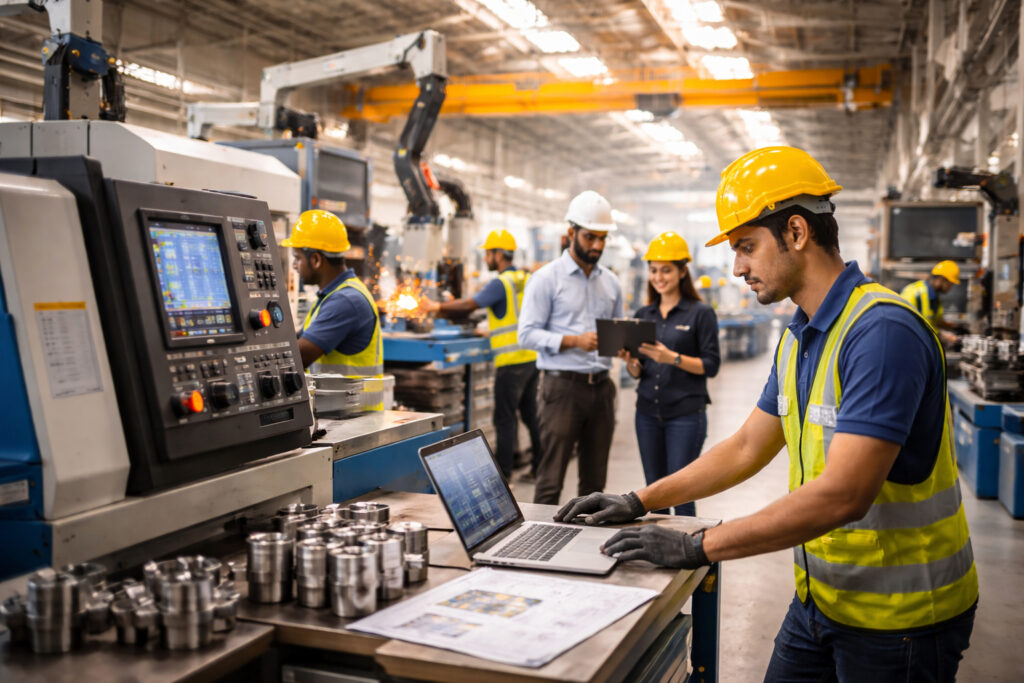
Indian manufacturing sector with workers and machinery representing Atmanirbhar Bharat initiative
Growth of domestic manufacturing under the Atmanirbhar Bharat initiative
SHARE

Introduction

In recent years, the idea of self-reliance has moved from a philosophical concept to a central pillar of national policy in India. The phrase atmanirbhar bharat meaning has become widely discussed—not just in political speeches but across industries, startups, and public discourse. At its core, it reflects a vision where India strengthens its domestic capabilities while remaining globally competitive.

Contents
IntroductionBackground and ContextWhat Is Happening Right NowWhy Atmanirbhar Bharat Meaning Is ControversialDifferent Perspectives on Self Reliance India ImpactFacts vs Claims: Separating Reality from NarrativeWhat People Often OverlookImpact on Society / Economy / UsersRole of Media and NarrativeBigger Picture / Future OutlookConclusionFAQs

But what does this truly mean in practice? Is it about reducing imports, boosting local manufacturing, or building technological independence? More importantly, what is the real self reliance India impact on businesses, citizens, and the broader economy?

As global supply chains face disruptions and geopolitical tensions reshape trade dynamics, India’s push toward self-reliance has gained urgency. This article takes a deep, analytical look at the concept—its origins, current developments, debates, and long-term implications—offering a balanced understanding beyond slogans.

Background and Context

The concept of self-reliance in India is not new. It dates back to the post-independence era when the country adopted a protectionist economic model focused on import substitution. The goal was to reduce dependency on foreign goods and build domestic industries.

Ad image

However, this approach evolved significantly after the economic liberalization of 1991. India opened its markets, encouraged foreign investment, and integrated into the global economy. For decades, globalization became the dominant strategy.

The modern interpretation of atmanirbhar bharat meaning emerged in 2020, during the COVID-19 pandemic. Global supply chain disruptions exposed vulnerabilities in over-dependence on imports, especially in sectors like pharmaceuticals, electronics, and manufacturing.

In response, the government introduced the “Atmanirbhar Bharat Abhiyan” (Self-Reliant India Mission), aiming to:

  • Strengthen domestic production
  • Encourage local entrepreneurship
  • Reduce critical import dependencies
  • Build resilient supply chains

Unlike earlier protectionist models, this initiative emphasizes “self-reliance with global integration”, not isolation.

What Is Happening Right Now

Today, the self reliance India impact is visible across multiple sectors. Several policy initiatives and economic reforms have been introduced to support this vision.

Ad image

Key Developments:

Area Key Initiatives
Manufacturing Production Linked Incentive (PLI) schemes
Startups Increased funding support and policy ease
Technology Push for semiconductor and electronics manufacturing
Defense Indigenization of defense equipment
Agriculture Focus on local supply chains and storage

India is also promoting “Make in India” and “Vocal for Local” campaigns, encouraging consumers to prefer domestically produced goods.

Additionally, sectors like mobile manufacturing have seen significant growth, with India emerging as a major global hub. Similarly, renewable energy and digital infrastructure are being scaled rapidly.

However, the pace and effectiveness of these initiatives vary across industries, raising important questions about sustainability and execution.


Ad image

Why Atmanirbhar Bharat Meaning Is Controversial

Despite being widely promoted as a progressive and growth-oriented vision, the concept of atmanirbhar bharat meaning continues to generate debate among economists, policymakers, and industry experts. While the idea of self-reliance sounds inherently positive, the controversy arises from how it is interpreted, implemented, and communicated.

Indian startup founder working on laptop representing digital growth and self-reliance
Rise of startups and digital platforms contributing to a self-reliant India

At the core of the debate is a fundamental question: Does self-reliance mean strengthening domestic capabilities while staying globally connected, or does it signal a shift toward protectionism? This ambiguity has led to multiple viewpoints and ongoing discussions about the real self reliance India impact.

Key Triggers Behind the Debate

Several factors contribute to the controversy:

  • The fear of protectionism, where domestic industries are shielded from global competition
  • Concerns about efficiency and productivity, especially if local industries lack competitiveness
  • The potential impact on global trade relationships and foreign investments
  • Risks of policy overreach, including excessive government intervention

Critics argue that an aggressive push toward domestic production could lead to higher costs, reduced innovation, and limited consumer choices. On the other hand, supporters see it as a necessary correction in a world where global supply chains are increasingly uncertain.

Different Perspectives on Self Reliance India Impact

Supporters’ View

Supporters of the initiative believe that the atmanirbhar bharat meaning represents a strategic and timely shift in India’s economic approach. In an era marked by geopolitical tensions and supply chain disruptions, building internal strength is seen as essential.

Key Arguments in Favor:

  • Reduces dependency on imports, especially in critical sectors like defense, pharmaceuticals, and electronics
  • Creates employment opportunities by boosting domestic manufacturing
  • Strengthens national security through local production capabilities
  • Encourages innovation, startups, and entrepreneurship

From this perspective, the self reliance India impact is expected to create a more resilient and future-ready economy that can withstand global uncertainties.

Critics’ View

Critics, however, raise concerns about the long-term implications and execution challenges of the policy. They argue that the concept, if misapplied, could reverse decades of economic liberalization.

Key Concerns:

  • A shift toward protectionist policies may reduce global competitiveness
  • Higher production costs could lead to increased prices for consumers
  • Limited exposure to global competition may reduce innovation
  • Over-dependence on government incentives may distort market dynamics

Many economists emphasize that global integration—not isolation—has historically driven economic growth. They question whether the current interpretation of atmanirbhar bharat meaning maintains this balance effectively.

Facts vs Claims: Separating Reality from Narrative

To understand the true self reliance India impact, it is important to distinguish between verified outcomes and popular claims.

Verified Facts:

  • Growth in domestic manufacturing, especially in electronics and mobile production
  • Expansion of India’s startup ecosystem and digital infrastructure
  • Government-backed incentives boosting targeted industries

Common Claims:

  • India will achieve complete self-sufficiency in a short time
  • Imports will significantly decline across all sectors
  • Local products are inherently superior to global alternatives

Reality Check:

In reality, self-reliance is a gradual, sector-specific process, not an overnight transformation. Complete independence from global trade is neither practical nor economically beneficial. Instead, the goal is to reduce critical dependencies while remaining globally competitive.

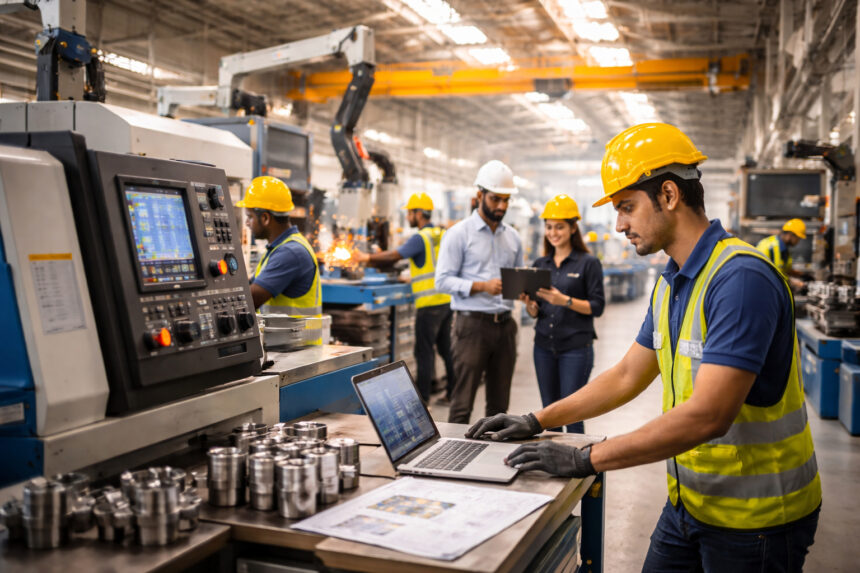
Indian manufacturing sector with workers and machinery representing Atmanirbhar Bharat initiative
Growth of domestic manufacturing under the Atmanirbhar Bharat initiative

What People Often Overlook

While most discussions focus on policy and economics, several deeper aspects of the atmanirbhar bharat meaning are often overlooked:

1. Self-Reliance Does Not Mean Isolation

The initiative aims to strengthen domestic capabilities while continuing to engage with global markets.

2. Quality vs Quantity Challenge

Local production must meet global standards in both quality and cost to be truly sustainable.

3. Skill Development Gap

A skilled workforce is essential for achieving meaningful self-reliance, yet this remains a key challenge.

4. Importance of Private Sector Participation

Government policies can provide direction, but real progress depends on private sector innovation, efficiency, and scalability.

This balanced understanding highlights that the self reliance India impact is complex, evolving, and deeply dependent on execution rather than just intent.

Impact on Society / Economy / Users

The self reliance India impact is multifaceted, affecting different stakeholders in different ways.

For Businesses:

  • Increased opportunities in manufacturing and services
  • Access to government incentives
  • Need to adapt to changing regulations
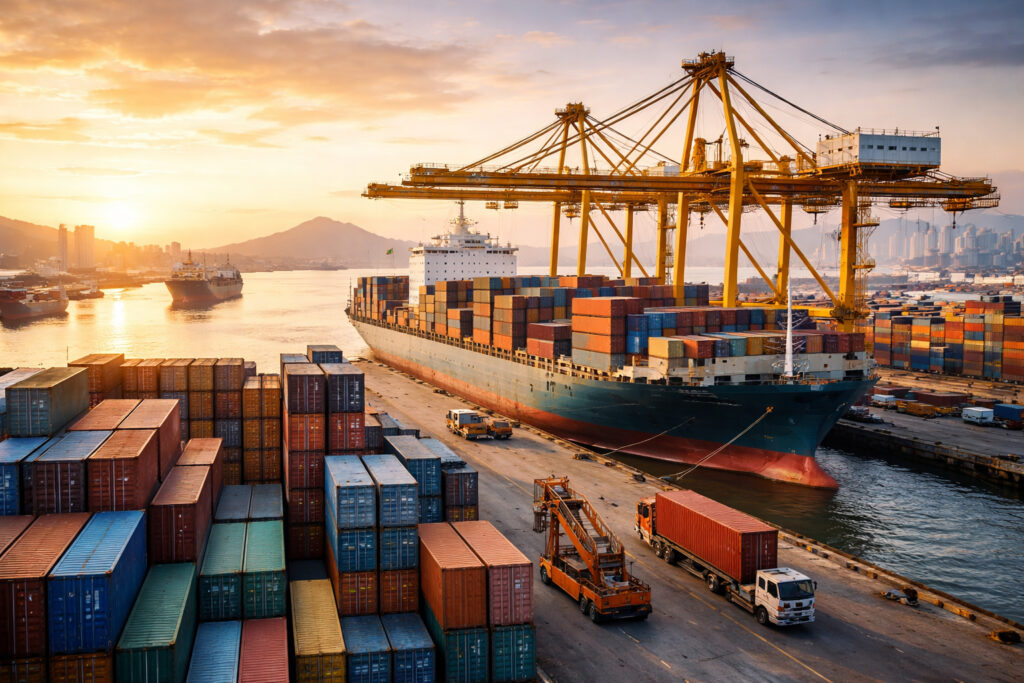
India export and global trade concept with cargo containers and shipping
India strengthening its position in global trade through self-reliance

For Consumers:

  • Greater availability of local products
  • Possible price variations
  • Shift in brand perception toward “local”

For Economy:

  • Potential boost in GDP through domestic production
  • Improved trade balance
  • Enhanced economic resilience

For Workforce:

  • Job creation in emerging sectors
  • Need for upskilling and reskilling

Role of Media and Narrative

Media plays a significant role in shaping public perception of the initiative.

Key Influences:

  • Promotion of “Vocal for Local” campaigns
  • Highlighting success stories of startups and manufacturers
  • Framing debates around nationalism vs globalization

Social media, in particular, amplifies narratives—sometimes simplifying complex economic policies into emotional or ideological discussions.

This can lead to polarized views, where the initiative is either seen as a complete success or a flawed strategy, rather than a nuanced policy.

Bigger Picture / Future Outlook

Looking ahead, the success of this initiative will depend on execution, adaptability, and global positioning.

Key Future Factors:

  • Investment in technology and innovation
  • Strengthening education and skill development
  • Balancing domestic growth with global trade
  • Policy consistency and transparency

India’s goal is not just to be self-reliant but to become a global manufacturing and innovation hub.

If implemented effectively, the self reliance India impact could position India as a key player in the evolving global economic order.

However, challenges such as infrastructure gaps, regulatory hurdles, and global competition must be addressed.

Conclusion

The atmanirbhar bharat meaning goes beyond a policy slogan—it represents a strategic shift in how India approaches growth, resilience, and global integration. While the vision of self-reliance offers significant opportunities, it also raises important questions about execution, balance, and long-term sustainability.

More Read

Data privacy India law concept showing digital security and personal data protection
Data Privacy India Law: A Deep Analysis
Future of Space: Where Exploration Meets Opportunity
Internet Lore: The Stories the Internet Refuses to Forget
Cashless Economy India Reality: Growth, Risks & Future
Mobile Recharge 28-Day Cycle: Why This Issue Is Being Questioned in Parliament

The reality lies somewhere between optimism and caution. The initiative has already shown measurable progress in certain sectors, yet its broader success will depend on consistent policy, private sector participation, and global collaboration.

Ultimately, self-reliance in today’s interconnected world is not about isolation—it is about building strength from within while engaging confidently with the world.

The real test of this vision will unfold over time, shaping not just India’s economy but its position in the global landscape.

FAQs

1. What is atmanirbhar bharat meaning?

It refers to India’s vision of becoming self-reliant by strengthening domestic industries while staying connected to global markets.

2. Why is this topic controversial?

It raises concerns about protectionism, economic efficiency, and the balance between domestic growth and global integration.

3. What are the key facts?

There has been growth in manufacturing, startups, and digital infrastructure supported by government initiatives and incentives.

4. What does it mean for the future?

It could position India as a global manufacturing hub if challenges like infrastructure and skill gaps are addressed.

5. How does it impact businesses?

Businesses gain opportunities through incentives and local demand but must adapt to policy and competitive pressures.


You Might Also Like

Digital India vs Ground Reality: What Was Raised in Parliament Explained

Rise of Digital Identity: When Your Online Self Becomes Your Real Self

GPU Shortage in India: Is It Slowing Down the AI Revolution?

Web3 Future: Who Really Owns the Internet Next?

Blockchain Beyond Crypto: Where the Real Revolution Is Happening

TAGGED:Atmanirbhar Bharatbusiness in indiaeconomic developmenteconomic policy indiagovernment schemes IndiaIndian economyMake in Indiamanufacturing growthself reliance indiastartup ecosystem IndiaTheVueTimesTheVueTimesLatestUpdatesTVTTVT latest updates
Share This Article
Facebook Twitter Whatsapp Whatsapp LinkedIn Email Copy Link Print
By Aanchal Manocha Editor
Follow:
Aanchal Manocha is an editor and content strategist with 5 years’ experience in journalism, digital publishing, and brand storytelling. She combines research and creativity to craft impactful content that informs, engages, and sparks conversation.
Previous Article UPI Payment Failure In India How to Fix UPI Payment Failed Error in India: Complete Troubleshooting & Recovery Guide (2026)
Next Article AI infrastructure and GPU server availability challenges in India GPU Shortage in India: Is It Slowing Down the AI Revolution?

Follow US

Find US on Social Medias
FacebookLike
TwitterFollow
InstagramFollow
YoutubeSubscribe
ThreadsFollow

Weekly Newsletter

Subscribe to our newsletter to get our newest articles instantly!

Popular News
Answer AQI
Environment & ClimateGeneral AwarenessOpinion & Editorial

AQI Levels Explained and What They Actually Mean

Sidrah Malik By Sidrah Malik January 3, 2026
Ayushman Bharat Scheme: India’s Quiet Health Revolution Under Scrutiny
India’s Russian Oil Imports Plunge After New U.S. Sanctions Hit Rosneft and Lukoil
Family Business Digital Transformation: How India’s Next-Gen Founders Are Pivoting Family Legacies into Tech Startups
How India’s Local Startups Are Building AI Tools for Regional Languages
Ad imageAd image

You Might Also Like

Skill India success rate analysis showing youth training and employment challenges in India
Government PoliciesGeneral AwarenessIndia / NationalOpinion & Editorial

Skill India Success Rate: Jobs Reality Check

By Aanchal Manocha
Artificial intelligence transforming data into insights visualization
Latest

Future of Internet Infrastructure: The Invisible System Shaping Tomorrow

By Ishita Gupta
Global AI race visualization connecting major cities through digital intelligence networks
Latest

The Global AI Race: Power, Strategy, and the Future of Intelligence

By Ishita Gupta
Startup India scheme impact showing entrepreneurs working in modern Indian startup office
Government PoliciesGeneral AwarenessIndia / NationalOpinion & EditorialPolitics

Smart Cities India Progress: Ground Reality, Challenges & Future

By Aanchal Manocha

Top Categories

  • AI & Robotics
  • Lifestyle & Culture
  • Culture and Heritage
  • Viral / Trending Now
  • General Awareness
  • India News
The Vue Times
Facebook Twitter Youtube Envelope Whatsapp-square Instagram Threads
About Us

Daily Dose of Info & Entertainment: At TheVueTimes, we blend powerful information with captivating entertainment to keep you updated, engaged, and inspired — every single day!

More Categories
  • Entertainment
  • Bollywood
  • Health & Wellness
  • India / National
  • Politics
  • Sports
  • Technology
Bank Account Frozen India (2)
Why Your Bank Account Is Frozen & How to Unfreeze It
April 9, 2026
Data privacy India law concept showing digital security and personal data protection
Data Privacy India Law: A Deep Analysis
April 9, 2026
Vibe Check: The Subtle Language That’s Shaping How We Read the World
April 9, 2026
Latest Blogs
Now Playing 1/0

© The Vue Times. All Rights Reserved.

Welcome Back!

Sign in to your account

Register Lost your password?