Introduction: Nationwide Voter List Revision by Election Commission
This has been a Special Intensive Revision (SIR), an exercise of the electoral rolls country wide, which the Election Commission of India (ECI) has embarked on in recent years and which is likely to involve one of the most extensive exercises the Commission has ever undertaken. The Commission will initially cover approximately 10-15 states and Union Territories, and additional ones are planned. This massive update is the beginning of a new chapter in the voter management and democratic transparency in India.
It is not merely a bureaucratic procedure, but in fact, the national attempt to clean, modernize, and fortify the base of Indian democracy, the voter list.

Meaning of the Special Intensive Revision
It is through this voter list of official or electoral roll, that every election in India will rely on the authenticity of the voter list. Any mistake, duplicate, or even the old entries may create confusion, disenfranchisement, or rather the eminence of corruption.
The Special Intensive Revision is the improvement of the regular revision, which is done yearly. It involves:

- Checking out every voter registration.
- Elimination of duplicated, transposed, or ineligible voters.
- Including citizens who have reached 18 years or those who just acquired a voter ID.
- Withdrawal of addresses and personal information to the electorate where necessary.
- Engaging the general population in draft decision-making by publishing drafts.
- This update will be national, as opposed to the regular ones, and carried out in several stages, which will guarantee its consistency and local considerations.
Why the Revision Matters Now
The time of such exercise is crucial. Such a thorough and nation-wide revision of the voter roll hasn’t been done in India in almost 20 years. Ahead of a number of state elections and the presence of the general election, clean and inclusive electoral roll is a constitutional requirement.
Cases of missing names, fabricated entries, or unregistered young votes have been on the news headlines in recent years, bringing concerns to the people. These issues are to be tackled in the SIR.
Furthermore, the digital preparedness of the ECI, including the voter databases and GIS mapping of all the voting points, has become more precise in terms of verification and minimized errors of people when compared to previous years.
Historical Background: Development of Voter Roll Revisions
The idea of renewing electoral rolls dates back to the republican early years. Modifications up to the 1950s and 1960s were mostly done manually, with local officers doing door-to-door inspections. The complexity increased with the growth of the population.
The Election Commission in the 2000s gravitated in the use of computerized rolls, data became easier to manage but also issues of duplication were revealed. They were followed by the introduction of the National Voters Service Portal and Voter Helpline app to facilitate the registration.

But nationwide SIR, a physical re-check and over-checking of the entries with documentary evidence–has been a rarity. The previous significant one happened at the start of the 2000s and, therefore, the current initiative is not only long overdue but also necessary.
What is Special about this Exercise?
The 2025 SIR is unique in several aspects:

- Pan-India Protection – The revision will eventually cover all sections of the country, as opposed to some states.
- Gradual Implementation – The initial round will include 10-15 states and subsequent rounds will occur in snow-bound or areas with high traffic polls.
- Data Mapping and Digitization – Voter information will be cross-matched with Aadhaar records and other official sources, which will guarantee that the data is accurate.
- Transparency Measures – The ECI is supposed to issue regular communication to the public and invite the political parties to monitor the process.
- Training on the Ground Level – Booth Level Officers (BLOs) are being trained on how to deal with both the digital and the physical verification.
- This digital technology and field-checking combination is a hybrid model of electoral integrity that may serve as a universal standard.
States Vested in the First Phase
Although the Election Commission has not published the entire list publicly, it is believed that the initial batch of states might include West Bengal, Tamil Nadu, Kerala, Assam, Telangana, Odisha and Madhya Pradesh.
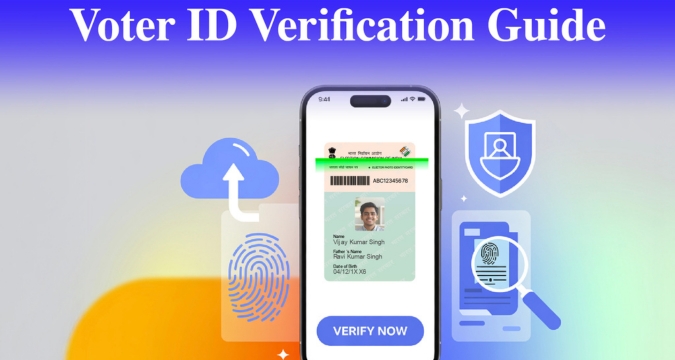
This is because these states have large populations, voter discrepancies have been alleged in recent years, and there have been coming elections. For instance:
- West Bengal has been accused of swollen rolls and ghost voters.
- In Tamil Nadu, there have been opposition issues regarding the deletions of minority and working-class voters.
- Assam is yet to come out of the delicate NRC process where voter identity has become a very emotional topic.
- Madhya Pradesh and Telangana are on the eve of important assembly elections, and new rolls are necessary.
- In comparison, Himachal Pradesh, Uttarakhand, Jammu and Kashmir, along with some areas of the Northeast are expected to be covered at a later stage because of the adverse terrain and the occurrence of winter.
The Role of Data and Technology
The credibility of the SIR will be focused on using technology. Most state lists of voters have already been digitized, and the Commission has launched mapping technology that defines duplicates using name, date of birth or address similarity.
Anomalies that may be flagged with the help of Artificial Intelligence tools include:
- Such cases have the same names and ages in several different constituencies.
- Voters were registered at non-nonexistent addresses.
- Quick demographic shift in one polling voting station.
Nevertheless, researchers warn that automation can assist in identifying mistakes, but a human factor cannot be ignored to avoid false erasures. It will thus be necessary to provide transparency and community involvement so that fairness will be upheld.
Expert Perspectives
This to former election officials and political analysts is a bold, and delicate move.
Former Chief Election Commissioner SY Quraishi repeatedly has said that a clean voter list is the pillar of democracy. He proposes that when conducted openly, mass revisions would be able to restore the confidence of the people with the electoral institutions.
Prof. Sanjay Kumar of CSDS writes that verification conducted via technology should be weighed with inclusivity, and that the possibility of not reaching all data due to flaws in the process, or due to the limited capacity to reach out to enough real voters is the danger of inadvertently locking out the real ones.
Retirement bureaucrat Anil Swaroop perceives this move as an ordeal of Commissions efficacies: “This will build credibility to the ECI provided that it is well done. When it is not handled properly, it may give rise to suspicion by both the political parties and the people.
Challenges on the Ground
The scale of SIR implies that it has a number of real-world challenges:
- Accessibility and Logistics
Lots of rural and hilly areas have inadequate infrastructure, the internet connection, or trained employees. The verification at the household level in remote areas will also require physical visits of the booth-level officers.
- Public Awareness
Voters should be advised of ways on how to verify their information and make corrections. Ignorance, principally tribal and urban poor, might lead to inadvertent marginalization.
- Political Reactions
A large deletion can be claimed to be biased by a political party when it is done in a place where the parties have a good voter base. The public trust can be killed by such allegations even prior to the ultimate list being released.
- Administrative Deadlines
The Commission has to coordinate the revision schedule with state elections. Any postponement in the issue of end-year rolls may have an impact on election arrangements.
- Data Privacy Concerns
Connecting electoral data to other databases brings concerns on privacy, particularly discussing the means of the storage and utilization of the personal information.
Role of Citizens: The participation of Voters
The process of the SIR will also be successful only through the active participation of citizens, not only through the ECI. Every voter should:
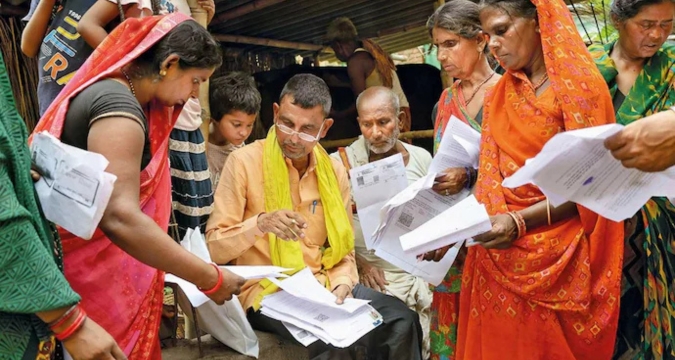
- Verify their voter information on the online official portal or the local BLOs.
- New registration- Form 6; Amendment Form 8.
- Incite family members and neighbors particularly first time voters to check their names.
Attend public hearings or complaints as draft rolls are released
The use of citizen awareness, non-governmental organizations, and media such as The Vue Times can significantly contribute to assisting citizens in realizing these measures.
Lessons from Past Revisions
The revision of voter rolls has had strengths and weaknesses in India’s electoral system in the past. As an example, in the earlier changes in states such as Bihar and Rajasthan, a massive duplication was noted and rectified to create accuracy.
Nevertheless, we occasionally had the cases of legitimate voters when their name was absent because of clerical or data entry mistakes. The concern is having a balance between erasing the ineligible entries and ensuring the rights of real voters.
Provided the ECI is able to display transparency, i.e. release the cause of deletions, provide redress on grievances, then it may become the new standard of electoral fairness.
The Political and Democrat Effect
Its very essence is a technical clean up and a democratic clean up. Thorough elections and clean and inclusive voter rolls require unfair elections.
Among the political parties, rolling is better in terms of targeting campaigns and avoidance of contended voter legitimacy. To the citizens, they are empowerment; the guarantee that every valid vote is counted and every invalid entry is eliminated.
The ripple effect may reach further to policy confidence, with more honest elections, there might be more confidence in governance and less post election litigation.
The Future: The Highway to a Better Democracy
It is not only an administrative exercise but a reassertion of the spirit of democracy in India, and the pan-India Special Intensive Revision represents that. Having a population exceeding 96 crore registered voters, the accuracy of this list is a monumental issue, but it is an essential requirement.
When effectively carried out, this revision will:
- Increase the credibility of future state and national elections.
- Make institutions gain public trust.
- Increase voter participation, both youth and first time voters.
- Be an example to other developing democracies that are handling mass elections.
- The key to its success, however, will lie in its inclusivity, transparency, and accuracy such that no qualified citizen is disadvantaged and no ineligible entry is valid.
Conclusion
The Special Intensive Revision of electoral rolls that the Election Commission transverse nationally is a historic move in the Indian democratic path. It has come at the point when the belief of citizens into institutions and the electoral integrity is questioned closely.
By design, a successful SIR would be a turning point in the state of the democratic structure in India, with every voter voice being counted, acknowledged and honored. Not just the names on paper but the belief in the ballot, trust in the system and the assurance of equality at the core of Indian democracy.