

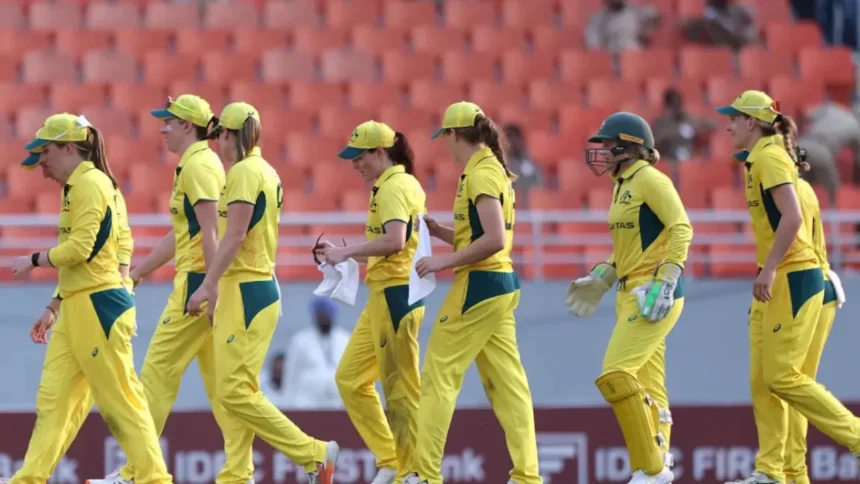
On Thursday morning (October 23, 2025) in Indore, two players from the Australia women’s national cricket team (who were in the city for the ICC Women’s World Cup 2025) were stalked and one of them was reportedly molested while walking from their hotel to a café.
The players had been staying at the Radisson Blu Hotel Indore (in Vijay Nagar) and had gone for a short outing to a café (reportedly “The Neighbourhood” on Ring Road) when a man on a motorcycle followed them, overtook them and one of the players was allegedly touched inappropriately.
The local police (MIG Police Station, Indore) registered an FIR under relevant sections (stalking, outraging modesty) and arrested a suspect (named as “Aqeel” in some reports) from the Khajrana area. Following the incident, the national governing body Cricket Australia released a statement expressing deep concern and collaborating with local authorities and the tournament organisers.
1. Context – Women’s World Cup in India & Indore’s role
The ICC Women’s World Cup 2025 is being held in India, with Indore selected as one of the host cities.
Indore’s stadium – the Holkar Stadium – and its supporting infrastructure have hosted international women’s matches, and local authorities had made preparations for security, hospitality and player welfare.
However, the incident raises serious questions about the “off-match” or external movement security of international players, and whether all protocols had been properly implemented or if there were lapses in ground level escort and monitoring.
2. Why this is alarming
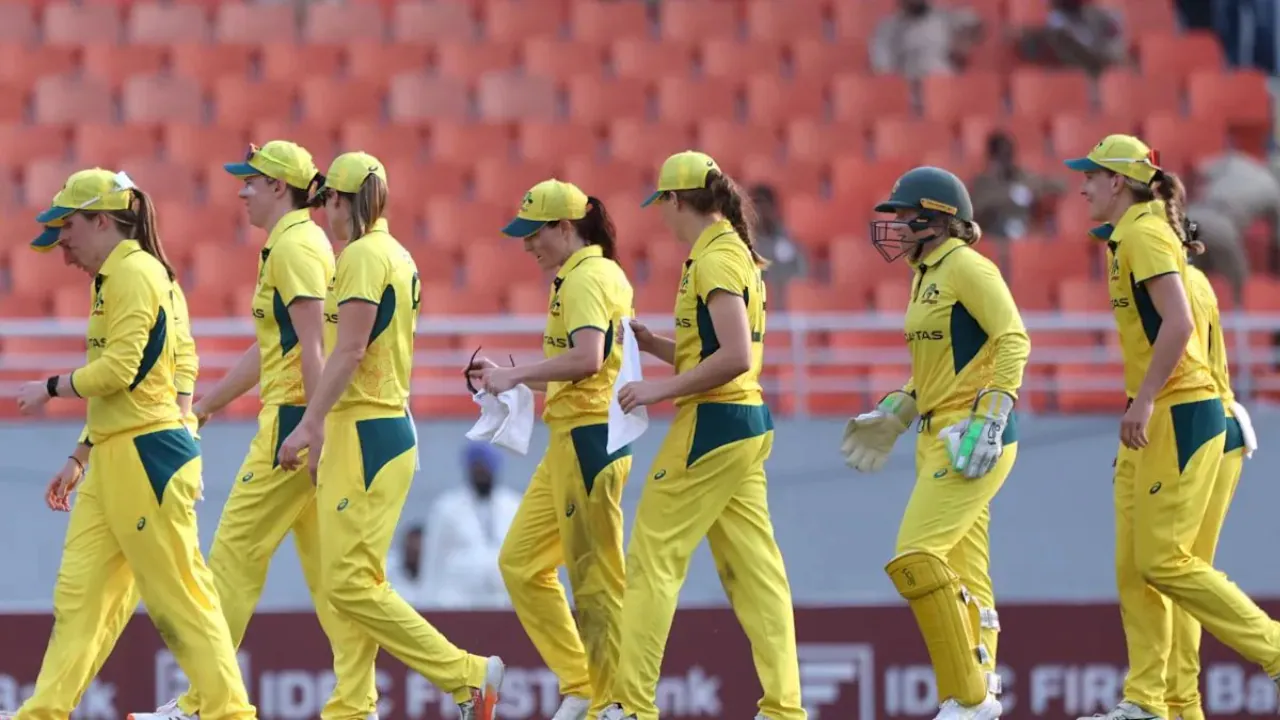
a) Safety of players
International athletes – especially women athletes – expect strong protection when representing their countries and competing abroad. An incident of stalking and molestation undermines that expectation.
b) Reputation & hosting credibility
India, and by extension the state of Madhya Pradesh and the city of Indore, carry reputational risk when such incidents occur during high-profile tournaments. It can affect bids for future events, the confidence of visiting teams, and broadcast/advertiser perceptions.
c) Women’s sport and respect
The incident is not just a cricket story—it touches on broader issues of respect for women in public spaces, cultural and behavioural attitudes, and security standards for women in sport and outside.
d) Operational & security protocol shortcomings
Despite the team being in a “bubble” environment (hotel, team transport, escort) the fact that the players were walking to a café suggests either insufficient escort, route planning, or vulnerability in external movement. The presence of a motorcycle suspect implies that the route was exposed, unguarded or had gaps in surveillance/patrol.
3. What we know about the case so far
-
The complaint was filed by the Australian team’s security manager (identified in some reports as “Danny Simmons”).
-
CCTV footage is being reviewed; police have reportedly identified the suspect from Khajrana.
-
The suspect was arrested (though details such as bail, formal charge sheet are yet to be publicly clarified).
-
The local police have stated that they will step up security around hotels and key movement routes for teams.
-
Cricket Australia’s statement emphasised that all athletes deserve a “respectful and secure environment”.
4. Analysis – What may have gone wrong & how to address it

Potential shortcomings
-
Route and transit vulnerability: Allowing a walk from hotel to café may have exposed the players to unguarded public streets, which should ideally be covered by security personnel, driver escort, or closed corridor arrangements when teams move outside.
-
Timing & location: The incident happened in broad daylight (~11 a.m.) on a public road (Khajrana Road / Ring Road). A crowded or visible area does not always guarantee safety if security arrangements are weak or absent.
-
Patrol & surveillance gap: The fact the suspect could stalk on a motorcycle and appear close enough to touch a player suggests weak monitoring or delayed response. Maybe the café exit, hotel entrance or parking area lacked designated security cover.
-
Coordination among stakeholders: The team security, local police, tournament organisers and hotel security must coordinate constantly. Gaps in this chain can create exposure.
-
Off-duty or “free movement” exposure: International teams often have small windows of “free time”. During such time, the expectation is that moves are still secured; any assumption of casual movement can increase risk.
What should happen to mitigate risk
-
Escort vehicles & closed corridors: For any transit of players outside hotel/stadium, a dedicated vehicle should be used; pedestrian movement in public roads should be minimised, or if unavoidable then accompanied by security personnel.
-
Clear risk assessment of movement: Every outing (even to a café) should be risk-assessed: route, time, crowd density, possible exposure to public interaction.
-
Hotel & café coordination: Hotels should coordinate with local policing for any team movement; cafés or venues frequented by teams should have designated secured entry and exit.
-
CCTV and quick response: Real-time monitoring of CCTV along known routes, plus patrolling security staff with radio linking, so that any suspicious approach (e.g., loitering motorcycle) triggers alert.
-
Team security training & SOPs: Even with outside security, players should be briefed on safe movement, what to do when stalked, to use SOS alerts (apparently used in the incident).
-
Public and local awareness campaigns: Local host city residents need awareness about visiting international athletes and expected norms; public cooperation helps.
-
Incident review & future improvements: After such incidents, tournament organisers should conduct a full review, learn lessons, update protocols for future events (especially women’s sport).
5. Implications for cricket, tourism & image
For women’s sport
This unfortunate incident may overshadow the progress being made in women’s cricket — increased visibility, investment, streaming rights, bigger crowds. Players need not only professional support but also safe, respectful environments. Host nations must ensure that organising a major women’s tournament means security standards at least match (or exceed) those for men’s events.
For tourism and hosting bids
If visiting teams feel unsafe, they may express reluctance to play in certain venues or host nations. That creates pressure on organisers (International Cricket Council, national boards, state associations) to maintain stringent safety standards. The image of the city or arena can suffer; sponsors may reassess risk; media may ask critical questions.
For locals and public perception
Such incidents provoke public outrage, questioning of local law enforcement, and damage to city image. Comments on social media show a mix of shame, anger and concern:
“Disgraceful. But then this is your everyday for millions of women in this country.”
“We need to seriously stop trying to host women’s tournaments if we can’t even guarantee their safety.”
These reactions reflect deeper societal issues about safety of women in public spaces in India.
For the visiting team and tournament
The Australian team, and other teams, may raise questions about security planning, may demand assurances, and in worst case may alter their willingness to travel to certain venues. The tournament organiser must respond swiftly to maintain credibility.
6. Looking ahead: key questions and what to watch

-
Legal process/charges: What exact charges are filed against the accused? How quickly is the investigation advancing? Are there arrests of accomplices if any?
-
Protective action for other teams/players: How many other teams/players are at risk in other venues? Is there a system-wide review?
-
Follow-up by Cricket Australia: Will they issue formal protest or demand reporting and monitoring from the Indian board or venue hosts?
-
Local authority accountability: Will the local police, state cricket association and hotel management issue a transparent report and review of the incident?
-
Safety protocol revision: Will this incident lead to published improvements — e.g., pedestrian movement of players replaced by driver-only transport, escorts, route security?
-
Media and public repercussions: How will Indian media handle this? Will the debate go beyond cricket into women’s public safety, city infrastructure, and host-city readiness?
-
Effect on hosting future events: Will the ICC or other bodies impose stricter prerequisites for host cities for women’s tournaments, especially regarding off-field security?