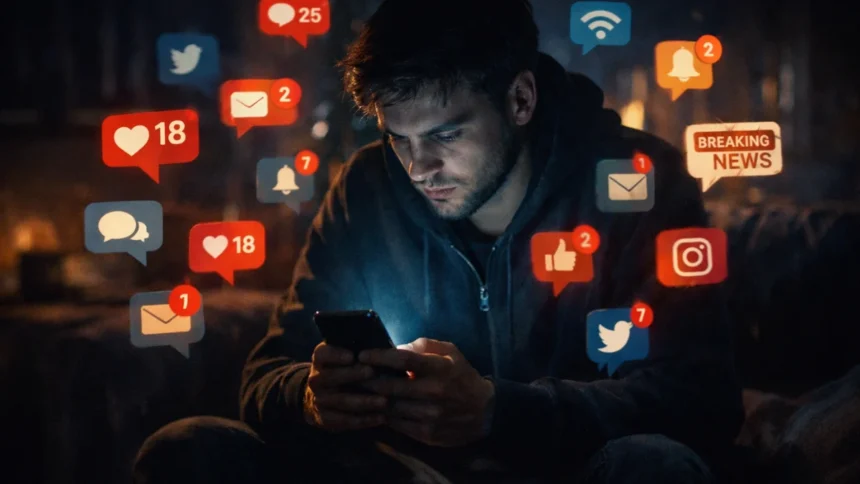
There’s a familiar kind of silence that doesn’t feel peaceful anymore. You sit in a room, phone in hand, scrolling without purpose. Minutes stretch into an hour. Nothing memorable happened, yet your mind feels crowded—as if it has consumed too much and understood too little.
This is the environment where Digital Minimalism begins to make sense—not as a trend, but as a quiet correction.
The idea is simple, almost uncomfortable in its clarity: most of what we do online isn’t essential. And yet, it fills our days.
What Digital Minimalism Really Means
Digital Minimalism isn’t about rejecting technology. It’s about being deliberate with it.

The term gained traction through thinkers like Cal Newport, who argued that technology should serve deeply held values—not hijack attention. The distinction is subtle but powerful.
A minimalist approach doesn’t ask, “Is this app useful?”
It asks, “Is this the best way to spend my time?”
That shift changes everything.
Because usefulness is easy to justify. Value is harder.
Why Digital Minimalism Is Suddenly Everywhere
The rise of Digital Minimalism isn’t accidental. It’s a response.

Over the last decade, the internet stopped being a tool you occasionally used. It became an environment you live inside. Social platforms, short-form content, notifications, algorithmic feeds—each designed not just to engage, but to retain.
The result is predictable:
- Constant distraction
- Fragmented attention
- Reduced ability to think deeply
But there’s something else happening beneath the surface. People are beginning to notice.

You see it in small ways. Phones turned face down during conversations. Notifications turned off. Social media breaks that quietly extend longer than planned.
This isn’t rejection. It’s fatigue.

Digital Minimalism and the Economics of Attention
There’s a reason your attention feels under siege—it is.
Most digital platforms operate within what’s often called the attention economy. The longer you stay, the more valuable you become. Time isn’t just spent; it’s extracted.
That changes how products are designed.
Features are no longer neutral. They are engineered to create loops:
- Endless scrolling
- Auto-play videos
- Variable reward systems
From a business perspective, this is efficient. From a human perspective, it’s exhausting.
Digital Minimalism pushes back—not by abandoning technology, but by refusing passive consumption.
It replaces default behavior with intentional choice.
The Psychological Cost of Always Being Connected
There’s a misconception that more connectivity equals more awareness. In reality, it often leads to cognitive overload.
When the brain is constantly switching contexts—message to video, video to email, email to notification—it never settles. Depth is replaced by surface-level processing.
This has consequences:
- Reduced focus span
- Decision fatigue
- Persistent mental restlessness
You might recognize this pattern: opening your phone for one task and leaving 20 minutes later without completing it.
Digital Minimalism isn’t about discipline in the traditional sense. It’s about removing friction where it shouldn’t exist.
When distractions are reduced, focus becomes natural—not forced.
Digital Minimalism in Practice: Less, But Better
The practical side of Digital Minimalism isn’t extreme. It’s selective.
People who adopt it don’t necessarily use technology less—they use it better.
That might look like:
- Keeping only essential apps on the home screen
- Scheduling specific times for social media instead of constant checking
- Replacing passive consumption with active use (learning, creating, researching)
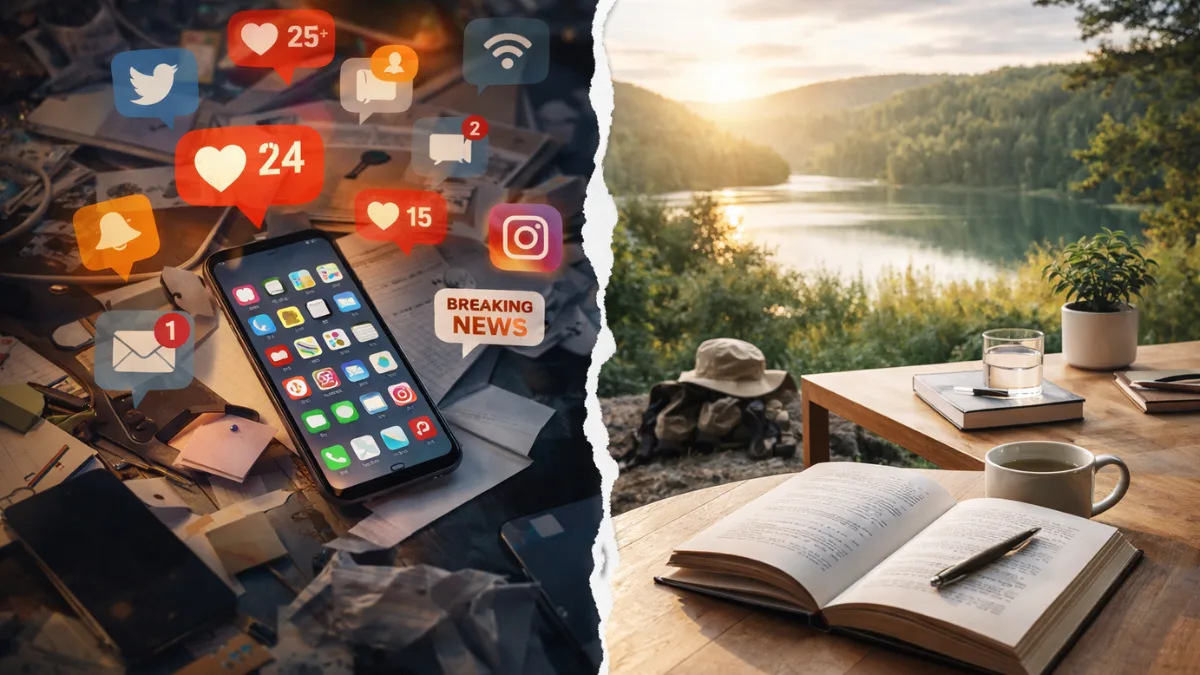
A striking pattern emerges here. When digital noise is reduced, people rediscover analog depth—reading, thinking, even boredom.
And boredom, it turns out, is not a problem. It’s a gateway.
Some of the most original ideas don’t come when you’re stimulated. They come when you’re not.
Why Digital Minimalism Is Also a Productivity Strategy
There’s a strong link between Digital Minimalism and high-quality work.
Deep work—the kind that requires sustained attention—cannot coexist with constant interruption. Every notification, every quick check, resets your cognitive state.
The cost isn’t just time. It’s momentum.
Professionals who adopt minimalist digital habits often report:
- Faster task completion
- Higher clarity of thought
- Reduced burnout
It’s not about working harder. It’s about working with fewer interruptions.
In a world that rewards speed, clarity becomes a competitive advantage.
The Social Trade-Off No One Talks About
There’s an uncomfortable side to Digital Minimalism.
Stepping back from constant connectivity can feel isolating—at least initially. Social media has become a default layer of interaction, even when it lacks depth.
Reducing that exposure creates space, but also silence.
The key difference lies in what replaces it.
Minimalists often report stronger, more intentional relationships—fewer interactions, but more meaningful ones.
A short call instead of endless messaging. A conversation instead of a reaction.
It’s not less social. It’s differently social.
Where This Is Headed: The Future of Digital Minimalism
Digital Minimalism isn’t a temporary trend. It’s a structural response to how technology has evolved.
As AI, automation, and hyper-personalized content continue to grow, digital environments will become even more immersive—and more persuasive.
Which means the need for intentional use will increase, not decrease.
We’re already seeing early signals:
- Rise of “focus apps” and distraction blockers
- Growth of offline-first lifestyles
- Increased awareness of digital wellbeing
The next phase isn’t about abandoning technology. It’s about designing personal boundaries within it.
Because the question isn’t whether technology will become more powerful.
It will.
The real question is whether users will become more intentional.
More Read

Conclusion
Digital Minimalism isn’t about cutting off from the world. It’s about choosing how you engage with it.
In a system designed to pull your attention in every direction, restraint becomes a form of control. Not rigid control—but thoughtful, selective control.
The goal isn’t to use less technology.
The goal is to stop using it without thinking.
Final Insight
The real shift behind Digital Minimalism isn’t technological—it’s psychological. The people who benefit most aren’t those who disconnect completely, but those who decide deliberately. In a noisy world, clarity is no longer automatic. It has to be chosen. Stay Informed-Stay Updated-The Vue Times
Frequently Asked Questions
What is Digital Minimalism?
Digital Minimalism is a philosophy of using technology intentionally—focusing only on tools that add real value while eliminating unnecessary digital distractions.
How is Digital Minimalism different from a digital detox?
A digital detox is temporary, while Digital Minimalism is a long-term lifestyle approach that reshapes how you use technology every day.
Does Digital Minimalism mean quitting social media?
Not necessarily. It means using social media with purpose—limiting time, removing distractions, and avoiding mindless scrolling.
Can Digital Minimalism improve productivity?
Yes. By reducing interruptions and distractions, it helps improve focus, deep work ability, and overall efficiency.
Is Digital Minimalism practical for students or professionals?
Absolutely. It can help students focus better on studies and professionals manage time more effectively without constant digital interruptions.