Problem Statement
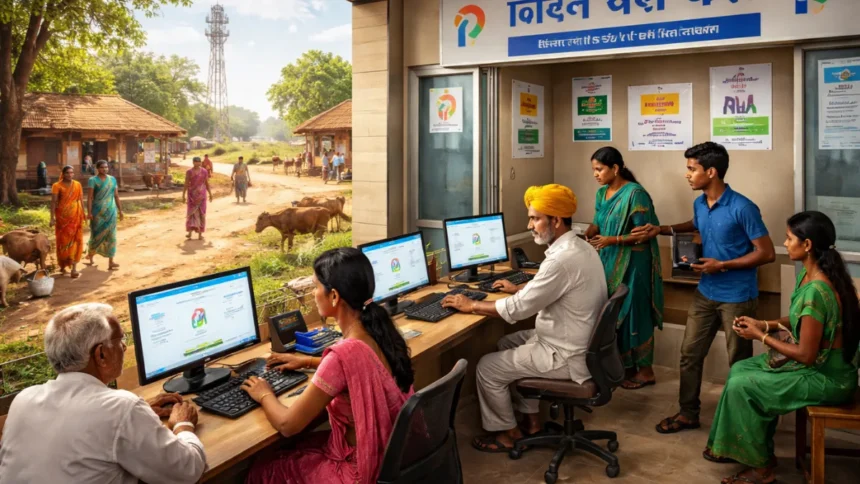
A recurring issue among serious aspirants is the inability to handle evaluation-based questions effectively—especially on topics like the Digital India Programme.
Most answers fall into two predictable patterns:
- A government-report style answer listing only achievements
- An editorial-style critique focusing only on failures
Both approaches are incomplete and lead to average or below-average marks.
The real exam challenge is not knowledge—it is structured evaluation.

👉 Students fail to balance “Achievements vs Ground Reality” in a clear, exam-oriented format.
In GS Paper 2 and State PCS exams, questions demand:
- Multi-dimensional analysis
- Evidence-backed arguments
- Balanced conclusions
Without this structure, even content-rich answers appear unfocused and superficial.
Concept Clarity
What is the Right Approach?
To score well, you must treat the Digital India Programme as a policy evaluation framework, not just a scheme.
This means:

- Understanding intent (objectives)
- Measuring outcomes (achievements)
- Identifying gaps (ground reality)
- Suggesting improvements (way forward)
What is Digital India Programme?
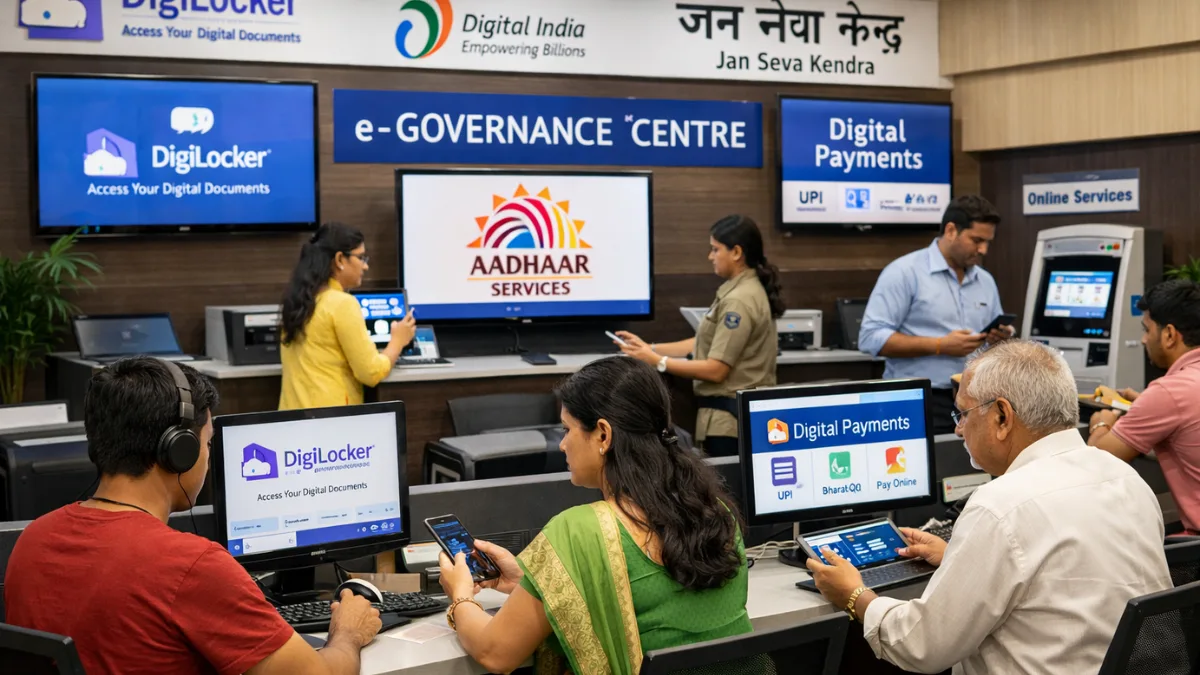
The Digital India Programme, launched in 2015, aims to transform India into a digitally empowered society and knowledge economy.
It is built on three pillars:
- Digital Infrastructure as a Utility
- Broadband highways
- Mobile connectivity
- Digital identity (Aadhaar)
- Governance and Services on Demand
- E-governance platforms
- Online public services
- Paperless administration
- Digital Empowerment of Citizens
- Digital literacy
- Access to information
- Citizen participation
What Does “Achievements vs Ground Reality” Mean?
In exam writing, this translates into a two-sided analytical framework:

| Component | What Examiner Expects |
| Achievements | Measurable success, outcomes, examples |
| Ground Reality | Implementation gaps, inequality, constraints |
| Conclusion | Balanced judgement + practical solutions |
Why This Matters in Exams?
Questions are framed as:
- “Critically examine…”
- “Evaluate the effectiveness…”
- “Discuss achievements and challenges…”
If you ignore either side:
👉 You lose marks in analysis, balance, and depth
Practical Framework
Step-by-Step Answer Writing Approach
Use this structured approach consistently:
Step 1: Introduction (2–3 lines)
- Define the Digital India Programme
- Mention its objective briefly
Step 2: Achievements (Positive Outcomes)
Focus on impact, not just schemes:
- Digital Payments Revolution
- UPI has transformed transactions
- Expansion of Digital Infrastructure
- BharatNet improving rural connectivity
- Direct Benefit Transfer (DBT)
- Reduced leakages and improved transparency
- E-Governance Platforms
- Online services like DigiLocker, e-Hospital
- Increased Internet Penetration
Rapid growth in smartphone and data usage

Step 3: Ground Reality (Challenges)
Highlight practical limitations:
- Digital Divide
- Rural vs urban access gap
- Connectivity Issues
- Poor network in remote areas
- Low Digital Literacy
- Many citizens unable to use services effectively
- Cybersecurity Risks
- Rising data breaches and fraud
- Administrative Capacity Issues
- Implementation gaps at local level
- Implementation gaps at local level
Step 4: Way Forward
Provide realistic solutions:
- Expand last-mile connectivity
- Strengthen digital education programs
- Improve cybersecurity infrastructure
- Enhance institutional capacity
Step 5: Conclusion
- Balanced + forward-looking
- Avoid extreme statements
Model Answer Snippet (Exam Ready)
- Evaluate the achievements and limitations of Digital India Programme.
Answer:
The Digital India Programme aims to transform India into a digitally empowered society by strengthening digital infrastructure and governance mechanisms.
On the achievements side, it has significantly expanded digital payments through UPI, improved transparency via Direct Benefit Transfers, and enhanced service delivery through e-governance platforms.
However, ground reality reveals persistent challenges such as digital divide, inadequate rural connectivity, low digital literacy, and cybersecurity concerns.
A balanced approach focusing on inclusive access, infrastructure development, and capacity building is essential to realize its full potential.
Mistake vs Correct Approach
| Mistake | Correct Approach |
| Listing schemes | Linking schemes to outcomes |
| Generic statements | Specific examples |
| Ignoring negatives | Balanced analysis |
| No structure | Intro–Body–Conclusion format |
Common Errors
❌ 1. Writing Like an Editorial
Students use opinion-heavy language without structure.
👉 Result: Poor clarity
❌ 2. One-Sided Answers
Only achievements or only criticism.
👉 Result: Low analytical marks
❌ 3. Lack of Examples
Statements without proof.
👉 Result: Weak credibility
❌ 4. Ignoring Question Demand
Not addressing “ground reality.”
👉 Result: Direct mark loss
❌ 5. Data Dumping
Too many statistics without explanation.
👉 Result: Reduced readability
❌ 6. Poor Structuring
No headings or flow.
👉 Result: Examiner confusion
Tactical Application
How This Improves Marks
Using this framework leads to:
✔ Better Answer Presentation
Clear structure improves readability.
✔ Higher Analytical Scores
Balanced answers score more.
✔ Time Efficiency
Pre-defined structure saves time.
✔ Content Relevance
Directly answers question demand.
✔ Examiner-Friendly Format
Headings and flow improve evaluation.
Application Across Papers
This strategy is useful for:
- GS Paper 2 (Governance)
- Essay writing
- State PCS exams
- Interview discussions
Improvement Plan
Daily Execution Strategy
Day 1–2: Concept Building
- Study Digital India Programme
- Understand objectives and components
Day 3–4: Structured Notes
Divide into:
- Achievements
- Challenges
- Way forward
Day 5–6: Answer Practice
Write answers on:
- Digital divide in India
- Role of e-governance
- Impact of digital payments
Day 7: Self-Review
Check:
- Balance in answer
- Use of examples
- Clarity of structure
Weekly Plan
- Revise 5 schemes
- Write 2 answers per scheme
- Focus on evaluation-based questions
Internal Linking (For The Vue Times)
- [How to Write High-Scoring GS Answers]
- [Role of E-Governance in India]
- [Best Answer Writing Strategy for UPSC]

Conclusion
The Digital India Programme is central to India’s transformation into a digitally driven economy and plays a critical role in strengthening digital governance India.
However, in examinations, success depends not on listing achievements—but on presenting a balanced evaluation.
A high-scoring answer must:
- Clearly highlight achievements
- Critically examine ground realities
- Offer practical solutions
By applying a structured framework, avoiding common mistakes, and practicing regularly, aspirants can significantly improve answer quality.
Mastering analytical topics like the Digital India Programme is essential for scoring high marks in governance-related questions and building strong conceptual clarity for competitive exams.
Final Insight
What’s Your Experience with Digital India?
Have you faced challenges or enjoyed seamless services like Aadhaar and UPI? Share your thoughts below and don’t forget to follow VUE TIMES for more real insights on India’s digital transformation.
FAQs
1. What is the Digital India Programme?
The Digital India Programme is a government initiative launched in 2015 to transform India into a digitally empowered society through improved digital infrastructure and e-governance services.
2. What are the key achievements of the Digital India Programme?
Major achievements include growth in digital payments (UPI), expansion of internet connectivity, improved Direct Benefit Transfers (DBT), and increased access to online government services.
3. What challenges exist in the Digital India Programme?
Key challenges include the digital divide, poor rural connectivity, low digital literacy, cybersecurity risks, and gaps in implementation at the grassroots level.
4. How does Digital India Programme impact digital governance in India?
It strengthens digital governance India by improving transparency, reducing corruption, enabling faster service delivery, and increasing citizen participation in governance.
5. Why is Digital India Programme important for competitive exams?
It is a key topic in GS Paper 2 and essay papers as it involves governance, technology, and policy evaluation, making it highly relevant for analytical questions.