Introduction
India’s demographic advantage is often described as its biggest strength. With millions entering the workforce every year, the pressure to create jobs and build employable skills has never been higher. This is where government initiatives like Skill India come into focus. Designed to train youth and bridge the employability gap, the program has been positioned as a transformative force in India’s economic story.
But beyond the vision and large enrollment numbers lies a more complex question: what is the skill india success rate in terms of actual jobs and sustainable careers? While official figures highlight millions trained, discussions around real job placement, income growth, and long-term impact continue to raise concerns. The gap between training and employment is where the real debate begins.
This article takes a deep, analytical look at the reality behind Skill India—examining skill india jobs data, multiple perspectives, ground-level challenges, and the broader implications for India’s workforce.
Background and Context of Skill India Mission
The Skill India Mission, launched in 2015, was one of India’s most ambitious workforce development programs. Its primary goal was to train over 400 million people in various skills by 2022, making India’s youth more employable and industry-ready. The initiative combined multiple government schemes under a single umbrella, including the Pradhan Mantri Kaushal Vikas Yojana (PMKVY), the National Skill Development Corporation (NSDC), and various sector skill councils.

Core Objectives of Skill India
The mission was built on a simple but powerful framework:
- Identify industry demand and future job trends
- Train youth with relevant, practical skills
- Enable job placements and career opportunities
India has long faced a unique challenge—a paradox where unemployment remains high, yet industries struggle to find skilled workers. This gap between education and employability has been a major barrier to economic growth.
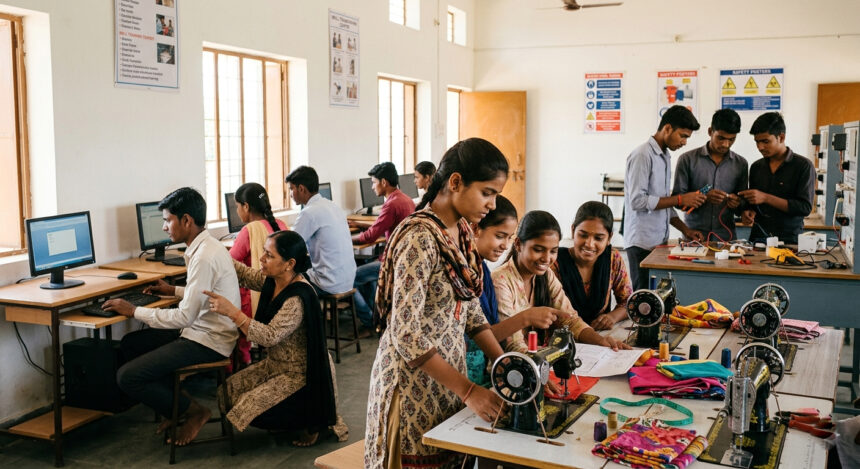
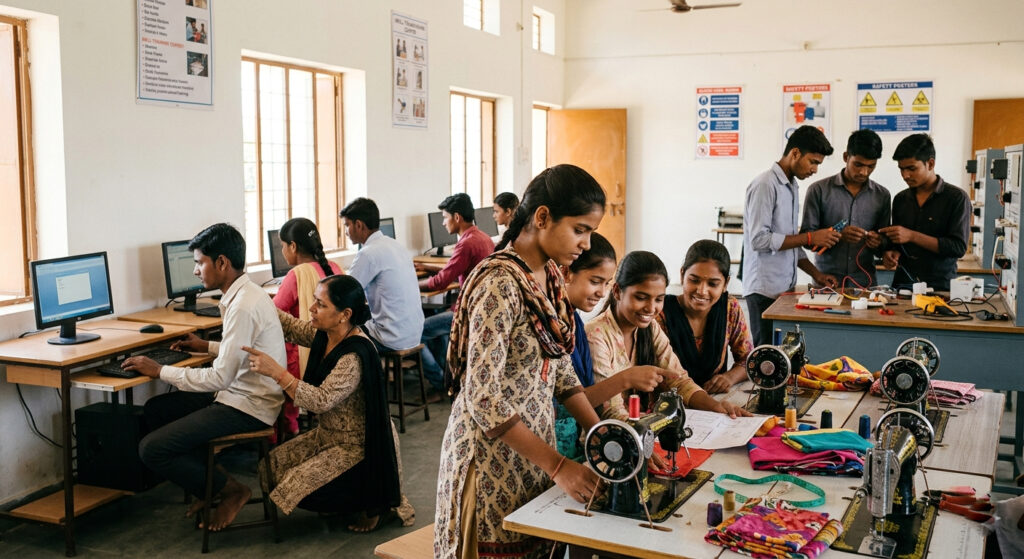
Skill India aimed to solve this issue by creating a structured ecosystem of training centers, certifications, and partnerships with industries. The idea was not just to provide education but to make individuals job-ready through hands-on training and skill-based learning.
Challenges Affecting Skill India Success Rate
However, the scale of the mission introduced several complexities. With millions of candidates enrolling, maintaining consistent training quality became difficult. Differences in infrastructure, trainer expertise, and course relevance started impacting outcomes.
Another critical factor influencing the skill india success rate is alignment with industry needs. In many cases, the skills taught do not fully match real job requirements, leading to employability gaps.

Additionally, post-training outcomes such as job placement, salary levels, and career growth have become key indicators of success. These factors have shifted the focus from just training numbers to actual impact.

What Is Happening Right Now in Skill India Jobs Data
In recent years, the conversation around Skill India has evolved significantly. Earlier, the focus was mainly on enrollment numbers and the scale of training programs. Today, attention has shifted toward real outcomes—especially job placements, income levels, and long-term career growth.
Current Trends in Skill India Programs
The latest skill india jobs data reveals several important trends:

- High enrollment numbers continue across training programs
- Placement rates vary widely depending on sector and region
- Rapid growth in short-term certification courses
- Increasing focus on digital, technical, and emerging skills
- Greater scrutiny of training quality and effectiveness
While millions are still enrolling, not all candidates are able to secure stable or well-paying jobs after training. This has led to growing discussions about the effectiveness of the system.
Government Reforms and Industry Involvement
To address these challenges, the government has introduced several reforms. These include integrating skill development with formal education, promoting apprenticeship programs, and encouraging private sector participation.
Industry involvement is especially important because it helps ensure that training programs align with real job requirements. Companies are increasingly being encouraged to collaborate with training institutions to design courses and provide hands-on experience.
Sector-Wise Performance Insights
The skill india jobs data also shows that performance varies across sectors:
- Retail, healthcare, and logistics sectors show relatively better job absorption
- Manufacturing and construction sectors face skill mismatch issues
- Emerging tech fields offer opportunities but require higher skill levels
This uneven performance highlights the need for more targeted and sector-specific training strategies.
Why Skill India Success Rate Is Controversial
The debate around the skill india success rate is driven by the gap between expectations and actual outcomes. While the program has achieved large-scale training, its effectiveness in delivering sustainable employment remains a key concern.
Key Issues Driving the Controversy
Several factors contribute to this ongoing debate:
- Significant gap between number of trainees and job placements
- Low wages in many entry-level skilled jobs
- Limited long-term career growth opportunities
- Regional disparities in access to jobs and training quality
For many candidates, completing a training program does not guarantee a stable job. This disconnect has raised questions about the real value of these certifications in the job market.
Quality vs Quantity Debate
One of the biggest criticisms is that the program has focused more on quantity (number of people trained) rather than quality (job readiness and career outcomes). Critics argue that without strong industry alignment and practical exposure, training alone is not enough.
On the other hand, supporters believe that skill development is a long-term investment. They argue that building a skilled workforce takes time and that immediate job placement should not be the only metric of success.
Different Perspectives on Skill India Jobs Reality
Supporters’ View: Building a Skilled Workforce
Supporters of Skill India highlight its scale and long-term vision. Training millions of people in a diverse country like India is a massive achievement in itself.
Key arguments from supporters include:
- Increased awareness about skill-based careers
- Better access to training in rural and semi-urban areas
- Creation of a foundation for future workforce development
- Stronger industry participation in training programs
They believe that the skill india success rate should be evaluated not just by immediate job placements but by overall employability and economic contribution over time.
Critics’ View: Gaps in Execution and Outcomes
Critics, however, focus on the practical challenges and outcomes. Their concerns highlight systemic issues that affect the program’s effectiveness.
Major concerns include:
- Low placement rates in several training programs
- Jobs offered often have low salaries or poor working conditions
- Training content not aligned with real industry requirements
- Lack of proper tracking and follow-up after training
According to critics, without a strong connection between training and employment, the program risks becoming more about certification than actual career building.
Facts vs Claims
| Aspect | Verified Facts | Public Claims |
| Training Numbers | Millions trained under various schemes | Often highlighted as success |
| Placement Rates | Vary significantly across sectors | Sometimes overstated |
| Salary Levels | Entry-level wages often low | Marketed as career opportunities |
| Industry Alignment | Improving but inconsistent | Claimed as strong linkage |
The reality of skill india jobs data lies somewhere in between. While there are genuine success stories, there are also systemic challenges that affect outcomes.
What People Might Be Missing
One of the most overlooked aspects is the difference between training and employability.
Completing a course does not automatically translate into job readiness. Soft skills, communication, adaptability, and real-world exposure play a crucial role.
Other hidden layers include:
- Migration challenges for rural candidates
- Social perceptions around vocational jobs
- Lack of mentorship and career guidance
- Informal sector dominance in India
The skill india success rate is deeply influenced by these factors, which often go beyond the scope of training programs.
Impact on Society / Economy / Users
Skill India has had a broad impact across multiple levels.
On Individuals
- Increased access to skill training
- Better awareness of career options
- Mixed outcomes in terms of income growth
On Economy
- Contribution to workforce formalization
- Support for sectors like manufacturing and services
- Ongoing challenge of underemployment
On Industry
- Easier access to semi-skilled labor
- Need for additional training and onboarding
- Opportunity to shape training standards
The skill india jobs data indicates that while the program has expanded the talent pool, the quality and job alignment still need improvement.
Role of Media and Narrative
Media plays a significant role in shaping public perception of Skill India.
Positive narratives often focus on:
- Large training numbers
- Success stories of individuals
- Government achievements
Critical narratives highlight:
- Placement gaps
- Ground-level challenges
- Data transparency issues
Social media further amplifies both sides, creating a polarized view. The reality, however, is more nuanced and requires deeper analysis beyond headlines.
Bigger Picture / Future Outlook
The future of Skill India depends on how effectively it evolves.
Key areas of focus include:
- Stronger industry partnerships
- Integration with formal education
- Emphasis on quality over quantity
- Better tracking of outcomes
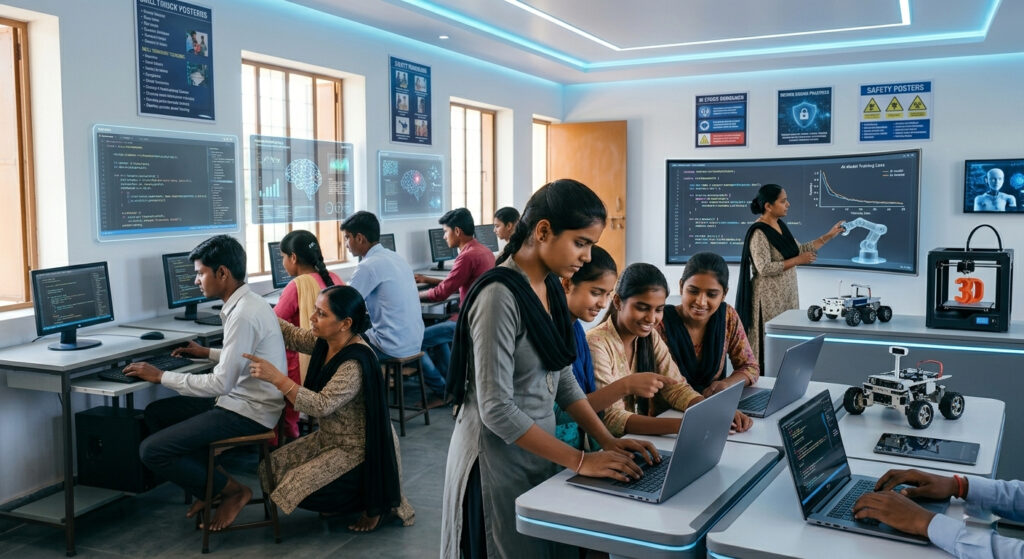
Technology will also play a major role. Digital platforms, AI-driven learning, and remote work opportunities could reshape the skilling landscape.
The skill india success rate in the coming years will likely depend on how well the ecosystem adapts to these changes and addresses existing gaps.
Conclusion
Skill India represents one of the most ambitious workforce development initiatives in the world. It has successfully brought skill development into mainstream conversation and expanded access to training across the country.
However, the reality behind the skill india success rate is complex. While the program has made significant progress in training millions, the challenge lies in translating these skills into meaningful and sustainable employment.
The truth is not black and white. Skill India is neither a complete success nor a failure—it is an evolving system with both achievements and limitations.
As India continues its journey toward becoming a global economic powerhouse, the effectiveness of its skill development programs will play a critical role. The real question is not just how many are trained, but how many truly build better futures because of it.