
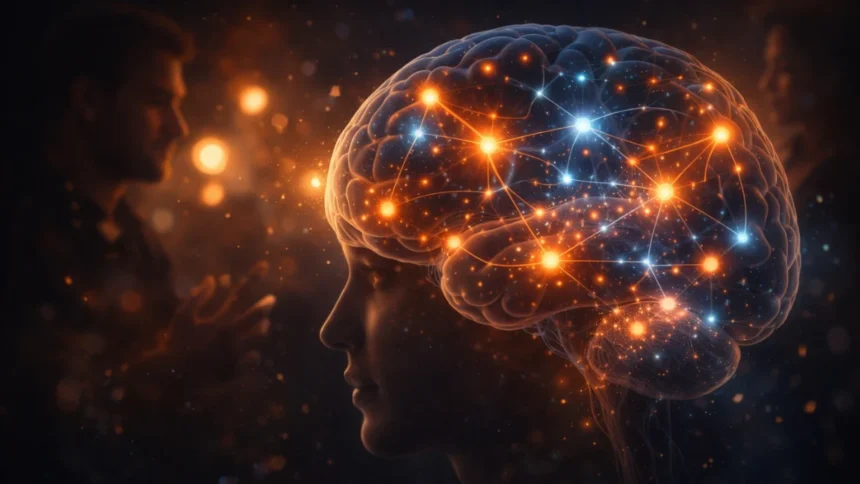
It usually happens in a moment you can’t quite explain.
You walk into a room — a meeting, a café, a friend’s house — and before anyone says a word, you’ve already made a judgment. Something feels off. Or right. Or uncertain. You don’t analyze it consciously, yet your brain has already processed tone, body language, energy.
That instinctive pause? That silent internal assessment?
That’s a Vibe Check.
What Is a Vibe Check, Really?
The term Vibe Check may sound like casual internet slang, but it captures something deeply human. At its core, a vibe check is a quick, intuitive evaluation of a person, environment, or situation — based not on facts, but on feeling.
In digital spaces, it often appears as a playful or ironic phrase — “pass the vibe check” or “failed the vibe check.” But outside the memes, it reflects something far more serious: how we interpret social cues in an increasingly fast-paced, often impersonal world.
A vibe check isn’t about logic. It’s about perception.
And perception, as it turns out, drives far more of our decisions than we like to admit.
From Internet Joke to Cultural Shortcut
Like many modern expressions, Vibe Check didn’t emerge from academia or psychology textbooks. It grew out of internet culture — particularly social platforms where communication is fast, visual, and emotionally driven.
Originally used humorously, the phrase became a shorthand for approval or rejection. A tweet, a person, even a brand could “pass” or “fail” the vibe check.
But what’s interesting is how quickly the phrase moved beyond humor. It started to describe real-world behavior. Hiring decisions, friendships, content consumption — all increasingly influenced by how something feels rather than what it objectively is.
In many ways, vibe check became a linguistic bridge between instinct and expression.
Why Vibe Check Matters More Than Ever
In a world overloaded with information, attention has become selective. People don’t have the time — or patience — to analyze everything deeply. Instead, they rely on quick judgments.
That’s where vibe checks come in.
We’re constantly scanning:
- Is this person trustworthy?
- Does this brand feel authentic?
- Does this space feel comfortable?
These decisions happen within seconds.
What used to be subtle is now amplified by digital environments. Social media profiles, websites, even news platforms are judged instantly. Not just for content, but for tone, design, and emotional resonance.
The rise of the Vibe Check reflects a shift from analytical thinking to emotional filtering.
And that shift has consequences.
The Psychology Behind a Vibe Check
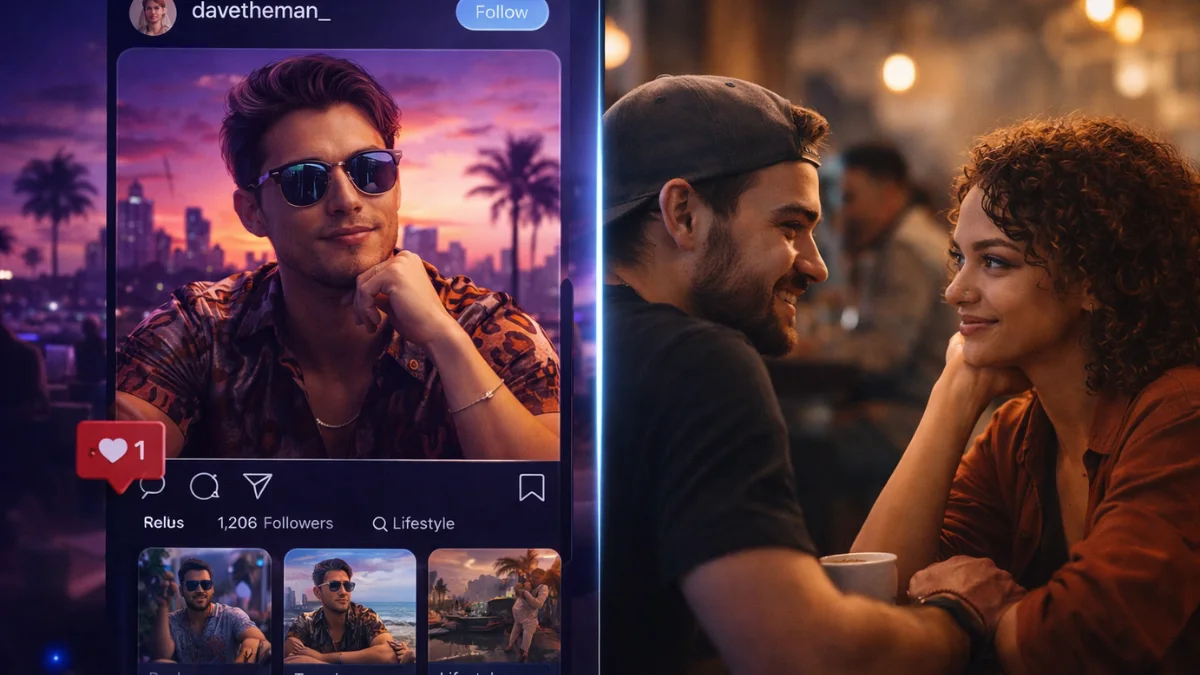
A vibe check isn’t random. It’s rooted in how the human brain processes information.
Psychologists often talk about “thin slicing” — the ability to make quick decisions based on limited data. Within milliseconds, the brain picks up patterns: facial expressions, posture, voice tone, even micro-behaviors.
These cues form what we interpret as a “vibe.”
But here’s the catch — vibe checks are not always accurate.
They are influenced by:
- Personal biases
- Past experiences
- Cultural conditioning
- Emotional state
What feels “off” to one person might feel completely normal to another.
So while vibe checks are powerful, they are also subjective — and sometimes misleading.
Vibe Check in the Digital Economy
Scroll through any website or social media feed, and you’ll see it immediately — some content just feels right.
That’s not accidental.
Businesses, especially in digital marketing and branding, are now actively designing for the Vibe Check.
A website isn’t judged only on functionality anymore. It’s judged on:
- Clean design
- Emotional tone
- Authentic messaging
- Visual storytelling
If it fails the vibe check, users leave — often within seconds.
This has reshaped industries. Brands are investing more in aesthetics, storytelling, and user experience than ever before. Not because it looks good, but because it feels right.
The same applies to personal branding. Influencers, creators, and even professionals are evaluated based on how they present themselves online.
The resume is no longer the first impression.
The vibe is.

The Social Impact: Reading People Without Words
In real-life interactions, vibe checks have always existed. But today, they’re more consciously recognized.
Meeting someone new? You assess their energy.
Joining a team? You read the room.
Attending an event? You gauge comfort instantly.
The language has changed, but the behavior hasn’t.
What has changed is awareness. People now openly talk about “good vibes” and “bad vibes,” making emotional intelligence more central to social interaction.
However, there’s a downside.
Relying too heavily on vibe checks can lead to snap judgments. People may be dismissed too quickly. Situations misunderstood. Depth replaced by immediacy.
In other words, while vibe checks simplify decisions, they can also oversimplify people.
When Vibe Check Goes Wrong
Not every vibe is accurate.
Sometimes discomfort comes from unfamiliarity, not actual risk. Sometimes confidence is mistaken for arrogance. Sometimes silence is read as disinterest.
The danger lies in mistaking intuition for truth.
A failed vibe check can mean:
- Missing opportunities
- Misjudging people
- Reinforcing biases
In professional settings, this becomes even more critical. Hiring decisions based purely on “fit” — essentially a vibe check — can exclude diversity and fresh perspectives.
So while vibe checks are natural, they require awareness.
The real skill isn’t just sensing a vibe.
It’s questioning it.
The Future of Vibe Check in a Hyper-Digital World
As technology evolves, the concept of vibe checks is expanding.
With AI-generated content, virtual interactions, and digital identities, the idea of “vibe” is becoming more complex. People are learning to read not just human signals, but digital ones.
Does this content feel authentic?
Does this interaction feel real?
Is this person who they say they are?
In a world where authenticity can be simulated, passing the vibe check will become harder — and more important.
We may even see platforms and technologies designed specifically to enhance or manipulate perceived “vibes.”
Which raises a deeper question:
If vibes can be engineered, can they still be trusted?
More Read

Conclusion: Beyond the Surface of a Vibe Check
A Vibe Check may sound like a casual phrase, but it captures something fundamental about how we navigate the world.
It’s fast. Instinctive. Efficient.
But also imperfect.
The modern challenge isn’t to ignore vibe checks — that would be unrealistic. It’s to balance them with awareness. To recognize when instinct helps, and when it limits.
Because behind every vibe is a layer we haven’t yet explored.
And sometimes, what feels “off” at first glance is simply something we don’t understand yet.
Final Insight
In a world driven by speed and impressions, the Vibe Check has quietly become a decision-making tool. But the real edge doesn’t lie in judging faster — it lies in seeing deeper. The next time something passes or fails your internal test, pause. Ask why. Because clarity, not instinct alone, is what truly sharpens judgment.-The Vue Times